Acropora ID

Muffin87

Active Member
View Badges
Joined
Aug 12, 2019
Messages
471
Reaction score
281
Location
Italy / UK
Rating - 0%
0   0   0
I've always steered away from acropora, but this one really caught my attention. What is it?
Thanks!
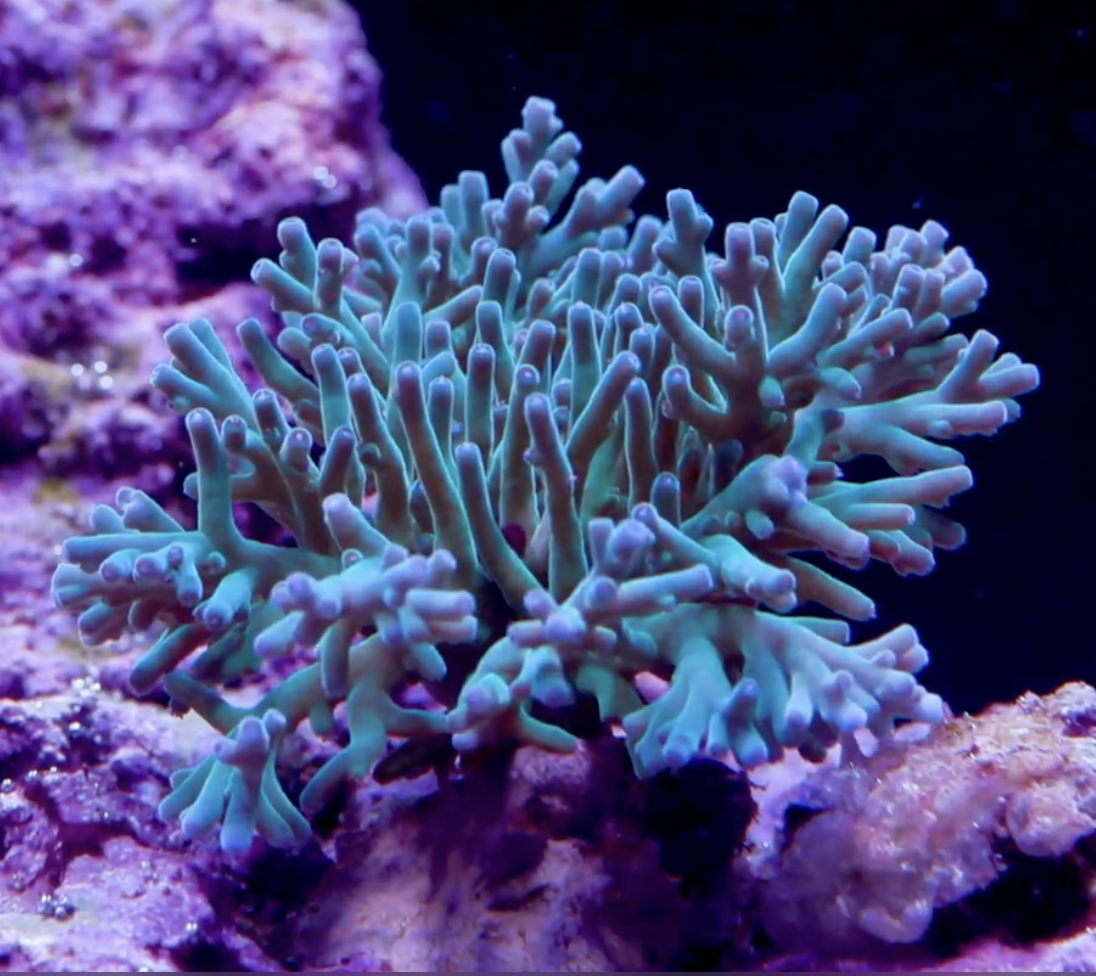
Screenshot 2023-12-01 alle 20.14.19.png
 
Not very well-versed in Acro identification, but I don't think it's turaki or echinata--those are bottlebrush species while this specimen is corymbose/caespitulose.
 
It's a turaki. I have one growing identically in my tank.
If your coral is growing corymbose/caespitulose like this, then I don't think it's a turaki. A. turaki is a bottlebrush species. Definitely some sort of deepwater acro, though.
 
If your coral is growing corymbose/caespitulose like this, then I don't think it's a turaki. A. turaki is a bottlebrush species. Definitely some sort of deepwater acro, though.
That classification only works if the coral is growing identically in the aquarium to the way it grows in the ocean. I have been dealing with a variety of growth anomalies that significantly alter branching vs polyp formation. The above coral appears to have a similar growth anomaly. I purchased a turaki which was growing in typical branching fashion. In my tank, it has a similar "porcupine" growth pattern.
 
For instance, this is a "green slimer" A. yongei. Obviously this is a very atypical branching pattern for this species:

IMG_8480.jpg
 
As an example, here is my small turaki forest. All of these came in looking identical, from typical branching turaki's.
IMG_8860.jpg


Note the guy in the bottom left. It is almost identical to OP's pic:

IMG_8856.jpg


I suspect the colony in OP's pic has a similar issue to this colony but they're both A. turaki.
 
That classification only works if the coral is growing identically in the aquarium to the way it grows in the ocean. I have been dealing with a variety of growth anomalies that significantly alter branching vs polyp formation. The above coral appears to have a similar growth anomaly. I purchased a turaki which was growing in typical branching fashion. In my tank, it has a similar "porcupine" growth pattern.

For instance, this is a "green slimer" A. yongei. Obviously this is a very atypical branching pattern for this species:

IMG_8480.jpg

As an example, here is my small turaki forest. All of these came in looking identical, from typical branching turaki's.
IMG_8860.jpg


Note the guy in the bottom left. It is almost identical to OP's pic:

IMG_8856.jpg


I suspect the colony in OP's pic has a similar issue to this colony but they're both A. turaki.
Fair point; I stand corrected.
 
As an example, here is my small turaki forest. All of these came in looking identical, from typical branching turaki's.
IMG_8860.jpg


Note the guy in the bottom left. It is almost identical to OP's pic:

IMG_8856.jpg


I suspect the colony in OP's pic has a similar issue to this colony but they're both A. turaki.
:)
 

ARE YOU READY TO CONFESS TO CRAZIEST, DUMBEST, FUNNIEST THING YOU’VE EVER DONE IN REEFING?

  • Yeah, I'll confess! (Share your story in the comments!)

    Votes: 44 52.4%
  • Nah, I'll keep mine a secret...(Don't be like that, share with the class!)

    Votes: 40 47.6%
Back
Top
Home
Post thread…
Market
What's new