Follow along with the video below to see how to install our site as a web app on your home screen.
Note: This feature may not be available in some browsers.
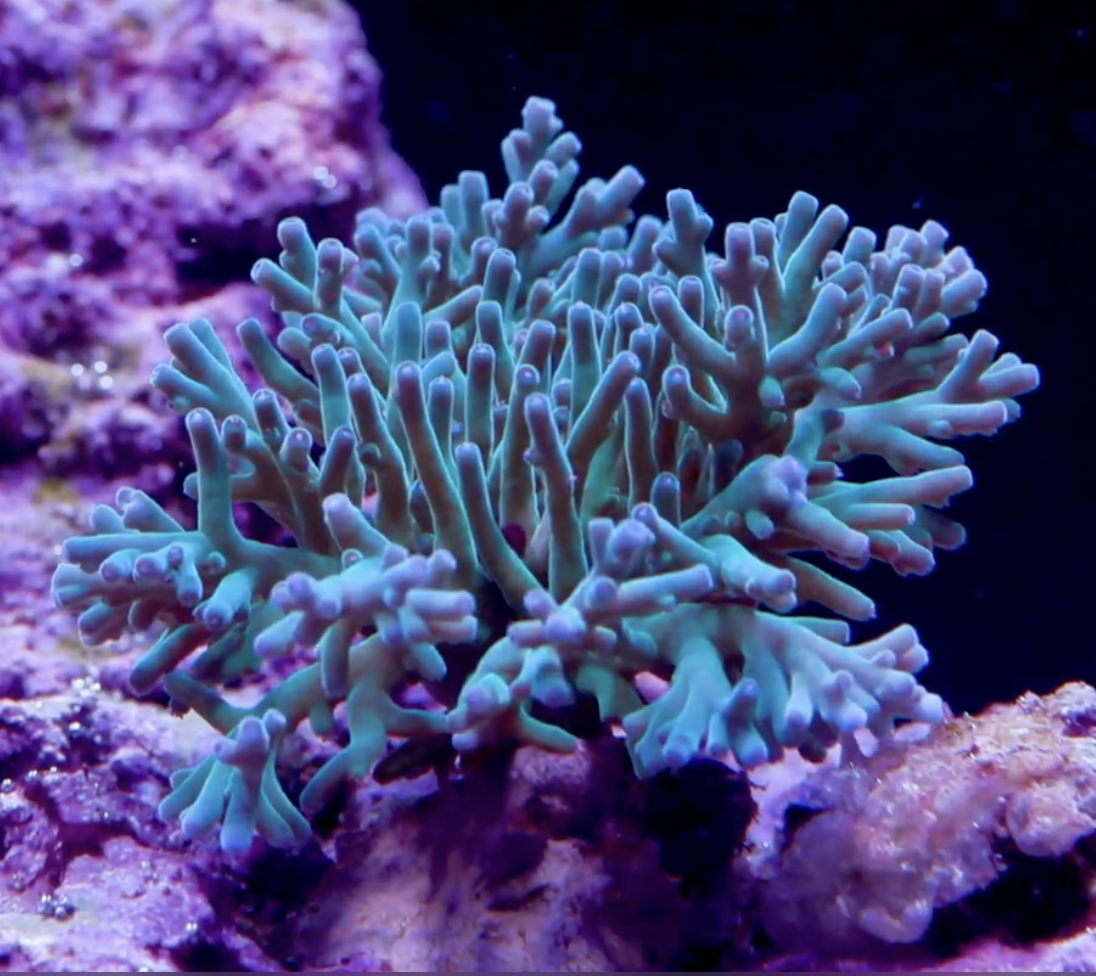
I've always steered away from acropora, but this one really caught my attention. What is it?
Thanks!
![]()
I was thinking that alsoThanks. It's very similar to the Hawkins Acropora echinata too.
![]()
Hawkins Acropora echinata
#html-body [data-pb-style=A980N0S],#html-body [data-pb-style=JVDTW70],#html-body [data-pb-style=S1UN265]{margin:5px}{{widget type="Magento\Cms\Block\Widget\Block" template="widget/static_block/default.phtml" block_id="44" type_name="CMS Static Block"}}<br><br>{{widget...tidalgardens.com
Maybe someone else can chime in.
If your coral is growing corymbose/caespitulose like this, then I don't think it's a turaki. A. turaki is a bottlebrush species. Definitely some sort of deepwater acro, though.It's a turaki. I have one growing identically in my tank.
That classification only works if the coral is growing identically in the aquarium to the way it grows in the ocean. I have been dealing with a variety of growth anomalies that significantly alter branching vs polyp formation. The above coral appears to have a similar growth anomaly. I purchased a turaki which was growing in typical branching fashion. In my tank, it has a similar "porcupine" growth pattern.If your coral is growing corymbose/caespitulose like this, then I don't think it's a turaki. A. turaki is a bottlebrush species. Definitely some sort of deepwater acro, though.
That classification only works if the coral is growing identically in the aquarium to the way it grows in the ocean. I have been dealing with a variety of growth anomalies that significantly alter branching vs polyp formation. The above coral appears to have a similar growth anomaly. I purchased a turaki which was growing in typical branching fashion. In my tank, it has a similar "porcupine" growth pattern.
For instance, this is a "green slimer" A. yongei. Obviously this is a very atypical branching pattern for this species:
![]()
Fair point; I stand corrected.As an example, here is my small turaki forest. All of these came in looking identical, from typical branching turaki's.
![]()
Note the guy in the bottom left. It is almost identical to OP's pic:
![]()
I suspect the colony in OP's pic has a similar issue to this colony but they're both A. turaki.
:)As an example, here is my small turaki forest. All of these came in looking identical, from typical branching turaki's.
![]()
Note the guy in the bottom left. It is almost identical to OP's pic:
![]()
I suspect the colony in OP's pic has a similar issue to this colony but they're both A. turaki.