Best Fish to Cycle With

Smarkow

Valuable Member
View Badges
Joined
Jan 3, 2018
Messages
1,214
Reaction score
2,378
Location
Toledo
Rating - 0%
0   0   0
Why do I still see these types of comments in the hobby?
My involvement in this thread went from “here’s a few small hardy fish you might enjoy mr OP” to “IT’S ON” when someone called my advice *cruel* and baselessly insisted there was only one way to cycle a tank. So that’s why you still see these posts :/

Surely adding a measured ammonia source instead of live animals is just so, so, easy and it works. The science is simple. Ammonia source is cheap...
I cycled my first tank this way. It was slow but worked. It’s important to note that this method will only select for a few strains of bacteria at first, the obligate ammonia oxidizers which get their carbon source from dissolved CO2. These strains alone do not accurately reflect the full microbial populations of coral reefs, so the idea that this method is natural is factually incorrect and the idea that it is lower risk remains unproven. However, the method you advocate is one common, simple, and acceptable method for starting an initial cycle. There are others. Using the method you describe, other forms of bacteria would not be introduced until fish entered the system.

Why take the risk? or more precisely why risk the animals welfare? One of the consequences of using live animals is, if it goes wrong or you make a mistake, the animal could be put through extreme stress and even die.
I, and others, have demonstrated some rough estimates that fish based cycling will produce no risk to the fish. In regards to ammonia testing, I would personally recommend it, with the caveat that we should recognize the known error margins regarding hobby-grade tests. In the event a cycle fails to produce the first time, water changes would solve the issue and give the cycle a second chance. We cite our calculations based on peer-reviewed literature.

What are the benefits of using a live animal compared to a measured ammonia source?
What is so difficult about adding ammonia that would make one even consider using a live sample?
[\QUOTE]
It’s not that the ammonia way is more difficult. Understanding of the health implications of the relationship between host (our fishies) and microbiome (the unique set of microorganisms composing a specific environment or organ, in our cases rock surface, fish intestines, and fish skin) is growing. There are implications for disease and health that need to be taken into account. The bacteria which process waste are not limited to those we select for with ammonia dosing alone. Adding in some organic carbon dosing (fish food, shrimp piece) will expand that number somewhat. Bacteria in a bottle solutions are mostly unlabeled, with the exception of biospira. Given the difficulty of mixing strains in a bottle and storing it, I would be surprised if Dr. Tim’s, microbacter, or others contained more strains than what biospira does (just the obligate ammonia and nitrite oxidizers).

The bacteria found on reef rock and on coral reef fish skin are remarkably consistent across sites and species. Bacteria within fish GI tracts are less consistent (likely related to different diets, therefore different nutrients to process). This type of consistency across species and geography, when found in nature, almost always has health implications.

My argument for possible benefit to fish based cycling is that it will produce a more natural microbiome of bacteria on the rock within our tank. A wider variety of organisms seeded into the rock from the start means that the tank might be more disease resistant or handle overall waste processing better. The required bacteria to process reef waste go wayyyy beyond ammonia oxidizers. Why should we give the ammonia oxidizers the first crack? Especially in tanks with algae, who are likely absorbing the ammonia at a much higher efficiency rate than the nitrifying bacteria...

Nothing Voodoo about it, the concept of fishless cycling is just common sense and IMO shows a proper regard for the care of the animals in your charge.
Probably should not have used the word “voodoo,” but the contempt for fish based cycling is disproportionate to the evidence. There are many ways to cycle a tank with respect for its inhabitants, and the “best” practice remains undefined.

Also comparing ammonia to carbon dioxide seems rather bizarre. Why not compare ammonia exposure of your animals to ammonia exposure in your home. That would be a little more accurate. Ammonia is considerably more toxic to both Humans and Fish.
I chose this analogy for a couple reasons. First, ammonia toxicity to fish produces respiratory distress and rapid gill movements. Hypercarbia in humans also produces respiratory distress and rapid breathing. Both are dependent on the concentration of the chemical in the exterior environment to produce their effect. Seal off a human in a confined environment and they will quickly become hypercarbic. Seal a human inside an airplane hanger and it will take a very long time for adverse effects. Place a 4” grouper in a 10 gallon tank and see effects quickly... place a 1” clown in a 30g and it will take much longer.
Secondly, much of what we presume to know about ammonia in fish is based off of its known toxicity in humans. There are several wonderful papers in the past ten years or so documenting that some tropical marine species are highly resistant to ammonia based off if differing gill structures and rhesus protein variations. This might explain why some fish are “hardy” for cycling and others are not. Ammonia is universally toxic to humans, not so to fish, depending on species.

Anyways, thank you for your thoughtful comments. You’re absolutely right that fishless cycling is simple and will likely work. And it’s important to note the different techniques - cycle with pure ammonia vs ammonia plus carbon source, etc. But that doesn’t mean fishless is the “best” way to cycle, nor does it mean fish based cycling is inherently cruel.
 

Paul Sands

Active Member
View Badges
Joined
May 7, 2019
Messages
329
Reaction score
395
Rating - 0%
0   0   0
Since you won’t respond to evidence or data which contradicts your view, I’ll offer a rebuttal in the form of a song:


Your dissertation of stuff that you copied from the internet and pasted into this thread didn’t refute any of the issues raised regarding using a fish to cycle a tank and possible reasons for failure. I’m probably the only person in the world that read it.

How very adult of you to use a song instead of just refuting the points raised. Should I use “I’m rubber, you’re glue” now?
 

Smarkow

Valuable Member
View Badges
Joined
Jan 3, 2018
Messages
1,214
Reaction score
2,378
Location
Toledo
Rating - 0%
0   0   0
Your dissertation of stuff that you copied from the internet and pasted into this thread didn’t refute any of the issues raised regarding using a fish to cycle a tank and possible reasons for failure. I’m probably the only person in the world that read it.

How very adult of you to use a song instead of just refuting the points raised. Should I use “I’m rubber, you’re glue” now?
Because I don’t believe that fish based cycling is the only way to cycle, I acknowledge there are many ways of cycling, to the point that reefers probably cannot help but have a cycle.

You’re a writings to me have been rude (edited). So yes, you get a song.
 

Paul Sands

Active Member
View Badges
Joined
May 7, 2019
Messages
329
Reaction score
395
Rating - 0%
0   0   0
I, and others, have demonstrated some rough estimates that fish based cycling will produce no risk to the fish.

Keywords “rough estimates”. Also, it was already established that you ignored food in your “scientific” calculations. Therefore your claim that there is no risk to the fish is unproven by your data.

I cycled my first tank this way. It was slow but worked. It’s important to note that this method will only select for a few strains of bacteria at first, the obligate ammonia oxidizers which get their carbon source from dissolved CO2. These strains alone do not accurately reflect the full microbial populations of coral reefs, so the idea that this method is natural is factually incorrect and the idea that it is lower risk remains unproven.

It’s not difficult to add a carbon source like a tiny piece of frozen shrimp of a bit of frozen food to address this, as has already been stated in this thread.
 

Gareth elliott

Read, Tinker, Fail, Learn
View Badges
Joined
May 7, 2017
Messages
5,470
Reaction score
6,903
Location
NJ
Rating - 0%
0   0   0
Keywords “rough estimates”. Also, it was already established that you ignored food in your “scientific” calculations. Therefore your claim that there is no risk to the fish is unproven by your data.


It’s not difficult to add a carbon source like a tiny piece of frozen shrimp of a bit of frozen food to address this, as has already been stated in this thread.

We all live in a world of rough estimates. As you tap on your phone your brain is taking data from your eyes and skin and approximating distance, it then makes a few more approximations about the current mass of your body and the required electrical impulses to perhaps move your fingers. Ever go to pick up a glass and instead knock it to the floor? Your brain made some weong estimates.

Nothing i mean nothing is proven in this world(except that nickel back is terrible band) no data will ever quantitatively be enough to say its true on any subject, this is not what the scientific method attempts to do. What the scientific method does attempt to do is find evidence that under our current knowledge it is the best current hypothesis. :)
 

Smarkow

Valuable Member
View Badges
Joined
Jan 3, 2018
Messages
1,214
Reaction score
2,378
Location
Toledo
Rating - 0%
0   0   0
Keywords “rough estimates”. Also, it was already established that you ignored food in your “scientific” calculations. Therefore your claim that there is no risk to the fish is unproven by your data.
Nitrogen added as food can be estimated based off of the weight and composition of the food. Whether or not the fish actually eats the food would not be relevant, as that nitrogen is added to the system anyways. You are correct that this does need to be taken into account. Hikari marine s pellets are one common small pellet food you could feed a clown or damsel once daily for a cycle. And easier to estimate than frozen food. 48% protein by weight, and protein averages about 16% nitrogen by weight, though not all of that nitrogen will be converted to ammonia (some will be incorporated into the fish and their bacteria). I don’t have a scale sensitive enough to weigh out some pellets, and there are no recommended serving sizes on the package besides the usual “no more than the fish can consume in 2-3m”... if anyone knows the serving size/weight who can ‘weigh in’ on this so we can take it into account??
Thanks
 

ReefGeezer

Valuable Member
View Badges
Joined
Nov 9, 2009
Messages
2,131
Reaction score
2,958
Location
Wichita, KS
Rating - 0%
0   0   0
Um - if it were a settled process (maybe to Dr. Tim it is - but then again he is making (hopefully) a bunch of money selling his product - which did not work that well in recent testing). The goal of gradually using a fish - plus a bacteria source - whether its in a bottle or a filter - is not speed - its not to jump start - its none of that - as much as it is to merely enjoy your tank and slowly adding fish. There is nothing cruel here, there is nothing mean here.

On the other side, though there are products that suggest that they work (though perhaps they dont) - while waiting weeks to enjoy your tank. I started becoming lost when someone on this site suggested that waiting 3-6 weeks is a good exercise in patience - and another said it could be accomplished in 24 hours.

Not to quibble, but I didn't mention using products like Dr. Tims or bacteria in a bottle... IMO, that stuff is as unnecessary as the fish where cycling a tank is concerned. Neither did I call using a fish cruel or mean. It's just unnecessary and extends the time before I can put what I really want in the tank. Cycling a tank with ammonia (Ammonium Chloride or plain old household ammonia) is a 4-5 week thing. It also allows time to work the kinks out of a new set-up without worrying about harming an expensive specimen. I just don't have money to burn.

Back in the day, I started a tank with live rock that I cured in a bin before putting it in the tank. I put fish directly into that tank without issue... but... I spent 8 weeks curing that rock. Some of those weeks were pretty smelly!
 

Lasse

10K Club member
View Badges
Joined
Mar 20, 2016
Messages
12,664
Reaction score
31,358
Location
Källarliden 14 D Bohus, Sweden
Rating - 0%
0   0   0
Here it comes - first picture 0,077 g of pellets 35 % protein thereof 16 % N

IMG_20190613_161156.jpg


Second - the amount of frozen artemia I use in my own method. app 13 % protein thereof 16 % N On the edge of the glass!

IMG_20190613_161556.jpg


IMG_20190613_161552.jpg


I feed every 3 day in the first week, every 2 day second week and so on.

Most of the surplus N is secreted during the around 3 hours after the feeding

To help the caculations - at pH 8 - NH3-N is 5 % of the amount of NH4/NH3 -N. pH 8.5 -> NH3-N is 15 % of total NH4/NH3-N.

NH3 is 1.21 x N

Calculat free NH3 in 10 l/ 50 l and 100 l

Sincerely Lasse
 

MnFish1

10K Club member
View Badges
Joined
Dec 28, 2016
Messages
26,916
Reaction score
24,617
Location
Midwest
Rating - 100%
2   0   0
@Paul Sands. @bluprntguy. Soon we will have the answers to the points you're brining up - since @Dr. Reef is going to be doing a study with fish and bottled bacteria. There will be safeguards to protect the fish with seneye ammonia monitors. The study will use bacteria of various types. Until then this back and forth is getting kind of 'old'. With no evidence - and despite multiple explanations from MANY people here - you just keep repeating 'its cruel' or some similar words or pulling apart others thoughts word by word. My opinion (which I'm summarizing since they have been butchered through the thread):

1. it is not right to add a fish into a tank with no live bacterial source (UNLESS -you're putting a small fish into a large tank - and only slowly adding new inhabitants). (see #3 below)
2. There are multiple products on the market - that suggest its not only safe - but recommended to add fish with the bacteria. If you want to argue against them - maybe get some picket signs and go to their company offices. But arguing here - why?
3. There will be little or no risk if appropriately sized fish are put in an appropriately large tank - and some source of living bacteria is provided. AND - by that I mean enough bacteria from day 1 to utilize all of the ammonia produced by the chosen fish. My guess is that the experiments will show that there is no ammonia rise (at least not a significant one). Yes - this is a bit of an estimate - so perhaps chose a smaller fish or add a little more bacteria.
4. The advantage to this method: you get to enjoy your tank immediately, it is low risk, there may be better bacterial diversity by adding fish.
5. Other methods to cycle a tank (waiting, adding bacteria, adding. bacteria and ammonia, a shrimp, etc) work - but also often have problems - but I dont care if anyone wants to use them.

Lastly - if those of you are so 'up in arms' about the 'cruelty' of the 'possibility' of ammonia toxicity - you should make sure that you are intellectually and ethically consistent. You should certainly not 'take the risk' of having fish etc shipped to you - in bags in which the ammonia level can become quite high (what happens if shipping is delayed???? - is that not analogous to the risk of 'bacteria in a bottle not working'?). You should not go to LFS that have fish sent to then in those 'potentially' poisonous bags right ? To be ethically consistent?

Now - of course we all know - the risks of shipping are low - and sometimes ammonia detoxifying chemicals are used - BUT - what if they fail????? The fact is - using bacteria and adding fish to a tank immediately also can have risks - but I would postulate that its far less than the shipping risk.
 
Last edited:

MnFish1

10K Club member
View Badges
Joined
Dec 28, 2016
Messages
26,916
Reaction score
24,617
Location
Midwest
Rating - 100%
2   0   0
Not to quibble, but I didn't mention using products like Dr. Tims or bacteria in a bottle... IMO, that stuff is as unnecessary as the fish where cycling a tank is concerned. Neither did I call using a fish cruel or mean. It's just unnecessary and extends the time before I can put what I really want in the tank. Cycling a tank with ammonia (Ammonium Chloride or plain old household ammonia) is a 4-5 week thing. It also allows time to work the kinks out of a new set-up without worrying about harming an expensive specimen. I just don't have money to burn.

Back in the day, I started a tank with live rock that I cured in a bin before putting it in the tank. I put fish directly into that tank without issue... but... I spent 8 weeks curing that rock. Some of those weeks were pretty smelly!

I have no objection to this method - I have no disagreement with what you're saying - I just choose to do it differently:)?
But I do have a question - Why? Assume there is a product which contains live nitrifying bacteria. why wait for 4-5 weeks when you can detoxify the ammonia in your tank within a couple days? (even if you use added ammonia instead of adding fish). Again I'm not wanting to start a debate - I just don't understand it (except the part about getting kinks out of the system).
 

MnFish1

10K Club member
View Badges
Joined
Dec 28, 2016
Messages
26,916
Reaction score
24,617
Location
Midwest
Rating - 100%
2   0   0
Weird. The title of this thread is “best fish to cycle an aquarium with”. Are you just ignoring that FACT?

You are correct - the title of the thread is not optimal. The problem is that 'we' don't know if the poster meant adding an angelfish into a 10 gallon aquarium or whether he meant adding a clown fish to a 50 gallon aquarium with live bacteria/or live rock/sand. So - early in the thread I posted what I meant personally so when I make the comment 'cycling a tank' I'm basing it on what I've said previously.

There are a number of people that posted the EXACT SAME THING other than me and @bluprntguy. No reason to attack and bully either of us. Frankly, the vast majority of people on R2R understand the argument about why you shouldn’t use a fish to cycle or “test” a tank. It’s a small vocal minority making your arguments.

I apologize that I have seemed to bully you or @bluprntguy. Truthfully - I have seen several people discuss the tone of your posts -. NOTE: people have also discussed the tone of my posts as well - so I don't consider these comments as 'bullying' or 'an insult'.

When someone brings something that I have said to my attention I try to at least look at the reason WHY my comments may have been more harsh than appropriate (which is why im responding to your comment above) - and then I try to correct my behavior the next time.
 
Last edited:

Smarkow

Valuable Member
View Badges
Joined
Jan 3, 2018
Messages
1,214
Reaction score
2,378
Location
Toledo
Rating - 0%
0   0   0
Soon we will have the answers to the points you're brining up - since @Dr. Reef is going to be doing a study with fish and bottled bacteria. There will be safeguards to protect the fish with seneye ammonia monitors. The study will use bacteria of various types.
Love it :)
Can’t wait to see,
Thanks!
 

Smarkow

Valuable Member
View Badges
Joined
Jan 3, 2018
Messages
1,214
Reaction score
2,378
Location
Toledo
Rating - 0%
0   0   0
Here it comes - first picture 0,077 g of pellets 35 % protein thereof 16 % N
[\QUOTE]

So for the pellets I have 77mg*0.35*0.16*0.05*1.21
(I assumed pH 8)
So 0.26 mg NH3 in the water needs to be processed per day total, or more applicably

0.0023 mg/L NH3 produced per day in a 30 gallon (113L) tank
0.0007 mg/L NH3 produced per day in a 100 gallon tank

The artemia would be a much lower number since the protein content is lower and there is a tiny but if water.

Thanks @Lasse
 

MnFish1

10K Club member
View Badges
Joined
Dec 28, 2016
Messages
26,916
Reaction score
24,617
Location
Midwest
Rating - 100%
2   0   0
Your post didnt come out correctly - it all shows as a quote from @Lasse - I assume this was your part:

(I assumed pH 8)
So 0.26 mg NH3 in the water needs to be processed per day total, or more applicably

0.0023 mg/L NH3 produced per day in a 30 gallon (113L) tank
0.0007 mg/L NH3 produced per day in a 100 gallon tank

This is quite similar to my other post on this thread (with total ammonia) that shows that the levels should never reach toxic levels
(this experiment was done with 'normal feeding' not 'feeding sparingly' as in @Lasse's example.

To the OP - here is a quick example calculation. A pair of clownfish produce approximately 7.125 mg ammonia/day (total). So depending on the tank size - and the end of a day placing 2 clowns in a tanks of varying sizes - will result in (with no added bacteria):
7.125 mg ammonia/day/38 liters (10 gallons) = 0.19 ppm ammonia

7.125/190 l (50 gallons) =0.038 ppm ammonia

7.125/380 l (100 gallons) = 0.019 ppm ammonia
 

Lissa1987

Active Member
View Badges
Joined
Apr 29, 2018
Messages
321
Reaction score
381
Location
Tampa Bay
Rating - 0%
0   0   0
Okay $2.79, way cheaper than I thought. You do have to buy the bacteria too ($22.46) for his method, but you're right, drop in the bucket in this hobby. And you can always get some live rock (not cheap, but you're buying regular rock anyways and how much of it has to be live? A couple good pounds of high surface area stuff at my LFS is about 7.99 per pound, and caribsea live sand costs about $40 for a 20lb bag, though you'd have to buy dead sand anyways or go bare bottom... it costs what it costs.

But you know what? OP wanted some hardy fish for a simple cycle, and I believe there are a lot of ways to practice this hobby.

So I'll choose to read friendly challenge, curiosity, and camaraderie in your post rather than arrogance and contempt. So with all due respect, sir, I believe I do know a thing or two about whether or not a fish based cycle is "cruel." Let's go to the peer reviewed literature...
Screen Shot 2019-06-10 at 2.59.10 AM.png
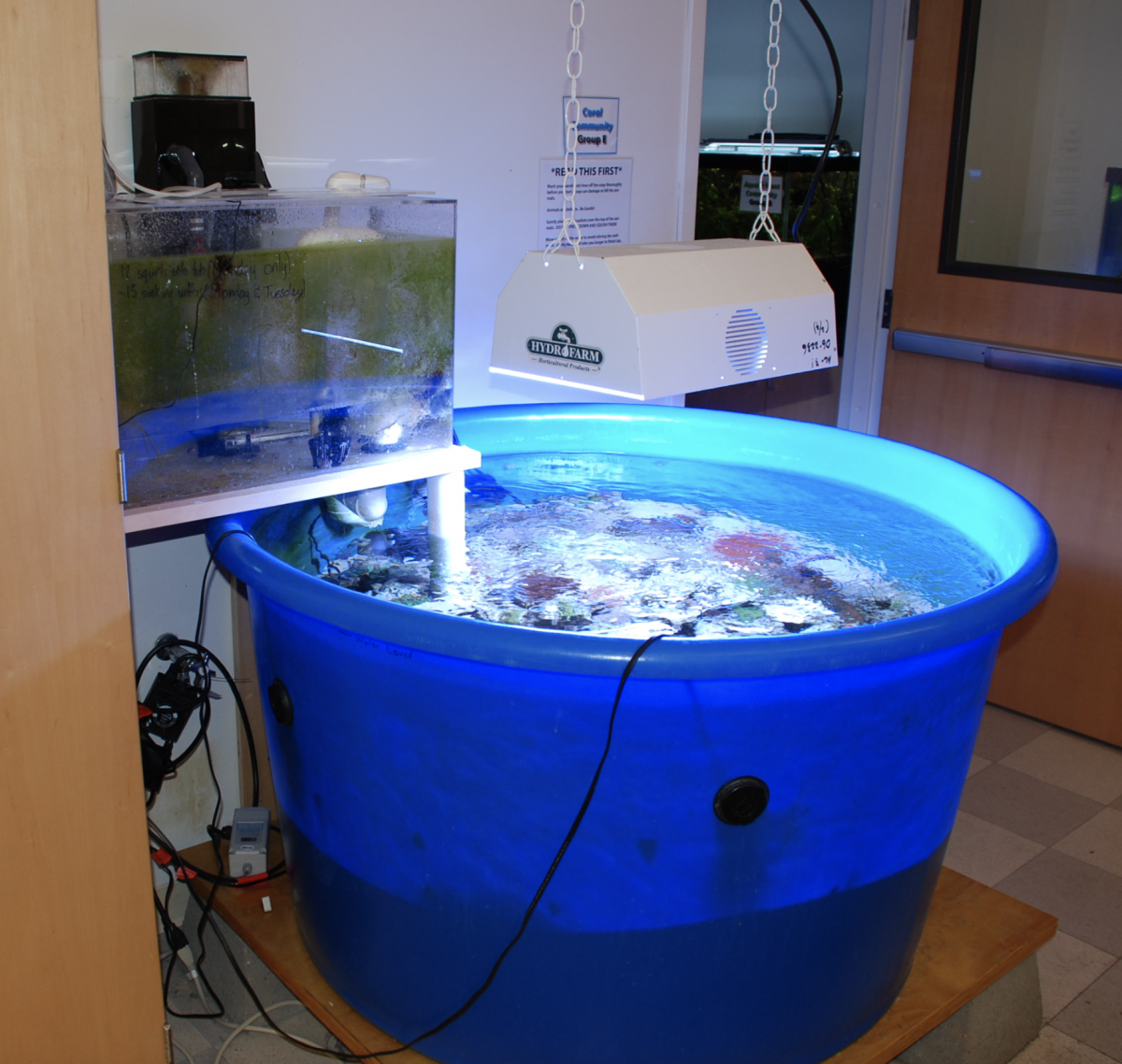
After a brief review of the literature, the authors setup two Berlin style systems with deep sand beds and subjected them to various "perturbations," (adding rock, scraping glass, doing water changes, and a couple more minor things). They also included an established control tank (they state it has been up for years, but not how many) and natural seawater control (Bodega Bay, CA as their source water, which they also used for setup and water change). Their "live rock" was cured in a barrel for 2 months with periodic water changes. The authors sampled the bacteria (in triplicate) from the sand, walls, and mid-tank water (often times every day or twice daily) over a 90 day period and subjected samples to genomic identification. They tested a wide variety of water parameters daily during the initial setup and around "perturbations," and at minimum every 5 days otherwise. "Coral Pond 1" (CP-1 in figures) was setup 5 days prior to the second tank, "Coral Pond 2" (CP-2) but all "perturbations" were performed on the same day, thus CP-1 is given a slight head start. As an aside, aren't scientist great at naming things? Although the original paper does not include it, I have obtained this photograph of one of their tanks, below (Circa 2012, so some equipment is older than what we are used to, note the 14k metal halide fixture!?). All photo rights to the study authors. Other than their sumps being above their "displays" and not using traditional glass, please note, these are heavily stocked reef tanks very much in line with hobbyists. They put the corals in right away, not waiting for a completed cycle. The authors do not comment on specific stocking, I have reached out to them to clarify and have asked about any losses.
Screen Shot 2019-06-10 at 3.32.04 AM.png


Their results indicate several points germane to our discussion.

Figure 1 indicates that in both tanks, the initial addition of 2 month cured live rock effectively and nearly immediately cycled the tank (Green doodle), despite the water starting with an ammonia concentration of 0.75 mg/L. In the author's words, "when the aquarium was seeded with live rocks... there was an immediate reduction in ammonia and nitrite levels." Addition of live rock (Sand disturbed?), water changes (presumably some ammonia in Bodega Bay?), and even scraping the aquarium glass produced some ammonia spikes (violet and red), which were promptly removed (my doodles and musings, not theirs).

Screen Shot 2019-06-10 at 4.08.51 AM.png

There is a ton of other info on surprising microbial discoveries made by the authors. Pretty much every time they touched the tank the bacterial populations shifted in ways that were not detectable according to hobby kits, or as they put it, "No correlation between microbial shifts and water chemistry." The authors conclude that reef aquaria have multiple steady states at which they are stable and that microbial populations are highly redundant in terms of role. They also reported new taxa of microbes previously not known in aquaria, and demonstrated that the established microbial populations early in the cycle did not differ significantly from their years old established tank comparison, so a cycled tank is largely a cycled tank. Additionally, CP-1 with the head start on the cycle was not meaningfully different from CP-2.
Screen Shot 2019-06-10 at 4.29.05 AM.png

The authors conclude that, "Our data set provides an overview of community changes over time, including the impacts of aquarium setup, conditioning, and routine tank maintenance such as wall cleaning and water changes. Notably, our results suggest that changes in microbial community composition do not always correlate with water chemistry measurements."

Hopefully what we have established is that 1) small ammonia spikes happen all the time in our tanks, 2) putting some cured live rock effectively cycles a tank in days, and 3) large shifts in aquarium bacterial composition happen beyond the hobbyists ability to detect both spontaneously and whenever we touch out tanks (the authors detected bacteria from the human GI tract in the tank, presumably from the scientists hands).

Let's talk about the ammonia spikes they noted. The authors report a maximum NH4 concentration of 1.0 mg/L, which accounting for pH, temperature, and salinity should get us to ~0.05 mg/L of NH3, the toxic part we care about for our fishies health. I used the "Free Ammonia Calculator" available courtesy of Hamza's Reef. This is right at the most conservative estimate (0.05-0.2 mg/L NH3) of what has been proposed as a "safe" range for "most" marine fishes. (Lemarie ́ G., Dosdat A., Cove `s D., Dutto G., Gasset E. and Person-Le Ruyet, J., Effect of chronic ammonia exposure on growth of European seabass (Dicentrarchus labrax) juveniles. Aquaculture, 229, (2004) 479-491)

There is great flux and shifts in understanding of the relationship between ammonia and marine fishes. I highly recommend the following review articles, which I found fascinating.
Screen Shot 2019-06-10 at 5.57.53 AM.png Screen Shot 2019-06-10 at 6.12.03 AM.png

In short, we have made many incorrect assumptions about ammonia in marine fishies, most based off of our study of humans with liver failure. Some fishies, and particularly their larva, are very sensitive to even low concentrations of ammonia. Others seem to thrive in high concentrations. Indeed, analogs of proteins on our own red blood cell proteins (the Rh protein which gives our blood a + or - denotation) are theorized to help some fishes with their ammonia transport. Some fish adapt their gills quickly (usually < 3 hours in the species studied) to artificially high ammonia concentrations, while others exhibit gill changes which may not be adaptive. Other fish change their environment around them to make ammonia less toxic (the mudfish decreases seawater pH in its burrow all the way down to 7.0). The long held belief that hyperammonemia leads to fish respiratory distress has come under scrutiny of late, although fish do seem to have an area in their gills analogous to humans' means for responding to high CO2 levels which may affect their respiratory rate in response to ammonia.

Okay but clearly some fish die of ammonia poisoning... for the cruel people doing fish cycles, is one small fish possibly excreting enough ammonia to kill itself? I could only find numbers for the two-banded clownfish, but here goes... "Rates of ammonia excretion by the anemonefish Amphiprion bicinctus varied from a high of 1.84 μmole g−1 h−1 at 2 h after feeding, to a basal rate of 0.50 μmole g−1 h−1 at 24–36 h since the last meal." The authors state adult clownfish in typically weigh 11g and we feed these fish typically once per day, therefore we would expect ~300 micro mol/day of NH3, about 95% of which is converted to NH4 in seawater after leaving the fish, at pH 8.1, 25C, and 35 ppt salinity, so let's say 15 micro mol -> 0.26 mg per day (someone check my math, I assumed that over a 24 hour period there is a gradual decrease from 1.84 to 0.50). So this would depend on tank volume for concentration, and this is an adult clown so I'll go with live aquaria's recommendation for minimum tank size 30 gallons -> 113 liters (a big nano, but still), that gives you 0.26 mg / 113 L -> 0.002 mg/L ammonia per day that the tank has to process when cycling with an adult clownfish in a large nano tank.
(Roopin, Modi, Raymond P. Henry, and Nanette E. Chadwick. "Nutrient transfer in a marine mutualism: patterns of ammonia excretion by anemonefish and uptake by giant sea anemones." Marine Biology 154.3 (2008): 547-556.)

Anyways, I had fun reading and studying this. Learned a ton. And it's entirely possible my math is wrong or I've read the lit wrong, missed something etc. Feel free to correct me.

But bottom line from my review, @mfrumkin can go get whatever dang little fishy he wants and cycle his tank any number of ways. And he'll probably take care of his fish best when he's not branded as *cruel* two weeks after he's joined our community.

Cheers

Thank you for actually posting scientific articles as opposed to just your opinion like so many others! Science is awesome!
 

ReefGeezer

Valuable Member
View Badges
Joined
Nov 9, 2009
Messages
2,131
Reaction score
2,958
Location
Wichita, KS
Rating - 0%
0   0   0
But I do have a question - Why? Assume there is a product which contains live nitrifying bacteria. why wait for 4-5 weeks when you can detoxify the ammonia in your tank within a couple days? (even if you use added ammonia instead of adding fish). Again I'm not wanting to start a debate - I just don't understand it (except the part about getting kinks out of the system).

I hear you. I used a product from Fritz years ago to start holding systems in pet shops. It worked as far as I knew, but I was less than competent enough to determine its effectiveness back then. Back then if the fish lived, I figured it worked. I'm better able to see stress in my fish now. I'm not a bleeding heart that sweats a little stress. I just don't want to chance making the introduction of the sensitive fish I wish to keep any more difficult... and I have no use for a tank full of Damsels, Mollies, or tank raised Percs. The hobby isn't flocking to adding a shot glass sized bottle of miracle stuff in lieu of cycling tanks just yet. I would think if it was a slam dunk, the hobby would welcome it. My critical thinking cap also makes me wonder how "live nitrifying bacteria" survives in those little bottles or after being dried into a powder. The answer can't be "it's proprietary, trust us it works".
 

MnFish1

10K Club member
View Badges
Joined
Dec 28, 2016
Messages
26,916
Reaction score
24,617
Location
Midwest
Rating - 100%
2   0   0
I hear you. I used a product from Fritz years ago to start holding systems in pet shops. It worked as far as I knew, but I was less than competent enough to determine its effectiveness back then. Back then if the fish lived, I figured it worked. I'm better able to see stress in my fish now. I'm not a bleeding heart that sweats a little stress. I just don't want to chance making the introduction of the sensitive fish I wish to keep any more difficult... and I have no use for a tank full of Damsels, Mollies, or tank raised Percs. The hobby isn't flocking to adding a shot glass sized bottle of miracle stuff in lieu of cycling tanks just yet. I would think if it was a slam dunk, the hobby would welcome it. My critical thinking cap also makes me wonder how "live nitrifying bacteria" survives in those little bottles or after being dried into a powder. The answer can't be "it's proprietary, trust us it works".
Actually fritz at least lists the strains of nitrifying bacteria. It has to be kept cold and has a relatively short expiration date. Nitrifying bacteria do not form spores but they can become dormant u see various consitions
 

Reefermadness13

Community Member
View Badges
Joined
May 18, 2019
Messages
47
Reaction score
11
Rating - 0%
0   0   0
Check out Dr. Tims ammonia for fishless cycling. It's already made to the desired dilution. Just add however many drops it says in comparison to tank size. I little bottle for $5 will last forever. I tried cycling my tank with live sand and live rock and was doing phantom feeding and after 2 months it still hadn't cycled. I tried Dr Tims and it ended up cycling a few days later. Though I still waited another couple weeks to make sure everything was stable. No point in buying fish to cycle your tank and having them potentially die. Waste of money and life.
 

Lasse

10K Club member
View Badges
Joined
Mar 20, 2016
Messages
12,664
Reaction score
31,358
Location
Källarliden 14 D Bohus, Sweden
Rating - 0%
0   0   0
Here is my calculation. Dry food 77 mg -> 35% protein -> 26.95 mg -> 16 % N -> 4.312 N -> uptake from the fish is normally caculated to 20% (call blooded animals is more effective to gain nutrients compared with us there the normal uptake is caculated to 10%) -> 3.45 mg -> pH 8 - 25 degree C - NH3 ratio is 5 % -> 0.1725 mg NH3-N -> 0,2 mg per day. i one litre -> it will be 0.2 ppm Toxic NH3; in 10 litre it will be 0.02 ppm toxic NH3 - in 30 litre it will be 0.006 ppm toxic NH3 - in 100 litre - it will be 0.002 ppm toxic NH3. Not even in 1 litre it will be acute toxic. The final concentration for pH 8,5 is 10 litre 0.062 ppm; 30 litre - 0.012 ppm and 100 litre 0.0062 ppm.

Let us say that we want to feed our fish with 1 % of total weight - 77 mg is enough for a fish with a wieght of 10 gram

My way - frozen artemia - weight 34 mg -> 13 % protein -> will end up with around 0.003; 0.0007 and 0.0003 ppm (10, 30 and 100 litre) at pH 8 and 0.01, 0.002 and 0.001 for pH 8.5. and I feed every 3 days the first week!

Sincerely Lasse
 

Smarkow

Valuable Member
View Badges
Joined
Jan 3, 2018
Messages
1,214
Reaction score
2,378
Location
Toledo
Rating - 0%
0   0   0
Here is my calculation. Dry food 77 mg -> 35% protein -> 26.95 mg -> 16 % N -> 4.312 N -> uptake from the fish is normally caculated to 20% (call blooded animals is more effective to gain nutrients compared with us there the normal uptake is caculated to 10%) -> 3.45 mg -> pH 8 - 25 degree C - NH3 ratio is 5 % -> 0.1725 mg NH3-N -> 0,2 mg per day. i one litre -> it will be 0.2 ppm Toxic NH3; in 10 litre it will be 0.02 ppm toxic NH3 - in 30 litre it will be 0.006 ppm toxic NH3 - in 100 litre - it will be 0.002 ppm toxic NH3. Not even in 1 litre it will be acute toxic. The final concentration for pH 8,5 is 10 litre 0.062 ppm; 30 litre - 0.012 ppm and 100 litre 0.0062 ppm.

Let us say that we want to feed our fish with 1 % of total weight - 77 mg is enough for a fish with a wieght of 10 gram

My way - frozen artemia - weight 34 mg -> 13 % protein -> will end up with around 0.003; 0.0007 and 0.0003 ppm (10, 30 and 100 litre) at pH 8 and 0.01, 0.002 and 0.001 for pH 8.5. and I feed every 3 days the first week!

Sincerely Lasse
Looks good, thanks
10 liter is a really small tank..
 

TOP 10 Trending Threads

WHAT AMOUNT OF LIVE ROCK AND SAND SHOULD BE PRIORITIZED FOR OPTIMAL BIODIVERSITY/FILTRATION?

  • 100% live rock + bagged sand

    Votes: 38 26.6%
  • 100% dry rock + 100% live sand

    Votes: 48 33.6%
  • 50/50 live/dry rock, 50/50 live/bagged sand

    Votes: 32 22.4%
  • 75% live rock, 25% live sand

    Votes: 15 10.5%
  • 25% live rock, 75% live sand

    Votes: 10 7.0%
Back
Top








