Can someone explain the return pipe siphon problem/trick?

  • Thread starter Thread starter JoJosReef
  • Start date Start date
  • Tagged users Tagged users None

JoJosReef

Primus huffalumpus
View Badges
Joined
Sep 27, 2021
Messages
20,494
Reaction score
78,992
Location
Orange County, CA
Rating - 0%
0   0   0
I'm an AIO guy, not a sump guy, but now I'm doing sumps. Here's my sump:
1738017125910.jpeg

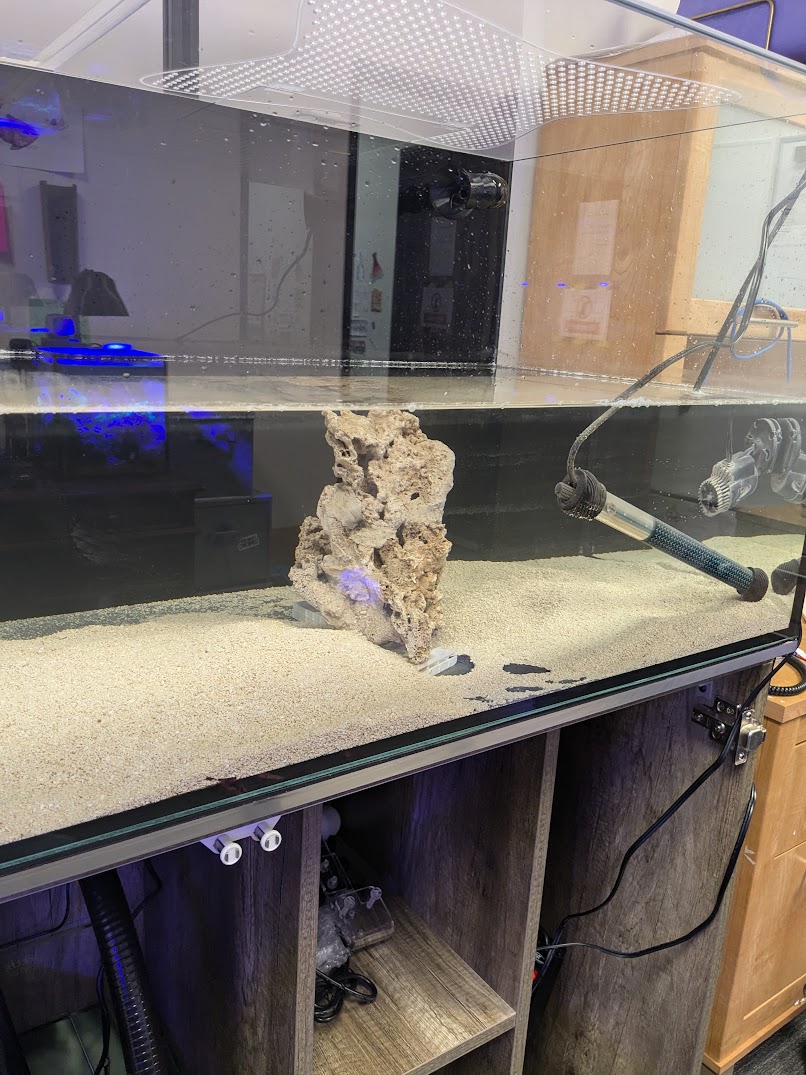
And here's the return from the sump into the DT (one return nozzle with random flow generator):
1738017170924.jpeg


Note: I haven't put the tank into operation yet, just leak tested and starting to put in sand, water and rocks.

I understand that if the pump cuts off, purposefully or not, then the water in the drain tubes will go into the sump until no more water is going into the overflow, i.e., once the tank level is below the overflow box grates.

I've also been made to understand that the water in the return pipes will drop back into the sump in the return chamber, but that a siphon could form sucking water out of the tank and into the sump, potentially causing an flood in the sump. I.e., as gravity pulls the water in the return pipes back down to the sump, the displaced volume will pull tank water in the the return line that continues flowing into the sump until the water level reaches the opening of the RFG and lets air fill into the tube. Is my understanding correct?

Someone said in one of my previous posts and elsewhere that I've read that you drill a hole in the return pipes to prevent this siphon from happening. I don't understand where you would do that or how it would work during regular operation. Won't a hole in the return pipe mean that water pumped from the sump up the return tube would exit both the return RFG as well as the drilled hole, spraying water everywhere?

Sorry for the naive post, but thanks for the explanations!

 
I drill on the plumbing when it first enters the tank. This just gives a chance for air to break the siphon. Other option is to aim the end of the return higher and then once it hits air the siphon will break. Understand also that the holes will clog with algae and such and you need to clean regularly.
 
I'm an AIO guy, not a sump guy, but now I'm doing sumps. Here's my sump:
1738017125910.jpeg

And here's the return from the sump into the DT (one return nozzle with random flow generator):
1738017170924.jpeg


Note: I haven't put the tank into operation yet, just leak tested and starting to put in sand, water and rocks.

I understand that if the pump cuts off, purposefully or not, then the water in the drain tubes will go into the sump until no more water is going into the overflow, i.e., once the tank level is below the overflow box grates.

I've also been made to understand that the water in the return pipes will drop back into the sump in the return chamber, but that a siphon could form sucking water out of the tank and into the sump, potentially causing an flood in the sump. I.e., as gravity pulls the water in the return pipes back down to the sump, the displaced volume will pull tank water in the the return line that continues flowing into the sump until the water level reaches the opening of the RFG and lets air fill into the tube. Is my understanding correct?

Someone said in one of my previous posts and elsewhere that I've read that you drill a hole in the return pipes to prevent this siphon from happening. I don't understand where you would do that or how it would work during regular operation. Won't a hole in the return pipe mean that water pumped from the sump up the return tube would exit both the return RFG as well as the drilled hole, spraying water everywhere?

Sorry for the naive post, but thanks for the explanations!
If there is a tiny hole at or just below the water line of the aquarium, when the water drops below the hole and air flows into the hole to break the siphon. The hole can be small, 1/16 th of an inch. And yes, when water is flowing through the return a tiny jet of water flows through the hole.
 
It’s not that a siphon “could” form but that a siphon “will” form. The mechanism is the exact same as when you siphon water out for a water change.

The siphon will continue until it sucks in enough air to break the siphon. Same as when you remove a water change siphon from the tank.

Without modifying the return nozzle this means it’ll siphon until the water surface reaches the nozzle enough for it to suck in air.

You can drill a hole in the return nozzle/plumbing inside the tank, just below the water line. This will let it suck in air without draining the tank all the way to the nozzle opening.

The hole may need to be fairly large, and if the nozzle constricts to cause a water jet then a fair amount of flow will also go out the hole, so don’t angle it up…
 
It can be a small hole just make sure it stays clear. A not pro but amateur tip make sure the hole faces the back wall or down not up because water will be coming out of the hole when the return is running :face-with-hand-over-mouth: . If you Google syphon break it brings up a lot of info with examples.

EDIT: the higher you drill the hole the less water will drain down. Sorry is you have that figured out already. I made a lot of mistakes early on lol.
 
I drill on the plumbing when it first enters the tank. This just gives a chance for air to break the siphon. Other option is to aim the end of the return higher and then once it hits air the siphon will break. Understand also that the holes will clog with algae and such and you need to clean regularly.

If there is a tiny hole at or just below the water line of the aquarium, when the water drops below the hole and air flows into the hole to break the siphon. The hole can be small, 1/16 th of an inch. And yes, when water is flowing through the return a tiny jet of water flows through the hole.

It’s not that a siphon “could” form but that a siphon “will” form. The mechanism is the exact same as when you siphon water out for a water change.

The siphon will continue until it sucks in enough air to break the siphon. Same as when you remove a water change siphon from the tank.

Without modifying the return nozzle this means it’ll siphon until the water surface reaches the nozzle enough for it to suck in air.

You can drill a hole in the return nozzle/plumbing inside the tank, just below the water line. This will let it suck in air without draining the tank all the way to the nozzle opening.

The hole may need to be fairly large, and if the nozzle constricts to cause a water jet then a fair amount of flow will also go out the hole, so don’t angle it up…

Thanks everyone. Follow-up questions:

Here is the return nozzle:
1738019583597.jpeg


I also looked at where the bottom of that return nozzle lines up to the overflow box grates with a pen laser:
1738019616118.jpeg


And measured the difference:
1738019658141.jpeg

So in theory, after the DT is done draining the volume over the overflow grates back into the sump, it would still be sucking another inch of height in volume down the return before getting to the drilled "siphon break" hole. Correct?

Should I drill the hole in the side of the return rather than below it?

I also wondered whether the RFG would break the siphon or not:
1738019774348.jpeg


If that were the case, then drilling the hole in the bottom would effectively do nothing, would it, because the water level would stop lowering before getting to the bottom of the return tube?

Thanks again for entertaining my questions. I don't know why they would make the tank this way knowing that it will pull back so much water. Why not drill the return hole higher up and pre-drill the siphon break?
 
If your sump is large enough it may be able to hold the siphoned water until the siphon is broken at the discharge of the flow generator discharge (when it is exposed to air) and you would not need to drill an anti-siphon hole. As mentioned above you can test it, but if you later decide to change the direction of the flow generator down you could get a lot more water in the sump and should retest.

If you do need to drill a hole, you want it on the top of the random flow generator, not the bottom, to minimize the volume of water that will backflow to the sump before the hole is exposed to air and breaks the siphon. Putting it on the bottom accomplishes nothing because the siphon will already be broken by the discharge of the flow generator before the water level reaches the hole on the bottom.

The pressure at the random flow generator is usually low enough that you will not get enough water flow out of the anti-siphon hole to be a problem (i.e. breaking the water surface) if it is normally even slightly submerged.
 
If your sump is large enough it may be able to hold the siphoned water until the siphon is broken at the discharge of the flow generator discharge (when it is exposed to air) and you would not need to drill an anti-siphon hole. As mentioned above you can test it, but if you later decide to change the direction of the flow generator down you could get a lot more water in the sump and should retest.

If you do need to drill a hole, you want it on the top of the random flow generator, not the bottom, to minimize the volume of water that will backflow to the sump before the hole is exposed to air and breaks the siphon. Putting it on the bottom accomplishes nothing because the siphon will already be broken by the discharge of the flow generator before the water level reaches the hole on the bottom.

The pressure at the random flow generator is usually low enough that you will not get enough water flow out of the anti-siphon hole to be a problem (i.e. breaking the water surface) if it is normally even slightly submerged.
Wouldn't a hole in the top of the RFG shoot water straight up out of the tank?
 
Well let me tell you how not to fix this. Dont bend the end of the return tubes so that they are higher in the tank. That will work until they get bumped down and the power goes off.

For the highest siphon break hole, put a few 90's inside the tank to raise the entrance hole and drill the 90. It adds ugly fittings but they can prevent floods..
 
I have those interlocking tubes also. I actually have mine (x2) right at the water surface. I find it causes more surface turnover for aeration, and gives my LED's a nice shimmer. I have never accidentally bumped them down, but if I did the lack of surface movement and shimmer would be my alarm. That being said, always cut your power for a test run to make sure your sump can handle the volume to the skimmer bottom plus that little bit of surface water you are going to get.
 
I'm an AIO guy, not a sump guy, but now I'm doing sumps. Here's my sump:
1738017125910.jpeg

And here's the return from the sump into the DT (one return nozzle with random flow generator):
1738017170924.jpeg


Note: I haven't put the tank into operation yet, just leak tested and starting to put in sand, water and rocks.

I understand that if the pump cuts off, purposefully or not, then the water in the drain tubes will go into the sump until no more water is going into the overflow, i.e., once the tank level is below the overflow box grates.

I've also been made to understand that the water in the return pipes will drop back into the sump in the return chamber, but that a siphon could form sucking water out of the tank and into the sump, potentially causing an flood in the sump. I.e., as gravity pulls the water in the return pipes back down to the sump, the displaced volume will pull tank water in the the return line that continues flowing into the sump until the water level reaches the opening of the RFG and lets air fill into the tube. Is my understanding correct?

Someone said in one of my previous posts and elsewhere that I've read that you drill a hole in the return pipes to prevent this siphon from happening. I don't understand where you would do that or how it would work during regular operation. Won't a hole in the return pipe mean that water pumped from the sump up the return tube would exit both the return RFG as well as the drilled hole, spraying water everywhere?

Sorry for the naive post, but thanks for the explanations!

Ok, let’s start at the beginning:
1) Any pipe between the display and sump can drain water back down until it a) gets below the fitting in the glass, and b) doesn’t suck in air. If it sucks in air, it will only go down to the bottom rim of the inside of the pipe, then stop.
2) The easiest way to stop problems is introduce air asap into the lines. This can be done by having the outlets near (but still under) the surface. Or, you can add a hole, which will then clog with biofilm/sponges/algae and need cleaning. Me, I prefer a nice big opening.
3) we can make sure this isn’t an issue by properly filling the system to start, marking those levels, and then keeping the amount of water in the system the same.

How do we do #3? Fill the tank until it just starts trickling into the sump. Then fill the sump until you have 1-2 inches left before it overflows. Then turn on the pump. If it doesn’t work because you don’t have enough water, it’s likely your sump is too shallow. But this is rare given most sumps are 6-8” taller than their running heights.
 
Rocket Engineer has it right for the test except I go a bit further and have the whole overflow area involved. I test with a simple shut down and realize that a lengthy power outage the whole overflow will seep down to the sump as the pipes should not be glued inside the overflow.
 
Another option, although it’s not for everyone…

Just cut the nozzle off while it’s still horizontal, after the first “bulb”, then let your power heads manage circulation.
 
That RFG has an anti-siphon built in. That "Air Goes In Here" is your siphon break. Have that close enough to the surface that when the pump shuts off it sucks air in there and breaks the siphon. If it's near or at the bottom of the weirs it'll break siphon before the water gets below the weirs.
 

TOP 10 Trending Threads

ARE YOU READY TO CONFESS TO CRAZIEST, DUMBEST, FUNNIEST THING YOU’VE EVER DONE IN REEFING?

  • Yeah, I'll confess! (Share your story in the comments!)

    Votes: 33 57.9%
  • Nah, I'll keep mine a secret...(Don't be like that, share with the class!)

    Votes: 24 42.1%
Back
Top
Home
Post thread…
Market
What's new