




Randy Holmes-Farley
Reef Chemist
View Badges
Staff member
Super Moderator
Ultimate Member
Partner Member 2027
Excellence Award
R2R App User
Expert Contributor
Article Contributor
R2R Research
My Tank Thread
This thread is for the general discussion of the Article Forget Redfield, Liebig is the Man!. Please add to the discussion here.
Forget Redfield, Liebig is the Man!
By Randy Holmes-Farley
I’ll start with a blunt statement: you might be better off never having heard of Redfield. I would contend that Liebig and his Law of the Minimum is the better way for reefers to think of what is growth limiting for algae, corals, and most anything in a reef aquarium. It won’t solve all your reefing problems to know about Liebig, but it may save you from wasting effort on trying to match the Redfield Ratio!
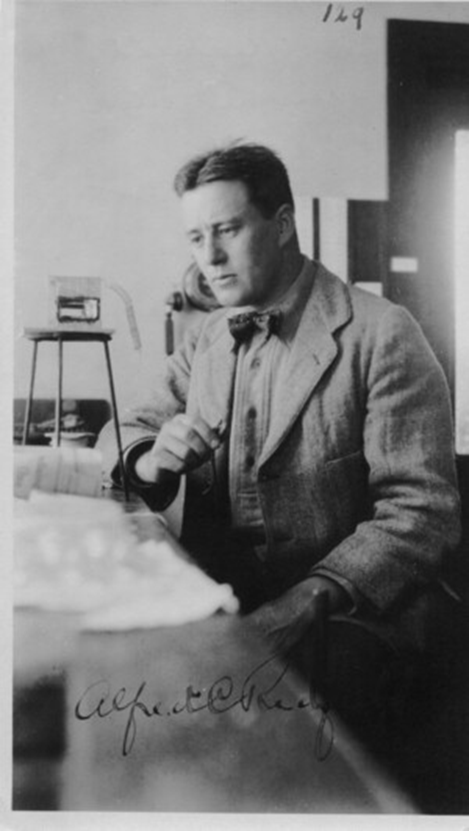
Figure 1. Alfred Redfield
https://history.archives.mbl.edu/dc-subject-lcsh/redfield-alfred-c-alfred-clarence-1890-1983
Redfield Ratio
A number of folks, including me, have tried to correct the misinformation that churns its way through the internet about the Redfield Ratio and how it relates to reef aquaria. I’m not going to belabor that point and folks can read more about it in various articles and discussions such as this one:
https://www.reef2reef.com/threads/redfield-isn’t-your-friend.1151513/
In short, the Redfield Ratio is the ratio of three elements in marine plankton, C, N, and P. That also happens to match the element ratio in the deep oceans. That ratio in numbers of atoms (not ppm) is 106:16:1. In an approximate sense, it likely also represents the C/N/P ratio found in many organisms since the basics of biology and the molecules of life are similar in different organism tissues (bones and skeletons being a notable exception). Wikipedia has a decent write up of it:
https://en.wikipedia.org/wiki/Redfield_ratio
What the Redfield Ratio NOT
The Redfield ratio says NOTHING about the ratios or even the absolute levels of elements that an organism might prefer to have in the water for optimal growth. Not a single study says the Redfield Ratio is optimal for growth rate, independent of absolute levels. Only reefers misunderstanding it make that claim. One simple fact is that no matter what ratio one believes is perfect, if both N and P are too low or too high at that same ratio, problems will surely arise. It may be the case that some values of N and P that are good for growth also happen to close to the Redfield ratio, but multiply both by a thousand, giving the same ratio, and it is unlikely growth will still be optimal.
Is the Redfield Ratio Good for Anything?
Maybe. It does tell use approximately the ratio of elements taken up by growing plankton and possibly other organisms. Thus, when corals or algae or bacteria or whatever are growing, if they take their needed C N and P from the water, the levels remaining in the water will be reduced in roughly that ratio. Thus, it tells us that if you have 1 ppm phosphate and 1 ppm nitrate as the only source of N, growing algae or bacteria cannot take up all of that phosphate since they will surely run out of N first.
It also gives a little guidance about what ratios might come in foods. That’s not perfect since some food ingredients differ greatly (fish meal has bones which are super high in P, for example). In general, this ratio is why a reef tank might have 10 ppm nitrate, and far, far less phosphate (say, 0.1 ppm). It’s because the molecules of life contain a lot less P than N. (we will ignore C since it is complicated by CO2 and the fact that we do not regularly measure it).
Figure 2. Justus von Liebig

https://www.britannica.com/biography/Justus-Freiherr-von-Liebig
Bring on Liebig!
Justus von Liebig lived a hundred years before Redfield.
https://en.wikipedia.org/wiki/Justus_von_Liebig
His Law of the Minimum was developed first for agriculture. In short, it states that:
Growth is controlled not by total resources available, but by the scarcest resource.
That scarcest resource is called the limiting resource, or limiting nutrient. It can be lots of things, and in a reef tank, that would include various sources of N (nitrogen), P (phosphorous), a bunch of required trace elements such as iron and manganese, light, space to grow, and more.
What is scarcest is not determined purely by concentration, but by how readily an organism is able to take that nutrient from the water. Different organisms in the same water may have different limiting resources (nutrients) because they may have different abilities to get it out of the water and into their tissues.
Importantly, there is typically only one limiting nutrient at a time for a single organism. If N availability is very low, and is the limiting nutrient, increasing phosphate from 0.05 ppm to 0.5 ppm to 5 ppm is not going to make it grow faster. There is no substitution of one limiting nutrient for another (except in very unusual cases; never N for P or P for N).
Some reefers call algae and other organisms taking up nutrients as “feeding” on those nutrients. I heard that in a reefer video today. That sets up the false premise that algae might feed on one nutrient or another equally well, like a hot dog vs an apple, when in reality, both are needed. Both must be taken up for growth.
How Might Reefers use this Principle?
There are a number of ways reefers can incorporate this idea into their thinking.
1. If something (say, iron or phosphate) is very low, such that it is the limiting factor in coral or algae growth, adding more of anything (everything) else is not going to make it grow any faster. It may make other organisms grow faster, if those are limited by the increased element, but not the original organism that is limited by the iron or phosphate.
2. In the opposite sense, if an organisms is limited by an element (say, N very low), and not by something else (say, phosphate is very high), lowering phosphate is not going to make that organism grow more slowly, at least not until it is so low that it becomes the limiting nutrient instead of the original N.
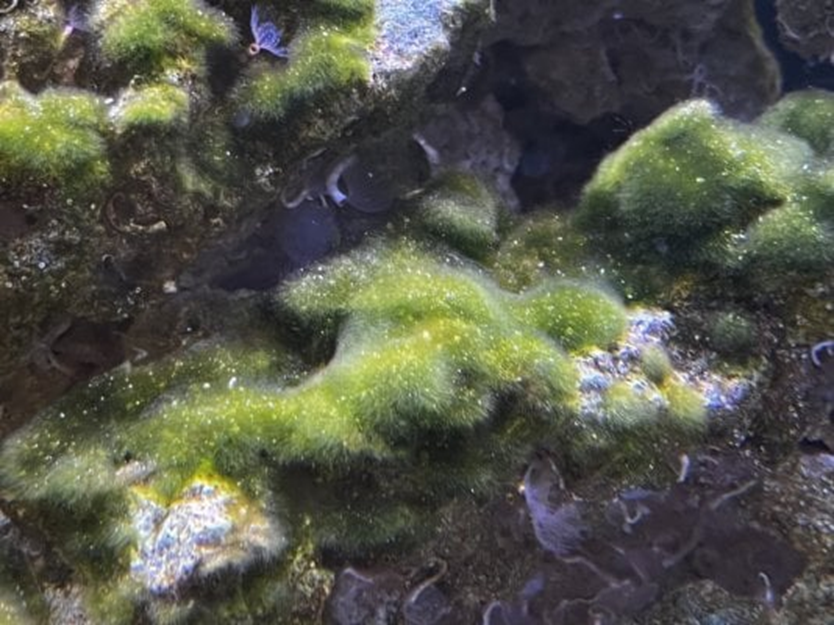
Figure 3. The reef aquarium of a Reef2Reef member who had a bad algae problem.
What are the Limiting Nutrient Levels for Algae?
If we knew that for every algae type for every element, we might have some good control tools, but we do not. It is also true that organisms can adapt to low (or high) levels of nutrients, and sometimes a limiting nutrient is only limiting until the organism alters its biology (uptake transporters, for example) to deal with it needing to work harder to obtain something. That is why dropping nutrient levels fast can be a big problem for corals when slow lowering is not; the organisms ramp up their uptake capability.
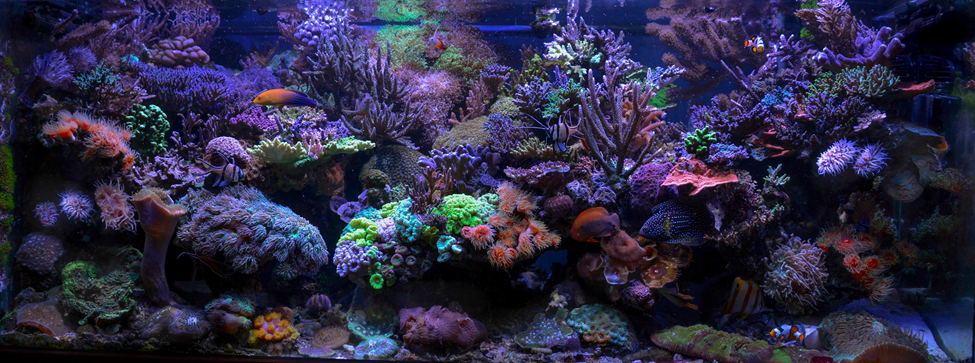
Figure 4. A very high nutrient system maintained by Richard Ross. It does not have an algae problem despite nitrate sometimes being above 100 ppm and phosphate being above 1 ppm.
We do know some things.
In some parts of the world’s oceans, iron is a limiting resource, including parts of the equatorial Pacific.
https://www.sciencedirect.com/science/article/abs/pii/S0967064597000593
Scientists have dosed ion and seen an increase in plankton. Thus, reefers should NOT assume it is always N or P. I personally think trace element limitation may be why algal turf scrubbers can limit algae in a display tank when nitrate and phosphate would suggest it could grow.
In other areas of the oceans, nitrate levels below 0.05 ppm have been shown to limit phytoplankton growth:
https://aslopubs.onlinelibrary.wiley.com/doi/10.4319/lo.1966.11.3.0393
We do not have similar values for other organisms, but it shows that nitrate can be limiting, but to do so, it may have to be very low, and may be why nitrate lowering often fails to deter algae before corals suffer.
Similar data for phosphate suggests the values also need to be fairly low to limit phytoplankton growth, on the order of 0.03 ppm. This too makes the point I alluded to earlier: lowering phosphate from 1 ppm to 0.1 ppm won’t have any growth rate effect on those organisms, because phosphate won’t become limiting until those even lower levels.
The following article suggests that light in winter is actually the limiting factor for plankton, rather than a nutrient, demonstrating that what is growth limiting can be a non-chemical need.
https://www.sciencedirect.com/scien...uggest,silicate source to surrounding waters.
Summary
You may be disappointed that by this point in the article I am not providing a way to solve algae problems or grow corals faster. Unfortunately, that's not so easily accomplished. What I do hope this article does is allow you to understand some of the deeper aspects of how nutrients control the growth of organisms, and thereby avoid some of the pitfalls of falling under the Redfield spell.
Happy Reefing!
Forget Redfield, Liebig is the Man!
By Randy Holmes-Farley
I’ll start with a blunt statement: you might be better off never having heard of Redfield. I would contend that Liebig and his Law of the Minimum is the better way for reefers to think of what is growth limiting for algae, corals, and most anything in a reef aquarium. It won’t solve all your reefing problems to know about Liebig, but it may save you from wasting effort on trying to match the Redfield Ratio!
Figure 1. Alfred Redfield
https://history.archives.mbl.edu/dc-subject-lcsh/redfield-alfred-c-alfred-clarence-1890-1983
Redfield Ratio
A number of folks, including me, have tried to correct the misinformation that churns its way through the internet about the Redfield Ratio and how it relates to reef aquaria. I’m not going to belabor that point and folks can read more about it in various articles and discussions such as this one:
https://www.reef2reef.com/threads/redfield-isn’t-your-friend.1151513/
In short, the Redfield Ratio is the ratio of three elements in marine plankton, C, N, and P. That also happens to match the element ratio in the deep oceans. That ratio in numbers of atoms (not ppm) is 106:16:1. In an approximate sense, it likely also represents the C/N/P ratio found in many organisms since the basics of biology and the molecules of life are similar in different organism tissues (bones and skeletons being a notable exception). Wikipedia has a decent write up of it:
https://en.wikipedia.org/wiki/Redfield_ratio
What the Redfield Ratio NOT
The Redfield ratio says NOTHING about the ratios or even the absolute levels of elements that an organism might prefer to have in the water for optimal growth. Not a single study says the Redfield Ratio is optimal for growth rate, independent of absolute levels. Only reefers misunderstanding it make that claim. One simple fact is that no matter what ratio one believes is perfect, if both N and P are too low or too high at that same ratio, problems will surely arise. It may be the case that some values of N and P that are good for growth also happen to close to the Redfield ratio, but multiply both by a thousand, giving the same ratio, and it is unlikely growth will still be optimal.
Is the Redfield Ratio Good for Anything?
Maybe. It does tell use approximately the ratio of elements taken up by growing plankton and possibly other organisms. Thus, when corals or algae or bacteria or whatever are growing, if they take their needed C N and P from the water, the levels remaining in the water will be reduced in roughly that ratio. Thus, it tells us that if you have 1 ppm phosphate and 1 ppm nitrate as the only source of N, growing algae or bacteria cannot take up all of that phosphate since they will surely run out of N first.
It also gives a little guidance about what ratios might come in foods. That’s not perfect since some food ingredients differ greatly (fish meal has bones which are super high in P, for example). In general, this ratio is why a reef tank might have 10 ppm nitrate, and far, far less phosphate (say, 0.1 ppm). It’s because the molecules of life contain a lot less P than N. (we will ignore C since it is complicated by CO2 and the fact that we do not regularly measure it).
Figure 2. Justus von Liebig
https://www.britannica.com/biography/Justus-Freiherr-von-Liebig
Bring on Liebig!
Justus von Liebig lived a hundred years before Redfield.
https://en.wikipedia.org/wiki/Justus_von_Liebig
His Law of the Minimum was developed first for agriculture. In short, it states that:
Growth is controlled not by total resources available, but by the scarcest resource.
That scarcest resource is called the limiting resource, or limiting nutrient. It can be lots of things, and in a reef tank, that would include various sources of N (nitrogen), P (phosphorous), a bunch of required trace elements such as iron and manganese, light, space to grow, and more.
What is scarcest is not determined purely by concentration, but by how readily an organism is able to take that nutrient from the water. Different organisms in the same water may have different limiting resources (nutrients) because they may have different abilities to get it out of the water and into their tissues.
Importantly, there is typically only one limiting nutrient at a time for a single organism. If N availability is very low, and is the limiting nutrient, increasing phosphate from 0.05 ppm to 0.5 ppm to 5 ppm is not going to make it grow faster. There is no substitution of one limiting nutrient for another (except in very unusual cases; never N for P or P for N).
Some reefers call algae and other organisms taking up nutrients as “feeding” on those nutrients. I heard that in a reefer video today. That sets up the false premise that algae might feed on one nutrient or another equally well, like a hot dog vs an apple, when in reality, both are needed. Both must be taken up for growth.
How Might Reefers use this Principle?
There are a number of ways reefers can incorporate this idea into their thinking.
1. If something (say, iron or phosphate) is very low, such that it is the limiting factor in coral or algae growth, adding more of anything (everything) else is not going to make it grow any faster. It may make other organisms grow faster, if those are limited by the increased element, but not the original organism that is limited by the iron or phosphate.
2. In the opposite sense, if an organisms is limited by an element (say, N very low), and not by something else (say, phosphate is very high), lowering phosphate is not going to make that organism grow more slowly, at least not until it is so low that it becomes the limiting nutrient instead of the original N.
Figure 3. The reef aquarium of a Reef2Reef member who had a bad algae problem.
What are the Limiting Nutrient Levels for Algae?
If we knew that for every algae type for every element, we might have some good control tools, but we do not. It is also true that organisms can adapt to low (or high) levels of nutrients, and sometimes a limiting nutrient is only limiting until the organism alters its biology (uptake transporters, for example) to deal with it needing to work harder to obtain something. That is why dropping nutrient levels fast can be a big problem for corals when slow lowering is not; the organisms ramp up their uptake capability.
Figure 4. A very high nutrient system maintained by Richard Ross. It does not have an algae problem despite nitrate sometimes being above 100 ppm and phosphate being above 1 ppm.
We do know some things.
In some parts of the world’s oceans, iron is a limiting resource, including parts of the equatorial Pacific.
https://www.sciencedirect.com/science/article/abs/pii/S0967064597000593
Scientists have dosed ion and seen an increase in plankton. Thus, reefers should NOT assume it is always N or P. I personally think trace element limitation may be why algal turf scrubbers can limit algae in a display tank when nitrate and phosphate would suggest it could grow.
In other areas of the oceans, nitrate levels below 0.05 ppm have been shown to limit phytoplankton growth:
https://aslopubs.onlinelibrary.wiley.com/doi/10.4319/lo.1966.11.3.0393
We do not have similar values for other organisms, but it shows that nitrate can be limiting, but to do so, it may have to be very low, and may be why nitrate lowering often fails to deter algae before corals suffer.
Similar data for phosphate suggests the values also need to be fairly low to limit phytoplankton growth, on the order of 0.03 ppm. This too makes the point I alluded to earlier: lowering phosphate from 1 ppm to 0.1 ppm won’t have any growth rate effect on those organisms, because phosphate won’t become limiting until those even lower levels.
The following article suggests that light in winter is actually the limiting factor for plankton, rather than a nutrient, demonstrating that what is growth limiting can be a non-chemical need.
https://www.sciencedirect.com/scien...uggest,silicate source to surrounding waters.
Summary
You may be disappointed that by this point in the article I am not providing a way to solve algae problems or grow corals faster. Unfortunately, that's not so easily accomplished. What I do hope this article does is allow you to understand some of the deeper aspects of how nutrients control the growth of organisms, and thereby avoid some of the pitfalls of falling under the Redfield spell.
Happy Reefing!
Last edited by a moderator:









