Getting ready for a peninsula

twotangs

Active Member
View Badges
Joined
Feb 16, 2012
Messages
301
Reaction score
83
Location
Shermans Dale PA
Rating - 0%
0   0   0
Hi -
My name is Greg and I live in Shermans Dale, PA. I have been keeping fish for a long time and have had some sort of reef tank for 25 or more years. I have mostly been an observer here on R2R, adding a small comment here and there. I have learned a lot from other peoples systems - both what I like and what I don't and what may apply to our setup here. Thank you to all who post your successes and failures as it helps so many.

To get you up to speed on where I am at aquarium wise.......I had a 120 in-wall (really a converted closet) in our living room. You can see it was a well establish reef, till a day in summer about two years ago I went to work not realizing the GFI had tripped. 12 hours later the tank had that smell of rotting eggs, all my fish were dead, the corals took a big hit as well. I was pretty crushed. I powered it back up, removed the dead and dying and it pretty much just sat for several months. Do I just want to get out all together or maybe have a do over? The display did have some issue that I wanted to resolve - mostly pests in the form of flat worms and bubble algae. Also a good problem to have was some of the colonies were getting really big. After some thought we decided to move forward. The new display will be a peninsula with the sump and a second aquarium in the basement. I am big into DIY, not so much into colored PVC pipe, like equipment to function but not to be seen, minimal electrical cords going into the display and a pest free environment.

Here is my 120 back in the day:
120.JPG


This is the last pic I took before I removed the 120. It shows that we converted a closet. The back side is the foyer, the new tank will be a custom peninsula viewable from the living room and the foyer:

old tank living room.JPG


We hope to have the construction part done over the winter (need to install a header to allow for the peninsula) so the new tank can be sized and ordered. So this will be a longer term project. First I want to move to the basement to put in place some of my ideas for the main display in the smaller 70 gallon tank. My thinking is I can workout the issues there so when the time comes to put in the new tank I will have the plan in place.

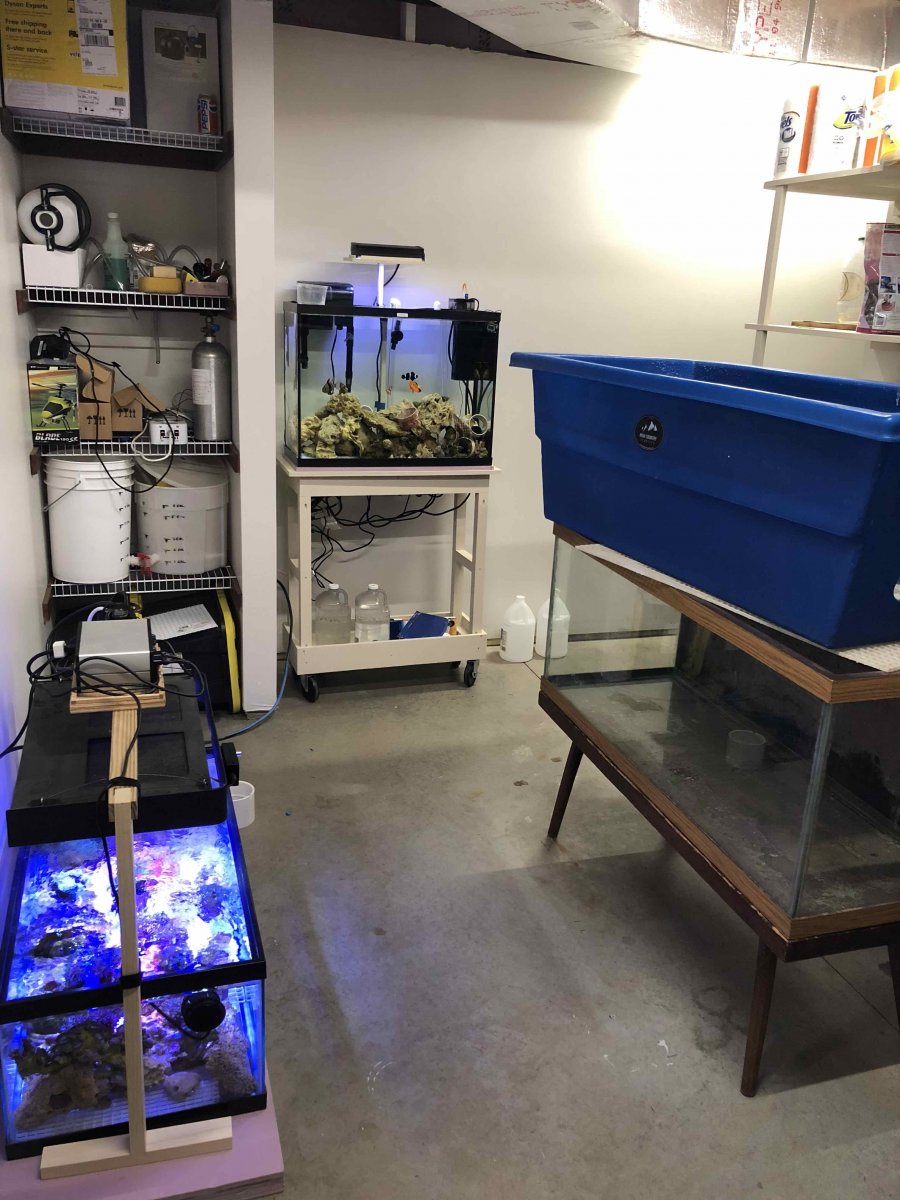
About a year ago we redid the "fish room" downstairs. Here is what it started like:

Fish room 1st revision.jpg


All well and good but a few things I need to change......I want to drill the 70 to allow for a bean style overflow, the 40 breeder will be okay for coral QT but I need self contained QT for fish that I can move around and out of the fish room in case I end up with a fish that has ick. I also need to add some more support to the stand the 70 sits on.

Over the weekend I setup my 37 gallon QT tank for fish. It will serve as a temporary location till I get the 70 drilled and plumbed. It is on wheels so I can move it around, includes a UV, Tunze DOC skimmer, HOB filter and a low intensity light. Pending how I am treating; things can be turned off should said treatment call for that. But for now just a temp location for my fish.

Self contained fish QT.jpg


The 40 is just sitting on the floor with a few corals in there, this will work for now:

temp home for corals.jpg


Here it is all move out:

temporary locations.jpg


And the current state of the fish room, kind of a mess........
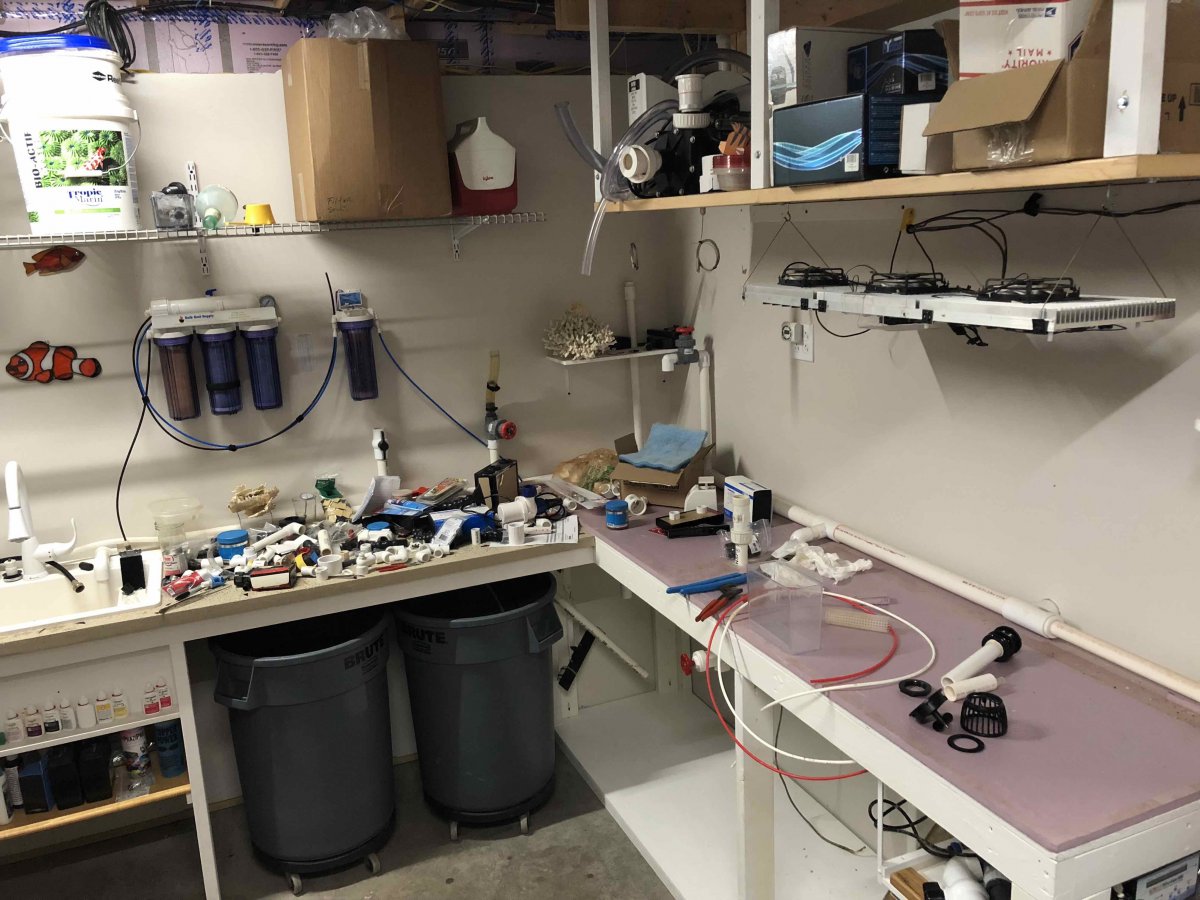
in progress.jpg


The current todo list:
1- clean up some of the equipment (skimmer, pump, MD-40)
2- reenforce the stand a little
3- run another PVC pipe in the wall to support the Bean from upstairs
4- drill the 70 and plumb it to the sump
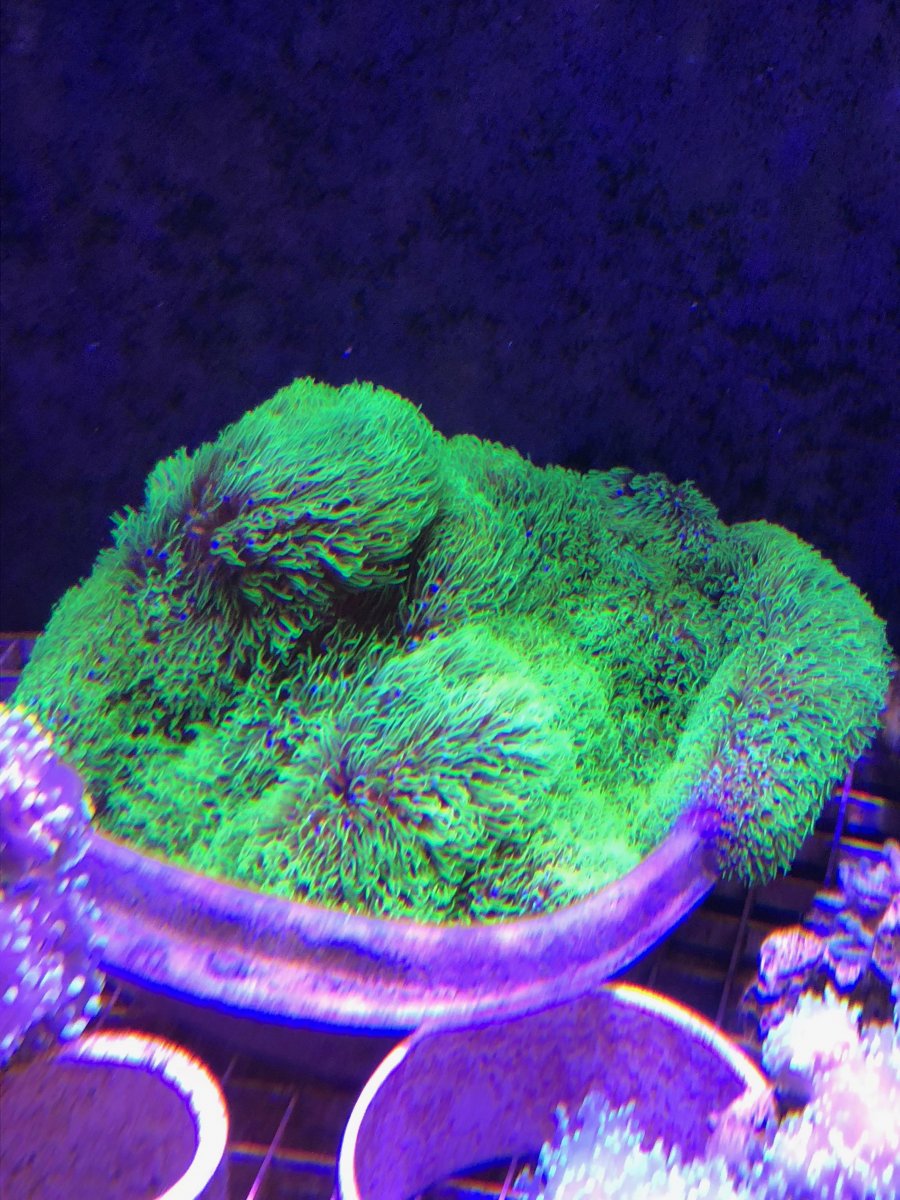
GSP.jpg
 
Last edited:

NY_Caveman

likes words, fish and arbitrary statistics
View Badges
Joined
Sep 8, 2017
Messages
17,010
Reaction score
101,309
Location
New York
Rating - 0%
0   0   0
Very nice! Sorry you had catastrophe on that beautiful tank. Glad to see a new build though!
 
OP
OP
twotangs

twotangs

Active Member
View Badges
Joined
Feb 16, 2012
Messages
301
Reaction score
83
Location
Shermans Dale PA
Rating - 0%
0   0   0
Thanks all - kind of funny that I got that GSP pic in there. Did not intend to add that one. GSP's have a nice color and I like the movement but once established they too fall into the "pest" category as they are so aggressive.
 

Janci

Staghorns will prevail
View Badges
Joined
Mar 14, 2016
Messages
3,021
Reaction score
9,225
Location
Belgium
Rating - 0%
0   0   0
Amazed by your previous set up and fish room.
Very clean and organized.
I am sure the new build will turn out awesome as well.

Following along.
 
OP
OP
twotangs

twotangs

Active Member
View Badges
Joined
Feb 16, 2012
Messages
301
Reaction score
83
Location
Shermans Dale PA
Rating - 0%
0   0   0
The heart of my system is the Reeflo Barracuda pump. Moves a lot of water and can handle the push between floors. I keep one on the shelf as a "hot spare" while the other is pumping away. The thing about these pumps is they require service. Like all pumps they needs cleaned from time to time and for these a seal replacement is needed. I have found they will last about 24 months maybe longer. I try to replace them every 18 months or so.
Here are the steps I take when replacing the seal:

Here is the pump I just took off-line
seal replacement 1.jpg


When you take it apart and unscrew the impeller you can see the seal. Even through they are stainless steel, you can see they are starting to rust.

old seal.jpg


After you remove the four screws holing the back of the volute to the motor you can remove the volute to get to the seal and expose the motor shaft.:

shaft.jpg


You can see how the salt will corrode the shaft which is why I will replace the seals before they "need" to be.

A socket is a good "tool" to use to knock out the seal from the Volute:

using socket to pop out seal.jpg


Next time to go to the sink and clean all the parts so you can reassemble.

One thing that needs to be done is to clean the motor shaft. I use some 100 grit sand paper and then plug in the motor. I use the sand paper to clean the corrosion off the motor shaft. After the shaft is clean it will look something like this:

cleaned shaft.jpg


Here is everything ready to put back together:

parts cleaned ready to reassemble.jpg


Next take the back of the volute and add a small amount of silicone rubber around the hole where the seal fits

just a little silicone for the seal.jpg


Then insert the new seal. Sometimes the seals are tight to get back in if that is the case find another socket the right size (needs to just touch the outer ring of the seal - NOT the carbon part of the seal) and tap it in.

Before you put the back of the volute with the new seal back on the motor get some plumbers grease and coat the shaft up to the threads. You don't need a lot you just want to help protect the shaft the best you can. Next get some silicone grease and apply a little to the threads on the shaft. This will make the removal of the impeller at next service so much easier. Now put the volute back on the motor.

new seal.jpg


The new seal comes with a new ceramic that goes into the impeller. Pry out the old one and replace with the new one. Next get some rubbing alcohol and wipe off the ceramic part and only the carbon part on the other side of the seal. You do not want any grease/dirt/oil on the seal at all. Then screw on the impeller to the shaft. A common screwdriver holding the shaft from the opposite end helps when tightening the impeller.
cleaned impeller .jpg


Next make sure the rubber O-ring going around the front of the volute is clean and in place. Then put the front the volute back on and tighten all the bolts. Let the pump sit for at least 24 hours for the silicone to cure.

All ready for the next "cycle"
cleaned pump ready to go.jpg
 

Janci

Staghorns will prevail
View Badges
Joined
Mar 14, 2016
Messages
3,021
Reaction score
9,225
Location
Belgium
Rating - 0%
0   0   0
The heart of my system is the Reeflo Barracuda pump. Moves a lot of water and can handle the push between floors. I keep one on the shelf as a "hot spare" while the other is pumping away. The thing about these pumps is they require service. Like all pumps they needs cleaned from time to time and for these a seal replacement is needed. I have found they will last about 24 months maybe longer. I try to replace them every 18 months or so.
Here are the steps I take when replacing the seal:

Here is the pump I just took off-line
seal replacement 1.jpg


When you take it apart and unscrew the impeller you can see the seal. Even through they are stainless steel, you can see they are starting to rust.

old seal.jpg


After you remove the four screws holing the back of the volute to the motor you can remove the volute to get to the seal and expose the motor shaft.:

shaft.jpg


You can see how the salt will corrode the shaft which is why I will replace the seals before they "need" to be.

A socket is a good "tool" to use to knock out the seal from the Volute:

using socket to pop out seal.jpg


Next time to go to the sink and clean all the parts so you can reassemble.

One thing that needs to be done is to clean the motor shaft. I use some 100 grit sand paper and then plug in the motor. I use the sand paper to clean the corrosion off the motor shaft. After the shaft is clean it will look something like this:

cleaned shaft.jpg


Here is everything ready to put back together:

parts cleaned ready to reassemble.jpg


Next take the back of the volute and add a small amount of silicone rubber around the hole where the seal fits

just a little silicone for the seal.jpg


Then insert the new seal. Sometimes the seals are tight to get back in if that is the case find another socket the right size (needs to just touch the outer ring of the seal - NOT the carbon part of the seal) and tap it in.

Before you put the back of the volute with the new seal back on the motor get some plumbers grease and coat the shaft up to the threads. You don't need a lot you just want to help protect the shaft the best you can. Next get some silicone grease and apply a little to the threads on the shaft. This will make the removal of the impeller at next service so much easier. Now put the volute back on the motor.

new seal.jpg


The new seal comes with a new ceramic that goes into the impeller. Pry out the old one and replace with the new one. Next get some rubbing alcohol and wipe off the ceramic part and only the carbon part on the other side of the seal. You do not want any grease/dirt/oil on the seal at all. Then screw on the impeller to the shaft. A common screwdriver holding the shaft from the opposite end helps when tightening the impeller.
cleaned impeller .jpg


Next make sure the rubber O-ring going around the front of the volute is clean and in place. Then put the front the volute back on and tighten all the bolts. Let the pump sit for at least 24 hours for the silicone to cure.

All ready for the next "cycle"
cleaned pump ready to go.jpg


Very interesting.
Thank you for sharing.
 
OP
OP
twotangs

twotangs

Active Member
View Badges
Joined
Feb 16, 2012
Messages
301
Reaction score
83
Location
Shermans Dale PA
Rating - 0%
0   0   0
Picked up one of these to add to the 70:
Modular box.jpg


Should give me what I need for the Bean in this aquarium:

Modular top down.jpg


Now I just need to drill a couple holes. Measure three or four times and drill once. I hope to do this this weekend

Hole locations.jpg
 
OP
OP
twotangs

twotangs

Active Member
View Badges
Joined
Feb 16, 2012
Messages
301
Reaction score
83
Location
Shermans Dale PA
Rating - 0%
0   0   0
Over the weekend I had some time to work on the "poof of concept" idea I have. With everything removed from the stand I was able to add two more supports. I have noticed some deflection in the wood so that needed to be corrected. Had some paint left over from another project so gave the stand a quick refresh.
Now to drill the 70 for the Modular Marine over flow. First added some tape to the back of the glass:

getting ready to drill.jpg


Next was to create some water "pools" with plumbers putty and getting the bit and guide ready:

Making pools for water.jpg


When I first tried to start drilling, I quickly realized the bit that Modular Marine included was bent. Maybe it was just a cheap bit or got bent in shipping. I am sure if I reach back out to them they would have sent a replacement. Good thing I have a spouse that works with art glass and just happens to have a much better quality core drill just the right size - I think I will use that. The chrome bit is from Modular Marine the brass is from my wife :)

good bit VS crap bit.jpg


You can see how the chrome bit was wobbling trying to get it started

Anyhow - I used the guide to get the holes started, then just the drill to complete each hole. Took about 10 minute for each one, slow and steady with a couple short breaks along the way.

1st hole in progress.jpg

First hole completed.jpg

Drilling.jpg


Both holes drilled without too many issues - so that is good!

And the first test fit.......

box test fit.jpg
 
Last edited:
OP
OP
twotangs

twotangs

Active Member
View Badges
Joined
Feb 16, 2012
Messages
301
Reaction score
83
Location
Shermans Dale PA
Rating - 0%
0   0   0
Now that the tank is drilled I can begin the process of putting things back and laying out the plumbing for the internal flow and the Bean overflow.
For anybody that uses a Bean now, I have seen pictures with the valve on the full siphon right at the bottom of the overflow. I am guessing that is for ease of adjustment. Will I have an issue if I place the full siphon value down at the sump?

laying out the plumbing.jpg


Picked up a few of these - can't wait to see how they work:

RFG Nozzle.jpg


Here is how the fish room looks today - still a bit of a mess but at least the sump and tank are back in there.

getting some things back in place.jpg
 

Janci

Staghorns will prevail
View Badges
Joined
Mar 14, 2016
Messages
3,021
Reaction score
9,225
Location
Belgium
Rating - 0%
0   0   0
Now that the tank is drilled I can begin the process of putting things back and laying out the plumbing for the internal flow and the Bean overflow.
For anybody that uses a Bean now, I have seen pictures with the valve on the full siphon right at the bottom of the overflow. I am guessing that is for ease of adjustment. Will I have an issue if I place the full siphon value down at the sump?

laying out the plumbing.jpg


Picked up a few of these - can't wait to see how they work:

RFG Nozzle.jpg


Here is how the fish room looks today - still a bit of a mess but at least the sump and tank are back in there.

getting some things back in place.jpg

Hi, great progress.
There is normally no issue to put the gate valve at the sump side.
It will only take a little longer time to create a full siphon as there is more air in the pipe to be pushed out.
My valve is also close to the sump and it works fine.
 
OP
OP
twotangs

twotangs

Active Member
View Badges
Joined
Feb 16, 2012
Messages
301
Reaction score
83
Location
Shermans Dale PA
Rating - 0%
0   0   0
Hi, great progress.
There is normally no issue to put the gate valve at the sump side.
It will only take a little longer time to create a full siphon as there is more air in the pipe to be pushed out.
My valve is also close to the sump and it works fine.

Thank you for the feedback. Good to know for this tank which is right above the sump. What would your thought be in the valve at the sump when the sump is in the basement and the aquarium is on the first floor? Other than running up and down the steps a few times, any other concerns?.
 

Janci

Staghorns will prevail
View Badges
Joined
Mar 14, 2016
Messages
3,021
Reaction score
9,225
Location
Belgium
Rating - 0%
0   0   0
Thank you for the feedback. Good to know for this tank which is right above the sump. What would your thought be in the valve at the sump when the sump is in the basement and the aquarium is on the first floor? Other than running up and down the steps a few times, any other concerns?.

Even then I would still run the tank with the valve close to the sump in the basement.
But I hope someone else, who actually has the sump in the basement, can confirm this for you.
 
OP
OP
twotangs

twotangs

Active Member
View Badges
Joined
Feb 16, 2012
Messages
301
Reaction score
83
Location
Shermans Dale PA
Rating - 0%
0   0   0
My thought for the peninsula is to create some things I have seen when SCUBA diving. That is a sloping wall from the surface down to the sandy sea floor. I have some thoughts on how to create this upstairs but for my proof of concept aquarium I plan to use rock to create the wall and hide the closed loop. Yesterday I was able to put some fresh water back in the tank to see what kind of flow I would get. Here I am using a Vectra S1 in closed loop mode. The RFG's look to do what they advertise. The upper two returns are just wide flow LOC-Line returns. I may add two more RFG's in the future. The S1 is very silent. All this is working toward my goal of minimal pumps and cords going into the display.

FTS.jpg


pump.jpg


RFG.jpg


overflow.jpg
 
OP
OP
twotangs

twotangs

Active Member
View Badges
Joined
Feb 16, 2012
Messages
301
Reaction score
83
Location
Shermans Dale PA
Rating - 0%
0   0   0
Despite being sick over the Christmas Holiday I was able to make some progress. The 75 has the rock back in it and what corals I have left. The fish are still in the 37 gallon while the "new" tank settles in. I hope through all this process I have rid myself of some unwanted pests, All the star polyps, mushrooms, bubble algae and any remaining flatworms should all be gone. I still have some more arranging to do in the fish room but that process is almost completed. Here are some more pics of where things are as of now:

fts.JPG

fts - length.JPG


FTS corals.JPG

rock.JPG

In the above picture that is a pipe organ coral not GSP's, it really grows fast, may have to trim it back to keep it under control.

clam.JPG

And the newly installed overflow:
overflow.JPG
 

Janci

Staghorns will prevail
View Badges
Joined
Mar 14, 2016
Messages
3,021
Reaction score
9,225
Location
Belgium
Rating - 0%
0   0   0
This will look great when the fish are in.
 

TOP 10 Trending Threads

WHAT AMOUNT OF LIVE ROCK AND SAND SHOULD BE PRIORITIZED FOR OPTIMAL BIODIVERSITY/FILTRATION?

  • 100% live rock + bagged sand

    Votes: 34 28.1%
  • 100% dry rock + 100% live sand

    Votes: 41 33.9%
  • 50/50 live/dry rock, 50/50 live/bagged sand

    Votes: 27 22.3%
  • 75% live rock, 25% live sand

    Votes: 11 9.1%
  • 25% live rock, 75% live sand

    Votes: 8 6.6%
Back
Top