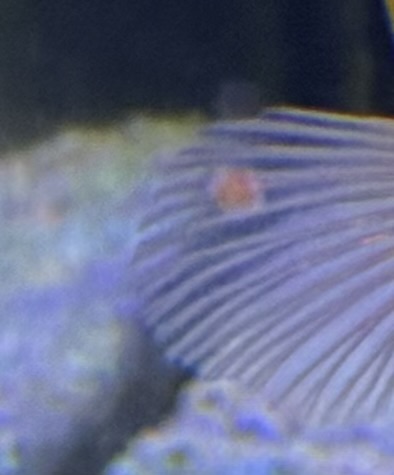
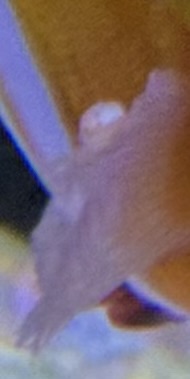
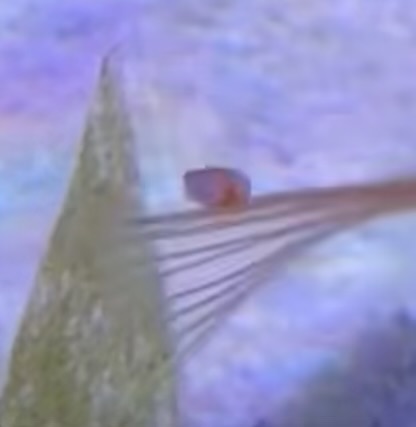
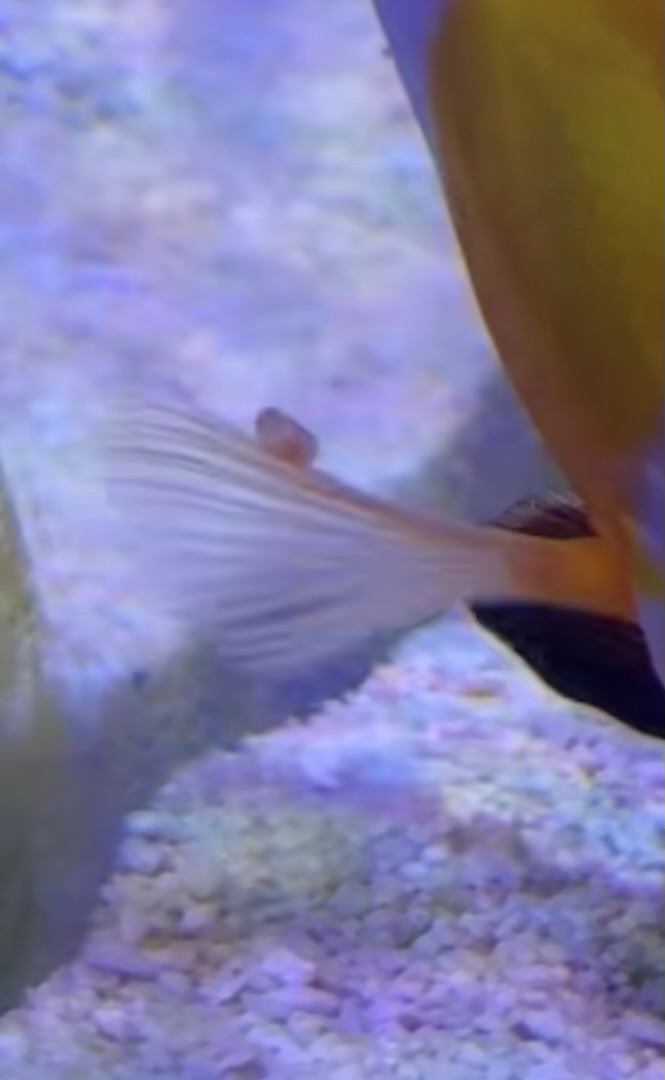
I presume the fish is newly acquired? If so, 100% this is Lymphocystis. The emperor angel has a bit of it on its tail.
You won't need to treat this, it is a self-limiting viral disease and will go away on its own in a month or so, although it may get worse before it gets better, especially on the emperor.
Here is a write-up I did on this:
Lymphocystis (cauliflower disease)
This is a common viral disease of marine, brackish, and certain freshwater fishes (usually those with marine relatives: glassfish and rainbowfish). It is a chronic (long-lasting) but self-limiting (usually going away on its own) syndrome caused by an iridovirus. The virus causes hypertrophy (enlargement) of the epithelial cells of a fish’s skin and fins.
Initial symptoms consist of off-white to gray nodules on the fish that spread and grow larger over a timeframe of 10 to 90 days. Commonly, when a
Lymphocystis nodule forms on a pectoral fin, a new nodule will soon begin to form on the part of the fish that is brushed by the fin, indicating that direct contact can be a mode of spreading the infection.
When
Lymphocystis first starts, the small growths can be misdiagnosed as a protozoan infection, such as
Cryptocaryon, or even a bacterial infection. The fact that the lesions are long-lasting and do not cause the fish to become acutely ill rules out these more virulent diseases.
Since Lymphocystis is most often seen in newly imported fishes, capture and transport stresses are often mentioned as the stressors that allow this disease to take hold. While this may be true, it may also be that the cause is actually exposure to other infected fish in the aquarium systems of the exporter, importer, or retail suppliers. In any event, it is extremely rare for a fish held in captivity for more than four to six months to suddenly develop this disease.
Treatment with copper sulfate has also been implicated in the development of
Lymphocystis in marine fish. The connection is actually not very clear, in that copper sulfate is most often used on newly imported fishes, and those are the ones that develop the disease most often.
Lymphocystis infections can sometimes become more serious, covering large areas of a fish’s body and even interfering with proper feeding if the cell growth involves areas around the mouth. In rare instances, the virus can also cause enlargement of the cells of internal organs, especially in marine fishes (Wolf 1988). This has the potential of causing serious, yet difficult-to-identify diseases in marine fishes.
A variety of cures have been suggested for this disease over the years. Some public aquarists have reported that a reduction in the animal’s environmental stress level will help reduce the severity of an infection. Others have reported that treatment with a mixture of malachite green and formalin (Quick Cure, Formalite, etc.) helps limit the spread of the lesions. Since both of these compounds can damage an aquarium’s bio-filter, and since both are toxic to fish, care must be taken if this method is attempted. By far, the most commonly recommended treatment involves surgically removing the hypertrophied skin cells, followed with a topical antibiotic to hopefully prevent secondary bacterial infection.
The issue with all these suggested treatments is that because
Lymphocystis is usually self-limiting, remission of the disease will almost always occur in spite of any treatment undertaken. Additionally, cutting the tissue to remove the lesions releases viral particles into the aquarium, potentially spreading the disease to other fish. Finally, any time a fish is handled, there is a risk to its health due to injury or infection.
The general advice is to never intercede with a
Lymphocystis infection—just let it run its course. The only exception might be if the fish develops a severe form of the disease, and its mouth develops lesions that might inhibit it from feeding. Even in those extreme cases, surgery around the mouth will also cause the fish to stop feeding, so it may be better to just wait it out (Hemdal 2014).
Interestingly, aquarists do not seem to report
Lymphocystis infections in their fish as often as they did in the 1970’s and 1980’s. Anecdotally, the disease does not seem as common in public aquariums overall as it used to be. The reason(s) for this change are unclear. It may be that more aquarists are familiar with the syndrome, know that it is usually self-limiting, and therefore do not report it. It may also be that marine fish traveling through the commercial supply chain are being handled better, with less stress, making the outbreaks less common.
The table below (adapted from Hemdal 2014) lists the marine aquarium fish groups known to be vulnerable to the
Lymphocystis virus (+ = can occur, ++ = commonly infects, +++ = extremely common).
| Angelfish (marine) | Pomacanthidae | ++ |
| Blennies | Blenniidae | + |
| Boxfish | Ostraciidae | ++ |
| Butterflyfish | Chaetodontidae | ++ |
| Damselfish, clownfish | Pomacentridae | + |
| Dottybacks | Pseudochromidae | + |
| Gobies | Gobiidae | + |
| Groupers | Serranidae | + |
| Hamlets | Hypoplectrus spp. | +++ |
| Moorish idol | Zanclidae | ++ |
| Porcupine fish | Diodontidae | + |
| Rabbitfish | Siganidae | + |
| Royal gramma | Serranidae | +++ |
| Scorpionfish, lionfish | Scorpaeniformes | + |
| Tangs, surgeonfish | Acanthuridae | + |
| Triggerfish | Balistidae | ++ |
| Wrasses | Labridae | ++ |
No doubt
Lymphocystis will infect marine fish other than those species on this list, but it’s a good starting point of known carriers of this disease. Some marine aquarium fish are so commonly affected with
Lymphocystis that diagnosis can be made just knowing that they are the species involved. If an aquarist says they see a growth on a royal gramma, copperband butterflyfish, or hamlet that they just acquired, it is very likely to be
Lymphocystis. The only freshwater fish that are prone to this disease are those that are from a family that has marine origins, such as the glassfish,
Chanda and possibly
Athernidae – the rainbowfishes.