- Joined
- Jul 31, 2022
- Messages
- 5
- Reaction score
- 2
- Location
- USA
- What state or country do you live in
- Arkansas
Sorry for the long explanation but hope it helps.
I did not have my treatment quarantine ready to go when I got this small Hippo Tang (#1) so I put him in an “observation only” quarantine for two weeks. He never showed signs of disease so I put him into my 310g display tank and he was doing great. A couple of weeks later an opportunity presented itself on another small Hippo Tang (#2). I was able to run #2 through a full copper and Prazi treatment quarantine for two weeks. I then put him in a large acclimation box in the 310g for a couple of days and then took a gamble that they would both get along and released #2 into the 310, as well.
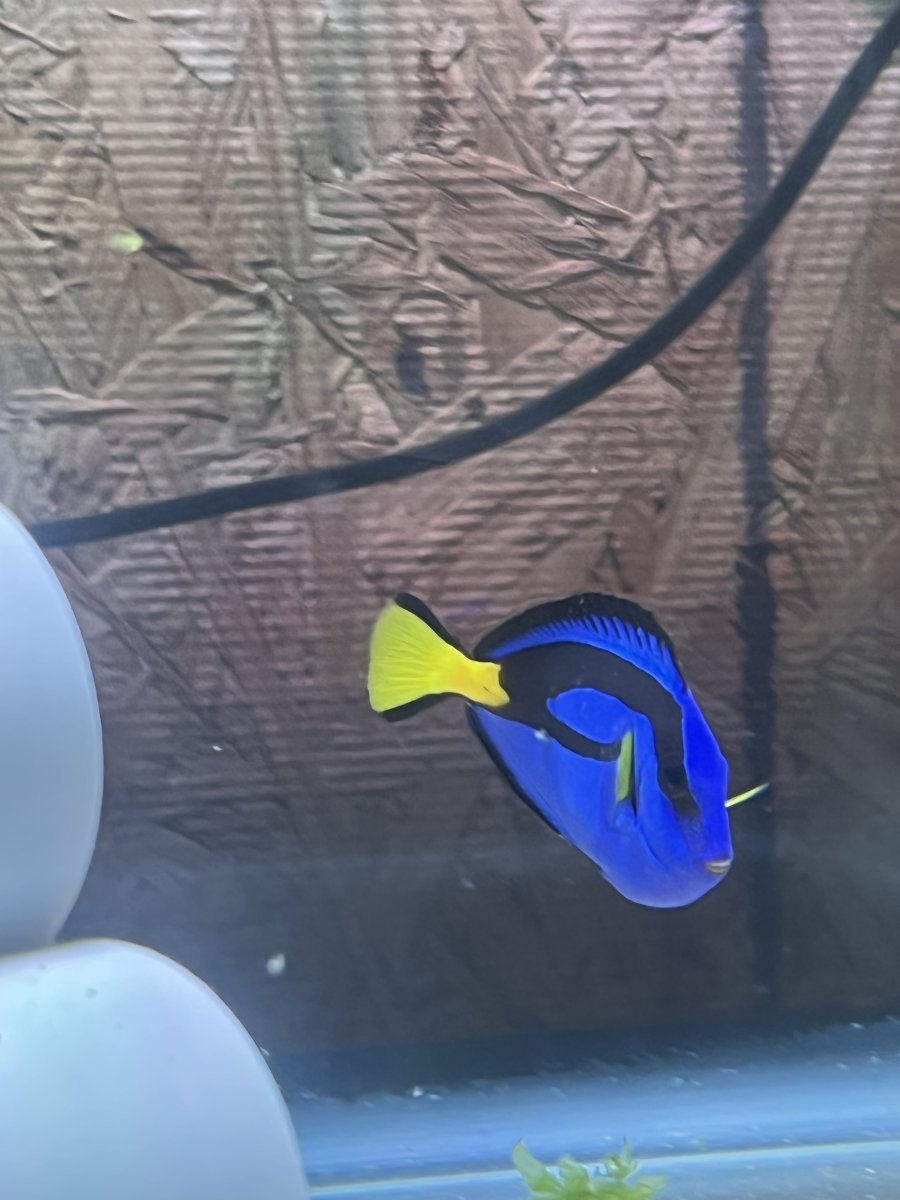
Unfortunately, #1 did not care for #2 and began chasing and nipping at him. Luckily, #2 was disoriented enough in the new surroundings that I was able to capture him and remove from the tank. However, almost immediately #1 started showing signs of ick and this white “spot” showed up on his side. Any ideas as to what this is?


I did not have my treatment quarantine ready to go when I got this small Hippo Tang (#1) so I put him in an “observation only” quarantine for two weeks. He never showed signs of disease so I put him into my 310g display tank and he was doing great. A couple of weeks later an opportunity presented itself on another small Hippo Tang (#2). I was able to run #2 through a full copper and Prazi treatment quarantine for two weeks. I then put him in a large acclimation box in the 310g for a couple of days and then took a gamble that they would both get along and released #2 into the 310, as well.
Unfortunately, #1 did not care for #2 and began chasing and nipping at him. Luckily, #2 was disoriented enough in the new surroundings that I was able to capture him and remove from the tank. However, almost immediately #1 started showing signs of ick and this white “spot” showed up on his side. Any ideas as to what this is?