Reef By Steele
10K Club member
View Badges
Partner Member 2026
Partner Member 2027
R2R Secret Santa 2024
R2R App User
Secret Santa
Toy Sponsor
Birthday Bash Sponsor
Black Friday Sponsor
Sponsor Associate
Premier Sponsor
Yes, there is an obvious answer to this question, but there seems to be a number of people from the Reef2Reef community with questions.
Every tank needs a CUC (Clean Up Crew). These inhabitants have a vital role in our mini oceans in our homes. They are often our first line of defense regarding water quality, as most will consume left over foods and detritus. Another significant benefit that a CUC provides is consumption of nuisance algae.
There are a lot of different animals to choose from, and while I am sure there are some better than others, a mixture of different types is a great start. From phytoplankton to herbivorous fish the options are almost infinite.
Phytoplankton, are you kidding me? While we mostly consider CUC to be creatures that EAT waste and algae, another factor in clean up and water quality is nutrient reduction and export. So no actually live phytoplankton (single cell pants) are the smallest member of the CUC family as regular dosing of LIVE phytoplankton reduces nitrates and phosphates naturally in our closed system. This reduces the amount of these nutrients available for nuisance algae to utilize to grow.
Copepods are another of the smallest members of a well rounded CUC. Their size allows them to reach deep into the nooks and crannies within our system, which allows them to get down to the roots of algae such as GHA (Green Hair Algae). Isopods and amphipods are other micro crustaceans that also work hard at helping to eliminate nuisance algae and detritus from our systems. Many note seeing them on the glass, where they may assist with the film algae, but IMO there are better options for attaining clear clean glass.
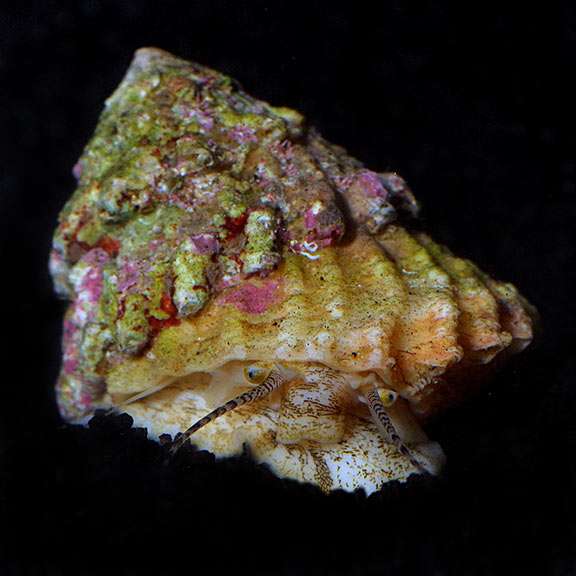
Snails! There are a plethora of species of snails with many available in our trade. While all snails are not equal, from my experience, most perform the same basic job. While it is obvious that they are consuming algae as they leave a clear path behind them on the glass, they also perform this same service on rock and substrate surfaces as well. Some species also consume waste, detritus and left over food.
Hermit crabs are another popular member, especially the red and blue legged hermits which seem to be readily available. Benefits of the hermit crabs is they will eat GHA after it has begun to take off where snails tend to lose the efficiency once it has started to gain any size. Excellent scavengers, hermit crabs also play a role by eating left over food and detritus. While largely considered reef safe, there are issues that can arise from them. Mostly they have been noted to topple or knock over smaller corals. This reinforces the need to properly affix or place corals to minimize this risk. Some have said they believe their hermits have eaten corals, but from most of my reading, I believe the general consensus is that they only do this when a coral is already dying as they are attracted by the deterioration. Another concern is they can prey upon snails as they hunt replacement shells as they grow. Therefore adding loose shells when keeping hermit crabs is strongly recommended.
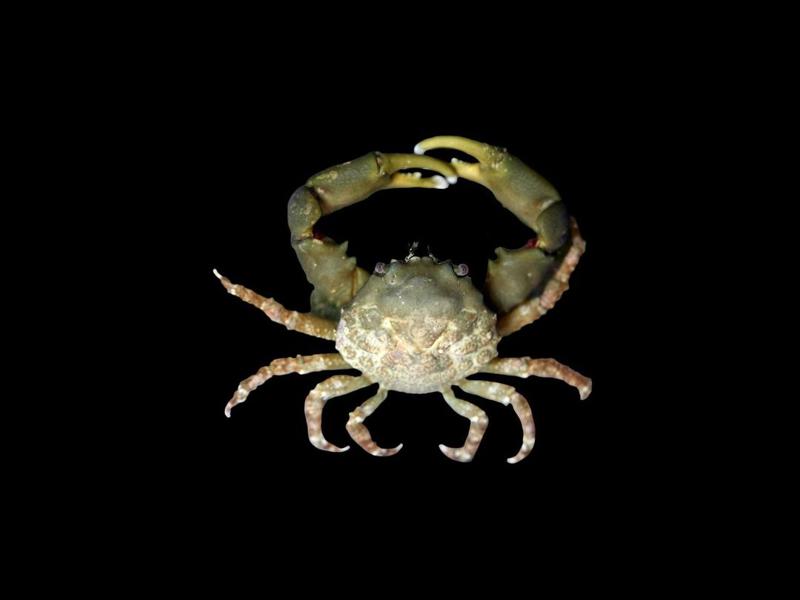
Other crabs that we often see include the Emerald and Pitho crabs. These guys are machines when it comes to taking out the larger algae including bubble, Caulerpa and GHA. Again these crabs are considered reef safe, but again securing and solid placement of corals is important as they may inadvertently move things around as they work their way through the reef.
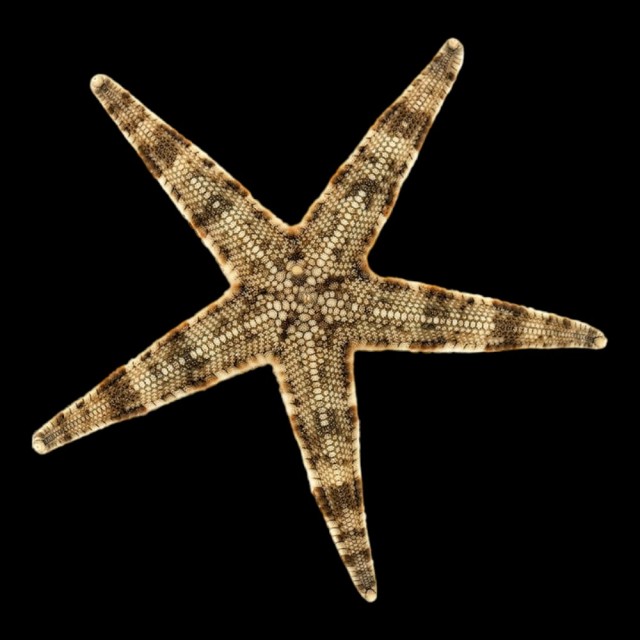
Starfish can also play distinctive roles and be valuable members of this community. From asterina, to serpent stars you will find that they can be quite productive. Sand sifting stars are a great addition as they will help to displace the sand bed while consuming the detritus and left over food that works its way deeper into the sand bed, helping to keep our sand beds healthier and less likely to release toxins when cleaning a larger area. While some people seem to disregard the asterina stars, I have found that my tanks with strong populations seem cleaner and less susceptible to cyano outbreaks. This is anecdotal as I have not formally tested this hypothesis. Serpent stars are another excellent scavenger. The micro stars are awesome. We love and have larger serpents, but IMO they belong in larger tanks.
Urchins are another member that falls in this category. We personally have not had one in years, but my understanding is the pin cushions are a possible option for predator tanks where other CUC is prone to predation.
What are your go to picks for clean up crews? What are your favorite snails? Are there other animals that fall into the CUC family that I overlooked and should receive some attention?
Happy Reefing from www.reefbysteele.com
Every tank needs a CUC (Clean Up Crew). These inhabitants have a vital role in our mini oceans in our homes. They are often our first line of defense regarding water quality, as most will consume left over foods and detritus. Another significant benefit that a CUC provides is consumption of nuisance algae.
There are a lot of different animals to choose from, and while I am sure there are some better than others, a mixture of different types is a great start. From phytoplankton to herbivorous fish the options are almost infinite.
Phytoplankton, are you kidding me? While we mostly consider CUC to be creatures that EAT waste and algae, another factor in clean up and water quality is nutrient reduction and export. So no actually live phytoplankton (single cell pants) are the smallest member of the CUC family as regular dosing of LIVE phytoplankton reduces nitrates and phosphates naturally in our closed system. This reduces the amount of these nutrients available for nuisance algae to utilize to grow.
Copepods are another of the smallest members of a well rounded CUC. Their size allows them to reach deep into the nooks and crannies within our system, which allows them to get down to the roots of algae such as GHA (Green Hair Algae). Isopods and amphipods are other micro crustaceans that also work hard at helping to eliminate nuisance algae and detritus from our systems. Many note seeing them on the glass, where they may assist with the film algae, but IMO there are better options for attaining clear clean glass.
Snails! There are a plethora of species of snails with many available in our trade. While all snails are not equal, from my experience, most perform the same basic job. While it is obvious that they are consuming algae as they leave a clear path behind them on the glass, they also perform this same service on rock and substrate surfaces as well. Some species also consume waste, detritus and left over food.
Hermit crabs are another popular member, especially the red and blue legged hermits which seem to be readily available. Benefits of the hermit crabs is they will eat GHA after it has begun to take off where snails tend to lose the efficiency once it has started to gain any size. Excellent scavengers, hermit crabs also play a role by eating left over food and detritus. While largely considered reef safe, there are issues that can arise from them. Mostly they have been noted to topple or knock over smaller corals. This reinforces the need to properly affix or place corals to minimize this risk. Some have said they believe their hermits have eaten corals, but from most of my reading, I believe the general consensus is that they only do this when a coral is already dying as they are attracted by the deterioration. Another concern is they can prey upon snails as they hunt replacement shells as they grow. Therefore adding loose shells when keeping hermit crabs is strongly recommended.
Other crabs that we often see include the Emerald and Pitho crabs. These guys are machines when it comes to taking out the larger algae including bubble, Caulerpa and GHA. Again these crabs are considered reef safe, but again securing and solid placement of corals is important as they may inadvertently move things around as they work their way through the reef.
Starfish can also play distinctive roles and be valuable members of this community. From asterina, to serpent stars you will find that they can be quite productive. Sand sifting stars are a great addition as they will help to displace the sand bed while consuming the detritus and left over food that works its way deeper into the sand bed, helping to keep our sand beds healthier and less likely to release toxins when cleaning a larger area. While some people seem to disregard the asterina stars, I have found that my tanks with strong populations seem cleaner and less susceptible to cyano outbreaks. This is anecdotal as I have not formally tested this hypothesis. Serpent stars are another excellent scavenger. The micro stars are awesome. We love and have larger serpents, but IMO they belong in larger tanks.
Urchins are another member that falls in this category. We personally have not had one in years, but my understanding is the pin cushions are a possible option for predator tanks where other CUC is prone to predation.
What are your go to picks for clean up crews? What are your favorite snails? Are there other animals that fall into the CUC family that I overlooked and should receive some attention?
Happy Reefing from www.reefbysteele.com