- Joined
- Aug 18, 2026
- Messages
- 41
- Reaction score
- 33
- What state or country do you live in
- New Jersey
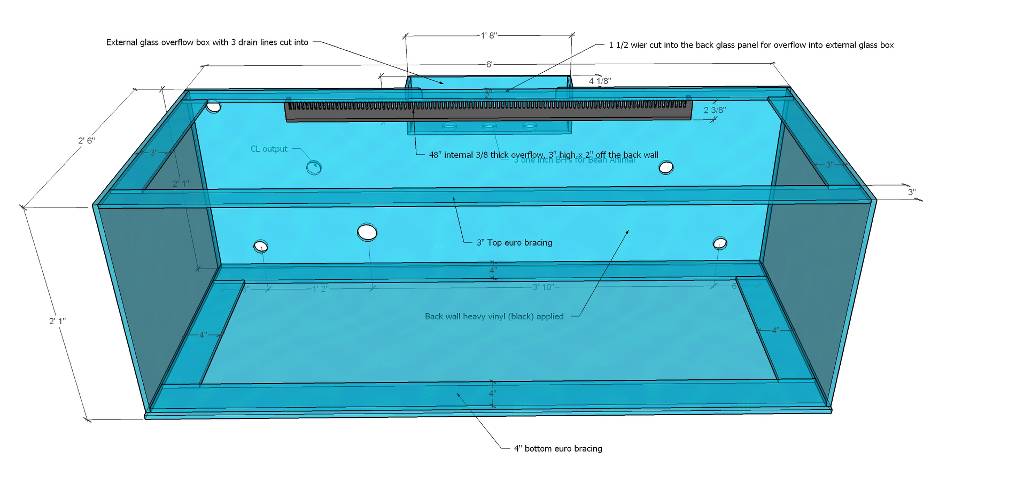
Is the main difference between internal and external overflows whether the tank is drilled on the bottom vs the side? Not including non drilled tanks with siphon overflows or otherwise. Meaning a box on the outside would be needed for a side drilled tanks therefore being external as a bottom drilled which can be plumbed into a sump directly. I suppose one could direct plumb a side drilled tank too.
If so, are there pros and cons of each aside from having plumbing, boxes, and bulkheads visible on the outside/inside of the tank? I understand having something on the outside can limit placement like being flush against a wall but more curious about performance than esthetics. I feel like having external offers more options. Like I can set up a herbie or bean animal easily.
For whatever reason im having a hard time finding these answers.
Insight into my experience. 20 years ago I had a reef tank for 3 years. 75 gal display coral tank with sump, plumbed with a 30 gal refugium, and a 29 gal tank display with other fish I didnt want in the reef. I ran a siphoned overflow and had all these tanks connected. None of the tanks were drilled.
If so, are there pros and cons of each aside from having plumbing, boxes, and bulkheads visible on the outside/inside of the tank? I understand having something on the outside can limit placement like being flush against a wall but more curious about performance than esthetics. I feel like having external offers more options. Like I can set up a herbie or bean animal easily.
For whatever reason im having a hard time finding these answers.
Insight into my experience. 20 years ago I had a reef tank for 3 years. 75 gal display coral tank with sump, plumbed with a 30 gal refugium, and a 29 gal tank display with other fish I didnt want in the reef. I ran a siphoned overflow and had all these tanks connected. None of the tanks were drilled.