Invincible GHA

mcarroll

10K Club member
View Badges
Joined
Jan 8, 2012
Messages
15,213
Reaction score
8,968
Location
Virginia
Rating - 0%
0   0   0
Ah yes its working now.

You really think the hermits are killing the snails? I mean I know it's possible I've never seen it and I've watched closely. Also my hermits are very small and have lots of options.
Without question IMO.

Crabs "can" eat algae, but it's not what they really want.

They are carrion scavengers just like the Nassarius snails they cohabitate with.

So whenever the crab is hungry enough or a snail becomes marginal enough, snail is on the menu. Multiply that factor by the number of crabs you keep. For this reason I try to keep no more than 1 or 2 per tank....0 is okay by me.

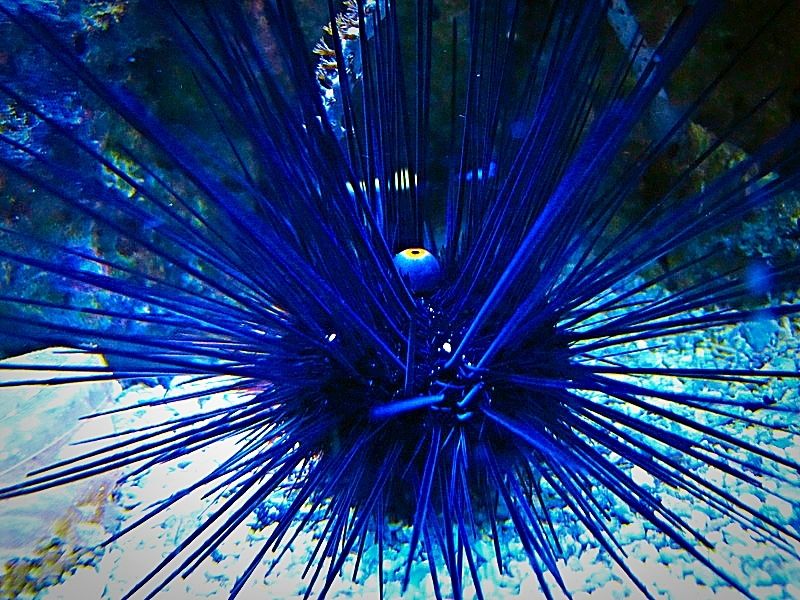
Have you tried an urchin? One of the small herbivore types.

Did you also check out Paul B's DIY micron filter, BTW?
 

Ghost-X9

New Member
View Badges
Joined
Jul 7, 2023
Messages
5
Reaction score
20
Location
Palmdale
Rating - 0%
0   0   0
Dealing with GHA is not fun. I’ve use Flux RX and it works great on bryopsys but GHA not so much. I’ve use peroxide with mid success but the stuff can harm corals with prolonged use. Coral snow is great to bind most pollutants that help feed the nuisance algae and I've used it as a tool with water changes and monitoring most of all the phosphates. The that worked for me is to remove as much as possible and measure the phosphate the following day because it will give you a more reliable measurement since the algae is unable to uptake the phosphates immediately. I would also do a good cleaning of your overflow. This area is usually overlooked and GHA will grow comfortably if left unchecked. I would check and clean overflow, remove as much algae from display and measure phosphates the following day then water change if phosphates are too high.

Don’t give up and good luck
 

slingfox

2500 Club Member
View Badges
Joined
Mar 22, 2023
Messages
2,720
Reaction score
2,565
Location
Northern California
Rating - 100%
1   0   0
In my prior tank I dealt with a dark green almost black turf algae which was finally invincible to fish, invert, and chemical. I battled that algae for half a year during which time I pulled out and scrubbed down the rock at least half a dozen times. ultimately, I did a tank reset where I switched out all my Marco Rock with ocean live rock. I have had the new aquascape up for 9 months now and it has been smooth sailing.

If you want to try one more chemical route my friend used the Continuum line of product on his tank and the results have been extremely impressive (he was dealing with a hair algae that was resistant to Fluconazole). This video explains the process:


I believe the only place you can buy the suite of products in the US is directly from the Brightwell website.
 
OP
OP
D

Davem24

Community Member
View Badges
Joined
Jun 5, 2020
Messages
98
Reaction score
104
Rating - 0%
0   0   0
Ah yes its working now.

You really think the hermits are killing the snails? I mean I know it's possible I've never seen it and I've watched closely. Also my hermits are very small and have lots of options.
Without question IMO.

Crabs "can" eat algae, but it's not what they really want.

They are carrion scavengers just like the Nassarius snails they cohabitate with.

So whenever the crab is hungry enough or a snail becomes marginal enough, snail is on the menu. Multiply that factor by the number of crabs you keep. For this reason I try to keep no more than 1 or 2 per tank....0 is okay by me.

Have you tried an urchin? One of the small herbivore types.

Did you also check out Paul B's DIY micron filter, BTW?
Hmmm. I can't say this isn't the case but there is tons of crab food in missed fish food, waste, etc.

I have both a pincushion and tuxedo. They go right past the stuff.

And I actually made that filter about 6 months ago. I use it to clean rock and suck out the algae.
 

BryanM

7500 Club Member
View Badges
Joined
Jun 27, 2024
Messages
7,651
Reaction score
9,361
Location
Morgan Hill
Rating - 100%
1   0   0
@Davem24

I just posted this in another thread:

The nuclear option is Fluconazole, but I would research that thoroughly before going down that road.

A much better option with success stories is an algae turf scrubber, which after it gets going (~6 weeks), basically outcompetes the GHA and it eventually dies off. It more efficiently grows a similar algae that uses up what fuels GHA, basically.

You can ask the folks over at santa monica filtration exactly how it works, but this would be a good, natural method to rid yourself of GHA. One note, its a nitrate and phosphate exporter as well, and you should probably be ready to dose something for both of these if you go down this road as you'll likely bottom out both N and P with your current levels.
 
OP
OP
D

Davem24

Community Member
View Badges
Joined
Jun 5, 2020
Messages
98
Reaction score
104
Rating - 0%
0   0   0
@Davem24

I just posted this in another thread:

The nuclear option is Fluconazole, but I would research that thoroughly before going down that road.

A much better option with success stories is an algae turf scrubber, which after it gets going (~6 weeks), basically outcompetes the GHA and it eventually dies off. It more efficiently grows a similar algae that uses up what fuels GHA, basically.

You can ask the folks over at santa monica filtration exactly how it works, but this would be a good, natural method to rid yourself of GHA. One note, its a nitrate and phosphate exporter as well, and you should probably be ready to dose something for both of these if you go down this road as you'll likely bottom out both N and P with your current levels.
Tried reef flux. No effect. I do have a fuge. I know a scrubber will be more aggressive but I don't really have the room to add it in .
 

13rodo

Lord of the Reefs
View Badges
Joined
Mar 27, 2026
Messages
216
Reaction score
299
Location
Denver
Rating - 0%
0   0   0
I have way, way, way more algae than that and I wouldn't do anything. Algae is actually a sign of health as it grows on every reef in the sea, of course we don't want it covering our corals. It sometimes covers mine but if you keep a reef long enough you will see that everything in our tanks runs in cycles. Algae is one of those things.

It may show up for a few months or a year, then disappear with no help from you. People feel these chemical interventions work, but I think it's just a cycle and unless you do something stupid, it will leave on it's own.


I have been SCUBA diving for 50 years and it grows in every ocean in every sea. The only reason we don't see it much on the real reefs is due to all the algae eaters on the reef. And most of the creatures in the sea eat algae.

If there was no algae in the sea what would these creatures eat?


Your tank looks fine and natural. I wouldn't add any chemicals.

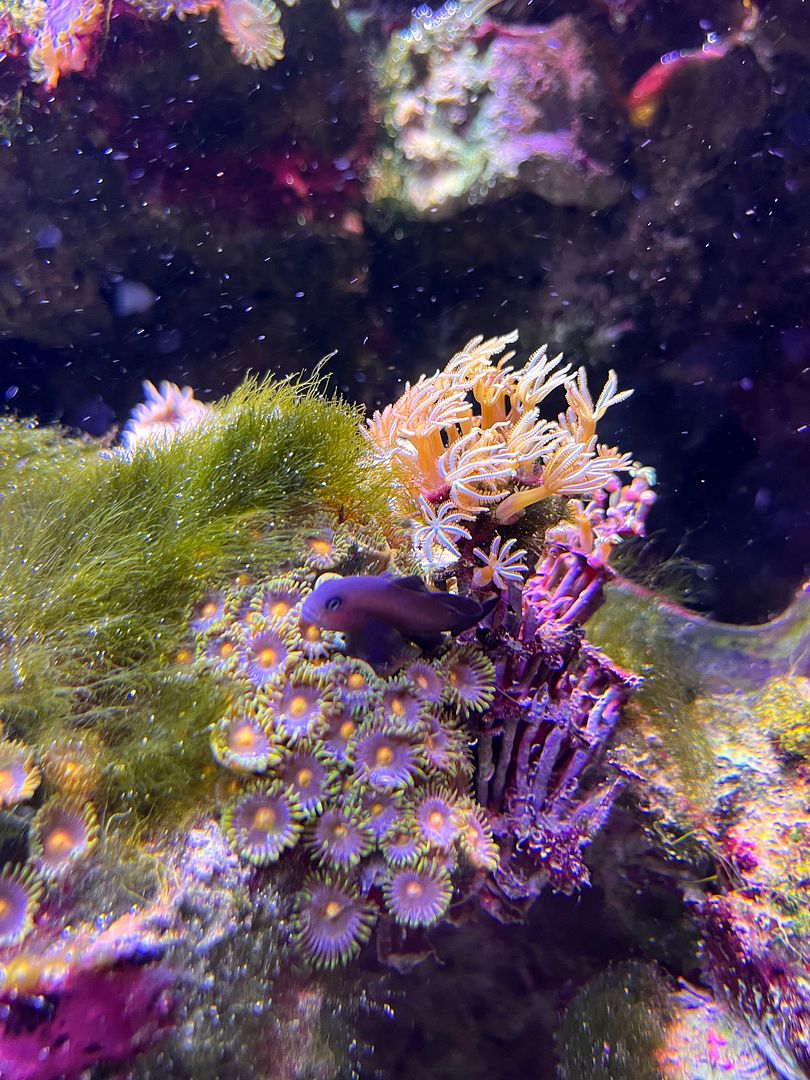
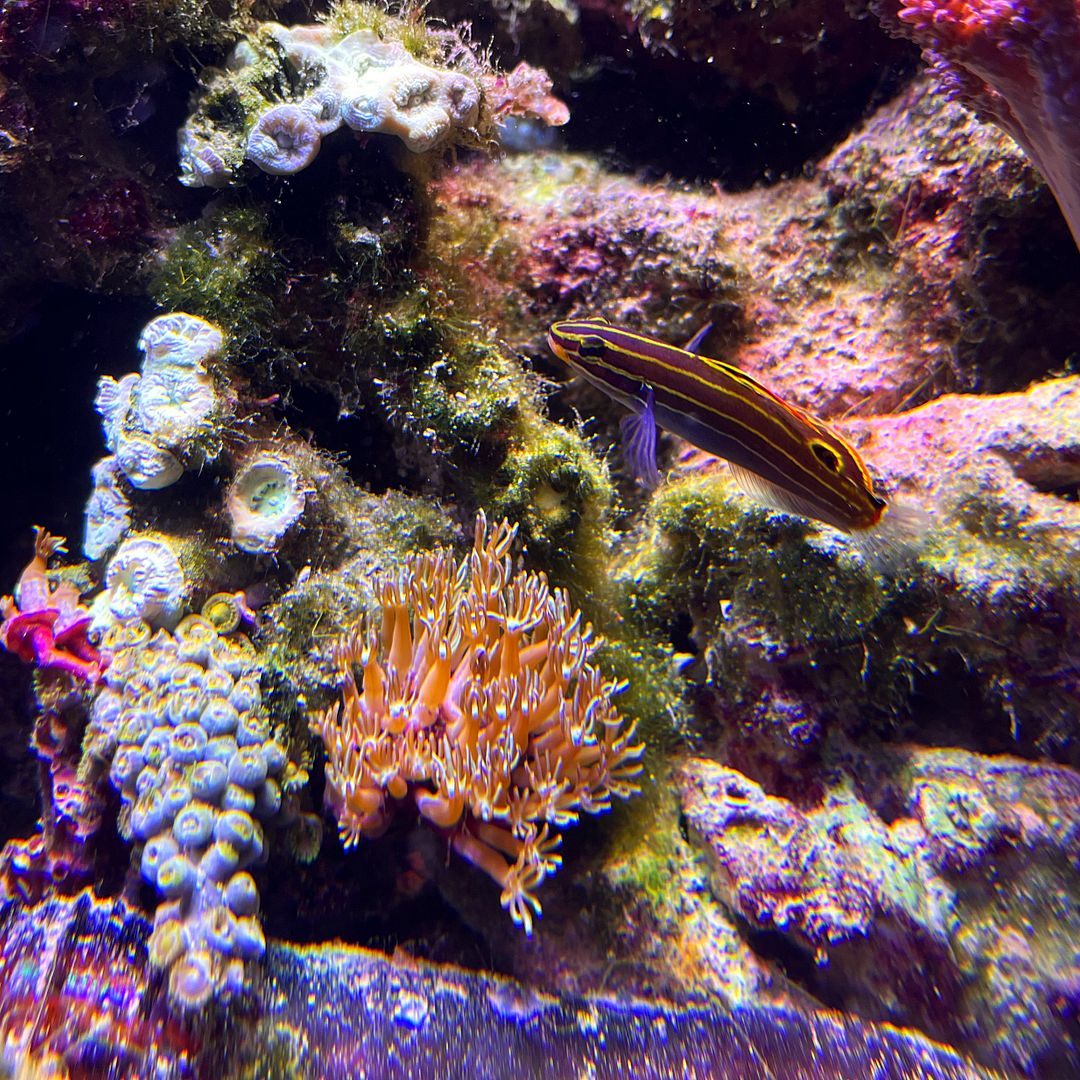
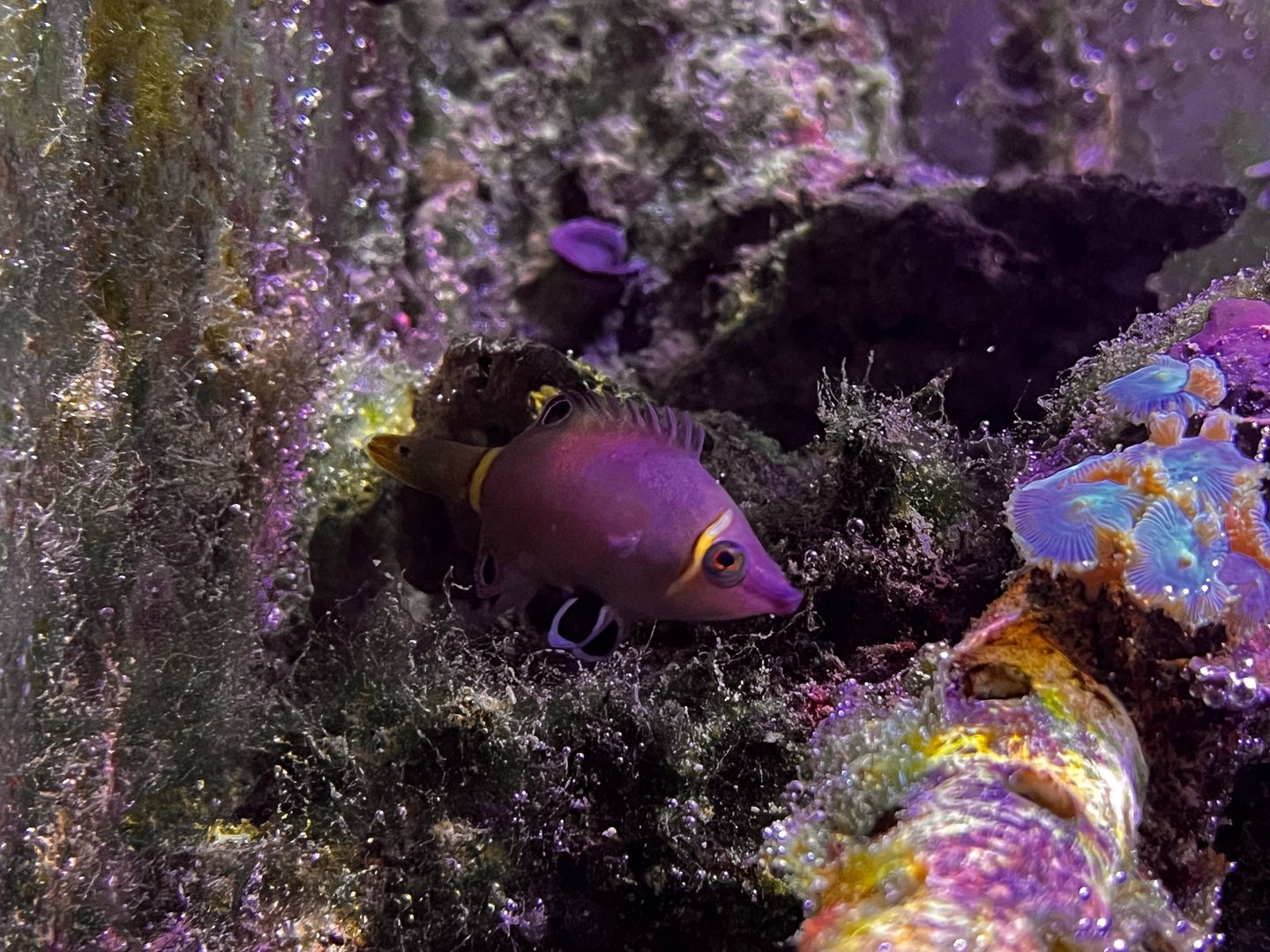
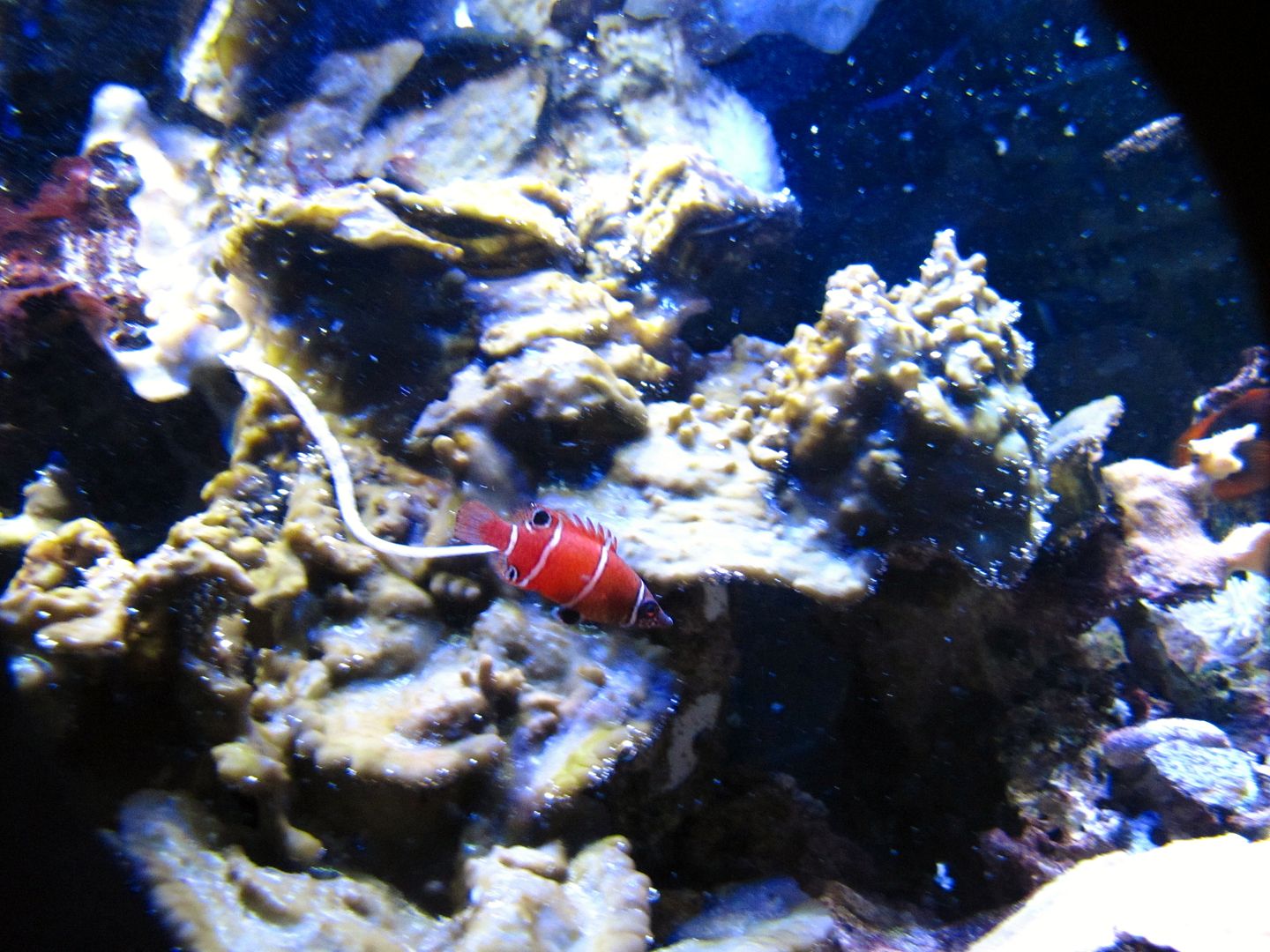
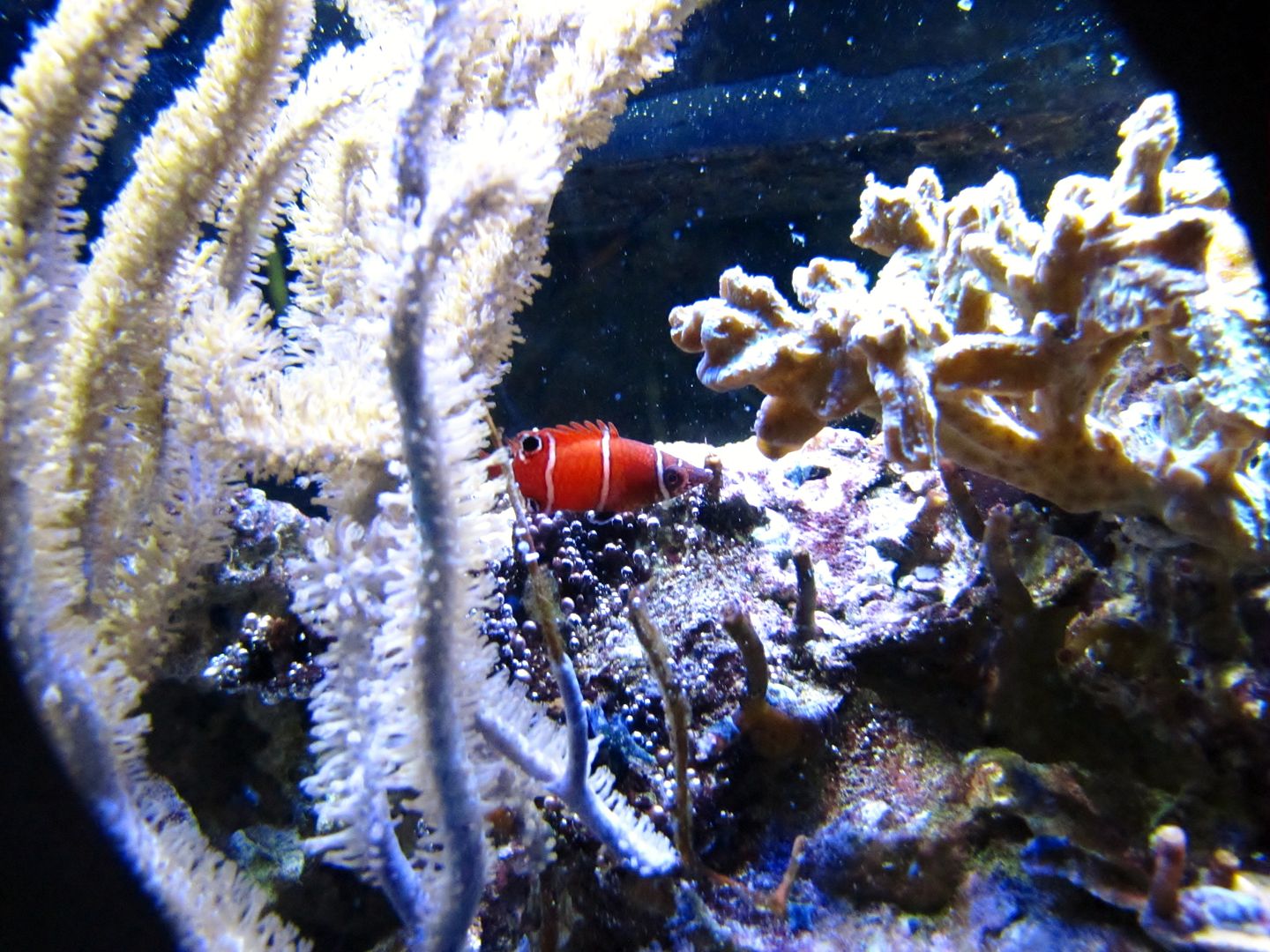
This is off-topic, but I love that possum wrasse!

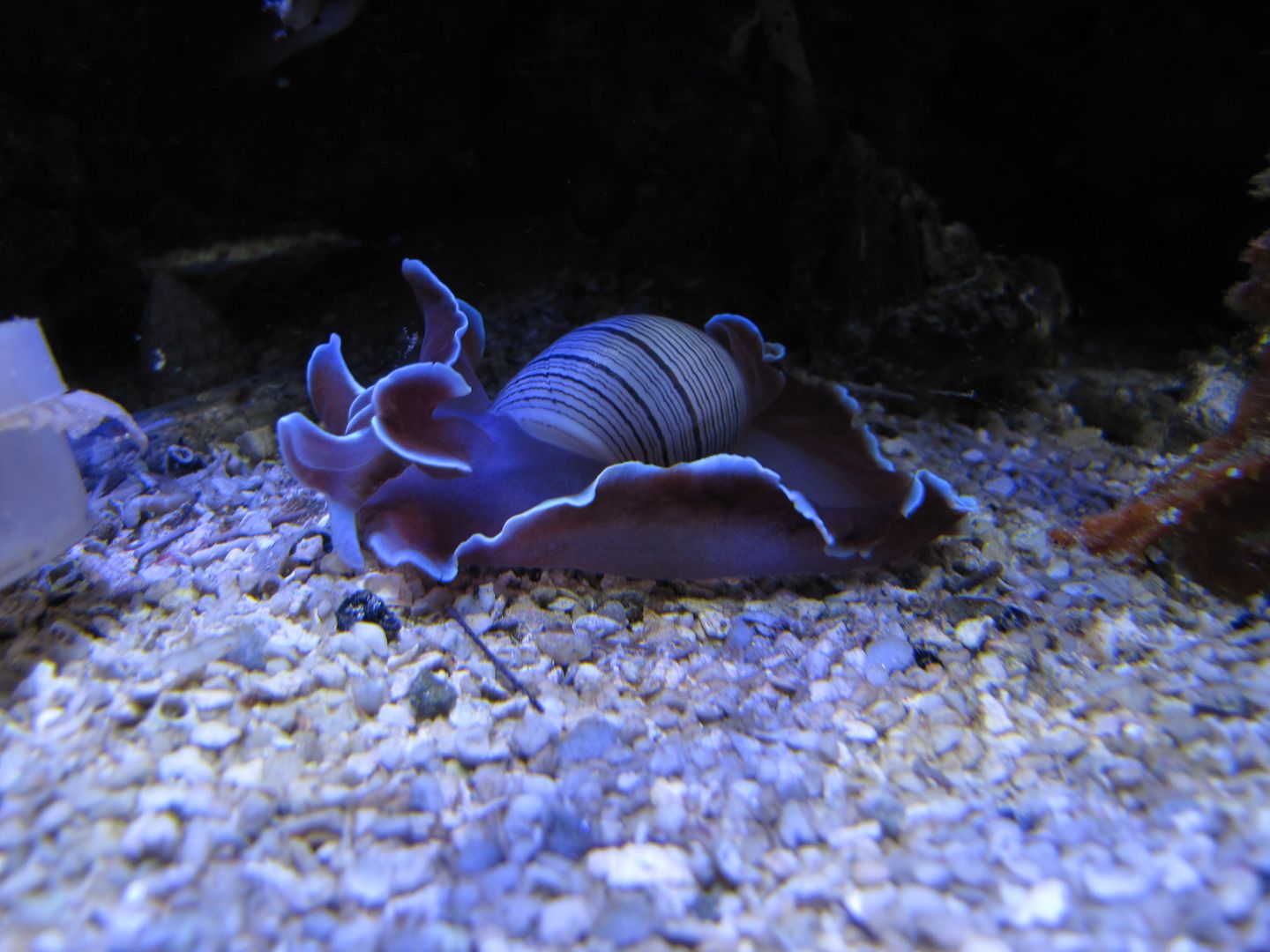
As for the algae, have you tried a sea hare? Gotta be careful because they can release an ink if threatened, but they are lawnmowers.

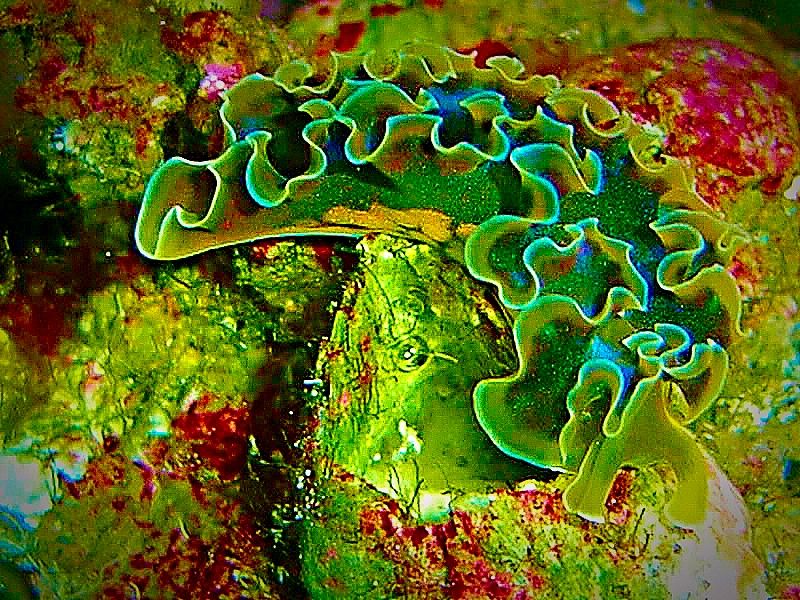
A lettuce nudibranch (really a sea slug) is also another cool algae eater that specifically hunts green algae. It can pull chloroplasts from them and use them to make energy :)
 

Paul B

10K Club member
View Badges
Joined
Nov 3, 2010
Messages
21,284
Reaction score
71,368
Location
Long Island NY
Rating - 0%
0   0   0
This is off-topic, but I love that possum wrasse!
He's an adult there. Probably 7 or 8 years old but he could be 12. I have two of them and I can't tell which one is which.

This is him as a youngster. They look better young. The same way I did. 🥺


13rodo

Lord of the Reefs
View Badges
Joined
Mar 27, 2026
Messages
216
Reaction score
299
Location
Denver
Rating - 0%
0   0   0
He's an adult there. Probably 7 or 8 years old but he could be 12. I have two of them and I can't tell which one is which.

This is him as a youngster. They look better young. The same way I did. 🥺

Such a cool little fish! Is it just my eyes playing tricks or is that a white band? I only ever see the yellow band.
 

mcarroll

10K Club member
View Badges
Joined
Jan 8, 2012
Messages
15,213
Reaction score
8,968
Location
Virginia
Rating - 0%
0   0   0
And I actually made that filter about 6 months ago. I use it to clean rock and suck out the algae.
Depending how yours is set up, you would want to leave it running 24/7 instead of just "spot-treating" with it.

Having too large a pump and too fine a micron rating might be a problem for running like this due to overheating....higher flow and smaller µ numbers would be good for spot treating, but for running 24/7 I'd use moderate flow and something like 25µ filter that will flow decently when it's new.

Tried reef flux. No effect. I do have a fuge. I know a scrubber will be more aggressive but I don't really have the room to add it in .
Algae respond to their environment to survive like anything else...established algae won't die just because nutrients get lower. Most algae I've read about just become less and less palatable and more and more competitive/aggressive as nutrient levels drop.

Something needs to eat or otherwise remove the algae from its place in the tank.

And something needs to displace that algae to prevent new algae from settling in the space.

In general our tanks lack big herbivores to clean up "out of control" algae (in the wild, this is often done by very large or non-traditional herbivores.

So in a reef tank the final removal job often ends up with the reefkeeper – you are cleanup crew member #1.

 
OP
OP
D

Davem24

Community Member
View Badges
Joined
Jun 5, 2020
Messages
98
Reaction score
104
Rating - 0%
0   0   0
And I actually made that filter about 6 months ago. I use it to clean rock and suck out the algae.
Depending how yours is set up, you would want to leave it running 24/7 instead of just "spot-treating" with it.

Having too large a pump and too fine a micron rating might be a problem for running like this due to overheating....higher flow and smaller µ numbers would be good for spot treating, but for running 24/7 I'd use moderate flow and something like 25µ filter that will flow decently when it's new.

Tried reef flux. No effect. I do have a fuge. I know a scrubber will be more aggressive but I don't really have the room to add it in .
Algae respond to their environment to survive like anything else...established algae won't die just because nutrients get lower. Most algae I've read about just become less and less palatable and more and more competitive/aggressive as nutrient levels drop.

Something needs to eat or otherwise remove the algae from its place in the tank.

And something needs to displace that algae to prevent new algae from settling in the space.

In general our tanks lack big herbivores to clean up "out of control" algae (in the wild, this is often done by very large or non-traditional herbivores.

So in a reef tank the final removal job often ends up with the reefkeeper – you are cleanup crew member #1.
Algae becomes less palatable the lower the nutrients ? I've never heard that! That makes sense. Do have any links to share so I can read up on that? I've never had an algae problem like this, I wonder if the reason is I tanked the nutrients and that's why nothing will touch it ?
 

mcarroll

10K Club member
View Badges
Joined
Jan 8, 2012
Messages
15,213
Reaction score
8,968
Location
Virginia
Rating - 0%
0   0   0
Algae becomes less palatable the lower the nutrients ? I've never heard that! That makes sense. Do have any links to share so I can read up on that? I've never had an algae problem like this, I wonder if the reason is I tanked the nutrients and that's why nothing will touch it ?
There's a bunch of good journal articles linked in the algae section on my blog:

This one is specific on that palatability....check out Appendix A specifically.

Throw that title into Google Scholar to get more related reading material. 👍


You might have to dig around some for the reference about the maturity, can't recall if that's specifically from the same article.
 

robanister

10K Club member
View Badges
Joined
Jan 15, 2023
Messages
22,627
Reaction score
22,885
Location
01887
Rating - 0%
0   0   0
Tank looks pretty mature. Wondering if you have phosphate bound to your rock. If so it will take some time to get rid of the hair algae. Start with full sump cleaning and sand bed cleaning over several weeks to not tank your nutrients. Get some pytho crabs they do the best job. If you can put an algae scrubber in that may be the wisest choice. Good luck . Nothing happens fast. This takes about 3 months and algae will be gone.
 
OP
OP
D

Davem24

Community Member
View Badges
Joined
Jun 5, 2020
Messages
98
Reaction score
104
Rating - 0%
0   0   0
Algae becomes less palatable the lower the nutrients ? I've never heard that! That makes sense. Do have any links to share so I can read up on that? I've never had an algae problem like this, I wonder if the reason is I tanked the nutrients and that's why nothing will touch it ?
There's a bunch of good journal articles linked in the algae section on my blog:

This one is specific on that palatability....check out Appendix A specifically.

Throw that title into Google Scholar to get more related reading material. 👍


You might have to dig around some for the reference about the maturity, can't recall if that's specifically from the same article.
Thank you ! I have some reading to do. This is fantastic.
 

TOP 10 Trending Threads

WHAT AMOUNT OF LIVE ROCK AND SAND SHOULD BE PRIORITIZED FOR OPTIMAL BIODIVERSITY/FILTRATION?

  • 100% live rock + bagged sand

    Votes: 34 27.9%
  • 100% dry rock + 100% live sand

    Votes: 42 34.4%
  • 50/50 live/dry rock, 50/50 live/bagged sand

    Votes: 27 22.1%
  • 75% live rock, 25% live sand

    Votes: 11 9.0%
  • 25% live rock, 75% live sand

    Votes: 8 6.6%
Back
Top