




- Joined
- Sep 13, 2017
- Messages
- 62
- Reaction score
- 49
- What state or country do you live in
- Illinois
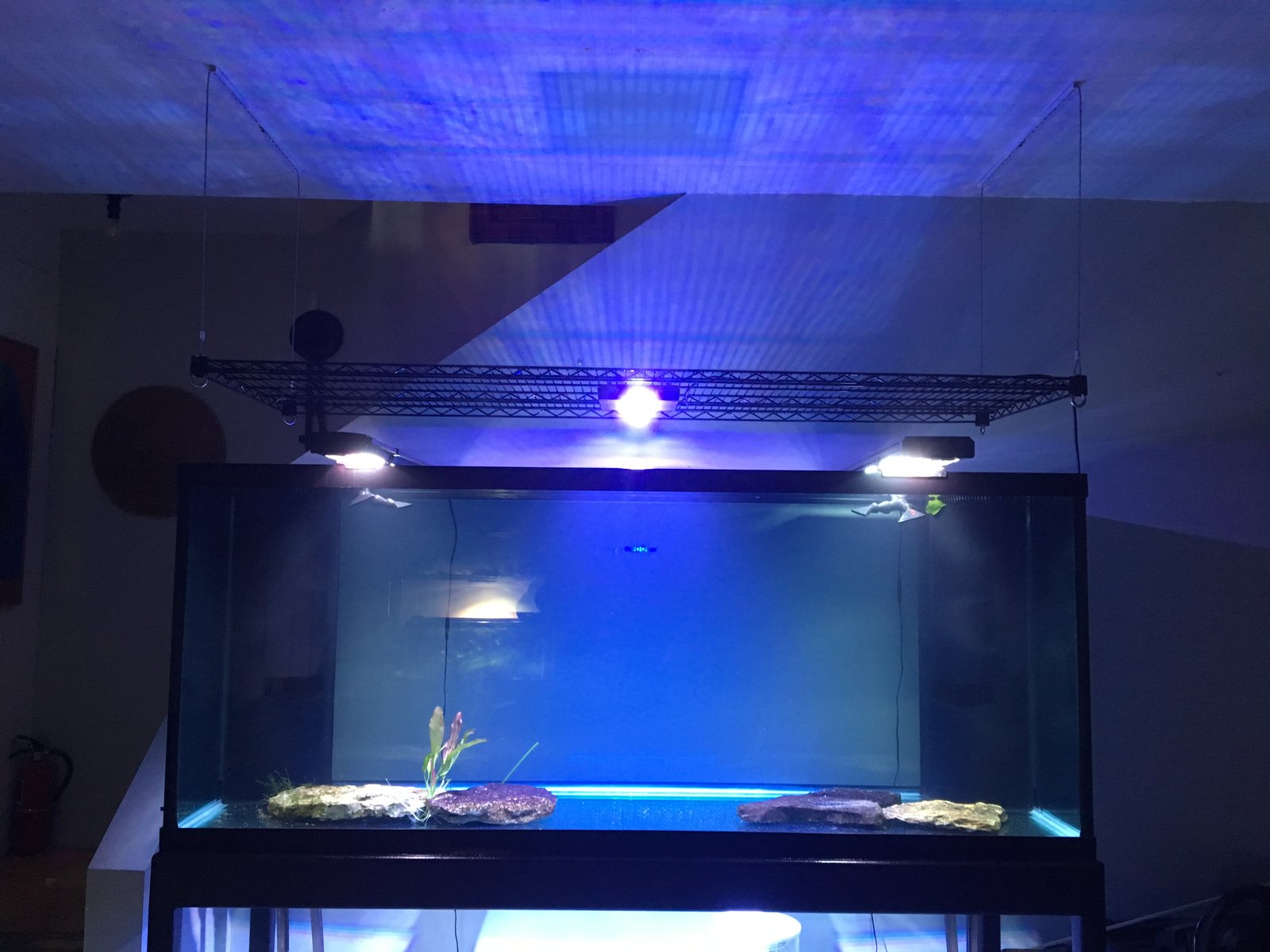
I've been building this setup since November 2017. With lots of starts and stops. Since I'm moving this build thread from another forum it might be a little weird at first until I catch up with the current status. Currently I have 6 active fresh water tanks in the house. The 220 Marine Land was bought for this project, and is currently housing a few Koi who at some point will be destined for a pond. The current plan is to do a mixed reef, and the livestock is undecided. So I don't lose track of it, here's an original location shot, and a current shot. And I'll post the build changes from one to the other.
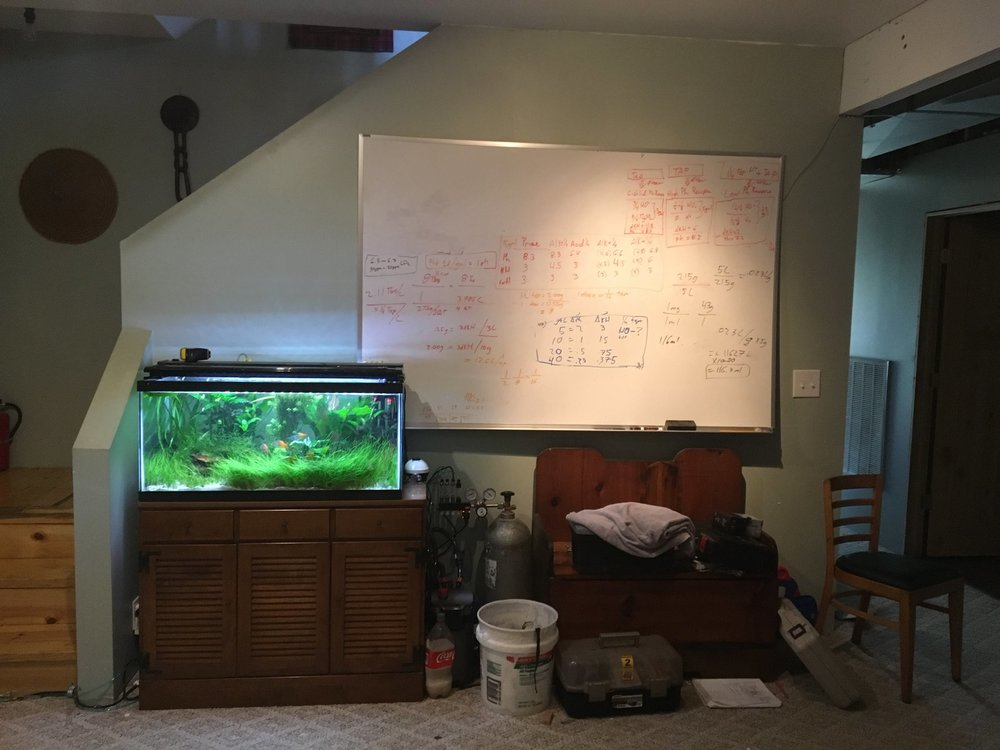
The will have a 44 gallon sump underneath it, and two smaller tanks off to the right. A 20 and a 29. The bottom will be open.
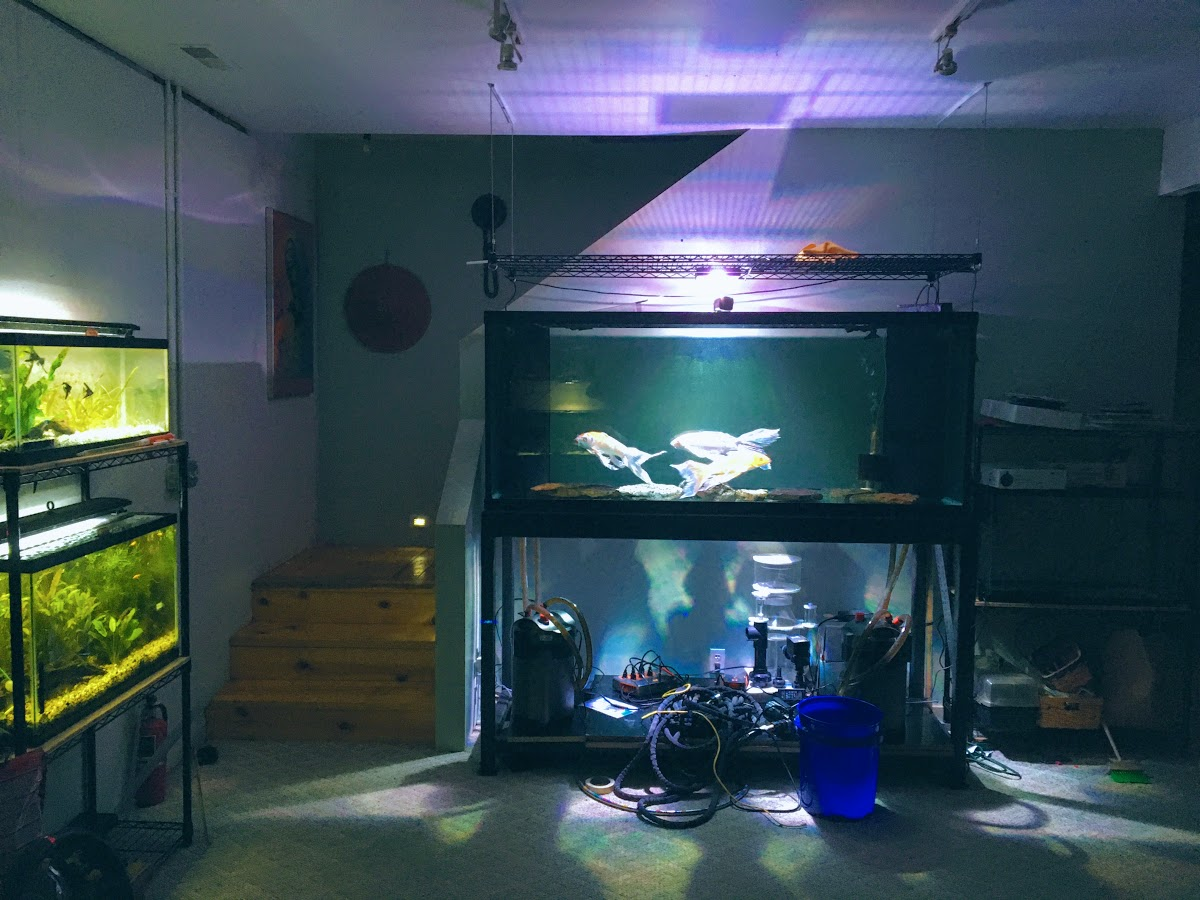
The will have a 44 gallon sump underneath it, and two smaller tanks off to the right. A 20 and a 29. The bottom will be open.







 Peanut-size openings (½–¾ inch / 1–2 cm)
 Golfball-size openings (1.5–2 inches / ~4–5 cm)
 Orange-size openings (3–4 inches / 7–10 cm)
 What about softball-size holes (5–6 inches)?








