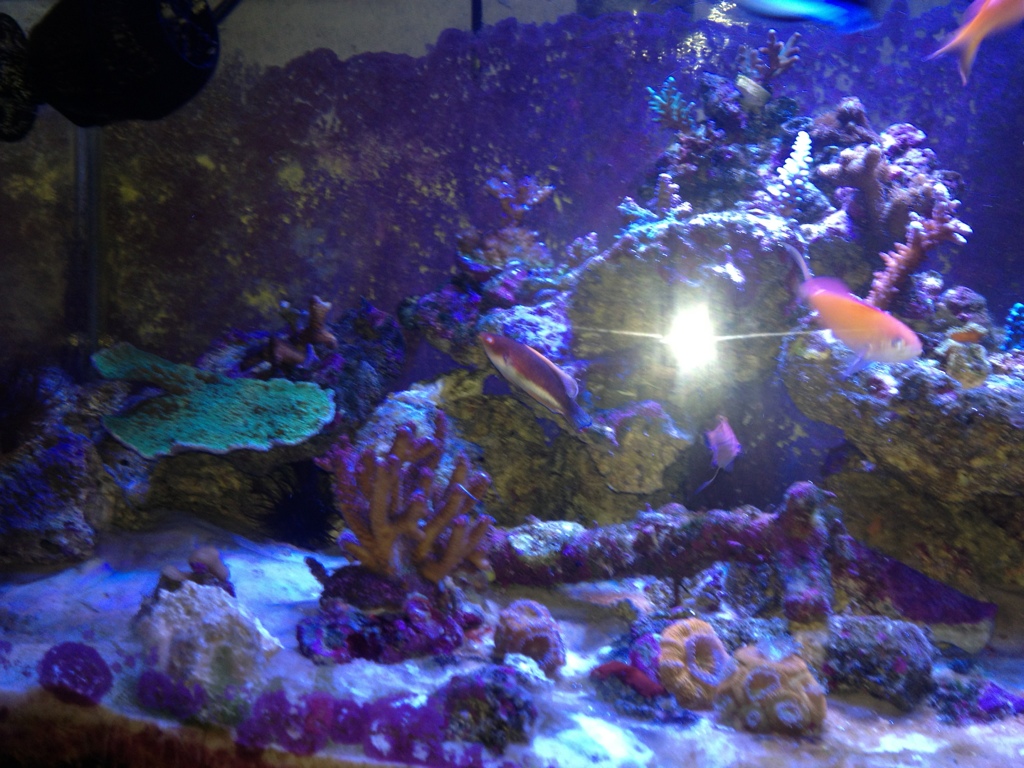
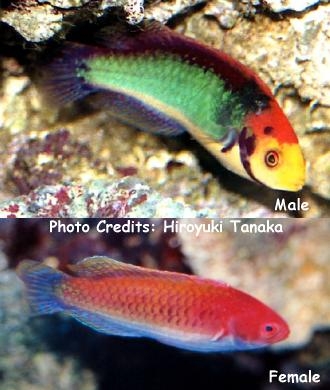
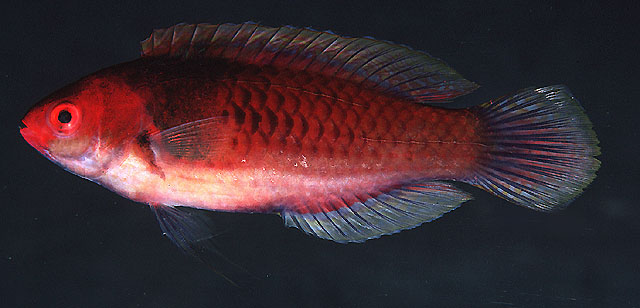
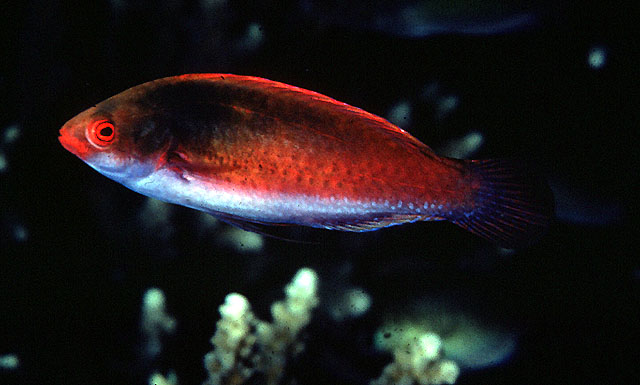
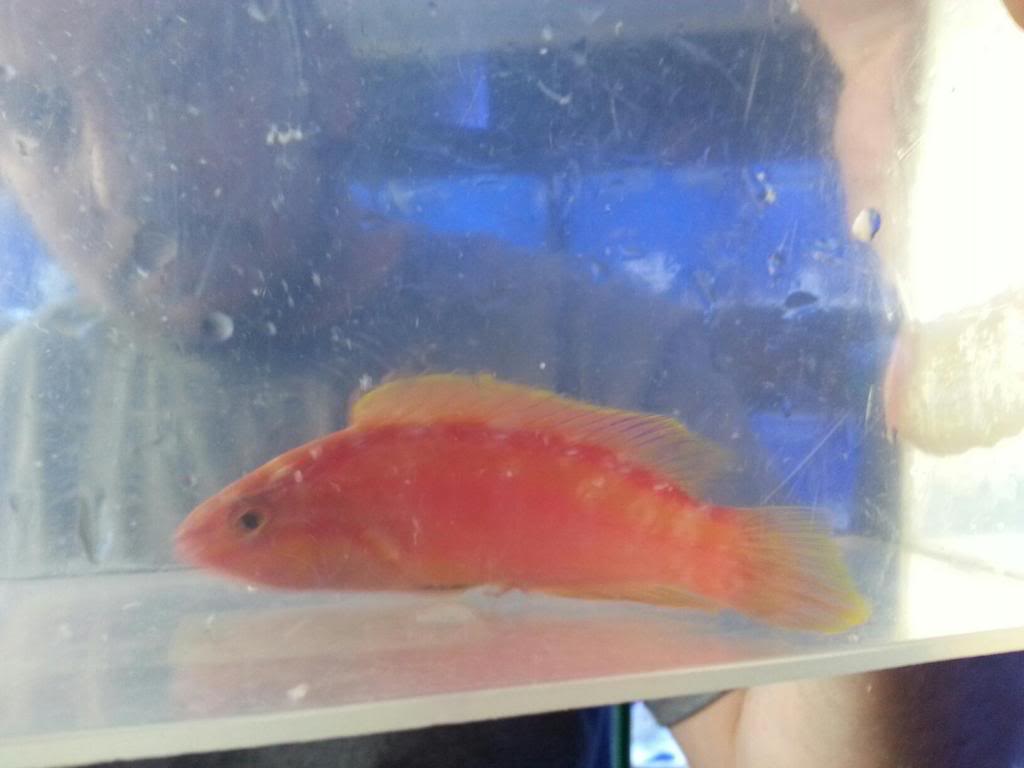
Hm. Then can you help me ID this? The LFS owner called it female solorensis. But it seems to have more color than those pics. Initial Phase Male possibly?
Hm. Then can you help me ID this? The LFS owner called it female solorensis. But it seems to have more color than those pics. Initial Phase Male possibly?
Now we're about a cross another blurry line; ready? The female C. solorensis and C. aurantidorsalis blurry line.
Purely based on the fact the orange present on the fish in your image does not have a clear de-markation along the sides, I tend to believe female C. solorensis is correct. However, what I can't see are the length/shape of the pelvic fins, which could push the ID to C. aurantidorsalis.
Based on the fins, what you said about the color, and the fact that it is already a bit over 4" (C. aurantidorsalis are smaller, correct?) makes me think C. solorensis.
How do you tell the difference between initial male and initial female? How long do they usually take to go male when no males are present?
Female is female, there is no initial. :) But how to determine when the female line is crossed and the sub-male path has begun is subjective and a judgement call.
Here is one for the wrasse lovers. Let's see if we can get an id. This is a pic from the LFS when it first arrived and obviously has it stressed patterns out which should make this more fun.
The only other possibility (C. lanceolatus) would require the pelvic fins to be visible.
The dark spot on the pelvic fins is at the anterior in C. lanceolatus, and the posterior in C. roseafascia.
Without seeing the markings on the pelvic fins, it is not possible to make this distinction on a sub-adult.
Sidenote: I really need to get my series back online; I have a great graphic I created to help in this particular distinction I could link to right now.