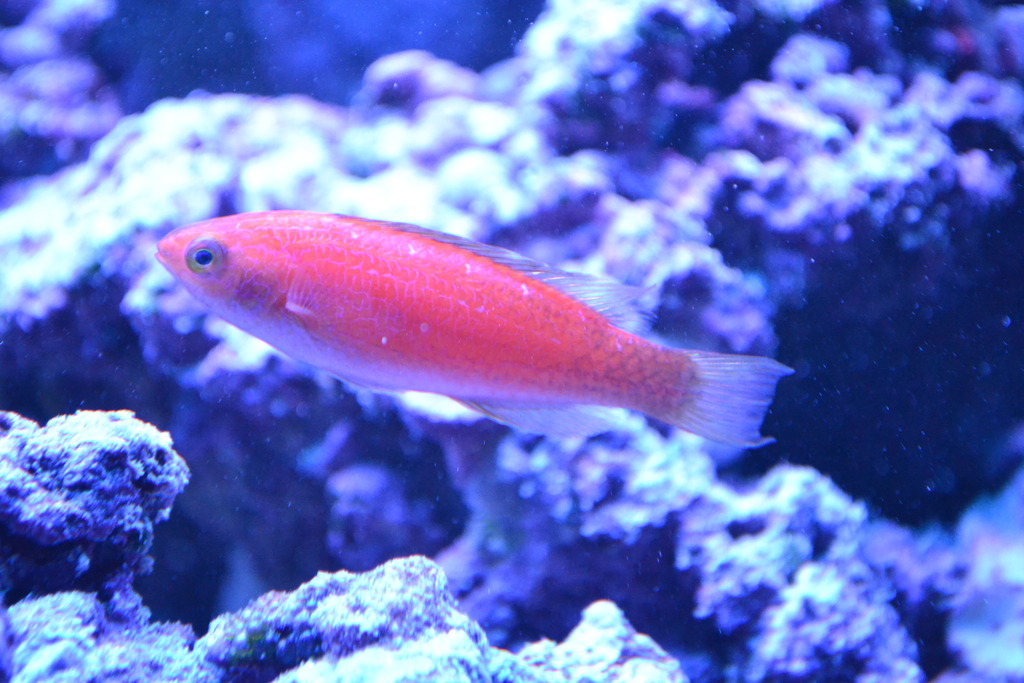
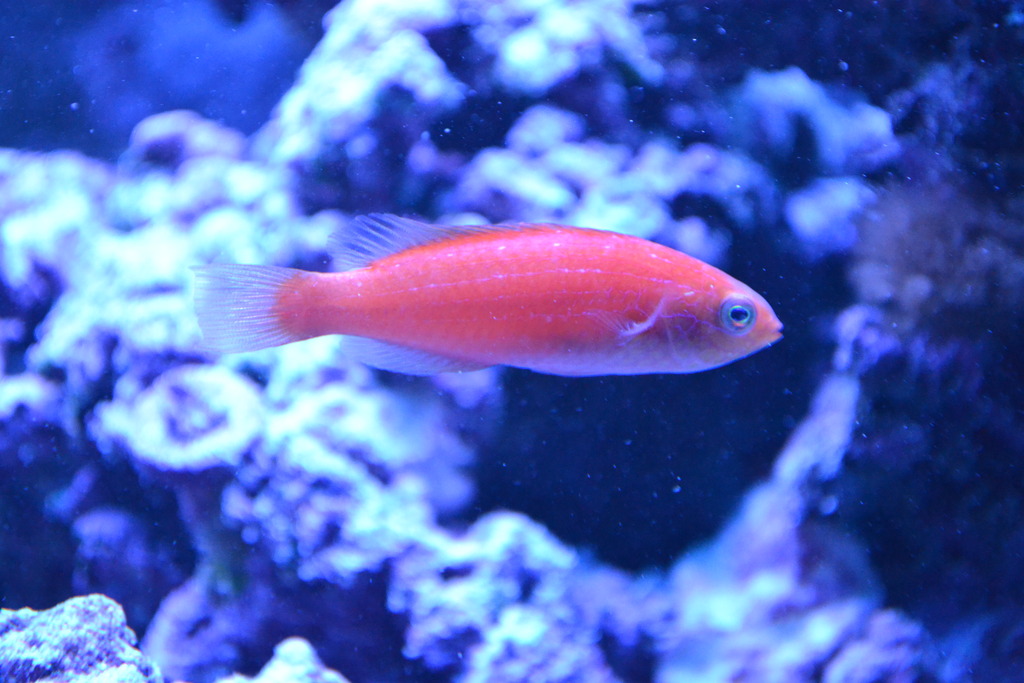
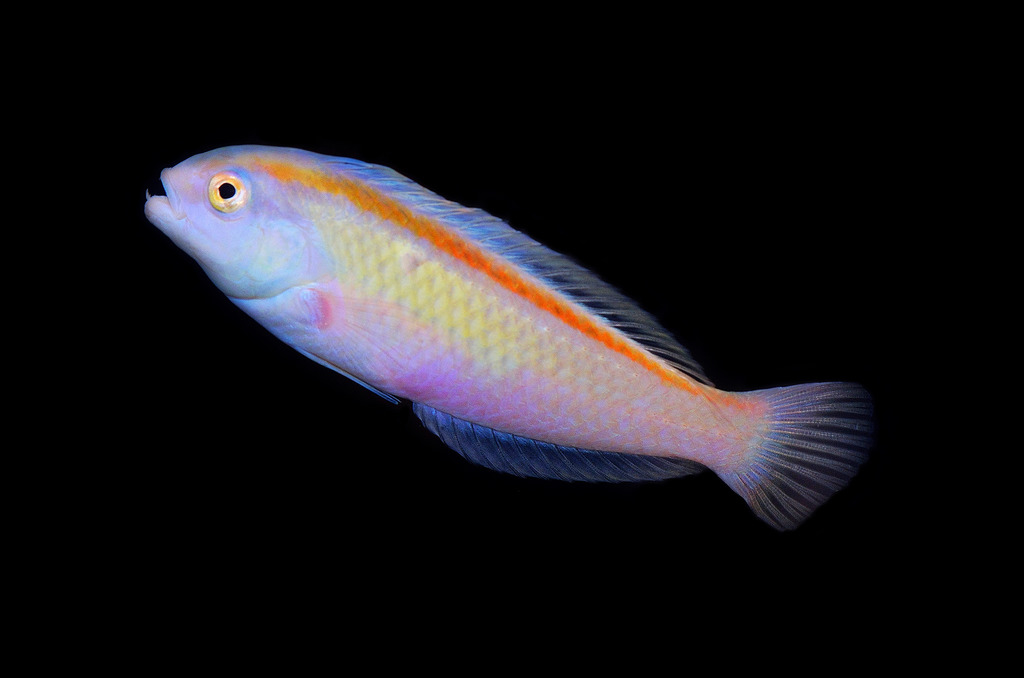
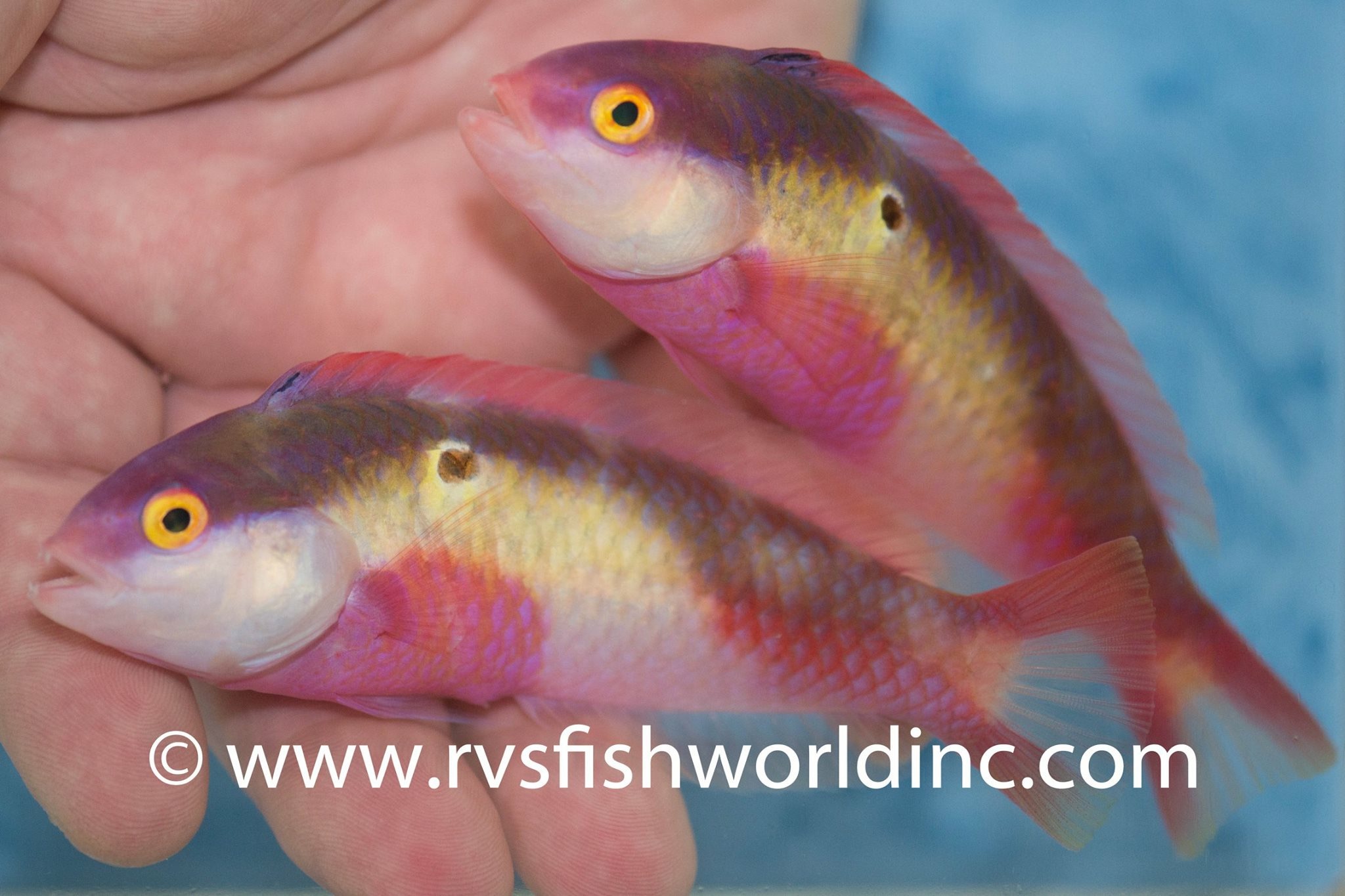
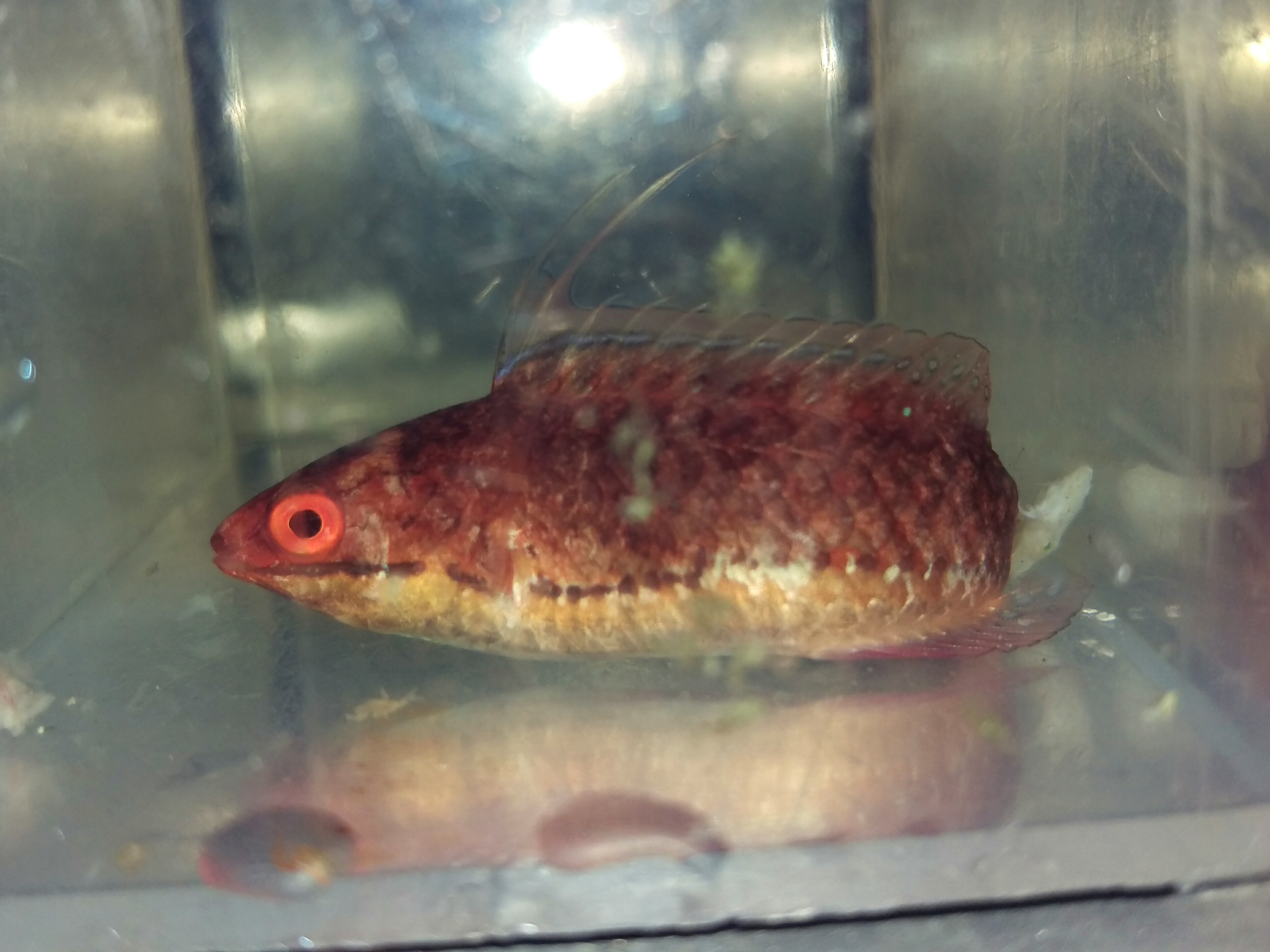
Hunter do you know what fish this is?
It's listed as Novaculops Halsteadi but it also shows another fish under that name. Not sure what to make of that.
Hunter do you know what fish this is?
It's listed as Novaculops Halsteadi but it also shows another fish under that name. Not sure what to make of that.
Not Hunter, but can still help. That is a juvenile Novaculops halsteadi. As it transitions, it will lose the red dorsum stripe, it's base color will become more blue, and it will develop a shoulder 'spot'.
Yes, that's lunatus. The question is, what variant? It could be the Japanese (true lunatus) or the Philippine variant (cf. lunatus) at this point, but I'll venture it's the latter since there was a pretty good supply of them a while back.
Hunter do you know what fish this is?
It's listed as Novaculops Halsteadi but it also shows another fish under that name. Not sure what to make of that.
How certain are you about this considering the second pictures I posted? Also, since it's in the same complex as C. Solorensis are they not likely to get along?
How certain are you about this considering the second pictures I posted? Also, since it's in the same complex as C. Solorensis are they not likely to get along?
Neither is C. isoscoles. The first is a diamondtail flasher, Paracheilinus attenuatus, the second is a female in the rubriventralis complex of fairy wrasse, possibly C. africanus.
OK same fish, still bad photo quality. Lol. It's not really as important to me as I have removed this fish. The aggression was worsening towards my pintail and that's a no go for me. Gonna be taking this guy back tomorrow. Still looking like a C. rubeus in this shot?
+1 - Looks like Paracheilinus lineopunctatus, the line-spot flasher wrasse. Small, peaceful ... and hoo-boy, can they light it up when they get excited!
+1 - Looks like Paracheilinus lineopunctatus, the line-spot flasher wrasse. Small, peaceful ... and hoo-boy, can they light it up when they get excited!
Neither is C. isoscoles. The first is a diamondtail flasher, Paracheilinus attenuatus, the second is a female in the rubriventralis complex of fairy wrasse, possibly C. africanus.
OK same fish, still bad photo quality. Lol. It's not really as important to me as I have removed this fish. The aggression was worsening towards my pintail and that's a no go for me. Gonna be taking this guy back tomorrow. Still looking like a C. rubeus in this shot?
















 New York Live Goods Speciosas, Banana torches along with some others, and high end zoas tank cleanout!








