Lux Meter App?

NanaReefer

5000 Club Member
View Badges
Joined
Sep 9, 2011
Messages
7,212
Reaction score
1,687
Location
Upper Peninsula of Michigan
Rating - 0%
0   0   0
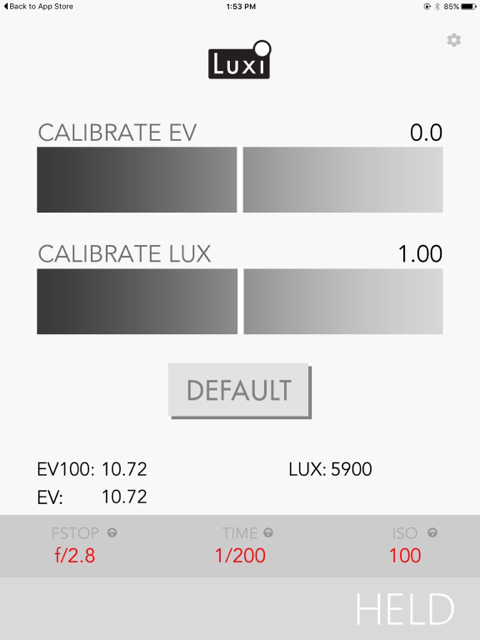
I've no idea what I'm doing-lol. Anyone wanna explain these readings to me? Please!
Readings taken 1" from waters surface, 9-10" directly under each Radion Puk.

Right Puk
52088799e3eeb32341787e6dc610e8ec.jpg


Left Puk
dc6e390dbc85c1f967c2b03e96219c5e.jpg
 

saltyfilmfolks

Lights! Camera! Reef!
View Badges
Joined
Feb 25, 2014
Messages
28,739
Reaction score
40,625
Location
California
Rating - 0%
0   0   0
Galactica for iPhone. Best of seven tested for iPhone. I tested 14 total iPhone and android
You looking for a lux only app if possible.
And honestly the $15 lux meter from Amazon will save a lot of headaches.

For reference my DT t5 are at 23000 lux and my 30 cube is approx 30,000.
Both measured at the top of the water.
 
OP
OP
NanaReefer

NanaReefer

5000 Club Member
View Badges
Joined
Sep 9, 2011
Messages
7,212
Reaction score
1,687
Location
Upper Peninsula of Michigan
Rating - 0%
0   0   0
According to what little knowledge I have, these numbers are not good. However my Radion is in acclimation mode and my max intensity is at 44%.

Just tried it with iPhone. Getting 3.9k under puks.
 
Last edited:

dbrewsky

Active Member
View Badges
Joined
Nov 29, 2014
Messages
476
Reaction score
325
Location
Denver
Rating - 0%
0   0   0
I know im going to catch some heat because of this but the majority of the apps will not be accurate at all. Besides LUX is not a good way to determine light intensity on a reef tank because Lux is a standard that measures perceived brightness in human eyes and will not accurately measure the heavy weighted blue and near uv range spectrum that corals actually use.

This does not make it an accurate measurement for reef tanks. You can take two identical tanks, one with a radion measuring 400 lux and have corals thriving and one with a sodium vapor or hot light studio light that lux is actually designed to measure at 10,000 lux and the corals would be dead in a week.

If you already have a Seneye that does accurately measure spectral data and PAR I would see if you can borrow a laptop or other device and use real, quantitative data that accurately measures the light quality that corals need.
 

Sabellafella

7500 Club Member
View Badges
Joined
Jul 8, 2015
Messages
7,634
Reaction score
11,507
Rating - 100%
5   0   0
Galactica for iPhone. Best of seven tested for iPhone. I tested 14 total iPhone and android
You looking for a lux only app if possible.
And honestly the $15 lux meter from Amazon will save a lot of headaches.

For reference my DT t5 are at 23000 lux and my 30 cube is approx 30,000.
Both measured at the top of the water.
Sorry to hijack the thread but yall getting me interested. Whats the best lux app for Android
 
OP
OP
NanaReefer

NanaReefer

5000 Club Member
View Badges
Joined
Sep 9, 2011
Messages
7,212
Reaction score
1,687
Location
Upper Peninsula of Michigan
Rating - 0%
0   0   0
I know im going to catch some heat because of this but the majority of the apps will not be accurate at all. Besides LUX is not a good way to determine light intensity on a reef tank because Lux is a standard that measures perceived brightness in human eyes and will not accurately measure the heavy weighted blue and near uv range spectrum that corals actually use.

This does not make it an accurate measurement for reef tanks. You can take two identical tanks, one with a radion measuring 400 lux and have corals thriving and one with a sodium vapor or hot light studio light that lux is actually designed to measure at 10,000 lux and the corals would be dead in a week.

If you already have a Seneye that does accurately measure spectral data and PAR I would see if you can borrow a laptop or other device and use real, quantitative data that accurately measures the light quality that corals need.

Orphek seems to disagree with you greatly. [emoji6]
 

Sabellafella

7500 Club Member
View Badges
Joined
Jul 8, 2015
Messages
7,634
Reaction score
11,507
Rating - 100%
5   0   0
I know im going to catch some heat because of this but the majority of the apps will not be accurate at all. Besides LUX is not a good way to determine light intensity on a reef tank because Lux is a standard that measures perceived brightness in human eyes and will not accurately measure the heavy weighted blue and near uv range spectrum that corals actually use.

This does not make it an accurate measurement for reef tanks. You can take two identical tanks, one with a radion measuring 400 lux and have corals thriving and one with a sodium vapor or hot light studio light that lux is actually designed to measure at 10,000 lux and the corals would be dead in a week.

If you already have a Seneye that does accurately measure spectral data and PAR I would see if you can borrow a laptop or other device and use real, quantitative data that accurately measures the light quality that corals need.
I dont disagree at all, depending on the type of lighting- you can be way way off with measuring lux as your primary measurement. The device could be 100% accurate,Par is too valuable to me but its too darn expensive for fellow reefers to even consider purchasing. You can litterally bleach any coral moving it 2 inches down your frag rack not realizing its only a 20+ par difference. From "what ive seen" with lux you can barely tell the difference. Im not bashing lux measurement as its better then nothing especially using leds
 

dbrewsky

Active Member
View Badges
Joined
Nov 29, 2014
Messages
476
Reaction score
325
Location
Denver
Rating - 0%
0   0   0
the article you are referring to also states that lux is light intensity most pecievable as "bright" to the human eye which is the green spectrum and does not benefit coral. The spectral graphs of light that corals actually use contains very little to no green spectrum. Using a method that measures green light to approximate the intensity of appropriate reef lighting intensity does not make sense and your actual PAR readings could be greatly higher than the lux would refer to especially in LEDS where the green could be dialed down significantly in comparison to the rest of the spectrum.

https://orphek.com/about/kelvin-lux-lumens-par-pur/
 

Darryl

Well-Known Member
View Badges
Joined
Oct 10, 2015
Messages
559
Reaction score
390
Location
Walden ,NY
Rating - 0%
0   0   0
spend more time enjoying your hobby and less time putzing with stuff.
if you need to get one because because listen to mcarroll its cheep and easy and then after you play with for a bit get back to enjoying .
AND DONT GO SCREWING WITH YOUR LIGHTS IF EVERYTHING IS AND HAS BEEN GOOD, BECAUSE A STUPID METER TELLS YOU TOO!
of corse if it hasn't been good then check your water first then habits
 
OP
OP
NanaReefer

NanaReefer

5000 Club Member
View Badges
Joined
Sep 9, 2011
Messages
7,212
Reaction score
1,687
Location
Upper Peninsula of Michigan
Rating - 0%
0   0   0
Well I dug out my Seneye and got a LUX reading of 14,995 at waters surface. My Radion is at 43% max for this reading.
Par at about 6" below surface was 356.
Where my T. Maxima on SB Par is 115. This concerns me.

I'm not messing with my lights. I'm educating myself! I'm curious too.
Anyone who does testing on lights use Par, Lux, Lumen, Kelvin and PUR to explain. I want to know what they all mean and how they apply to my corals.
 
Last edited:

DO YOU THINK TECHNOLOGICAL ADVANCEMENTS ARE MORE HELPFUL OR HURTFUL TO REEFING?

  • More helpful.

    Votes: 59 42.1%
  • More hurtful.

    Votes: 5 3.6%
  • I think it depends mostly on the technology.

    Votes: 53 37.9%
  • I think it dependsmostly on the reefer behind the technology.

    Votes: 42 30.0%
Back
Top
Home
Post thread…
Market
What's new