QT tank, dose or observe only?

  • Thread starter Thread starter dirtyd61
  • Start date Start date
  • Tagged users Tagged users None
. And some don’t know how to run such a system as what you have. And we do owe our fish a helping hand if we are to keep them in a glass cages .00001% of an ocean. 😆
My system is the simplest system on here. No quarantine tanks, no medications, no observation. Where is the hard part?

Reducing stress can be done by anyone. It's the way the tank is set up. Like the sea, the tank needs "many" hiding places where the fish can get out of sight.
Can you see the spotted moray eel in the center of this natural coral? I think I took this in the Caribbean but it could be Hawaii
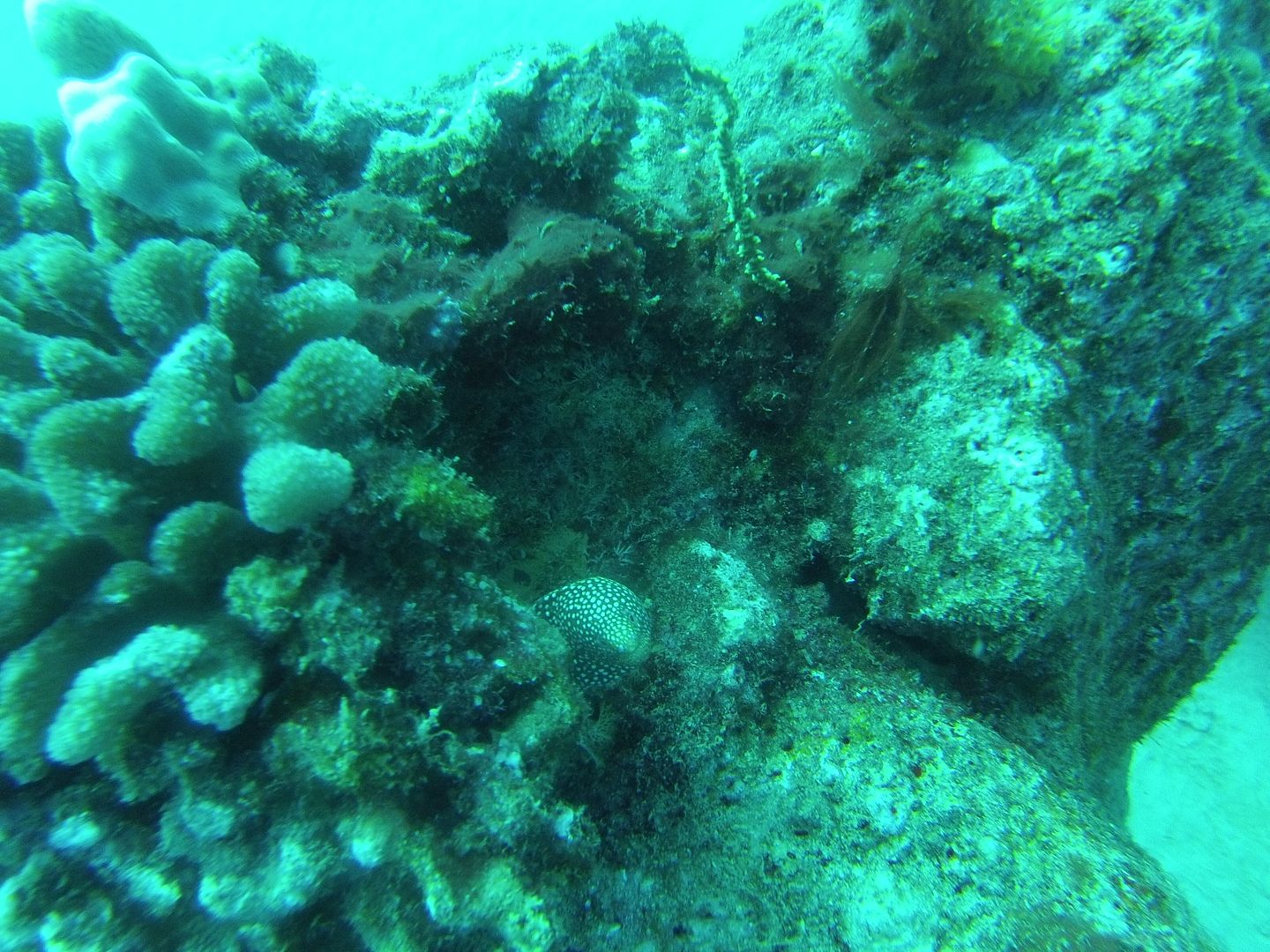


"Tight" hiding places, not a cave in the middle of the tank. If you SCUBA dive you will see this and when you approach most fish, they dive right into a hole where you can't see them. Very few tanks are set up like this so they have to quarantine or medicate because their fish will get sick.

It costs nothing and anyone can do it just by moving rocks around. Simple.
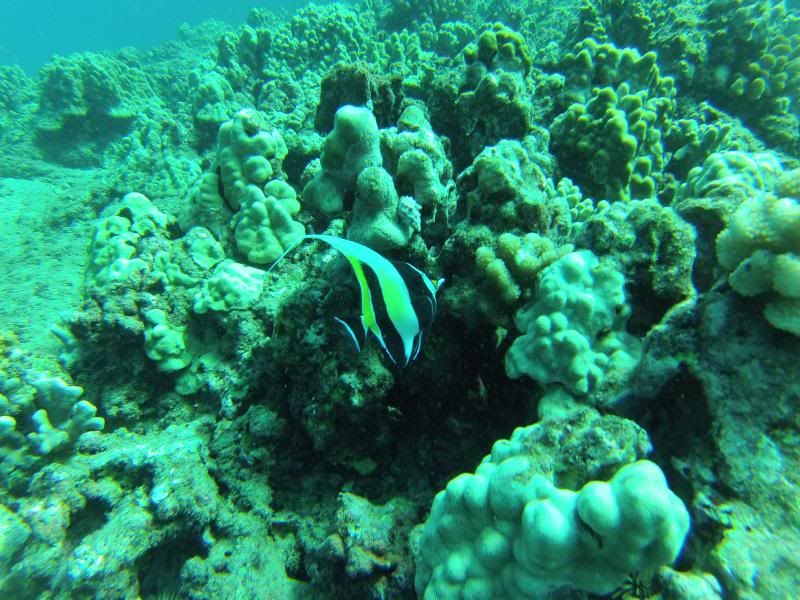


In my tank, I raised my entire reef structure over the substrate about an inch. My fish can traverse the entire tank through a systems of caves and tunnels all through the 6' tank and I will never see them. There are about 40 fish in there, How many do you see?


That is what fish want and a bare tank with white PVC will totally give them the horrors and actually cause disease, not cure it.

Anyone can get live whiteworms. I got a culture on Amazon for 15 bucks about 16 years ago and they breed like crazy so I have more than I can use. They are great for gut bacteria and I have been using whiteworms or blackworms since the hobby started in 1971. I also use some earthworms that I cut up. I can buy them in the winter at Walmart and in the summer I collect them in the rain. They also spawn like crazy on banana peels and I have way too many so I let some go.

Who can't get them?
If i find velvet on any fish i can ship it out to you. 😁😆 let me know. I would be curious to see what would happen also. I just think you have not gotten any fish with the disease. And here is a crazy one.
For about 20 years I asked anyone on these forums to send me any small fish with any disease they want so I could put it in my tank. No one sent any. Two years ago I took Humblefish to a filthy LFS and told him to pick out any sick fish so we could throw it in my tank. We couldn't find a fish sick enough so I bought a coral from there and threw it in. It is still there. That deal is off the table now because I asked for it for too long and I don't have the time for it. If you don't believe my 55 year old tank is immune, I don't have to worry about it because it's the oldest tank maybe in the US so again, I have nothing to prove.

The people who quarantine and are always on the disease forum have something to prove to show me that system works well.
In my humble opinion, this right here is the single biggest reason why I don't believe that your paradigm is a good choice for most reefers, especially beginners. Not everyone will have access to a wide variety of live, natural foods the way you do.
Read the beginning of this post again. Everyone can run a tank like I do. I don't even test and hardly change water, what is so hard. If we want to keep a dog, we have to give it dog food and care for it as a dog wants to be cared for. If we can't care for these millions of fish we take from the sea, we should get a different hobby because if your fish are not dying from old age and spawning, you are doing this wrong and it is an injustice to the creatures we say we care about. It's not that hard at all.

If they are quarantined and medicated they are not complete fish because they have almost no immunity as all living creatures, including parasites do.

I spend most of my day caring for my sick wife and have very little time for my tank. Sometimes I don't have time to feed them or clean the glass. I have not changed any water in many months, and I see 4 or 5 corals that fell down in the dark and need to be glued. I don't have time and nothing gets sick or needs extra care. They are just there living out their lives spawning and smiling while living out their lives all the way to their presumed lifespan.

The only sick fish I see are on these forums and it is silly to allow fish to get sick.

Remember, I don't care how you take care of your fish, that is not my business. If anyone wants to learn this system, I have dozens of posts, interviews and a book.
 
Last edited:
And to understand this Jay. It’s strain specific yes? It’s what I’m understanding vs acquired because of cellular change as in bacteria for example.

Yes, that’s my understanding. The researchers were using wild strains of Cryptocaryon.
 
My system is the simplest system on here. No quarantine tanks, no medications, no observation. Where is the hard part?

Reducing stress can be done by anyone. It's the way the tank is set up. Like the sea, the tank needs "many" hiding places where the fish can get out of sight.
Can you see the spotted moray eel in the center of this natural coral? I think I took this in the Caribbean but it could be Hawaii


"Tight" hiding places, not a cave in the middle of the tank. If you SCUBA dive you will see this and when you approach most fish, they dive right into a hole where you can't see them. Very few tanks are set up like this so they have to quarantine or medicate because their fish will get sick.

It costs nothing and anyone can do it just by moving rocks around. Simple.


In my tank, I raised my entire reef structure over the substrate about an inch. My fish can traverse the entire tank through a systems of caves and tunnels all through the 6' tank and I will never see them. There are about 40 fish in there, How many do you see?
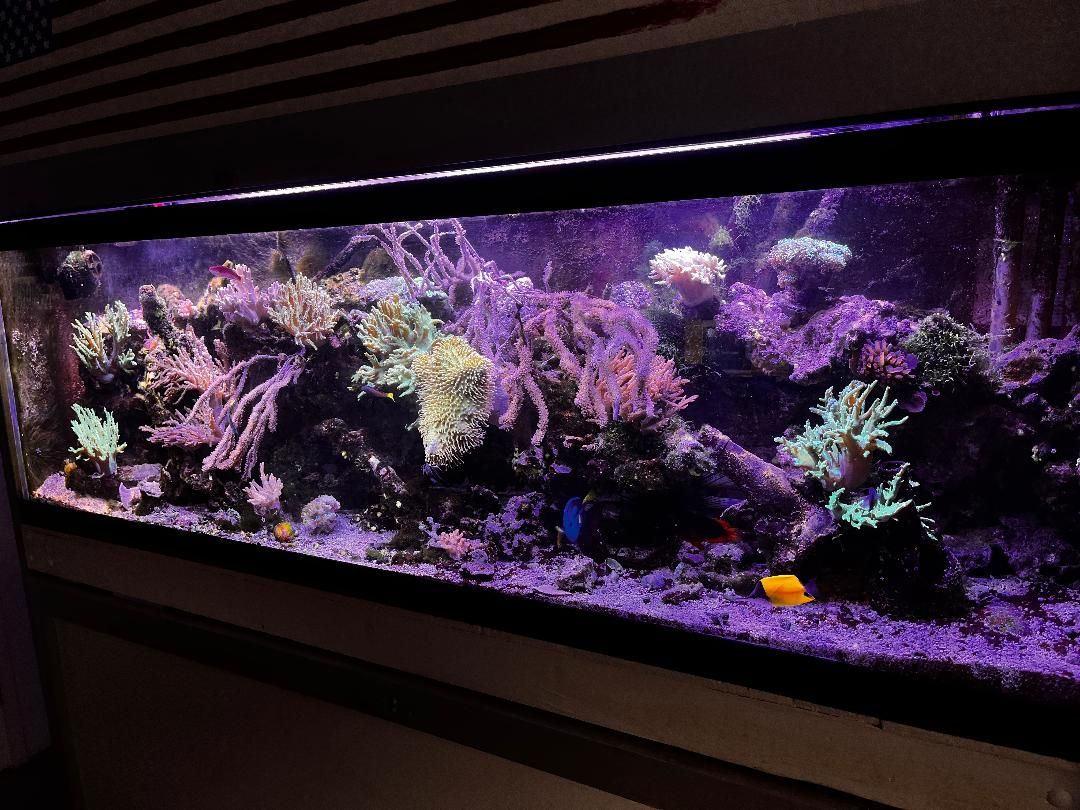

That is what fish want and a bare tank with white PVC will totally give them the horrors and actually cause disease, not cure it.

Anyone can get live whiteworms. I got a culture on Amazon for 15 bucks about 16 years ago and they breed like crazy so I have more than I can use. They are great for gut bacteria and I have been using whiteworms or blackworms since the hobby started in 1971. I also use some earthworms that I cut up. I can buy them in the winter at Walmart and in the summer I collect them in the rain. They also spawn like crazy on banana peels and I have way too many so I let some go.

Who can't get them?

For about 20 years I asked anyone on these forums to send me any small fish with any disease they want so I could put it in my tank. No one sent any. Two years ago I took Humblefish to a filthy LFS and told him to pick out any sick fish so we could throw it in my tank. We couldn't find a fish sick enough so I bought a coral from there and threw it in. It is still there. That deal is off the table now because I asked for it for too long and I don't have the time for it. If you don't believe my 55 year old tank is immune, I don't have to worry about it because it's the oldest tank maybe in the US so again, I have nothing to prove.

The people who quarantine and are always on the disease forum have something to prove to show me that system works well.

Read the beginning of this post again. Everyone can run a tank like I do. I don't even test and hardly change water, what is so hard. If we want to keep a dog, we have to give it dog food and care for it as a dog wants to be cared for. If we can't care for these millions of fish we take from the sea, we should get a different hobby because if your fish are not dying from old age and spawning, you are doing this wrong and it is an injustice to the creatures we say we care about. It's not that hard at all.

If they are quarantined and medicated they are not complete fish because they have almost no immunity as all living creatures, including parasites do.

I spend most of my day caring for my sick wife and have very little time for my tank. Sometimes I don't have time to feed them or clean the glass. I have not changed any water in many months, and I see 4 or 5 corals that fell down in the dark and need to be glued. I don't have time and nothing gets sick or needs extra care. They are just there living out their lives spawning and smiling while living out their lives all the way to their presumed lifespan.

The only sick fish I see are on these forums and it is silly to allow fish to get sick.

Remember, I don't care how you take care of your fish, that is not my business. If anyone wants to learn this system, I have dozens of posts, interviews and a book.


Paul to say wild fish don’t stress is in my opinion wrong. If anything the insanity of living in the wild is another level of life. Every turn you freak out and drop into rocks, just because a fish has a hiding spot does not mean its cortisol levels do not spike. I have done underwater videos of fish and their breathing rate when scared by just shadows tells the story that they life under stress on a regular. I have read on this subject for some time. I will try I to find a write up that was a good one in regard to marine fish stress in the world.

Also with everything happening on reefs sadly, it’s been getting better since some attention has been brought to the issues of reef, but you still see wild areas where collections don’t even take place and fish number naturally shrink and not even in regard to say living space. But the simple fact there are a million other things that can go wrong in the wild. The way I see it, wild fish if anything in the wild have a ton more to have a constant rise and fall in cortisol. Arian regardless of hiding spots. It’s a batter of the fish had to literally run off at super speeds to hide. No different than a person running for a dog that’s chasing him. Natures is savage and stress is something we are I think blowing way out of proportion. It happens all over the place.

I’m a firm believer in hiding spots for fish. And I’m still building my rocks in my fairly new 300g system. And can’t say enough about hiding caves and crevasses. But my fish are sure less stressed than fish living in the wild. Why you ask might ask? Simple fact my tank is in a garage, stability with temps, and salinity, no monsters chasing them in the open waters, not even a shadow to chase them in rocks. Yes when I open the door they used to freak out. Now they literally run to that side the door it at because they know it’s feeding times haha.

I will not say my fish don’t get stressed, but to say it’s way more than the wild? A bit of an overstatement of you’re to ask me. Wild fish numbers can decline because of stress factors that nature plays on them. And what do I mean by that? Pollution, dirty reefs, food sources issues and so on.

Lastly I have tried finding anything in studies that marine fish can become fully immune to a disease that is known to strike the gills before the body. Velvet that is. Whereas the others are usually on the body first. They might be more resistant to a degree but overall if velvet gets a hold of a fish it’s toast. But the ocean is just too big for fish to have to deal with concentrated amounts of disease as such in reef tanks.

What do we know about velvet? What is its life cycle? The dinospores can live up to 15 days, they complete a life cycle on 4 days, and the numbers are tremendous compared to ich. Thus why it’s such a crazy disease. And I’m sure you know this. But I have yet to find any writings on marine fish being immune in large numbers, as in it’s a cake walk, if you just feed the fish and get its immune system going.

If only I were a member here some time ago. Haha only have helped with your request to send of infected velvet fish. 😁👍🏽

But we’ll never know now. And nothing wrong with that. My tanks very much disease free as is yours I. And cheers to that. And sorry to hear about your sick wife. May the good Lord give her healing and comfort. 🙏🏽
 
Paul to say wild fish don’t stress is in my opinion wrong. If anything the insanity of living in the wild is another level of life. Every turn you freak out and drop into rocks, just because a fish has a hiding spot does not mean its cortisol levels do not spike. I have done underwater videos of fish and their breathing rate when scared by just shadows tells the story that they life under stress on a regular. I have read on this subject for some time. I will try I to find a write up that was a good one in regard to marine fish stress in the world.

Also with everything happening on reefs sadly, it’s been getting better since some attention has been brought to the issues of reef, but you still see wild areas where collections don’t even take place and fish number naturally shrink and not even in regard to say living space. But the simple fact there are a million other things that can go wrong in the wild. The way I see it, wild fish if anything in the wild have a ton more to have a constant rise and fall in cortisol. Arian regardless of hiding spots. It’s a batter of the fish had to literally run off at super speeds to hide. No different than a person running for a dog that’s chasing him. Natures is savage and stress is something we are I think blowing way out of proportion. It happens all over the place.

I’m a firm believer in hiding spots for fish. And I’m still building my rocks in my fairly new 300g system. And can’t say enough about hiding caves and crevasses. But my fish are sure less stressed than fish living in the wild. Why you ask might ask? Simple fact my tank is in a garage, stability with temps, and salinity, no monsters chasing them in the open waters, not even a shadow to chase them in rocks. Yes when I open the door they used to freak out. Now they literally run to that side the door it at because they know it’s feeding times haha.

I will not say my fish don’t get stressed, but to say it’s way more than the wild? A bit of an overstatement of you’re to ask me. Wild fish numbers can decline because of stress factors that nature plays on them. And what do I mean by that? Pollution, dirty reefs, food sources issues and so on.

Lastly I have tried finding anything in studies that marine fish can become fully immune to a disease that is known to strike the gills before the body. Velvet that is. Whereas the others are usually on the body first. They might be more resistant to a degree but overall if velvet gets a hold of a fish it’s toast. But the ocean is just too big for fish to have to deal with concentrated amounts of disease as such in reef tanks.

What do we know about velvet? What is its life cycle? The dinospores can live up to 15 days, they complete a life cycle on 4 days, and the numbers are tremendous compared to ich. Thus why it’s such a crazy disease. And I’m sure you know this. But I have yet to find any writings on marine fish being immune in large numbers, as in it’s a cake walk, if you just feed the fish and get its immune system going.

If only I were a member here some time ago. Haha only have helped with your request to send of infected velvet fish. 😁👍🏽

But we’ll never know now. And nothing wrong with that. My tanks very much disease free as is yours I. And cheers to that. And sorry to hear about your sick wife. May the good Lord give her healing and comfort. 🙏🏽

Regarding stress in wild fish: I had a decades-long study measuring respiration rates of fishes. We all know that stressed fish respire more rapidly. I then had some time to sample wild fish's respiration rates. This is what I found:

One early hypothesis was that since captive fishes whose health is compromised (through chronic or acute issues) tend to respire more rapidly, fish in the wild, typically having no health issues would possibly serve as good baseline for normal respiration rates. Sampling of wild fishes in Belize, the Galapagos and the Bahamas shows that for the most part, wild fish respire more rapidly than do healthy fish in captivity. Seemingly counterintuitive, the answer may be that fishes in the wild are so active searching for food, swimming against currents and avoiding predators, that they simply respire faster than healthy, sedate fish in captivity.

For many years, I assisted with another study that measured fecal cortisol levels of fish in captivity versus the wild as a non-invasive means to measure stress levels in fish. I helped with with the captive side of things - where he kept parrotfish in tanks and measured the steroids in their feces. I told him that parrotfish don't do well in small bare holding tanks like he was using and that I expected high stress hormones as a result.

In his paper, he found this: "...there was no difference in respective hormone levels between aquarium and field environments." You could have knocked me over with a feather!

Here is a link to his paper:

https://www.sciencedirect.com/science/article/abs/pii/S0016648003001965
 
Regarding stress in wild fish: I had a decades-long study measuring respiration rates of fishes. We all know that stressed fish respire more rapidly. I then had some time to sample wild fish's respiration rates. This is what I found:

One early hypothesis was that since captive fishes whose health is compromised (through chronic or acute issues) tend to respire more rapidly, fish in the wild, typically having no health issues would possibly serve as good baseline for normal respiration rates. Sampling of wild fishes in Belize, the Galapagos and the Bahamas shows that for the most part, wild fish respire more rapidly than do healthy fish in captivity. Seemingly counterintuitive, the answer may be that fishes in the wild are so active searching for food, swimming against currents and avoiding predators, that they simply respire faster than healthy, sedate fish in captivity.

For many years, I assisted with another study that measured fecal cortisol levels of fish in captivity versus the wild as a non-invasive means to measure stress levels in fish. I helped with with the captive side of things - where he kept parrotfish in tanks and measured the steroids in their feces. I told him that parrotfish don't do well in small bare holding tanks like he was using and that I expected high stress hormones as a result.

In his paper, he found this: "...there was no difference in respective hormone levels between aquarium and field environments." You could have knocked me over with a feather!

Here is a link to his paper:

https://www.sciencedirect.com/science/article/abs/pii/S0016648003001965

Interesting! Thank you for the write up. I’ll read the link you posted.

Your link was more geared to a specific point I see and good writing from what I glanced over. Here is the one I read upon.

https://www.sciencedirect.com/science/article/abs/pii/S0048969719324106
Publication is published more recent.
 
Last edited:
@Jay Hemdal how long is qt for Flukes for inverts like shrimp starfish and anemones? Is there a set timeline? It’s 21 days correct?
 

Paul to say wild fish don’t stress is in my opinion wrong.
Winxp, I didn't say fish in the sea don't experience stress. Of course they do, they all die by being eaten alive so that would be stressful. They are always being chased by something larger. But that is the way fish were designed.

After the fish escapes from a predator, it is no longer stressed for a while. Maybe a few minutes or hours, but when the danger is gone, the fish relaxes and the cortisol levels drop very fast. That is normal.

A fish in quarantine in a bare tank has no repast from the stress. It is constant, never ending for 64 days or how ever long people quarantine and if the fish is also medicated, that is more stress because all these "medications" we use are poisons. In that situation the cortisol levels don't drop and the cortisol does all those things I mentioned including stopping the immune system from functioning which is why we see so many fish get sicker or suffer from something else in quarantine. Just look at the disease forum.

Lastly I have tried finding anything in studies that marine fish can become fully immune to a disease that is known to strike the gills before the body. Velvet that is.
I have linked quite a few times how fish become fully immune to parasites so I won't do it again. I didn't write those links, they came from scientists that people on these forums seem to trust. I have an entire thread on here with those links. If this were not true, my and all the other very old, immune tanks would not exist as I have posted many times fish that I added to my tank covered in ich.

Remember, the oldest tanks in this hobby were never quarantined or medicated, I know of three of them off hand.

And I’m sure you know this. But I have yet to find any writings on marine fish being immune in large numbers, as in it’s a cake walk, if you just feed the fish and get its immune system going.
You have to read "all" the words I post, not just some. That is where people get it wrong. Providing hiding places and feeding fish won't do it. Those hiding places are specific sizes and the "good" food doesn't matter if it doesn't have living gut bacteria. Almost nothing from a LFS will work no matter how pretty the angel fish is on the label.

What do we know about velvet? What is its life cycle?
I don't know or care. I argued with Burgess on this many years ago. The life cycle of a parasite doesn't matter if the fish is immune to it.
When the hobby started I wrote an article in a magazine about immunity to parasites and I said that a fish could "not" become immune to parasites because that would be like being immune to bullets. I was wrong as I later found out.
The vast majority of hobbyists today have not discovered that, yet which is the reason for disease forums, but a small fraction of people know the secret, those are the ones never on disease forums. 😆

In medieval times many people were shot with arrows and died. So they invented armor that Knights wore that made them immune to arrows. Of course falling off a horse with that heavy armor on wasn't a good thing and Knights frowned on that because the guy with arrows just walked up to the knight and played RAP music in his helmet until his head exploded. 😳

A little scientific literature if you are interested:

Gut microbiota can affect fish physiology, development, "life span, immunity," and barriers against pathogens (Burns et al., 2016; Nie et al., 2017; Smith et al., 2017; Yan et al., 2016). Therefore, the gut microbiota plays an indispensable role in fish fitness. Several recent reviews have centered on the diversity and functions of bacterial communities in healthy fish (de Bruijn et al., 2017), as well as on the external factors that affect fish gut microbiota (Wang et al., 2017) and interactions between gut microbiota and innate immunity in fish (Gómez & Balcázar, 2008; Nie et al., 2017).

(Dry foods have no living microbia,,,,,By me)

However, most previous studies have focused on factors that govern healthy gut microbiota, such as diet, rearing conditions, and fish genotype (Schmidt et al., 2015; Sullam et al., 2012; Yan et al., 2016). In contrast, few studies have reported on the interplay among gut microbiota, fish immunity, and disease (Nie et al., 2017). In this commentary, we summarize current knowledge on the associations between fish immunity, gut microbiota, and invading intestinal pathogens. We also highlight recent progress in uncovering the ecological processes of fish diseases.

You can read the entire article here:
https://pmc.ncbi.nlm.nih.gov/articles/PMC6378566/
There is another article that I won't look for now but it states that natural reefs with the most parasites are healthier than the reefs with fewer parasites. It has to do with immunity and may be in the thread I linked. 😎

Another one. I can do this all day:


Creative Commons Attribution License, which permits unrestricted use, distribution, and reproduction in any medium, provided the original work is properly cited.

(ISRN ImmunologyVolume 2012 (2012), Article ID 853470, 29 pageshttp://dx.doi.org/10.5402/2012/853470Review ArticleAn Overview of the Immunological Defenses in Fish SkinMaría Ángeles Esteban)

Quote: Immunity associated with the parasites depends on the inhabiting discrete sites in the host. Especially important for this paper are the ectoparasites, those habiting in or on the skin. Until recently there had been little direct evidence of innate immune mechanisms against parasites associated with mucosal epithelium [285]. The active immunological role of skin against parasitic infection has been shown recently [286–288], and now mucosal immunity against them start to be elucidated.

Non-parasitic fishes usually die following infection, but animals surviving sublethal parasite exposure become resistant to subsequent challenge. This resistance correlates with the presence of humoral antibodies in the sera and cutaneous mucus of immune fishes.

Another excerpt:

Other consequences of copper:
(quote) High copper concentrations result in rapid mortality, partly a consequence of hypoxaemia, likely due in part to histopathological changes such as cell swelling and thickening of lamellae, congestion, telangiectasia, epithelial detachment, lamellar synechiae and even fusion of lamellae. These changes lead to an overall reduction in gill surface area and impaired laminar water flow, which have the saving effect of reducing exposure to the pollutant. Unfortunately, this very same response impairs oxygen uptake and carbon dioxide excretion, which leads in turn to an increase in PCO2 and acidosis (increased blood lactate). Instead of hypoxaemia, however, mortality likely results from ionoregulatory disturbances that induce elevated blood pressure, leading to cardiovascular collapse. (end quote)

I have a thread on here that is 170 pages long with many links to scientific study if you have nothing to do for an entire day you can read it. 😬


It's silly for me to re-post all those links that I posted dozens of times over many years. As I keep saying, you don't have to believe anything I say and when your quarantined tank gets to 50 years old and never has any disease and most of the fish are spawning and dying of old age, I will say I am totally wrong. Of course I will be dead so I won't care. 😆
 
Here is part of a thread I also started on here about the benefit of parasites:

The Benefits of Parasites.
For much of my 60+ years of fish keeping, I have always wondered why we have so many problems with fish diseases, especially parasite-caused diseases.

Today, in my Mailbox, I received a "Discover" magazine that I have been reading for decades. This month's issue (Sept/Oct 2024) had something on the cover that caused me to read the article immediately. It was titled "The Problem with Parasites" by Kate Golembiewki. The article initially sounds like it is against parasites and the diseases they cause, but just the opposite is true. It focuses on the work of Chelsea Wood, then, in 2010, a budding parasitologist pursuing her Ph.D. in Biology at Stanford University.

Wood is now an associate professor at the School of Aquatic and Fishery Sciences at the University of Washington.

She studied parasites in fish from uninhabited Islands and areas that were overfished. What she found shocked her.

Against what I have been saying for decades, most people feel parasites are harbingers of doom in an ecosystem that causes distress. Even many researchers and Scientists feel that way. We associate parasites with badness, destruction and doom. But we are wrong.

About 40% of all species on Earth are parasites and are here for a purpose.

Many people think that when something happens to screw up the ecosystem, parasites move in to colonize the weak animals, but just the opposite is true.
Most healthy animals, or in our case, fish, harbor parasites.

Probably every fish in the sea has some parasites, which are there for a reason and not to kill the fish as that would be counterproductive for the parasite.

Normally, parasites go through their life cycle in cycles and one of those cycles is to suck some blood from the fish, then move on, reproduce and start their cycle over again.
This does no harm to the fish, just as we Humans have parasites on and in us that cause no harm, and we are not even aware of their existence.

Quote: "A world with fewer parasites, perhaps ironically, means a world with less healthy ecosystems, as parasites help keep the populations of their hosts in a delicate balance". Un Quote

It's not the parasites that are making your fish sick. It's that your fish are not in optimal enough health to repel parasites. (That is also in this article by Wood and the book I wrote)

Parasites have a difficult time going through their life cycle, and many parasites are actually in decline and in danger of becoming extinct. First, they have to find a suitable host in a limited time. Then, after they find a host, they have to contend with its immune system that tries to repel them before they can multiply in massive numbers. In a healthy ecosystem, the immunity of the animals will have no difficulty repelling or even killing the majority of parasites, but the few that do live long enough to suck some blood and re-produce are needed to keep the fish healthy by allowing its immune system to continue to make antibodies to that particular parasite.

As I said, 40% of all creatures are parasites, and there are many different types of parasites. The fish's immune system has to make antiparasitic substances for all of them, and healthy fish do just that. The more parasites in an ecosystem, the stronger and better equipped the fish's immunity will become to repel the parasites.

If we remove all the parasites on a reef or in a tank, the immunity of the hosts will quickly wane because immunity for a fish uses up the majority of calories a fish has at its disposal. Much of a fish's immunity is located in its slime, and it is energy-consuming to constantly produce that slime because it is water soluble and continually sloughs off the fish.

The problem arises in our tanks because we add fish to an established tank that is not in excellent health due to its collection, storage, and shipping. Hence, the fish's immune system is not up to par as stress severely weakens the immunity.

So, killing the parasites is counterproductive, but keeping fish in a state of health as they were in the sea is key. To accomplish this, we need to give fish a stress-free environment as much as possible. End Quote"

The entire thread is here, it is 7 pages long. 😳

 
@Jay Hemdal how long is qt for Flukes for inverts like shrimp starfish and anemones? Is there a set timeline? It’s 21 days correct?

Neobenedenia eggs need to hatch and find a fish host within a time frame that is set by water temperature. Warmer water = shorter time, cooler water = longer time that the eggs can remain viable. The range is around 6 to 30 days for 82 F. to 70 F. degrees. The Oncomiracidium larva have two days to find a host. So - that is a range of 8 to 32 days for a fallow period. People have settled on 20 to 23 days as a good fallow period. I use 30 days just to be safe.

Live bearing flukes release larva only, no eggs, so the fallow period is just a few days for them.

Other egg laying flukes, like the common gill fluke have an intermediate fallow period.

There are rare digenean flukes that require multiple hosts in order to propagate. It seems that those secondary hosts are not normally present in aquariums, so we don't worry about them.
 
same. I do 30 days (min) with copper power and try to keep it between 2.4 and 2.5 ppm the entire time.
I also treat them with Prazi a few times.

I've got 2 fish in full QT right now. They are on day 6 in copper power.
I'm going to try using the new prazicleanse packets from Fritz rather than prazipro this time.
Agree also with this. I do my QT with Copper power at 2.0-2.4 for min 14 days...normally 21 to 30 days and observe in my DT. After my most recent tank crash due to likely flukes introduced by a PetCo fish...I restarted my DT and have it at hyposalinity at 1.011 now. All fish reintroduced have been thru QT for at least that period...QT is also at 1.012 also so I cover most bases of disease ich, velvet, and flukes also other parasites. But agree no fish goes in fresh anymore into DT...just too costly. Last infection was around Xmas and besides the cost in $$$ has also taken me almost 6 mos to get the main tank back up and stable for new fish which I am still slowly restocking.
 
same. I do 30 days (min) with copper power and try to keep it between 2.4 and 2.5 ppm the entire time.
I also treat them with Prazi a few times.

I've got 2 fish in full QT right now. They are on day 6 in copper power.
I'm going to try using the new prazicleanse packets from Fritz rather than prazipro this time.
Agree also with this. I do my QT with Copper power at 2.0-2.4 for min 14 days...normally 21 to 30 days and observe in my DT. After my most recent tank crash due to likely flukes introduced by a PetCo fish...I restarted my DT and have it at hyposalinity at 1.011 now. All fish reintroduced have been thru QT for at least that period...QT is also at 1.012 also so I cover most bases of disease ich, velvet, and flukes also other parasites. But agree no fish goes in fresh anymore into DT...just too costly. Last infection was around Xmas and besides the cost in $$$ has also taken me almost 6 mos to get the main tank back up and stable for new fish which I am still slowly restocking.
Just a quick note on this. Hypo doesn't clear velvet or brook, and 1.012 is too high for ich, it needs to be at 1.009. 1.012 would only really cover flukes.
 
Just a quick note on this. Hypo doesn't clear velvet or brook, and 1.012 is too high for ich, it needs to be at 1.009. 1.012 would only really cover flukes.
Yes my QT is treated with Copper Power also so that clear's the velvet and brook (don't have clownfish in there currently). Also covers ich tho and flukes which was my recent problem. Then transferring into DT with 1.010-1.011 currently ensures previously cleared fish don't have anything else form. Also add Kanaplex, Metroplex and Focus to brine/spirulina brine mix daily feeding both DT and QT to help along with Selcon and Garlic treated nori so immune systems are at their best in both tanks before they go to the main tank. Just added my purple tang to the DT after 14 days in QT and after a bit of poking and rear fin bumping by my smaller Yellow tang who already had been in DT after his QT time.....they both now are besties...with the slightly larger PT now holding his own and they've both found their own equilibrium in the tank space. Next up in a month...my Sohal tang gets to re-establish dominance and tang hierarchy....he's had copper/hypo for 30+ days now and been in QT since April so he's healthy...very active and seems to have grown a 1/2" while in there. Initially didn't tolerate my small juvenile clown tang till I moved the Naso and Yellow out to the DT. Then they were besties...almost. Clown in now in the DT and doing fine. Sohal will be last add tho.
 
Last edited:
I think those strains are pretty rare and most failures are due to inability to maintain therapeutic levels, since most people don't have access to a highly accurate measuring device.
It is not rare it is common you can’t just assume they are rare many people have done hypo and it usually fails due to human failure salinity changes and resistant strains. PH shock and bio media dying off are more issues as well with hypo.
 
Just a quick note on this. Hypo doesn't clear velvet or brook, and 1.012 is too high for ich, it needs to be at 1.009. 1.012 would only really cover flukes.
Yes my QT is treated with Copper Power also so that clear's the velvet and brook (don't have clownfish in there currently). Also covers ich tho and flukes which was my recent problem. Then transferring into DT with 1.010-1.011 currently ensures previously cleared fish don't have anything else form. Also add Kanaplex, Metroplex and Focus to brine/spirulina brine mix daily feeding both DT and QT to help along with Selcon and Garlic treated nori so immune systems are at their best in both tanks before they go to the main tank. Just added my purple tang to the DT after 14 days in QT and after a bit of poking and rear fin bumping by my smaller Yellow tang who already had been in DT after his QT time.....they both now are besties...with the slightly larger PT now holding his own and they've both found their own equilibrium in the tank space. Next up in a month...my Sohal tang gets to re-establish dominance and tang hierarchy....he's had copper/hypo for 30+ days now and been in QT since April so he's healthy...very active and seems to have grown a 1/2" while in there. Initially didn't tolerate my small juvenile clown tang till I moved the Naso and Yellow out to the DT. Then they were besties...almost. Clown in now in the DT and doing fine. Sohal will be last add tho.
I'm not sure if combining hypo, copper, Kanaplex and Metroplex is a good idea, that's a lot of meds, but fish medics should be able to chime in on that. Also, copper also doesn't treat brook.
 
I'm not sure if combining hypo, copper, Kanaplex and Metroplex is a good idea, that's a lot of meds, but fish medics should be able to chime in on that. Also, copper also doesn't treat brook.


This would be correct. Even if needed, one med at a time! This combo the Op posted can possibly end bad. And it’s not something I or any medic on this forum will ever recommend.
 

WHICH PART OF YOUR SETUP IS HARDEST TO REACH OR REMOVE FOR ROUTINE MAINTENANCE?

  • Glass behind or beside the tank

    Votes: 8 23.5%

  • Powerheads or wavemakers

    Votes: 3 8.8%
  • Sump or rear filtration chambers

    Votes: 5 14.7%
  • Skimmer or other filtration equipment

    Votes: 2 5.9%
  • Overflow or plumbing

    Votes: 7 20.6%
  • Lights or lids

    Votes: 0 0.0%
  • Mine is pretty easy to access!

    Votes: 8 23.5%
  • Other—tell us what I missed

    Votes: 1 2.9%
Back
Top
Home
Post thread…
Market
What's new