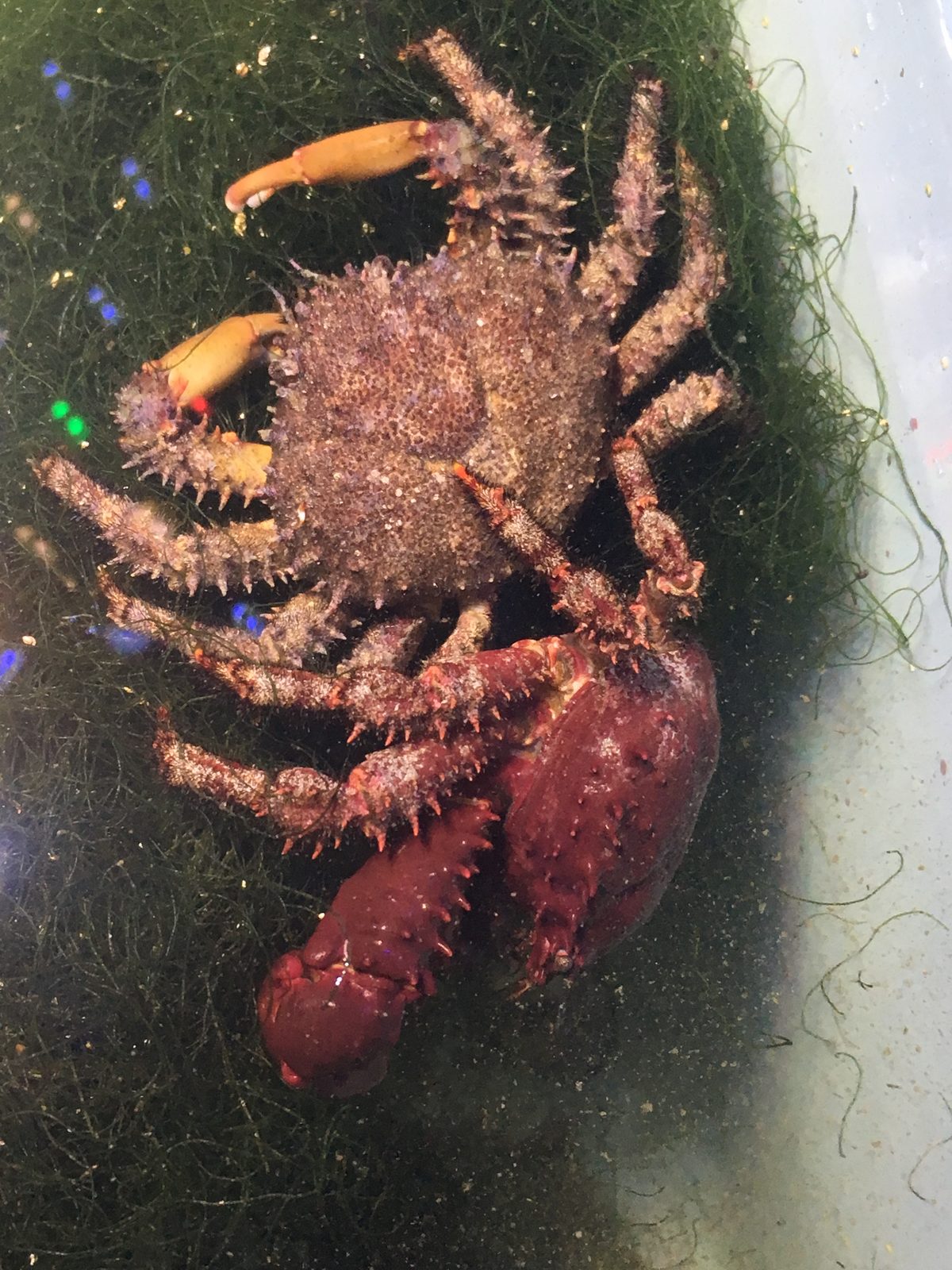
More Mithrax - The Paved Clinging Crab

reefcleaners

Active Member
View Badges
Joined
May 15, 2008
Messages
481
Reaction score
430
This picture is of a pair of the species Mithrax verrucosus, the Paved Clinging Crab. The red crab is male, the grayish crab is female.

Unlike other Mithrax species (like the Emerald Crab and Ruby Crab that are popular in the hobby), the sex of these crabs is apparent without “checking the undercarriage”.

They show pairing behavior. All of the male crabs in our tanks have paired with females and they stick together for a fair portion of the day, hanging out much like they are in this picture.

Their carapace is about 2 inches in diameter, and they are pretty beefy. They have about 8 times the weight of their cousin the Emerald Crab. They have a similar diet, but are large enough to harm and harass small fish and are not reef safe for most tanks.


Looks tough with all the spikes! Do you sell any captive bred mithrax or is everything collected?
 
Everything is collected except some algae. I don't think anyone is doing indoor aquaculture for clean up crews, they are very common in nature, the inputs to do it on land would be wasteful. To net 1000s of shrimp and fish to make food to raise 100s of crabs won't pay until the crabs are much harder to collect.

There were some people without fishing licenses selling them as aquacultured. We tried to work them but they never had the babies or the first settled in to show if you know what I mean so I steered clear of that.

ORA messed around with it for awhile for food purposes while Harbor Branch had a grant. Conchs and urchins. They may still be doing it if the grant money is still there. Some people have tank raised cleaners, which are cleaners that are wild caught and housed for a day or more. They were trying to get pearls out of conchs at Harbor Branch for awhile, might still be doing that. They rely on wild collected specimens though.

Overseas they allow you to farm acres of the ocean, and people do that with Trochus. They currently do not allow that in the tropical parts of the USA, the closest would be Abalone farming in temperate water. I don't think that will happen for most aquarium species, they tend to live in large colonies and it isn't necessary. The Dept of Agriculture in Florida at least isn't interest in aquaculture at sea except for a few food species they can carefully monitor. (Live rock is different because it goes into the water devoid of life). Aquaculture can be pretty destructive, in ponds you can manage the disease with heavy use of medicine, but when it is at sea the disease spreads to native stocks. Gene pools can be affected by the selection process, which is not natural etc.. Currently, the greatest long term threats to FL wildlife after development/runoff are the side affects of the aquaculture industry so it is expanded very cautiously.

edit - Now that I think of it, species like Berghia are probably what the model for invertebrate aquaculture will look like in America. The food is potentially abundant, they require little food before sale, their value to biomass ratio is good and they are not easy to collect reliably year round.
 
Last edited:

TOP 10 Trending Threads

Back
Top
Home
Post thread…
Market
What's new