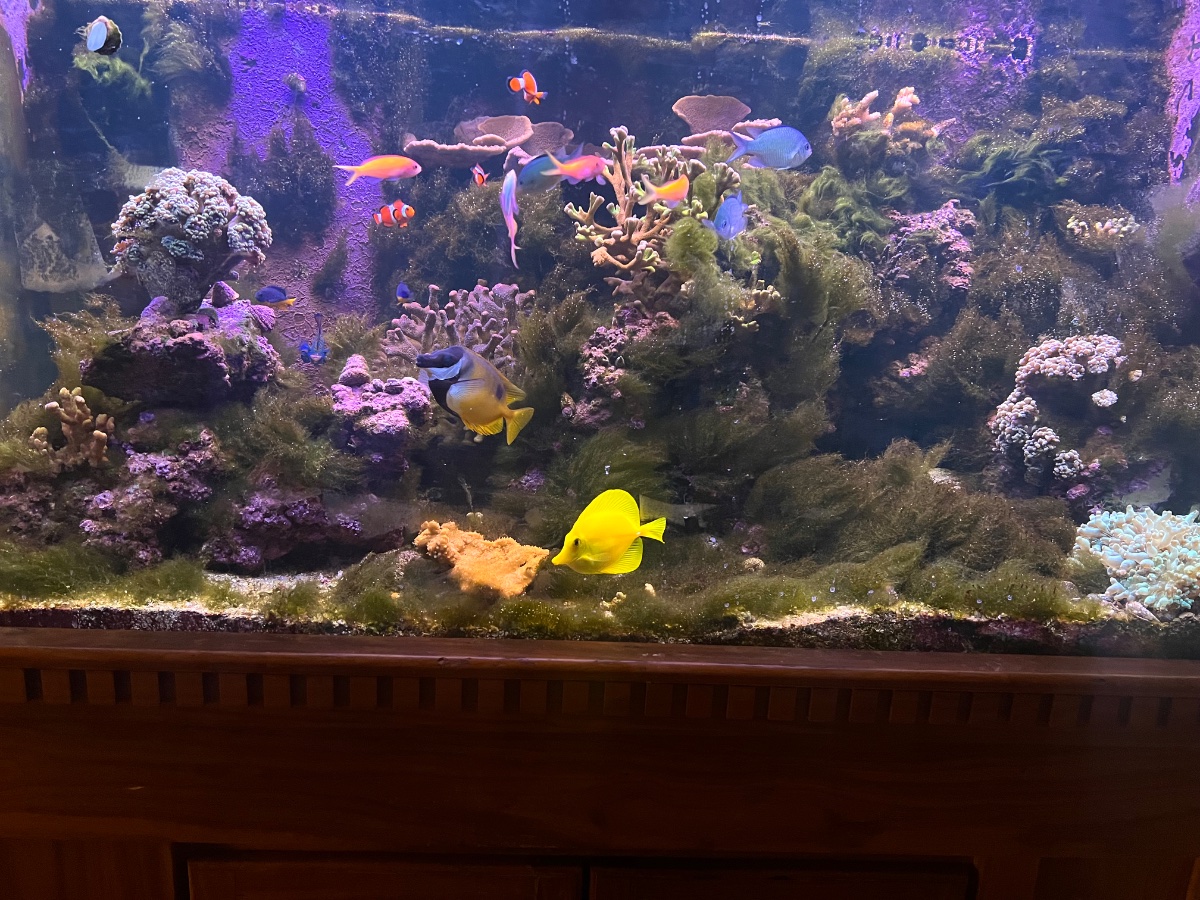
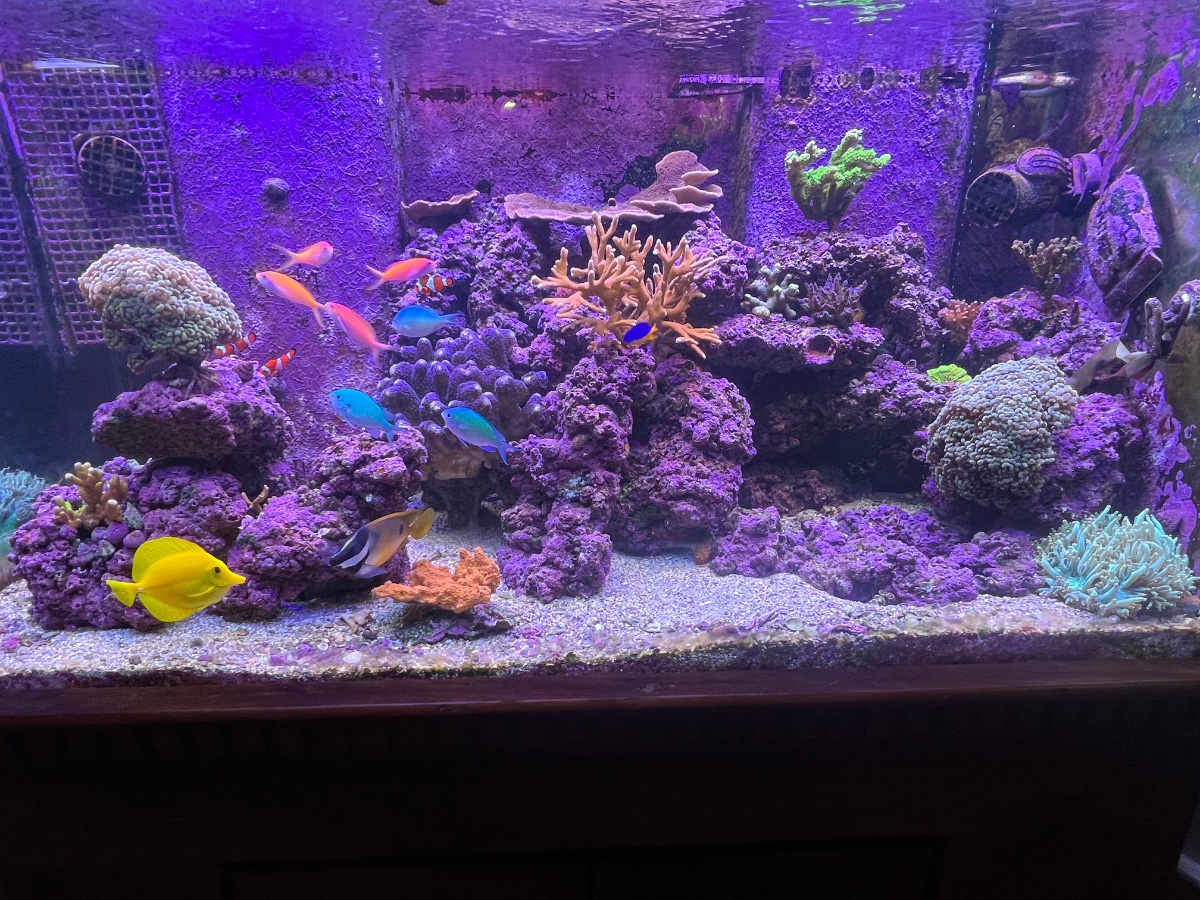
Randy, you could have that tank looking 80% back to the way it looked 5 months ago with 3-4 hours work. I’ve got a reasonably similar system to yours (this thread inspired me to get back into the hobby back in March) and I dealt with this problem 3-4 months ago. Longterm success has been a single sea hare: I suspect your problem was too far gone (for the sea hare to succeed) or your sea hares died and added nutrients to your fire (I have multiple Mantis left in my tank - they don't seem to have bothered the Sea Hare)
Step 1) Add a sock or filter pad to catch stray GHA you disrupt during clean-up. 2) For GHA on back glass, attach 4-6’ 1/4” flexible tubing to 18” of 1/4” rigid tubing (put 45 deg cut on end of rigid tubing). Create siphon on 1/4” tubing set-up into 5 gallon bucket as you run rigid tubing up and down the back glass - this will suck it up as you scrape it off back glass. 3) Manually extract GHA off sand bed and discard. 4) Manually pull GHA off rock-work. You won’t get it all as little nubs will be left where you manually extracted it. For those little nubs, consider a brush or this:

… which can be purchased from amazon. It is like 1000 snails or hermits but is also why you put the sock/filter mat in place to catch the GHA you dislodge into the water column. I used this exact tool - it is safe underwater: I recommend the conical shaped attachment. It is essentially an electric toothbrush. 4) I recommend a hydrogen peroxide dip for any coral colonies which have GHA attached (after manual removal). Worked really well on a Bubble Coral which had GHA on some of the exposed skeleton ( I don’t have the exact ratio (I’m not currently at home): but I got it from Tidal Gardens who sourced it from a MACNA lecture back a number of year’s ago . 5) remove and clean filter sock/pad. 6) CUC or Sea Hare to keep GHA mowed down. I’ve used the Sonic brush when GHA popped up in a couple of small spots since.
This worked for me (a few hours of work) - hope it helps for you.
Best, Brad