Is there a way to calibrate the probes?Try to take average of 3 different reading.3 different temperature instrument

Follow along with the video below to see how to install our site as a web app on your home screen.
Note: This feature may not be available in some browsers.
Is there a way to calibrate the probes?Try to take average of 3 different reading.3 different temperature instrument
All my probes have less than 5 feet wiring.Is there a max length or suggested cable for the temp sensors?
Thanks
How did you all add wiring to the probes?All my probes have less than 5 feet wiring.
i use standard audio jack connectors, https://learn.adafruit.com/reef-pi-guide-3-temperature-controller/circuit-constructionHow did you all add wiring to the probes?
I have that too, but the probe didn't come with 5 feet of cable.i use standard audio jack connectors, https://learn.adafruit.com/reef-pi-guide-3-temperature-controller/circuit-construction
I'd love to see a picture of that!I used a Cat 5 connection between my controller box and a cat5 breakout board at my tank. it is about an 8 foot run of cord.
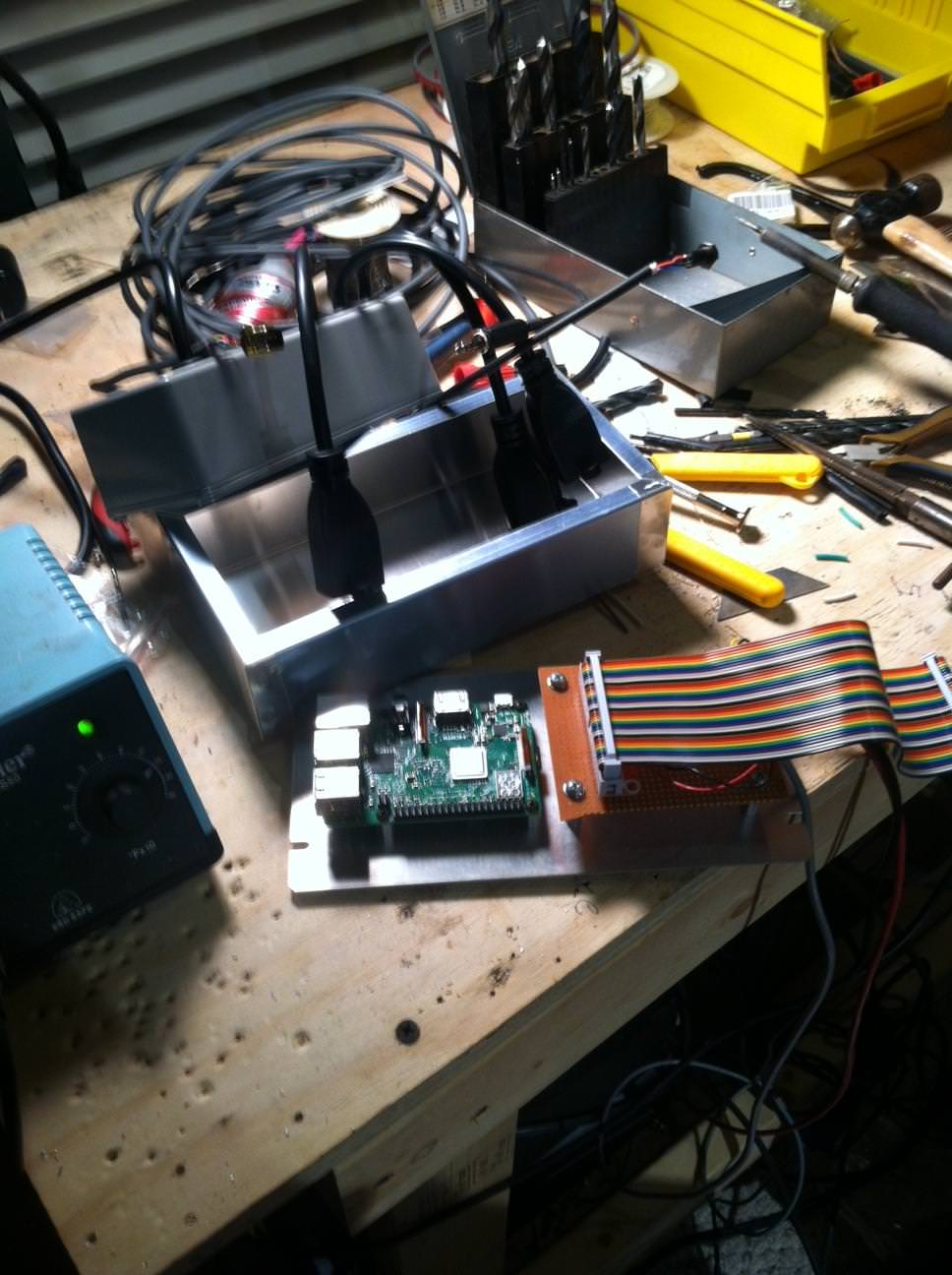
I have been running a raspberry pi for an internet connected weather station since 2014 and I have found it to be very stable. I have run that pi for over a year at a time without issues. The top three things I would consider for pi stability:So, I ordered and sourced a bunch of parts to start building this weekend. Unfortunately my raspberry was hijacked by a 13 year old!! There is a good chance I am going to have to buy another one lol. But I got the box I am going to use, the perma proto hat, buck converters, jumpers, wire, headers, I found a 12 volt 3 amp power supply and barrel connectors in my basement, and I have some heatsinks and fans that I may play around with. Since I already have a working controller deployed this is a side project to build over time. I was thinking though... I read some article of users complaining that the raspberry locks up often. Those that have been running it for awhile do you do scheduled reboots? Any issues with crashes, locking up, or erroneous behavior?
I have actually not tested reef-pi for a full automatic water change, we are releasing the macro feature to assist with these kinds of workflow. I am planning to use the doser module for continuous water change in one of my pico, while for the nano i want to use one of more macros for semi automatic water changes (i.e. they'll be triggered manually, but once triggered they'll invoke a sequence of actions). This is something I expect to evolve over time, as reef-pi matures,
The picture I posted earlier shows where the wires are connected. Black yellow and red. If you search back in the thread a little bit you can see on some of my post that I added a CAT5 connection inside my project box and then routed the wires to it.I'd love to see a picture of that!
Cool, cat5 works in a pinch.The picture I posted earlier shows where the wires are connected. Black yellow and red. If you search back in the thread a little bit you can see on some of my post that I added a CAT5 connection inside my project box and then routed the wires to it.
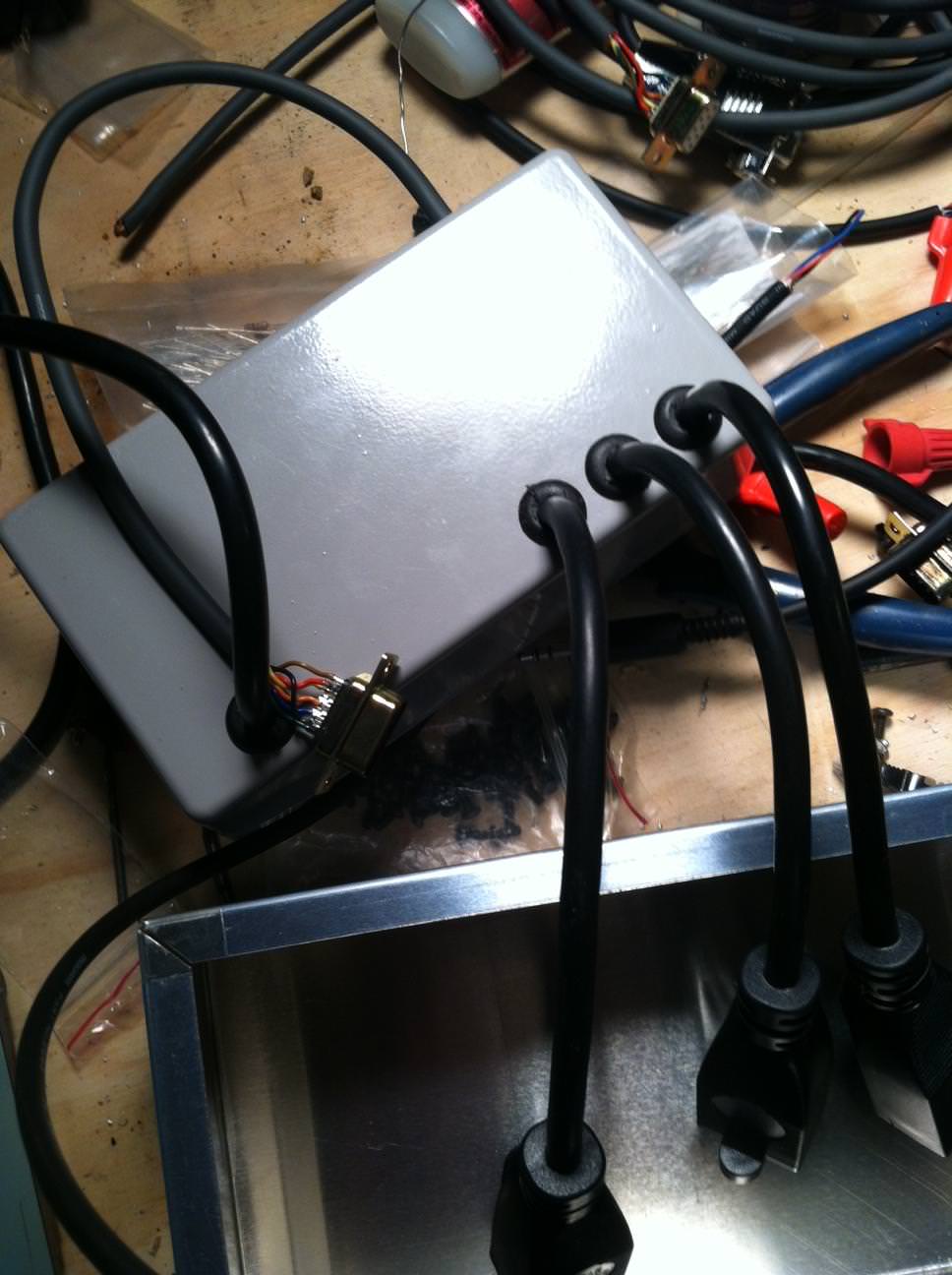
Looking good . Keep us postedStarting to box it up, went with just a basic 9pin had them already, did the outlets I think different than most with whips and grommets, like the light-o-rama controllers use. Hopefully be testing again tonight.
![]()
![]()
Not waterproof but again I had the enclosures around.
Hi everyone ,
I have cut another release candidate for reef-pi, it includes numerous improvements around the ui , including mobile friendly modules and client side validations across doser, lighting and several other modules. There’s no big changes in logic . We expect a few last changes around ui (macro in particular ) to come next , and that’s it, we should be good to go for final 2.0 release .
As usual , release builds can be found in GitHub , make sure you choose the right package for pi zero or pi 3.
https://github.com/reef-pi/reef-pi/releases/tag/2.0.0-rc1
maybe this page is interesting to visit
http://www.ispindel.de/
Here is the fritzing schematic
![]()
Do you by chance have an actual schematic of this? Breadboard diagrams are easy to copy but I cant read it. Is this still a legitimate design? I would really like to combine this with the existing power, temp, ATO, PH rather than building a whole new separate box.
Thanks for the thoughtful response. I agree with all of the above mentioned points. We have to do lot more field testing in coming days.I have been running a raspberry pi for an internet connected weather station since 2014 and I have found it to be very stable. I have run that pi for over a year at a time without issues. The top three things I would consider for pi stability:
1: Power. You will need a power supply with a decent current rating, especially as you add to your GPIO as your setup grows. The Raspberry Pi foundation folks recommend 2.5A for the Rpi 3. But another consideration is investing in a UPS to deal with power outages. Going a step further would include a UPS monitor like Network UPS Tools (NUT) so your pi can automatically shut down during a prolonged outage.
2: MicroSD card: These cards were originally meant for storage not running an OS. Find a reliable card (ie Sandisk or Samsung) from a reputable seller (sorry, no eBay $0.99 specials!). They both sell cards that are waterproof, xray-proof, temperature-proof, and magnet-proof. While all these designations are not strictly necessary, I think that the more reliable cards are worth the small premium. You don’t need a ton of space for reef-pi, I have used less than 2GB on my card and that includes a bunch of stuff I could delete
3. Network connection: Most of us run our pi’s headless. I think this improves reliability as the GUI isn’t used but it also means that a solid internet connection is important. The old wifi USB dongles I tried on my raspberry pi 1 were not reliable enough for my weather station so I only used Ethernet. The modern pi boards have a more robust built-in WiFi, and perhaps suggestions like @Ranjib made regarding resetting the connection nightly can make it even more stable.
There are a variety of other open questions related to our reefpi project that are currently unknowns. Just how reliable are the temp sensors, relays, optical sensors, etc we are all sourcing from different places during prolonged usage? I recommend redundant systems for critical components like temperature