reef-pi :: An opensource reef tank controller based on Raspberry Pi.

I do have this thing I made to measure distance so in theory can use as a rough water level meter. It also has a ATtiny board on it so I can reliably calculate the distance and I convert it to a I2C interface. Only down side is I think I had to slow down the I2C bus for the ATiny to work as a slave properly. Anyways. Just thought I mention if its something nobody done before already and if you want to add something like this in the future to the software.


20180303_215807.jpg
I am very interested in adding support for this in reef-pi. I think this can be very helpful across ato or even dosing containers to validate the evaporation rate or dosing rate. We have to discuss as a community and settle on how best to leverage this (ui/ux)
 
I was looking at doing one of these ultrasonic sensors, but backed off for a few reasons:
1. I have dogs. Don't need to be driving them insane
2. Accuracy at close range can be meh. I've seen some that claim to be accurate as close as a few inches, buuuuut I haven't seen any independent verification of that, and as an engineer, that's important to me.
3. Do I really need to know the level is 5 1/2 inches vs 6 inches? If not, I'm thinking a low level float switch is best for this. Or even a mid-level one to let me know it's "getting low".

@theatrus was working on a level sensor using differential pressure sensors. I like that idea the best of all...

Yeah it was just for a rough idea of how full/empty a supply tank is. I don't think it is not meant to be exact. The pressure sensor idea would be better if you have pets. I have cat's and they didn't seem to be bothered by the one I was using with @doughboy 's controller. So maybe Cats don't hear ultrasounds? or maybe it isn't loud enough? I have to post the design someplace if anyone is still interested. I think it might be easier to use a 3.3V version of the sensor, but I have to look at it again. I made a extra circuit that did the voltage translation to from 5V version I had.
 
I am very interested in adding support for this in reef-pi. I think this can be very helpful across ato or even dosing containers to validate the evaporation rate or dosing rate. We have to discuss as a community and settle on how best to leverage this (ui/ux)

@Ranjib - Like I said, these ultrasonic sensors don't always have the best accuracy at close range (the ones that do are typically $$$). e-tape may be a better option, while more spendy than the lower-cost ultrasonic sensors, still less than the ones that are highly reliable at close range. My other concern with the ultrasonic ones is the exposure to moisture - condensation from the water evap, etc. ETape is also very low profile and can fit into almost any container...
 
e-tape may be a better option, while more spendy than the lower-cost ultrasonic sensors, still less than the ones that are highly reliable at close range. My other concern with the ultrasonic ones is the exposure to moisture - condensation from the water evap, etc. ETape is also very low profile and can fit into almost any container...
+1.
I just ordered that exact one from Adafruit yesterday. I took a couple of notes from an Aussie reefing forum, they've been using these for a while. The general consensus is it needs to be installed in a 1" pipe to keep flowing water from causing some unintended fluctuations.
 
+1.
I just ordered that exact one from Adafruit yesterday. I took a couple of notes from an Aussie reefing forum, they've been using these for a while. The general consensus is it needs to be installed in a 1" pipe to keep flowing water from causing some unintended fluctuations.

Cool!
 
So is there a thread on the pressure transducer idea? I also go look but just checking in case it doesn't' exist yet. I would be interested in something that could measure level say in something bigger like a 55gal drum for saltwater storage.
 
So is there a thread on the pressure transducer idea? I also go look but just checking in case it doesn't' exist yet. I would be interested in something that could measure level say in something bigger like a 55gal drum for saltwater storage.

On the pico board thread, @theatrus has a 3D render of a board he's been designing for it. The major blocker right now is the lack of USB support in reef-pi, as it uses a USB interface back to the Pi.
 
Theres an i2c water pressure sensor, thats not specced too bad, thing is the board part has to be waterproofed, it returns an analog voltage

MS5837 .2mm accuracy
 
On the pico board thread, @theatrus has a 3D render of a board he's been designing for it. The major blocker right now is the lack of USB support in reef-pi, as it uses a USB interface back to the Pi.

Not sure its the major blocker, as I could adapt this to an ADS1115 breakout as well. Its a 0-5V analog output differential pressure sensor.
 
A while ago I was playing around with using capacitance as a way to measure fluid height. I stuck 2 strips of aluminum tape on either side of a cup and then used my multimeter to to measure the capacitance. As I would add/remove water it would increase/decrease capacitance accordingly. I have wanted to do more experimentation with this to see if it would be consistent over time but I needed a device with an analog pin to be able to do the capacitance check. Has anyone else tried this?

Here is the instructable I was following. https://www.instructables.com/id/Capacitive-Fluid-Level-Sensor/
 
A while ago I was playing around with using capacitance as a way to measure fluid height. I stuck 2 strips of aluminum tape on either side of a cup and then used my multimeter to to measure the capacitance. As I would add/remove water it would increase/decrease capacitance accordingly. I have wanted to do more experimentation with this to see if it would be consistent over time but I needed a device with an analog pin to be able to do the capacitance check. Has anyone else tried this?

Here is the indestructible I was following. https://www.instructables.com/id/Capacitive-Fluid-Level-Sensor/

Interesting I haven't tried that. So i can't quite tell if the metal parts isolated from the water? Hopefully that would be the case. Maybe we need a separate thread on water level sensors. lol Is there one around already?
 
Something to keep in mind, when thinking about water level sensors. KISS is the rule here. Most industrial controls dealing with fluid levels, are designed such that while there may be several sensors in a control to get fluid levels( pressure sensors, infrared, ultrasonic etc) the failsafes to back those up are generally simple mechanical float switches.

That being said, I think for reef pi we need to be looking in the direction of relatively simple sensors for water level. I agree with @theatrus here, the most robust sensors with relatively easy support for the developers are :
1. Mechanical floats
2. Pressure sensors(including a differential pressure type sensor)
3. The E-tape type sensors

These also happen to be the easiest for someone building a reef pi for the first time to implement into their setup.
 
Can I put a 7 inch display on a PI zero using HDMI ?, should i just keep the PI 3 in line?
I connected a 5 inch to a pi zero. It worked but the web browser in raspbian runs very slow on a pi zero. Combined with a small screen and fat fingers I found the setup not worth it. I removed my screen and only use my laptop and or phone to see reef-pi now.
 
Agree on the ultrasonic. The absolute accuracy is meh, and in an enclosed small space will hear tons of reflections. E-tape or a pressure transducer is the way to handle analog level.

I've used it for years with no accuracy issue. The software use a running average to calculate the reading. The ping is in milliseconds, so will not affect any animals.


 
I connected a 5 inch to a pi zero. It worked but the web browser in raspbian runs very slow on a pi zero. Combined with a small screen and fat fingers I found the setup not worth it. I removed my screen and only use my laptop and or phone to see reef-pi now.
Thanks, its a thought.
 
I thought I would mention that on this page -- https://reef-pi.github.io/guides/intro/ -- The "Dosing Controller" link is wrong. I put a PR in github to change it but I am not sure anyone monitors that github account.

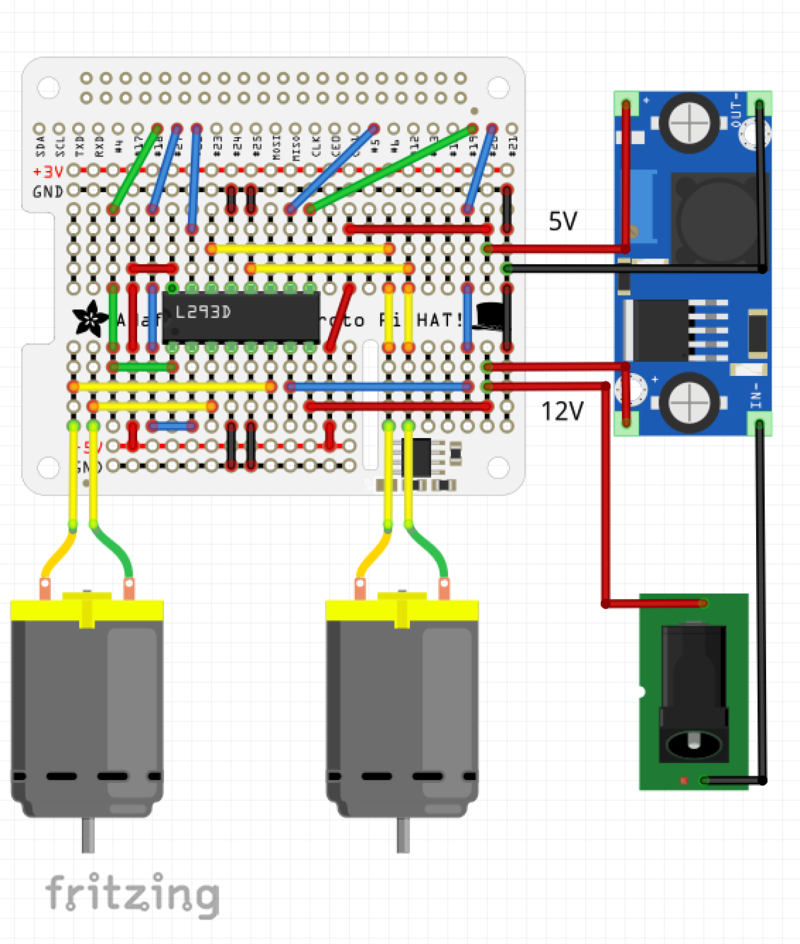
Also on this page -- https://learn.adafruit.com/reef-pi-guide-5-dosing-controller/circuit-construction -- The fritzing diagram is slightly wrong. In the top middle the yellow wire is connected to the wrong line. The line it shows it shows is ground. It should moved one pin to the right. The pictures of the actual board are correct.
components_Screen_Shot_2018-11-12_at_10.01.13_AM.png
 

TOP 10 Trending Threads

Back
Top
Home
Post thread…
Market
What's new