The primary thing I wanted to collect on this trip was some smaller serpent and brittle stars. I already know they are very communal and can live together in groups, sometimes even groups of 5 to 10 stars under a rock. I've had stars for many years but let most of them go with the aquariums I've sold or when I was selling the livestock before selling the tank. Now my 40g cube is fully stocked with corals (mostly zoas) and lots of rock flower anemones along with tiny white feather dusters 2 different kinds of sea cucumbers, shrimp, snails and blue leg hermit crabs, I think I'm ready to add stars.
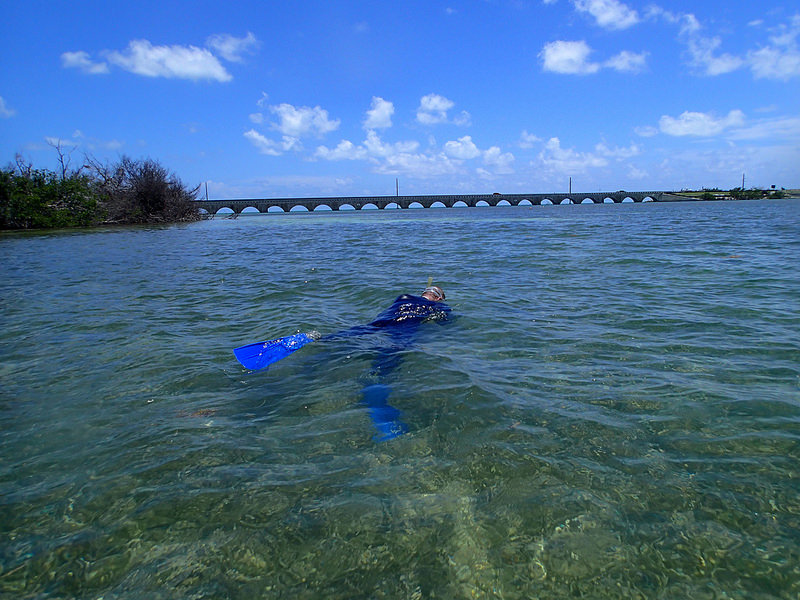
Finding stars on this snorkel was like trying to find popcorn in a movie theater! I'd bet one out of every 10 to 15 times I picked up anything loose off the bottom, there was a star. Almost all of them of the size I was looking for. This way they can mature and grow as a group. And as I've stated previously, this was all in water that was about 18" to 30" deep and between 50' and 200' off the edge of the island.
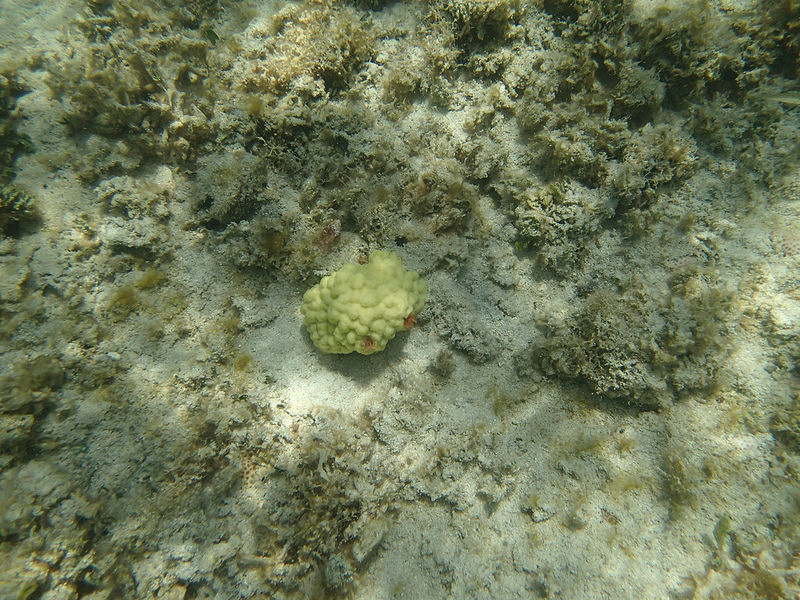
Small serpent stars can be very hard to find if you just float around looking for them. I't not hard to see in this photo because you know there is one there... somewhere! But put that in a sea bottom full of turtle grass, broken finger coral (dead & alive) and lots of sponges and it's rare that you'll see one.
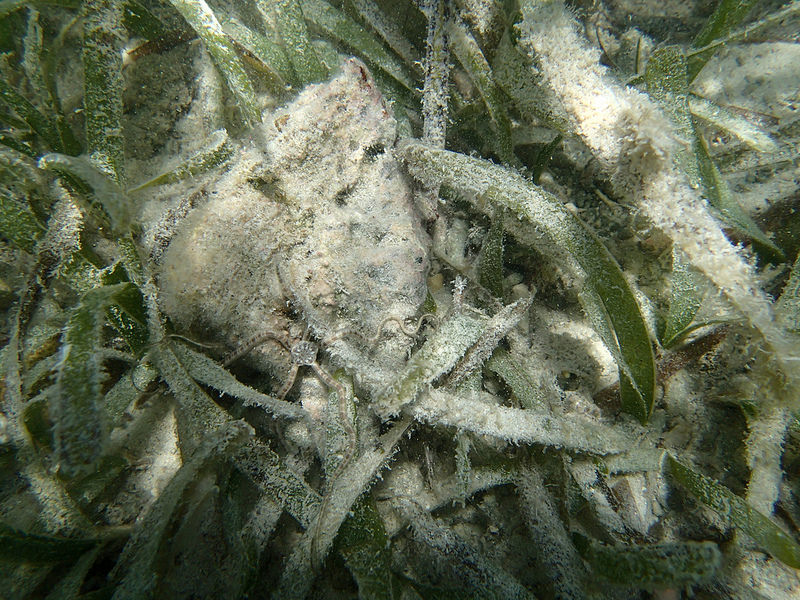 P8020239
by
Ron Lindensmith, on Flickr
Here is what I found as a typical pick up that had a star.
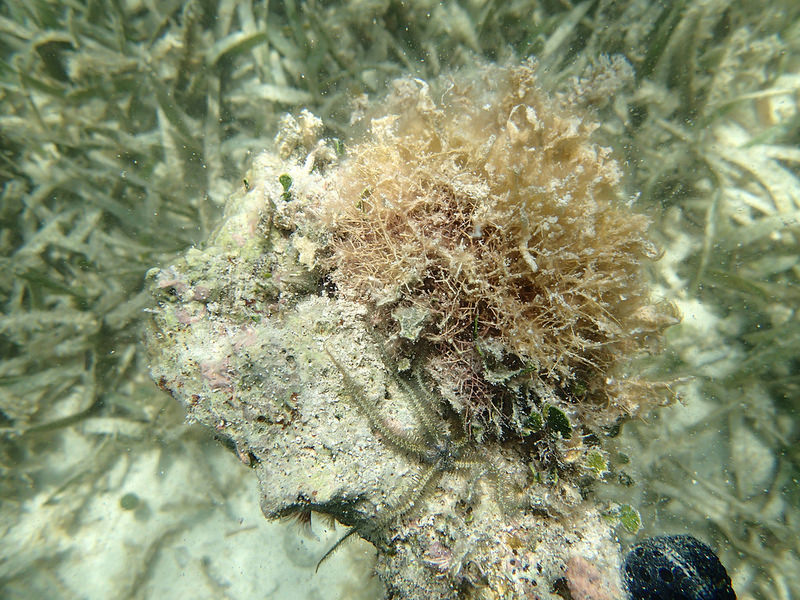 P8020194
by
Ron Lindensmith, on Flickr
This is fairly typical of the branching finger coral that is very common in the shallows here. Some of it is quite nice, but it's rarely even as big as this clump that Elaine picked up and found a star living inside. There is also a lot of it that's very dead and covered with sponges. Some, in the right areas also get covered with green zoas.
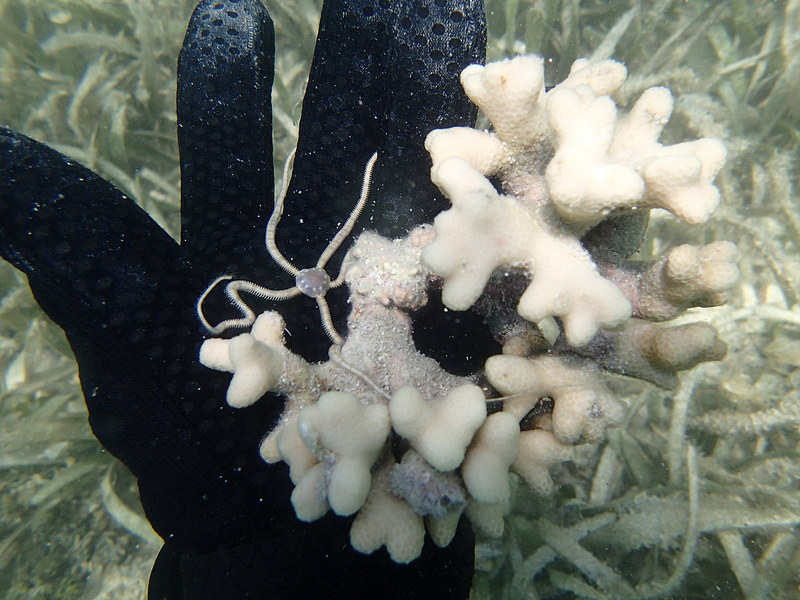 P8020253
by
Ron Lindensmith, on Flickr
Then I'd isolate the star from the rock, coral, sponge, seaweed... whatever, and take a good look at it.
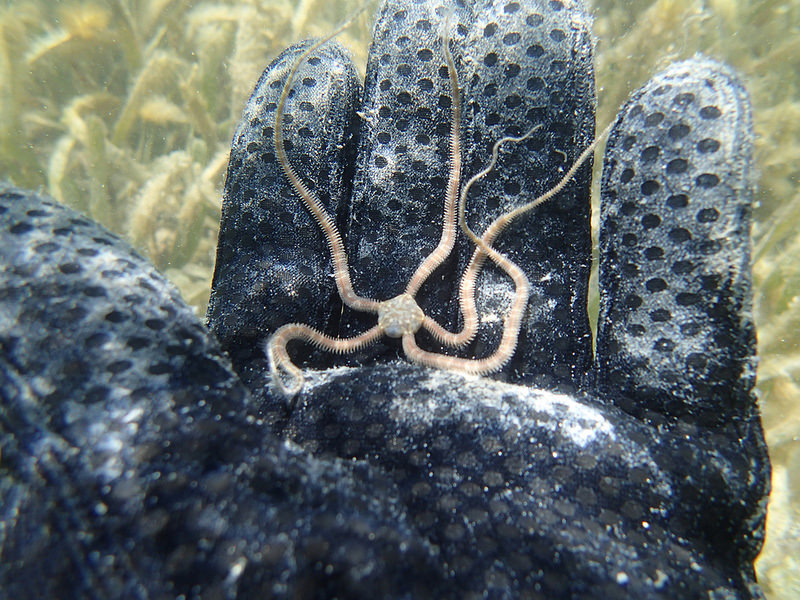 P8020141
by
Ron Lindensmith, on Flickr
Here is what I brought home for the aquarium. This first one was just to great a color to pass up. The central disk almost sparkled like a jewel!
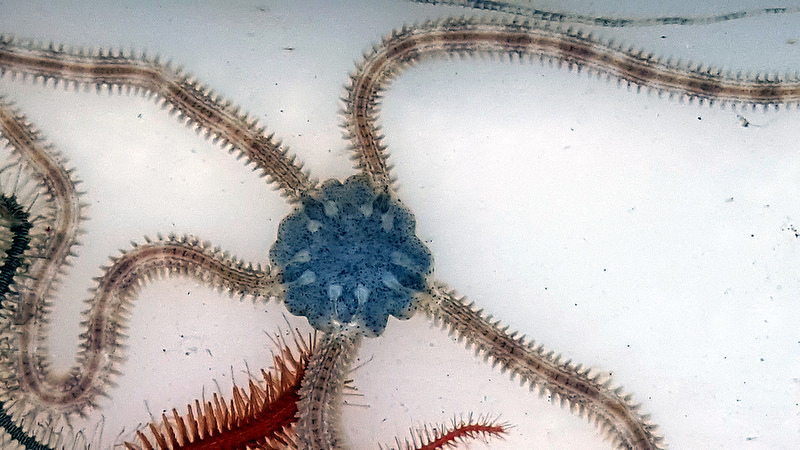 star blue disk serpent
by
Ron Lindensmith, on Flickr
This one was a close second and has different colors on it's legs.
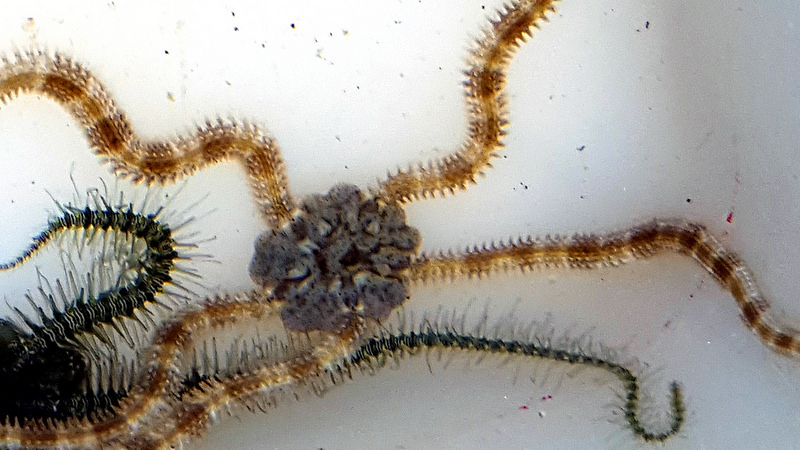 star light blue disk serpent
by
Ron Lindensmith, on Flickr
I almost didn't take this one as it's fairly obvious that it's recovering from some kind of injury. Two legs are significantly smaller than the other three and one of the short ones was broken at the tip. But out in the water, with the sun shining down bright, this was a crazy nice shade of red. So I decided to care for it's recovery myself.
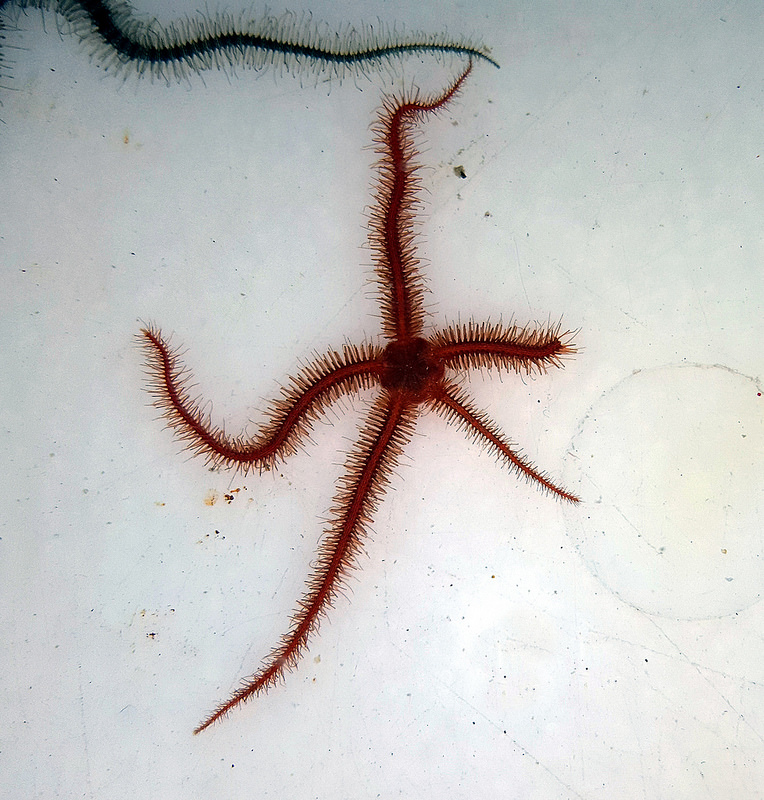 star red serpent
by
Ron Lindensmith, on Flickr
I did have a couple of accidental collections of stars. This one climbed out of a clump of sponge and dead coral I brought home. I made sure it was placed in the live rock of my tank, whether it survives or not is pretty much a 'life on the reef' issue! BTW, I found the nickel while snorkeling as well!
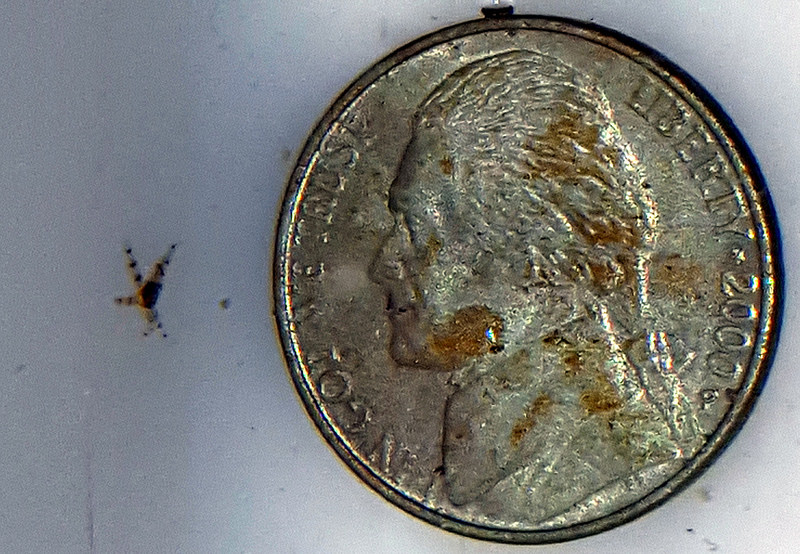 star tiny
by
Ron Lindensmith, on Flickr
Here are all 6 stars I collected on purpose. Now I'm a bit concerned about the darker one in the middle of the photo. I've read a lot of anecdotal accounts that green brittle stars are the only ones that really go after fish. I have my doubts about them catching healthy live fish at all, as well as why green ones and not all of them? But then is this even a green star? For the meantime it's in my 5g holding tank along with a couple of sponges and a tiny rock flower anemone that is attached to a very small rock that has a couple of sponges on it. BTW, I have very slim hopes of keeping any sponges alive. As far as I know they are not photosynthetic and are very difficult to keep long term (as in more than a month or two). And rather than fowling my 40g cube, I'll keep them in a 5g holding tank for a week or two.
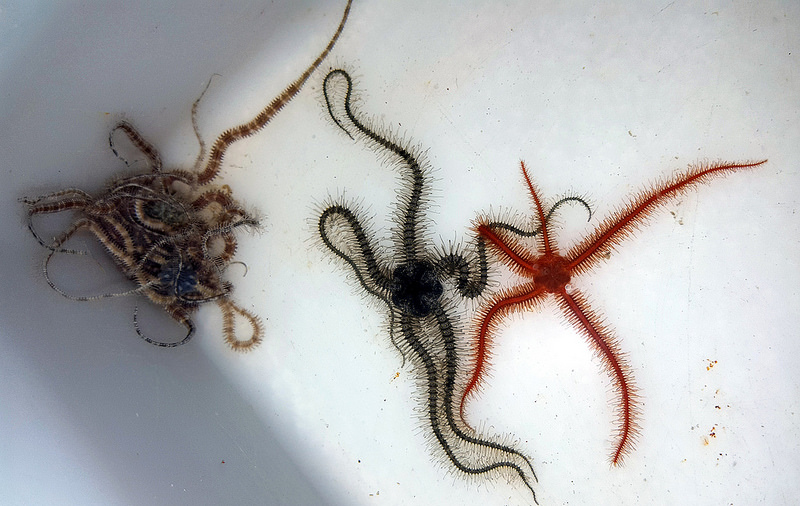 stars bundle
by
Ron Lindensmith, on Flickr
As always, I'm open to any and all comments or questions. Thanks for looking.







 P5070261R2

 Condy at Blackfin
 anemone shrimp
 octopus in hand
 P5070332R1 - Copy

 attack of the giant lobster RB23
 P1010128
 P1010014


 P6210039 R2


 P8020230
 P8020177
 P8020176

 P8020124R1
 P8020156








