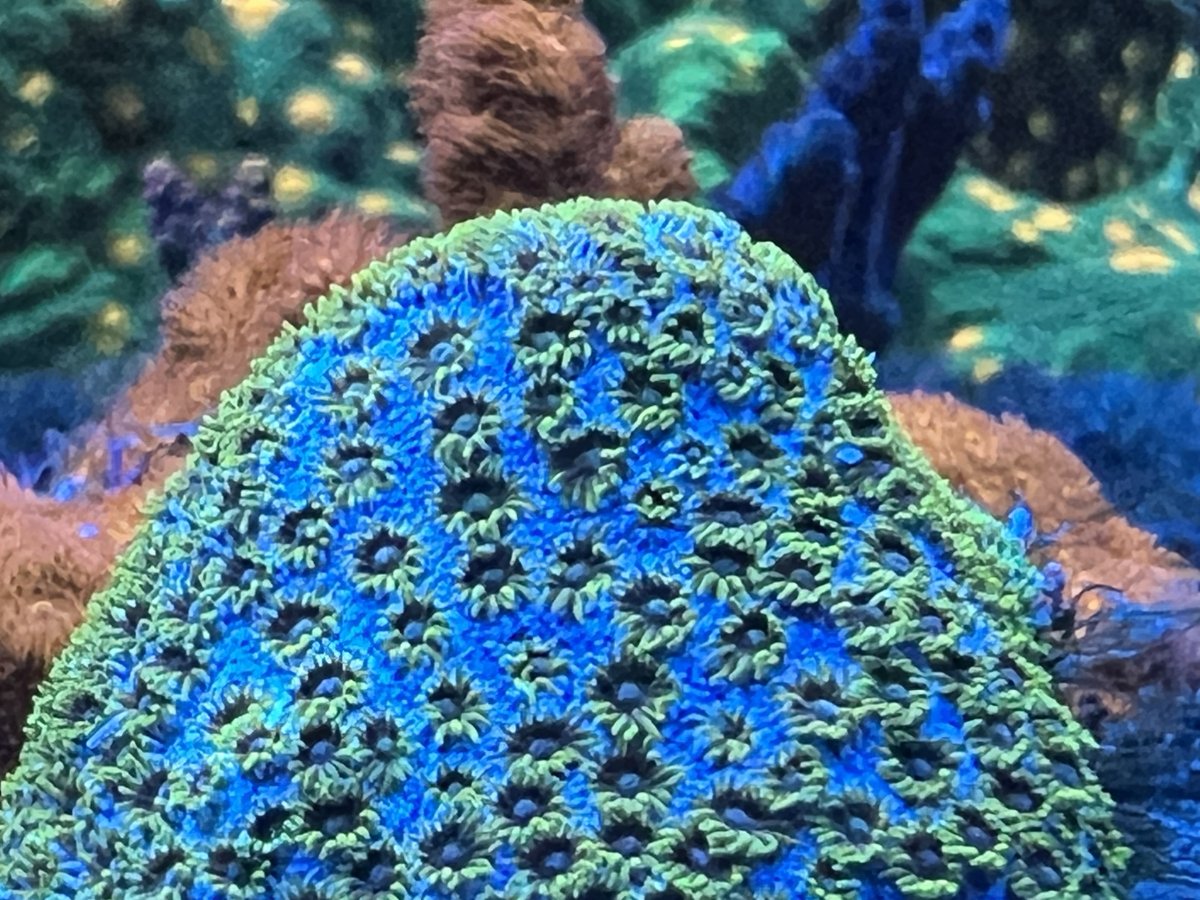
SPS receding FAST. Help !

  • Thread starter Thread starter BSej
  • Start date Start date
  • Tagged users Tagged users None
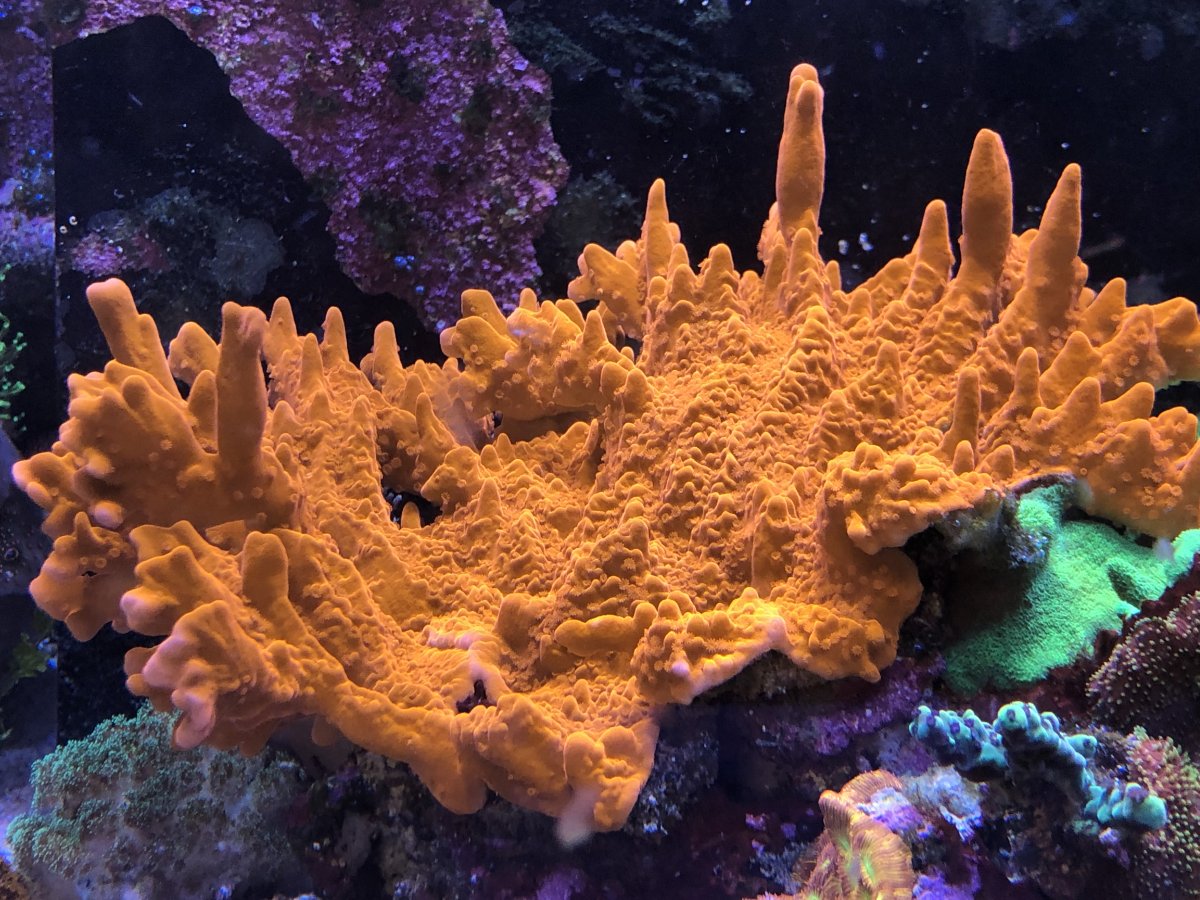
Just my opinion, I used to have Setosa but lost it when I turned my reef into brackish water (when I was on vacation).
That is what it looked like just before I lost it:
1731793446207.jpeg


From my experience Setosa and other montiporas do not like fluctuating PO4 especially sinking PO4. Going from 0.1 to 0.02 is really detrimental, again from my observation. Looking at your picture there may be PO4 instability.

For filtration I only use skimmer and bit of GAC (2 teaspoons on 65gal system changed every 4 weeks). I prefer for the nutrients especially fish poop to stay in the water column as long as possible so corals can feed. Idea being the corals are the main filter and I just supplement.

Using socks, skimmer, refugium etc… can make the water column too clean…

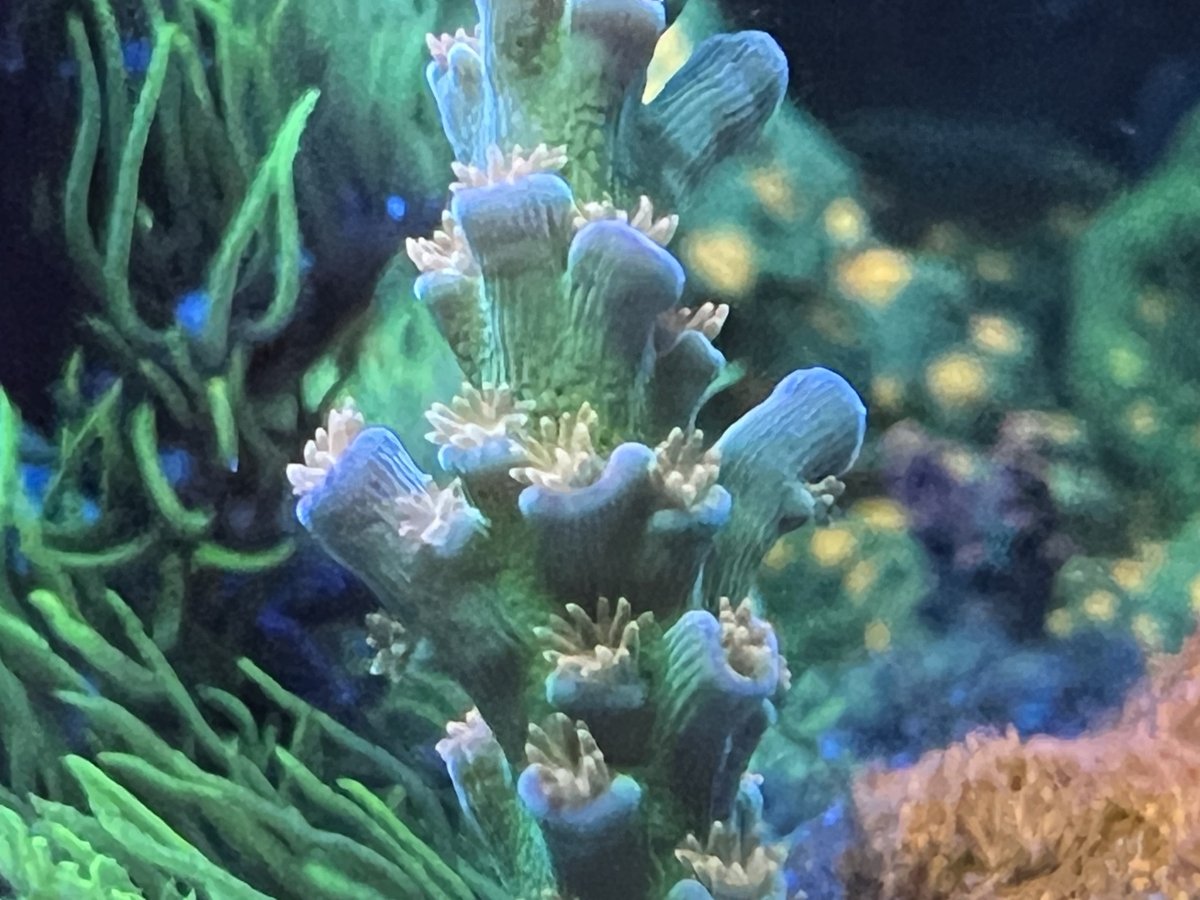
Some pictures of my corals for reference:
1731794634040.jpeg

1731794665023.jpeg


Also your salinity is bit elevated and your choice of Seachem Fusion 1/2 may be contributing, it is not balanced system. My suggestion would be to switch to TM AFR at some point, when I used it I had lot of luck with it and in addition to providing Ballance Alk/calcium it also adds trace elements.

Good luck,

My reefing philosophy exactly.
 
I had lot more issues at low PO4 (below 0.1ppm) compared to elevated levels (0.5-1 ppm). But it may be good idea to try to gradually reduce the levels. I don’t believe elevated levels of PO4 can cause problems.

You can try to measure PO4 before any food is added or late in the evening after food is added. The food addition can provide elevated reading. Also I had no luck with Seachem test kit. I use saltwater dedicated test kits.

I have no experience with frozen, I tend to feed pellets Fauna Marin Soft Multi Mix. I do feed 3 to 4 times a day, fish look fat and happy.
1731812461138.jpeg

1731813165162.jpeg


Best way to reduce PO4 is with GFO, but that can remove other things and corals can suffer. If you decide to use it, use small amount and change it often so you do not shock your corals.
I let my PO4 do it’s thing and I just monitor it and my tank runs at 0.1-0.25ppm.

NOPOX may reduce your PO4 levels a bit, but my suggestion is to use bit of carbon source (for example vinegar) to feed bacteria. In turn corals can feed on the bacteria so they have another food source.
I use 0.5ml of Tropic Marin Bacto Ballance for this purpose.
So we're not sure that the high phosphates is the reason for the quick death of the setosa though right? I see several hermits climbing over it throughout the day, but I imagine they are just eating the dead/dying tissue now as this wasn't a problem before.
 
So we're not sure that the high phosphates is the reason for the quick death of the setosa though right? I see several hermits climbing over it throughout the day, but I imagine they are just eating the dead/dying tissue now as this wasn't a problem before.
No I don’t think so.
Over the years I learned few things in reefing, one is when corals look upset it is something that I did few weeks back up to few months.

To get things back to normal it usually takes double that time and there is no quick fix.
Since you mentioned ich I wonder if you may be going fast and stressing corals and fish. Ich outbreak can be caused when fish get all upset /stressed.

Maybe just do a small reset, couple of 10% water changes, make sure all the equipment is clean etc… Don’t add any new critters and just observe for few weeks to a month.

I tend to follow the below suggestion and the rest seems to fall into place:
1731950389275.jpeg

Stability is important.

Good luck,
 
So one thing I noticed is the growth of some orange stuff in the sand - maybe Dino? I tried mixing the sand around a few times. Could this have caused any issues? I heard they could be toxic
 
Completely anecdotal but when I see cyano/dinos increasing it's time to change ro filters, (not necessarily membrane) and especially DI resin. Now don't go throwing $ at that but when was the last time you changed RO filters and DI resin?

City water is pretty unpredictable.
 
Completely anecdotal but when I see cyano/dinos increasing it's time to change ro filters, (not necessarily membrane) and especially DI resin. Now don't go throwing $ at that but when was the last time you changed RO filters and DI resin?

City water is pretty unpredictable.
Great question. I just checked - about 10-11 months.
 
Change those filters and resin.

And the more I look at you pic, i think it is actually montipora hirsuta. I hav eno experience with them but I don't imagine they are that different.

 
Change those filters and resin.

And the more I look at you pic, i think it is actually montipora hirsuta. I hav eno experience with them but I don't imagine they are that different.

Honestly don't know how. We had a guy change them for us. I'd like to do it myself though.
 

Attachments

  • 1732231051106.jpeg
    1732231051106.jpeg
    134.5 KB · Views: 59
I use well water now, but I vaguely remember that city sometimes switched to chloromine and added crap to the water for whatever. Seems to me chloramine was seasonal but my memory is bad
 
@Buckeye Hydro sorry to bother you, but this gentleman needs some assistance changing filters and DI resin.
Feel free to give us a call and we can get you set up with appropriate replacements and we can talk through the simple process of changing them out. From that pic is looks like you are long overdue for a DI resin replacement.
Russ
513-312-2343
 
Update: found an exposed copper wire in the water from my reefwave 45. Took it out. Hopefully we see some good changes. Fish looked skiddish so that should stop, and hoping the coral(s) bounce back
 

TOP 10 Trending Threads

ARE YOU READY TO CONFESS TO CRAZIEST, DUMBEST, FUNNIEST THING YOU’VE EVER DONE IN REEFING?

  • Yeah, I'll confess! (Share your story in the comments!)

    Votes: 26 54.2%
  • Nah, I'll keep mine a secret...(Don't be like that, share with the class!)

    Votes: 22 45.8%
Back
Top
Home
Post thread…
Market
What's new