Using UV LED, scared to burn corals

PedroYoung

Valuable Member
View Badges
Joined
Feb 12, 2014
Messages
2,082
Reaction score
2,777
Location
Chelsea, AL
Rating - 0%
0   0   0
I've been using AI Hydra 26's for about 5 yrs now and have never really cranked up the UV above 10%. At peak intensity I'm running both blues at 50%, whites at 20% and UV at only 5% with the rest around 8-12%. I keep mainly LPS, but have messed around with some Acros. In a BRS post comparing Radion AB+ and AI settings I saw they were running the UV's at max. I've always been afraid of burning corals. What spectrum are the UV's running in and what am I missing by not using them? I've been waiting on a rental PAR meter from BRS to become available so I can be more informed on what my lighting is doing.

 

Dana Riddle

2500 Club Member
View Badges
Joined
Sep 10, 2011
Messages
3,162
Reaction score
7,455
Location
Dallas, Georgia
Rating - 0%
0   0   0
Most UV LEDs don't produce that much. I've got some UV-A microwatt numbers (taken with a UV radiometer) somewhere in my notes. In addition, they usually produce a lot violet light so the hobbyist knows they're not burned out. Do you know where those UV LEDs peak (365nm, 390nm, ?)
 
OP
OP
PedroYoung

PedroYoung

Valuable Member
View Badges
Joined
Feb 12, 2014
Messages
2,082
Reaction score
2,777
Location
Chelsea, AL
Rating - 0%
0   0   0
Most UV LEDs don't produce that much. I've got some UV-A microwatt numbers (taken with a UV radiometer) somewhere in my notes. In addition, they usually produce a lot violet light so the hobbyist knows they're not burned out. Do you know where those UV LEDs peak (365nm, 390nm, ?)
Looks like 400nm
 

Dana Riddle

2500 Club Member
View Badges
Joined
Sep 10, 2011
Messages
3,162
Reaction score
7,455
Location
Dallas, Georgia
Rating - 0%
0   0   0
Looks like 400nm
I wouldn't be overly concerned if that is the case with UV. Some of the metal halide lamps produce gobs of UV with a peak usually around 365nm, and much is transmitted through the glass envelopes. With that said, make any changes slowly!
 
OP
OP
PedroYoung

PedroYoung

Valuable Member
View Badges
Joined
Feb 12, 2014
Messages
2,082
Reaction score
2,777
Location
Chelsea, AL
Rating - 0%
0   0   0
I wouldn't be overly concerned if that is the case with UV. Some of the metal halide lamps produce gobs of UV with a peak usually around 365nm, and much is transmitted through the glass envelopes. With that said, make any changes slowly!
I am always slow with my changes (when I make them). Would there be benefits to adding in the UV? I do have some problems keeping colors and wondered if maybe this could be part of an issue. I'm not a fan of making changes just to make them, but do want to give my corals what they need.
 

AcroCrush

Community Member
View Badges
Joined
Nov 7, 2018
Messages
43
Reaction score
38
Location
Jacksonville, NC
Rating - 0%
0   0   0
On some LED lights like mine, first gen Photon 48 by Reefbeeders, the UV and all but the blues are on one of the two channels. As it is now I only run that channel up to 20% and never have issues. I have been bumping it up one percent each week within the few hours that I am running them (5 hours). As soon as the adjustment for each hour of the 5 hour full spectrum photo period that I have set are at 20% I will start bumping one hour at a time per week to 21% and so on. Slow finishes the race every time.
 

Dana Riddle

2500 Club Member
View Badges
Joined
Sep 10, 2011
Messages
3,162
Reaction score
7,455
Location
Dallas, Georgia
Rating - 0%
0   0   0
Not sure about your light, but later model ReefBreeder modules use 420nm LEDs. I tried to take a close look at their products at the Las Vegas MACNA, but they were always busy. Yes - you are so right - slow and steady wins the race!
 

GrantRogers

New Member
View Badges
Joined
Sep 2, 2017
Messages
6
Reaction score
1
Rating - 0%
0   0   0
With my Radions I have the UV set to 100% and they ramp up to a total output of 90%.

I don't have any issues with burning.
 
OP
OP
PedroYoung

PedroYoung

Valuable Member
View Badges
Joined
Feb 12, 2014
Messages
2,082
Reaction score
2,777
Location
Chelsea, AL
Rating - 0%
0   0   0
I wouldn't be overly concerned if that is the case with UV. Some of the metal halide lamps produce gobs of UV with a peak usually around 365nm, and much is transmitted through the glass envelopes. With that said, make any changes slowly!
Dana, thanks for all your time and effort to make this community great. I am trying to understand the benefits of the UV channel to my critters. What is it supplying that maybe my blue/ royal blues aren't? What's going on in that 400nm spectrum?
 

Dana Riddle

2500 Club Member
View Badges
Joined
Sep 10, 2011
Messages
3,162
Reaction score
7,455
Location
Dallas, Georgia
Rating - 0%
0   0   0
Dana, thanks for all your time and effort to make this community great. I am trying to understand the benefits of the UV channel to my critters. What is it supplying that maybe my blue/ royal blues aren't? What's going on in that 400nm spectrum?
The 400nm LEDs are more outside of the absorption bandwidth of protective photopigments than those at 450-470nm range, hence, they are better at promoting photosynthesis. In addition, many of the colorful fluorescent proteins can absorb this light and 'pop.'
 
OP
OP
PedroYoung

PedroYoung

Valuable Member
View Badges
Joined
Feb 12, 2014
Messages
2,082
Reaction score
2,777
Location
Chelsea, AL
Rating - 0%
0   0   0
The 400nm LEDs are more outside of the absorption bandwidth of protective photopigments than those at 450-470nm range, hence, they are better at promoting photosynthesis. In addition, many of the colorful fluorescent proteins can absorb this light and 'pop.'
Great answer, that's what I was looking for. I will immediately crank the UV from 5% to 100% :eek:. Actually I'll gradually increase and observe.
 

Evan28395950

Valuable Member
View Badges
Joined
Apr 23, 2018
Messages
1,802
Reaction score
2,096
Location
United States
Rating - 0%
0   0   0
I run my hydra 26 hd on my 24 (31 including filtration) gallon tank uv at 30%, no problems so far, made the change up to that about 3 weeks ago
 

Dana Riddle

2500 Club Member
View Badges
Joined
Sep 10, 2011
Messages
3,162
Reaction score
7,455
Location
Dallas, Georgia
Rating - 0%
0   0   0
Great answer, that's what I was looking for. I will immediately crank the UV from 5% to 100% :eek:. Actually I'll gradually increase and observe.
Cool - especially the 'gradually increase and observe' part!
 

um02122

Community Member
View Badges
Joined
Oct 25, 2016
Messages
66
Reaction score
62
Rating - 0%
0   0   0
There is no real UV (365nm or lower) in the AI Hydra, more like Violet. Or near UV (nUV) if you prefer.

The wave lenghts below 395nm start being nasty with the human eye and make the microparticulate under the light very obvious, a very annoying if not dangerous effect. In my first lights I've tried 385nm Semileds, along 395nm and 415nm. I've settled for the 415nm, I was not even able to see much of the others.
 

um02122

Community Member
View Badges
Joined
Oct 25, 2016
Messages
66
Reaction score
62
Rating - 0%
0   0   0
There is no real UV (365nm or lower) in the AI Hydra, more like Violet. Or near UV (nUV) if you prefer.

The wave lenghts below 395nm start being nasty with the human eye and make the microparticulate under the light very obvious, a very annoying if not dangerous effect. In my first lights I've tried 385nm Semileds, along 395nm and 415nm. I've settled for the 415nm, I was not even able to see much of the others.
 

hart24601

5000 Club Member
View Badges
Joined
Mar 18, 2014
Messages
6,711
Reaction score
6,592
Location
Iowa
Rating - 0%
0   0   0
I always ran AI 400nm at same levels as the other blues and run orphek UV pretty much the same. With kessil you can't even individually decrease the UV.
 
OP
OP
PedroYoung

PedroYoung

Valuable Member
View Badges
Joined
Feb 12, 2014
Messages
2,082
Reaction score
2,777
Location
Chelsea, AL
Rating - 0%
0   0   0
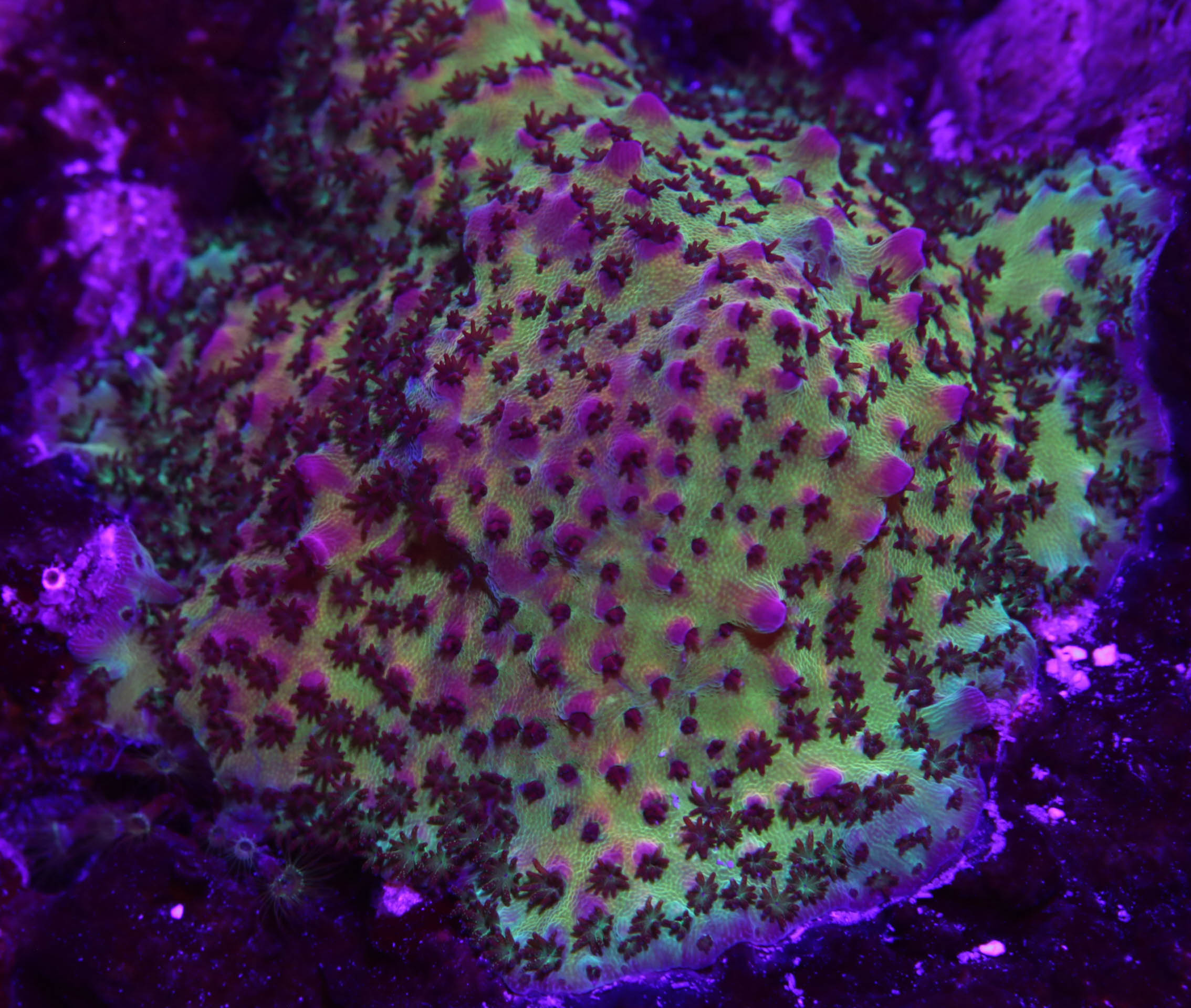
For anyone who chimed in on this thread and is interested, I've been slowly increasing (from basically zero) the Near UV in my lighting schedule. I've been increasing 2%/week across my entire schedule (except night time). I'm up to 16%ish and I've noticed some real difference in coloration. This is purely anecdotal and could be caused by any number of other factors, but in general my reef is pretty stable. I've seen a marked increase in red coloration in both SPS and LPS corals. Again, I can't say definitively it's due to the change in lighting, but my personal belief is that the added spectrum is helping. Here's a pic of my @WWC Christmas Mirabilis. Previously it was just green, and you can see the red tips starting to really show.

xmasmirabilis by Peter Young, on Flickr

I'm getting the same response on my PC rainbow, as well as several Acan Bowerbanki's/ Maximas and chalices. Just an FYI. Thanks to everyone who chimed in on my original post.
 

arafas

Active Member
View Badges
Joined
Mar 31, 2017
Messages
489
Reaction score
142
Rating - 100%
1   0   0
For anyone who chimed in on this thread and is interested, I've been slowly increasing (from basically zero) the Near UV in my lighting schedule. I've been increasing 2%/week across my entire schedule (except night time). I'm up to 16%ish and I've noticed some real difference in coloration. This is purely anecdotal and could be caused by any number of other factors, but in general my reef is pretty stable. I've seen a marked increase in red coloration in both SPS and LPS corals. Again, I can't say definitively it's due to the change in lighting, but my personal belief is that the added spectrum is helping. Here's a pic of my @WWC Christmas Mirabilis. Previously it was just green, and you can see the red tips starting to really show.

xmasmirabilis by Peter Young, on Flickr

I'm getting the same response on my PC rainbow, as well as several Acan Bowerbanki's/ Maximas and chalices. Just an FYI. Thanks to everyone who chimed in on my original post.

When you say near UV, What fixture are you talking about ??
 

TOP 10 Trending Threads

WHAT AMOUNT OF LIVE ROCK AND SAND SHOULD BE PRIORITIZED FOR OPTIMAL BIODIVERSITY/FILTRATION?

  • 100% live rock + bagged sand

    Votes: 37 27.0%
  • 100% dry rock + 100% live sand

    Votes: 46 33.6%
  • 50/50 live/dry rock, 50/50 live/bagged sand

    Votes: 30 21.9%
  • 75% live rock, 25% live sand

    Votes: 14 10.2%
  • 25% live rock, 75% live sand

    Votes: 10 7.3%
Back
Top