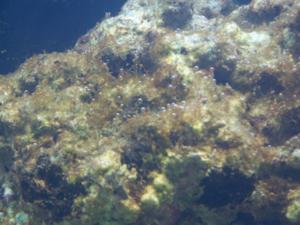
These species of cyano often appear as a light slimy yet hairy/fuzzy nastiness that loosely attaches to your rock work. Air bubbles are usually trapped while eascaping the "algae", just like in the picture to the left. Calothrix is a type of blue green algae that looks very similar to Dinos. We have them next to each other in the guide to help you distinguish the difference between the two.
Manual Removal - Remove the rock and scrub, and then fine tune with a toothbrush. Let the cleaners get the rest. It helps to use a net to collect the debris that will occur as a result of the toothbrushing.
Starving it out - Use a phosban reactor or a macro like chaeto to take down phosphate. If you have a nitrate problem too, you can add more live rock or rubble to the tank, do some more wcs, add macro, add dsb, etc...
Clean Up Crew - Chitons, Nerites and other cyano cleaners work well.