




I'm noticing from my (relatively few) years in the hobby that reef lighting manufacturers are trending towards not only bluer, but purpler lighting. Many recently released light fixturess seem to not just have more purple/UV LEDs, but also less larger-wavelength blue/cyan LEDs.
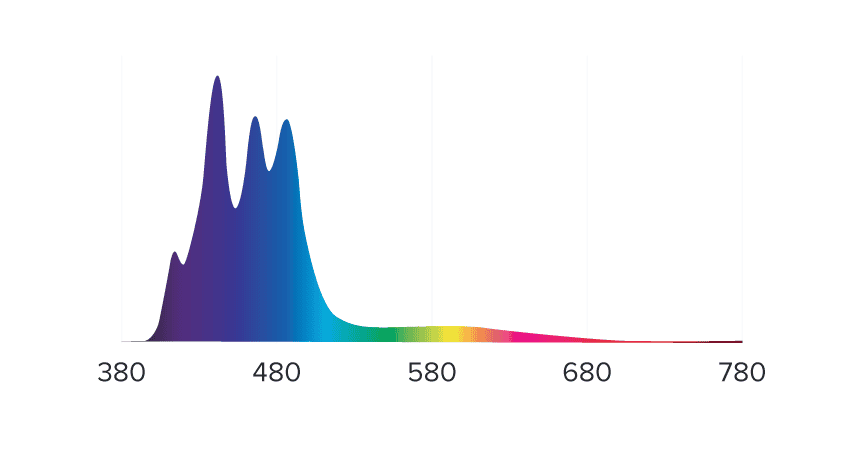
Take the new Hydra Edge (44) for example, which has 16 violet and UV LEDS compared to the 4 violet/UV LEDs in the previous generation Hydra, which is a 300% increase. Note also that AquaIllumination removed the green LEDs from the current generation.
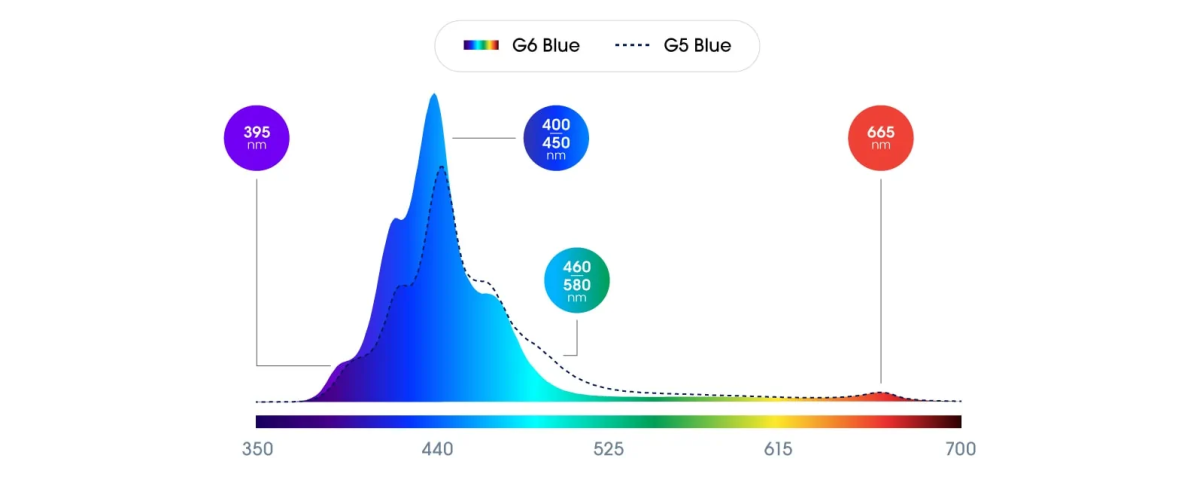
Another example is the Radion G6 blue, which ditched all the cyan LEDs from its predecesor and had an increase in purple/UV LEDs of 83% (12 to 22).
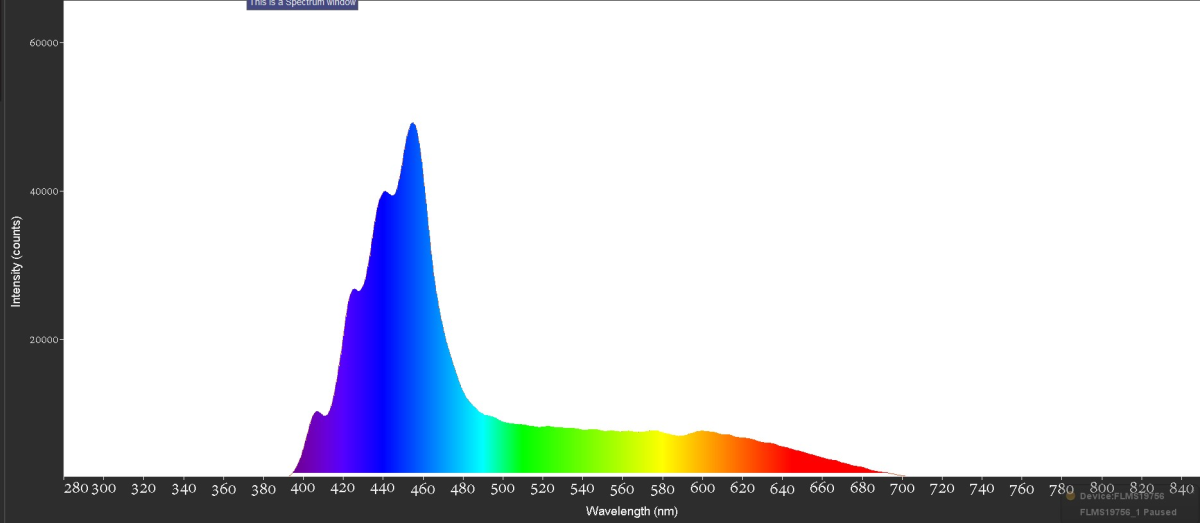
Also look at the Hydros XHOs, whose highest-wavelength blue peak is at 450 nm.
Now, many people have pointed out the hobby's shift towards bluer lighting, with others pointing out that corals mainly absorb light in the blue spectrum. However, this is different, as a lot of that absorption spectrum is also in the 475-525 nm range.

Why are LED manufacturers doing this? Purple light does not make corals fluoresce any better than blue, and I personally don't enjoy purplish lighting.
Take the new Hydra Edge (44) for example, which has 16 violet and UV LEDS compared to the 4 violet/UV LEDs in the previous generation Hydra, which is a 300% increase. Note also that AquaIllumination removed the green LEDs from the current generation.
Another example is the Radion G6 blue, which ditched all the cyan LEDs from its predecesor and had an increase in purple/UV LEDs of 83% (12 to 22).
Also look at the Hydros XHOs, whose highest-wavelength blue peak is at 450 nm.
Now, many people have pointed out the hobby's shift towards bluer lighting, with others pointing out that corals mainly absorb light in the blue spectrum. However, this is different, as a lot of that absorption spectrum is also in the 475-525 nm range.
Why are LED manufacturers doing this? Purple light does not make corals fluoresce any better than blue, and I personally don't enjoy purplish lighting.

















