



Why the shift to a "purpler" spectrum?

thamnasteroid

2500 Club Member
View Badges
Joined
Aug 24, 2020
Messages
3,518
Reaction score
2,890
Location
Washington State
Rating - 100%
1   0   0
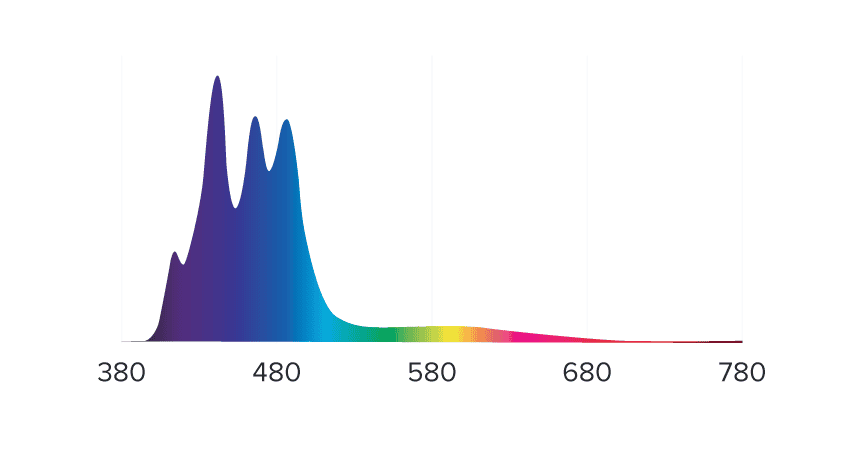
I'm noticing from my (relatively few) years in the hobby that reef lighting manufacturers are trending towards not only bluer, but purpler lighting. Many recently released light fixturess seem to not just have more purple/UV LEDs, but also less larger-wavelength blue/cyan LEDs.

Take the new Hydra Edge (44) for example, which has 16 violet and UV LEDS compared to the 4 violet/UV LEDs in the previous generation Hydra, which is a 300% increase. Note also that AquaIllumination removed the green LEDs from the current generation.
1746837191950.png


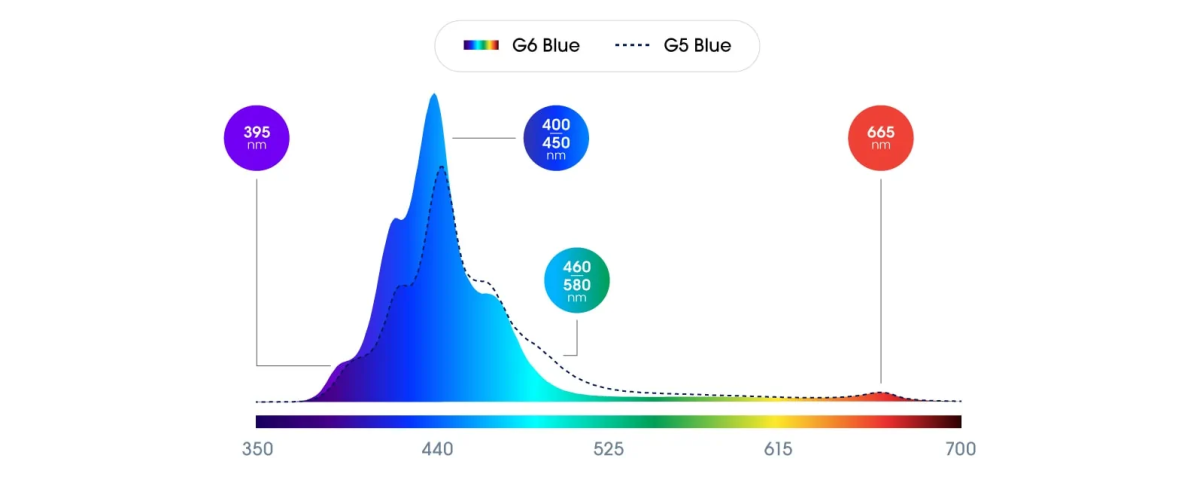
Another example is the Radion G6 blue, which ditched all the cyan LEDs from its predecesor and had an increase in purple/UV LEDs of 83% (12 to 22).
1746839148410.png


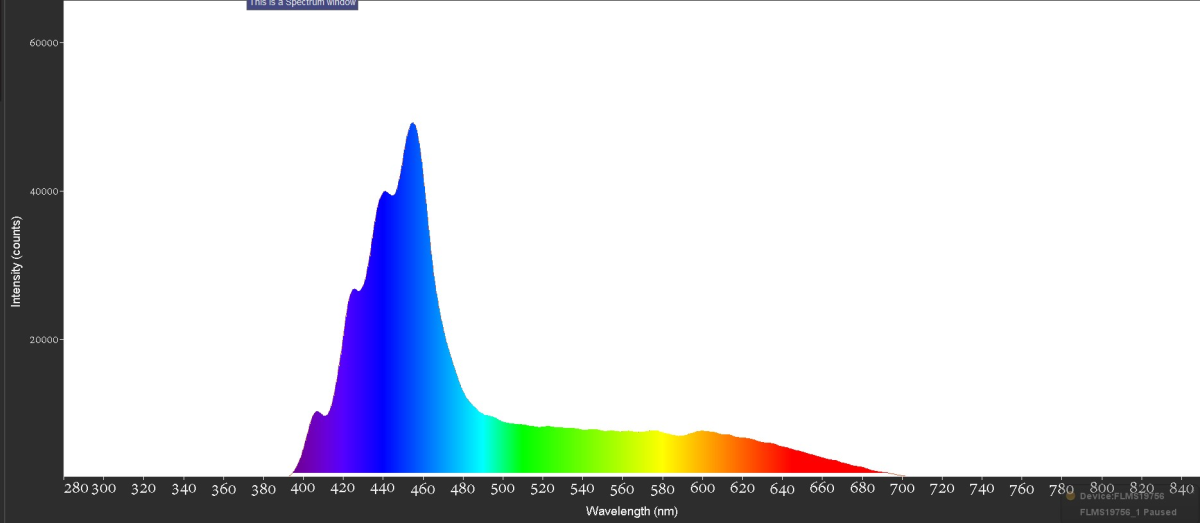
Also look at the Hydros XHOs, whose highest-wavelength blue peak is at 450 nm.
1746839358538.png


Now, many people have pointed out the hobby's shift towards bluer lighting, with others pointing out that corals mainly absorb light in the blue spectrum. However, this is different, as a lot of that absorption spectrum is also in the 475-525 nm range.
1746839750693.png


Why are LED manufacturers doing this? Purple light does not make corals fluoresce any better than blue, and I personally don't enjoy purplish lighting.
 

Miami Reef

Reef Chem Enthusiast
View Badges
Joined
Sep 8, 2017
Messages
17,255
Reaction score
29,618
Location
Miami
Rating - 0%
0   0   0
Not sure, but I dislike my T5 lighting because it had way too much green and cyan which washed out the colors and caused a green cast. I’m excited to move to LED now.

Most of the peaks from the absorption graph are in the blue range. Peridnin can absorb in the bluer range, too.

There really isn’t a biological need for the accessory colors IMO. They are mainly there to balance the blues and make the tank visually appealing. Some corals have chromoproteins which absorb and reflect at lower wavelengths.

I’m a fan of 660nm red. Not too much, but some can help corals.
 

oreo54

5000 Club Member
View Badges
Joined
Sep 18, 2017
Messages
6,880
Reaction score
4,087
Rating - 0%
0   0   0
I'm noticing from my (relatively few) years in the hobby that reef lighting manufacturers are trending towards not only bluer, but purpler lighting. Many recently released light fixturess seem to not just have more purple/UV LEDs, but also less larger-wavelength blue/cyan LEDs.

Take the new Hydra Edge (44) for example, which has 16 violet and UV LEDS compared to the 4 violet/UV LEDs in the previous generation Hydra, which is a 300% increase. Note also that AquaIllumination removed the green LEDs from the current generation.
1746837191950.png


Another example is the Radion G6 blue, which ditched all the cyan LEDs from its predecesor and had an increase in purple/UV LEDs of 83% (12 to 22).
1746839148410.png


Also look at the Hydros XHOs, whose highest-wavelength blue peak is at 450 nm.
1746839358538.png


Now, many people have pointed out the hobby's shift towards bluer lighting, with others pointing out that corals mainly absorb light in the blue spectrum. However, this is different, as a lot of that absorption spectrum is also in the 475-525 nm range.
1746839750693.png


Why are LED manufacturers doing this? Purple light does not make corals fluoresce any better than blue, and I personally don't enjoy purplish lighting.
The marketing of the "broad blue" spectrum.
After "regular blue" and royal blue you have nowhere to go but into the violets.
Then there is the "UV thing" including 400/395 which are heavily into the violet range as well.

The make what sells and this is the "flavor of the day" so to speak.
There are outliers like AI Blade grows which go back to the old school Blue/rb/cool white
but add a "glow" bar to add your burple if you so desire..

Cyans always been a hard sell along with green though most mercury based lamps have a good deal of green.
A lot of t5 tubes also contain a good amount of cyan.

Absorption data corrected for solvent.
coralabsorption.jpg
 
Last edited:

Bohemian Waxwing

2500 Club Member
View Badges
Joined
Apr 22, 2023
Messages
2,919
Reaction score
4,562
Location
Canada
Rating - 0%
0   0   0
This was one of the reasons I didn’t go with one of the budget LEDs like Noopsyche or Hypereef. I’m sure they are great bang for the buck but everytime I saw a pic of tanks running them, it was very purple. I’m with you OP, I dislike the purple.
 

Miami Reef

Reef Chem Enthusiast
View Badges
Joined
Sep 8, 2017
Messages
17,255
Reaction score
29,618
Location
Miami
Rating - 0%
0   0   0
I also don’t like purple very much.

I have actinic T5 bulbs from 400-420 nm, and at best, only gives cyan fluorescence. Most of the corals don’t react to it.

I don’t see that spectrum any better for chlorophyll A over 430-440 nm lights.

The graphs don’t lie.
 

VintageReefer

10K Club member
View Badges
Joined
Nov 16, 2023
Messages
19,172
Reaction score
34,122
Location
USA
Rating - 100%
3   0   0
I’m loving the Meridian + 14k edge bars. Wow. It’s like halides again, but with tons of fluorescence and pop like I’m used to from leds

F23D6C63-8E77-49C9-A8FC-46CA154F2908.jpeg
C86AE75A-B30E-4887-BEA2-F819A831B41B.jpeg
249EB1A6-1A64-4155-9664-C37387E22B04.jpeg
C87EE237-DAA0-475A-BDBF-651574C67D3E.jpeg
DC517AA1-47DE-4691-BFDE-BFCDD4596682.jpeg
CAA418F1-021A-4002-A1A6-36663A315CB1.jpeg
27EE22F9-C058-49CB-A710-A0D154032C6E.jpeg
BD6AEEC2-32B8-4486-B669-83F0B161BED5.jpeg
FF7B4410-EB28-49AF-83BC-1B2145F9FB29.jpeg
92CA7357-43FF-4DE4-9EA6-2C59B860214D.jpeg
B39AE4C6-9FCA-472D-9CF6-BE4288BAAB68.jpeg
 
OP
OP
thamnasteroid

thamnasteroid

2500 Club Member
View Badges
Joined
Aug 24, 2020
Messages
3,518
Reaction score
2,890
Location
Washington State
Rating - 100%
1   0   0
The marketing of the "broad blue" spectrum.
After "regular blue" and royal blue you have nowhere to go but into the violets.
Then there is the "UV thing" including 400/395 which are heavily into the violet range as well.

The make what sells and this is the "flavor of the day" so to speak.
There are outliers like AI Blade grows which go back to the old school Blue/rb/cool white
but add a "glow" bar to add your burple if you so desire..

Cyans always been a hard sell along with green though most mercury based lamps have a good deal of green.
A lot of t5 tubes also contain a good amount of cyan.

Absorption data corrected for solvent.
coralabsorption.jpg
Isn't cyan blue too? And looking at the graph, there does seem to still be high absorbance around 500, where cyan would be.
 

oreo54

5000 Club Member
View Badges
Joined
Sep 18, 2017
Messages
6,880
Reaction score
4,087
Rating - 0%
0   0   0
IDK; to me cyan just looks like light blue
Yea, somewhat depends on the nm..
Anyways I forget that most of the time I "see" it through a planted tank w/ a lot of green leaves.

Anyways middle one is just cyan leds.
bluegreen ,greenblue, light blue.. all good.


3reflectors.JPG


Screenshot 2025-05-10 212811.png

In RGB color space, cyan is represented as (0, 255, 255), which means 0 red, 255 green, and 255 blue.
For fun and only mildly related.. things that didn't survive the test of time..
 
Last edited:

TOP 10 Trending Threads

WHAT AMOUNT OF LIVE ROCK AND SAND SHOULD BE PRIORITIZED FOR OPTIMAL BIODIVERSITY/FILTRATION?

  • 100% live rock + bagged sand

    Votes: 38 26.4%
  • 100% dry rock + 100% live sand

    Votes: 48 33.3%
  • 50/50 live/dry rock, 50/50 live/bagged sand

    Votes: 32 22.2%
  • 75% live rock, 25% live sand

    Votes: 15 10.4%
  • 25% live rock, 75% live sand

    Votes: 11 7.6%
Back
Top





