


- Joined
- Dec 5, 2024
- Messages
- 14
- Reaction score
- 11
- Location
- Cambridge
- What state or country do you live in
- United Kingdom
Hi folks,
I’m looking for some advice regarding my first torch coral, which I purchased about three weeks ago. I placed it on the sand bed in an area with what I calculated to be medium flow and moderate light intensity. Before adding it to the tank, I acclimated it slowly and followed all the proper steps.
For the first 3–5 days, the coral seemed fine. However, I noticed the flesh at the base starting to recede. Upon closer inspection, it looks like it’s receding to a pinch point (see pictures below). I’ve read that this can happen during splitting, and I can see three mouths forming, with the split appearing to move toward the right.
To support it, I’ve been feeding Reef Roids every four days with the pumps off, but it doesn’t seem very interested in feeding. Despite the recession, the coral’s arms are fully extended and look healthy, even extending far toward the back. I took this as a sign it was doing okay, but the continued recession has me increasingly concerned.
For some background, I’m relatively new to the hobby, though I did reef-keep years ago. I recently adopted a mature tank with plenty of thriving Euphyllia corals like frogspawn and hammers, which have grown numerous heads previously with their old owner. I’m just not familiar with growing or splitting torches and want to ensure this one is thriving, not struggling.
Here are my tank parameters:
Day 2:

Day 4:
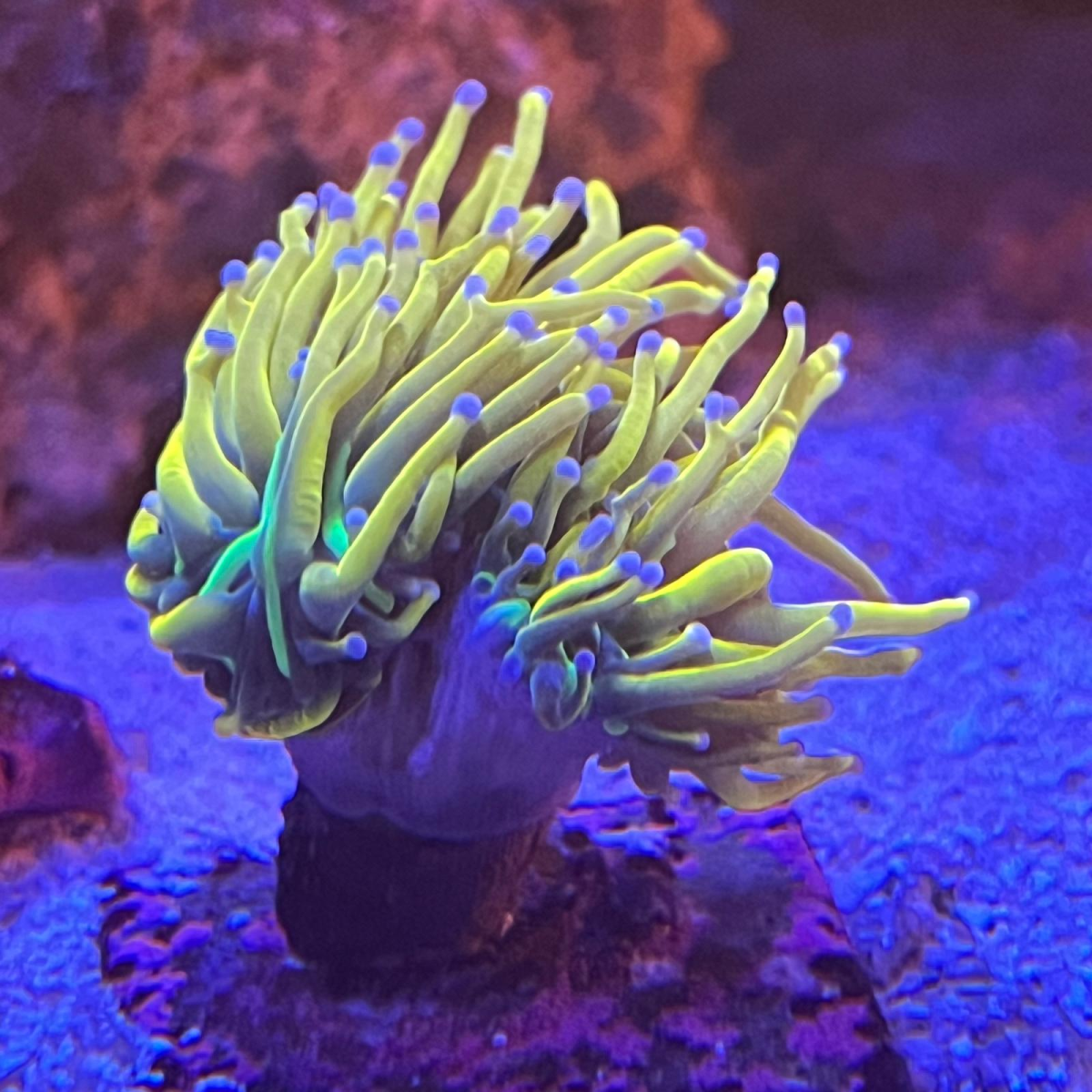
Week 2:
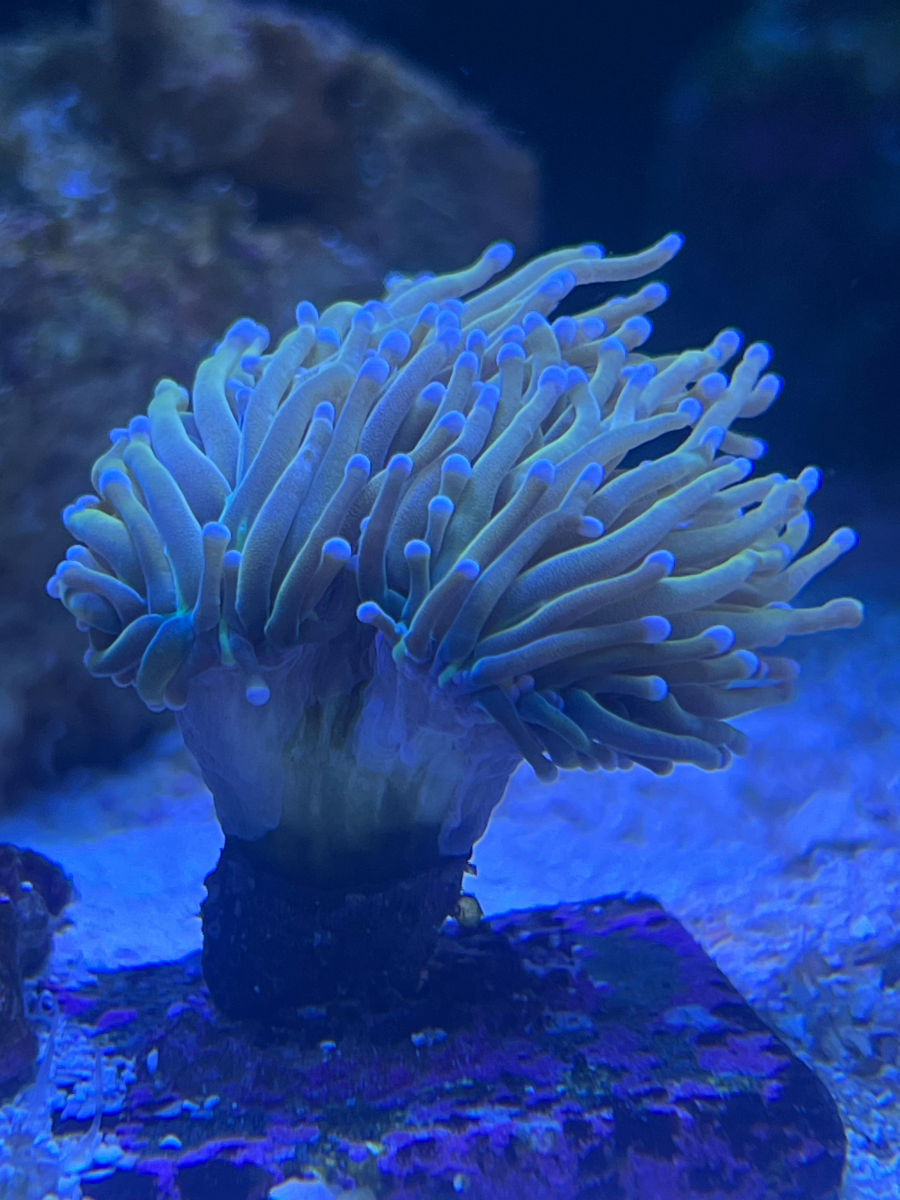
Week 3

Does this sound like typical splitting behaviour, or is this coral in trouble? Any advice would be greatly appreciated, as I want to give this torch the best possible care.
Thanks in advance!
I’m looking for some advice regarding my first torch coral, which I purchased about three weeks ago. I placed it on the sand bed in an area with what I calculated to be medium flow and moderate light intensity. Before adding it to the tank, I acclimated it slowly and followed all the proper steps.
For the first 3–5 days, the coral seemed fine. However, I noticed the flesh at the base starting to recede. Upon closer inspection, it looks like it’s receding to a pinch point (see pictures below). I’ve read that this can happen during splitting, and I can see three mouths forming, with the split appearing to move toward the right.
To support it, I’ve been feeding Reef Roids every four days with the pumps off, but it doesn’t seem very interested in feeding. Despite the recession, the coral’s arms are fully extended and look healthy, even extending far toward the back. I took this as a sign it was doing okay, but the continued recession has me increasingly concerned.
For some background, I’m relatively new to the hobby, though I did reef-keep years ago. I recently adopted a mature tank with plenty of thriving Euphyllia corals like frogspawn and hammers, which have grown numerous heads previously with their old owner. I’m just not familiar with growing or splitting torches and want to ensure this one is thriving, not struggling.
Here are my tank parameters:
- Alkalinity: 7.0 dKH (Hanna Checker)
- Calcium: 500 ppm (Salifert)
- Magnesium: 1320 ppm (Salifert)
- Phosphate: 0.07 ppm (Hanna Checker)
- Nitrate: 0.2 ppm (Salifert)
- Salinity: 1.026 (recently lowered from 1.029)
Day 2:
Day 4:
Week 2:
Week 3
Does this sound like typical splitting behaviour, or is this coral in trouble? Any advice would be greatly appreciated, as I want to give this torch the best possible care.
Thanks in advance!














