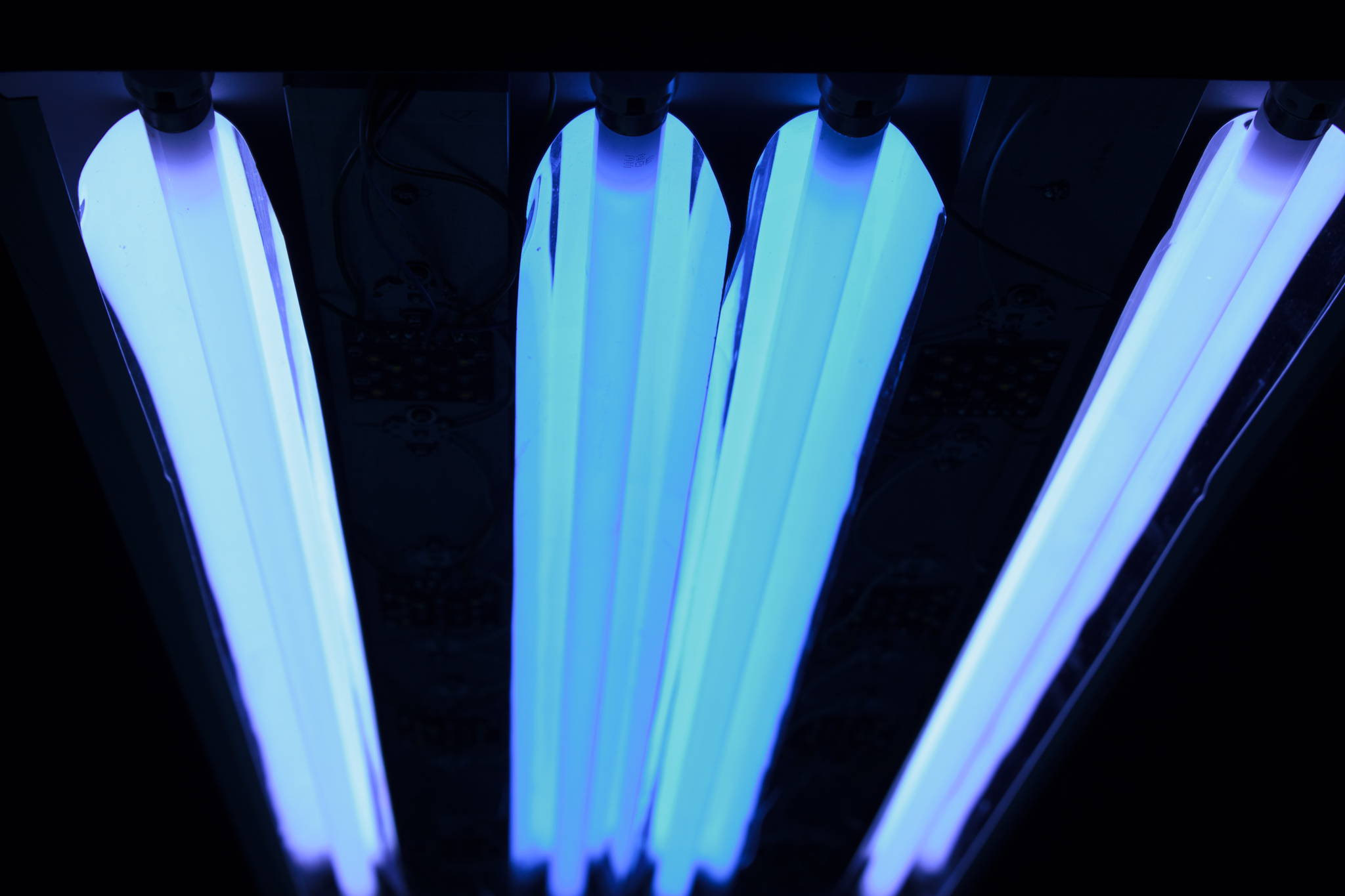
There is no reason you NEED to use Actinic bulbs and if you really don't find the look appealing I don't suggest you use them. Enjoying the look of your tank is a large part of what this hobby is all about. Personally, I like the richness they add to the spectrum and especially the glow they bring out in certain corals without creating heavy 'blue' look in the tank.
That said, I encourage you to do some independent research into spectral ranges for chromoprotein activation as well as photosynthetic activation curves for various clades of zooxanthellae. I think you'll find the 390-430nm range has a lot more action going on the current dogma would have you believe. It hits right at the heart of why a metal halide that churns out less lumens/watt than a given LED/array of LEDs will smoke the diode(s) in terms of spectral quality and resulting coral health. It's very tricky to quantify a lamp's efficiency with regards to its effectiveness for coral reef tanks when using metrics such as lumens or PAR. There's far too much info out there to even cover in a cursory manner in a forum post, but you seem quite passionate about lighting and for that reason I trust you'll have the initiative to go seek that knowledge out - especially since metal halides seem to be your point of interest and they are quite effective at generating photons in the nm range targeted by the True Actinic bulb.
You hit it! When comparing or evaluating a lighting system it is far more important to look at the wavelength of the light it produces first and foremost. If you look to the quality of that spectrum is too ensure that the light it produces is of quality for the corals health. Secondary is to look at amount of photons produced and this can be in PAR, most common in the hobby, or lumens, less useful.
So let's look that the most popular and/or most know bulbs for producing healthy corals.
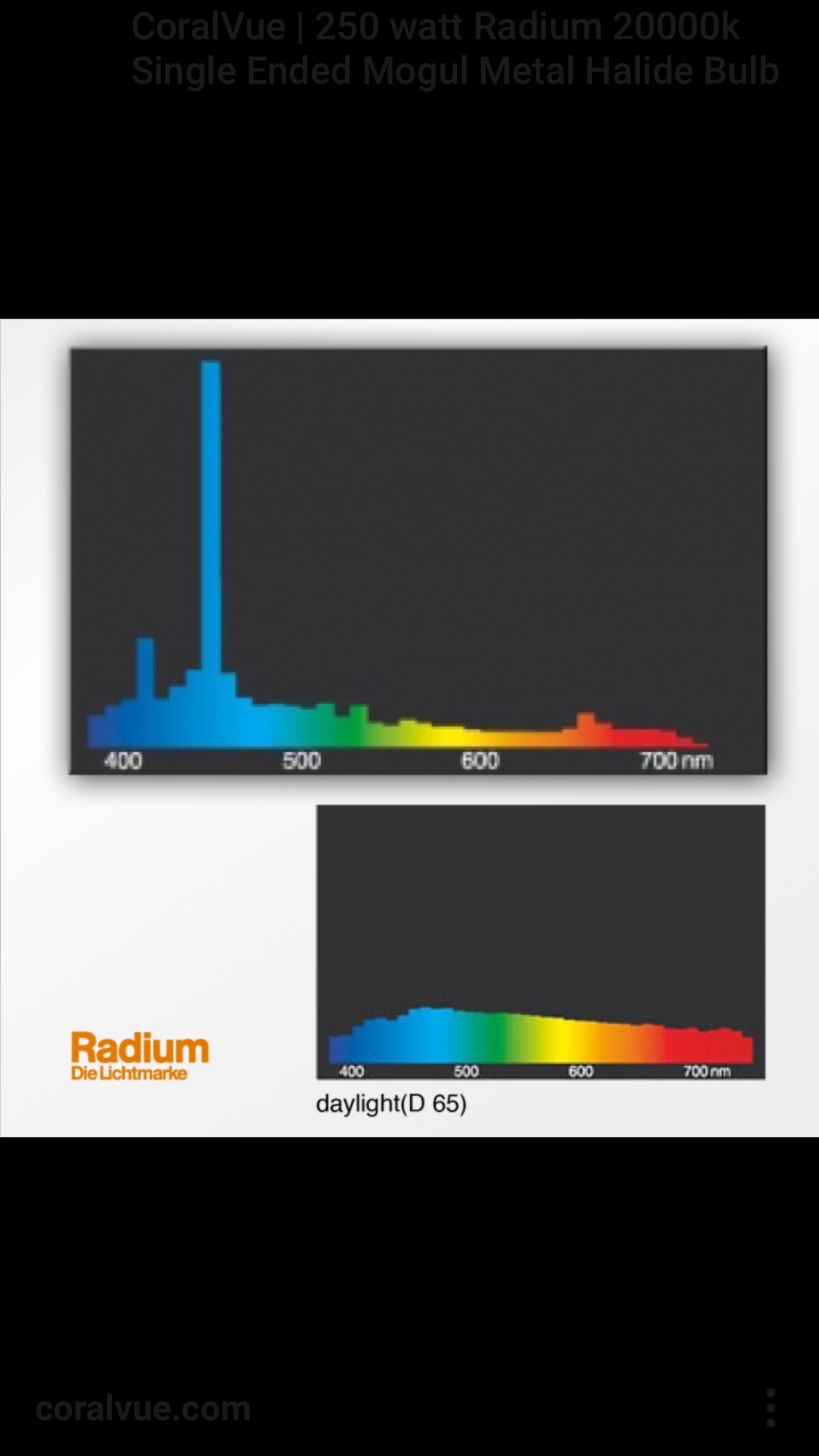
MH Radium, produces a very broad spectrum however most is in the 380nm-460nm.
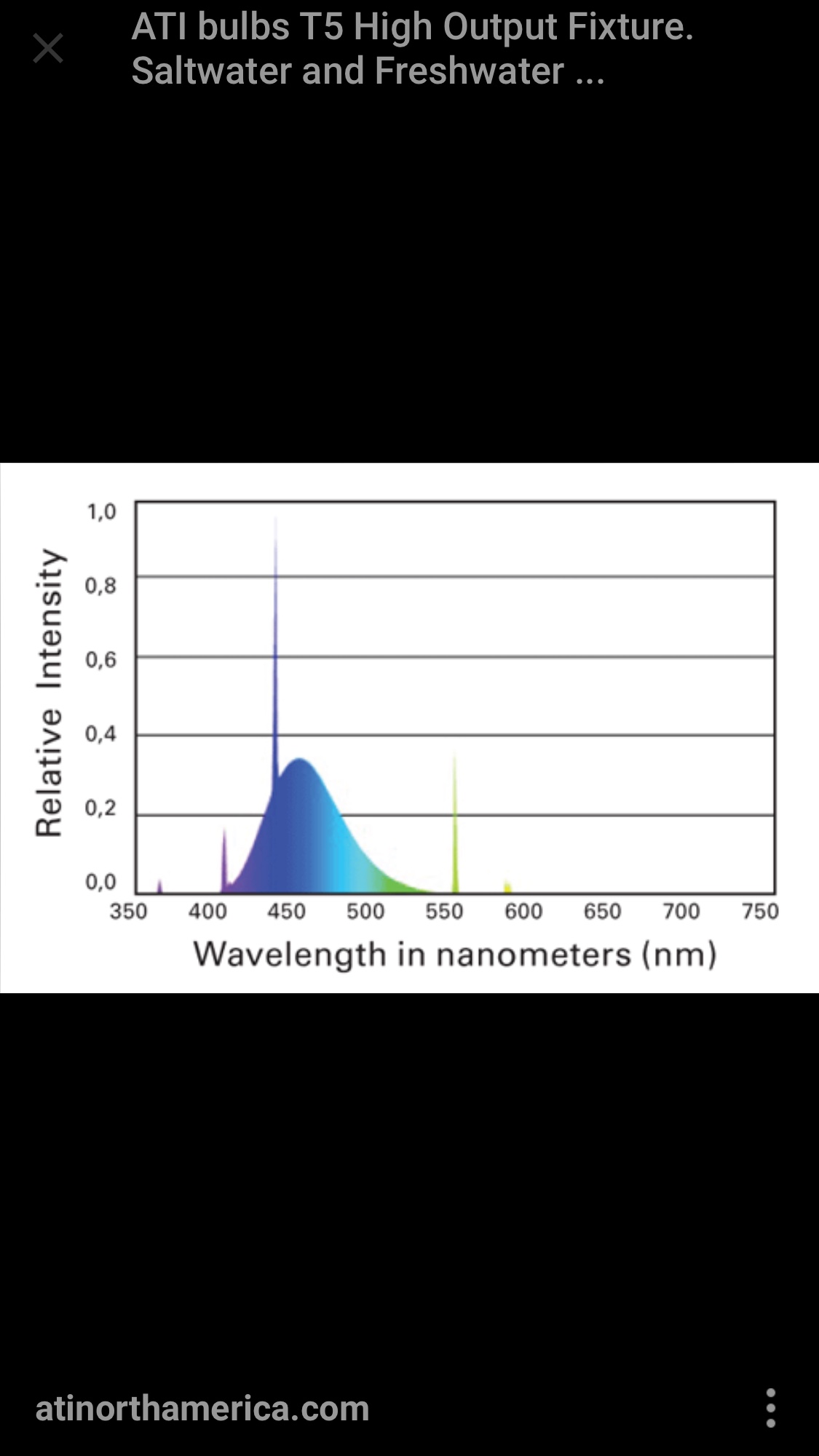
ATI Blue Plus, another bulb that had a general broad spectrum however most light is also in the sweet spot of 400nm-460nm.
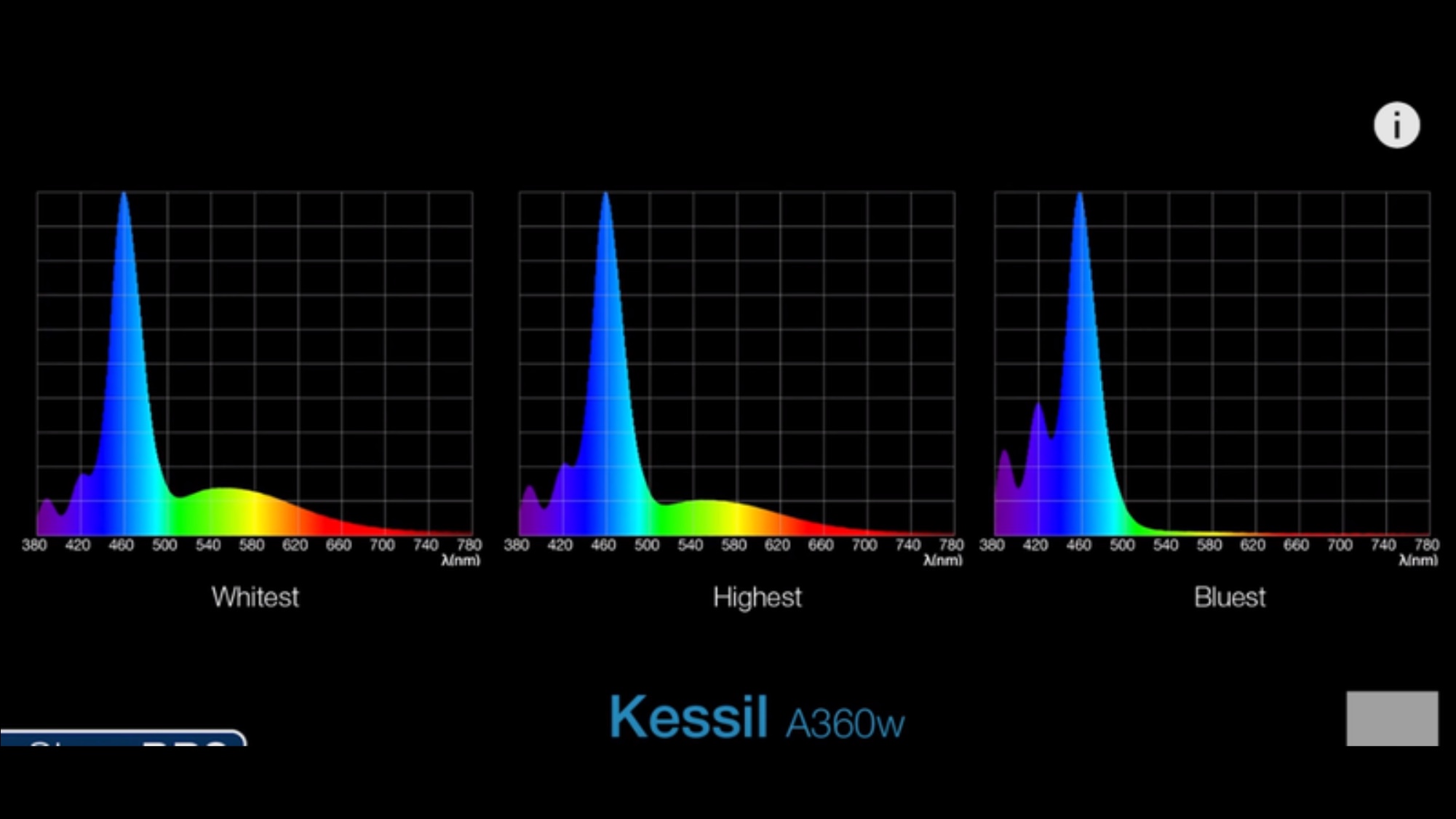
Now, let's look to the Kessil AP700 as a known and quality light. It also is capable of a broad spectrum with majority of light produced in the 380-460nm wavelength. You can also see that no matter then spectrum you choose, with Kessil Logic, it will still produce the majority of correct light for coral health. Also at the bluest settings the spectrum is really hitting that 380-460nm well.
So as you can see what all these have in common is that key spectrum 380-460nm range of light for coral health.
Now let's compare PAR, that's the easy bit. With any number of T5 bulbs you can produce as much PAR as needed/wanted.
The Radium MH is well know to produce high PAR number with either the 250 or 400 watt light as long as you choose the wattage needed for the depth and size of the tank.
I am here to say that the Kessil AP700 has no problem producing PAR numbers of 4-500 in the middle level of 12" depth and minimum of ~150-300 PAR for a 36"x24" area and 24" depth depending on mounting height and even more of you use more fixtures. For me I also use two T5 Blue Plus and I don't have a place in my tank I do not get 300+ PAR.
So each light can produce the amount of photos we generally see are required for SPS and even acros.
I see no real value in even determining the "Best". They all are equally capable and the bottom line is personnel choice.