Dinoflagellates my experience......h2o2 reefing tool!!!!!

I was fighting the dinos and did the 3 days of no light and major water change. Seems to have done the trick but if not, I will give the h2o2 a try.
 
Kniquy, I think personally that when you disturb the top surface of an old sandbed you reveal a new quantity of nutrients, that was buried and to a degree locked in by the original surface of the sand (old sand bed surface layers tend to be a bit clumped from some organic type glue I often find). So every time you scoop a bit more out, you release more to the tank. 8 years is pretty old too and I'm not sure how many people manage to keep a sand bed going that long (I'm now BB so all this is behind me but speaking from several years experience with sand beds). Especially if its not deep (deep, like 6 inch, sand beds last longer IMO. A 2 inch 8 year old sand bed is almost bound to have problems IMO).

If it were me and I wanted to keep the sand bed, I would take stock out and put in a bucket of clean water siphoned from the tank before disturbing anything (so its as clean as point of sale), then remove / siphon the sand bed entirely. If you want to keep the water, siphon the water out before disturbing the sand. Then either get new sand, or if you want to reuse the old stuff, although I think its quite hard to clean, you can have a go. Get some tough rubber gloves because this destroys your knuckles - put the sand in a big container and run water through (while outdoors) so its overflowing, and spend a few hours stirring the sand vigorously with your hand. This washes the sand of solid debris. Then, although I have never done this, if I was to clean sand nowadays, I would use an acid bath, probably using clean hydrochloric acid, like a gallon of muratic acid (about 30% strength) in 10 gallons of water. If the sand is really fine this might not work but for the coarse (1 to 2 mm) sand I used to use I think this would work. Keep stirring with your gloved hand for a couple of minutes every 10 mins, for a couple of hours maybe. Or maybe use stronger acid for shorter time. Hydrochloric acid will strip the outer layer of sand so it should look bright and clean after, and it will strip the bound phosphate from the sand grain surface. Then rinse for a couple of hours as above, overflowing the water and stirring, and it should be OK to go back in the tank then. Before putting live stock back in tank it would be wise to check pH and alk to make sure the acid is completely washed away.

I used a paint stirrer which I stripped of paint before using it in the past to violently stir sand, so the abrasive action of sand grains against each other would scrape the outer surface while rinsing.

Or, just buy new sand. You got yo rmoneys worth if it lasted 8 years!

Also clean the crap off the pump and rocks if possible. I've done this with a soft brush in the past, it dosent destroy life on the rocks but removes the fragile gunk algae. Do this in salt water though (like the old tank water) so it dosent kill the rock bacteria and little critters on the rock.

Then with all that nutrient rich stuff removed, you will have a chance IMO. But with the sand bed as it is, probably full of nutrients and carbon sources, I think it will be hard to get on top of.

 
Ostreopsis again. Only noticeable on the microscope so far...
I'll try H2O2 + UV germicide at least to prevent a bloom
 
Quick update. I continued to dose as stated in my earlier thread until Feb 1st when I stopedcompletly. I had not seen any dino's for 3 days. I'm happy to report that my problem has not resurfaced and the corals all look amazing. I did not notice any chemistry changes or wild swings during my treatment or after.
 
So when I doe my tank I should dose with straight undiluted peroxide? I have a 3 year old 55g reef with no fuge or anything. Filtering only on lr and water changes. Softies and SPS with LPS coral, along with a mated pair of clowns, Yellow tang and a Firefish. I also have a few hermits and various snails for cleanup crew. Will my cleanup crew suffer without the presence of algae?
 
Yes, dose it straight into the tank. It won't hurt your livestock.
 
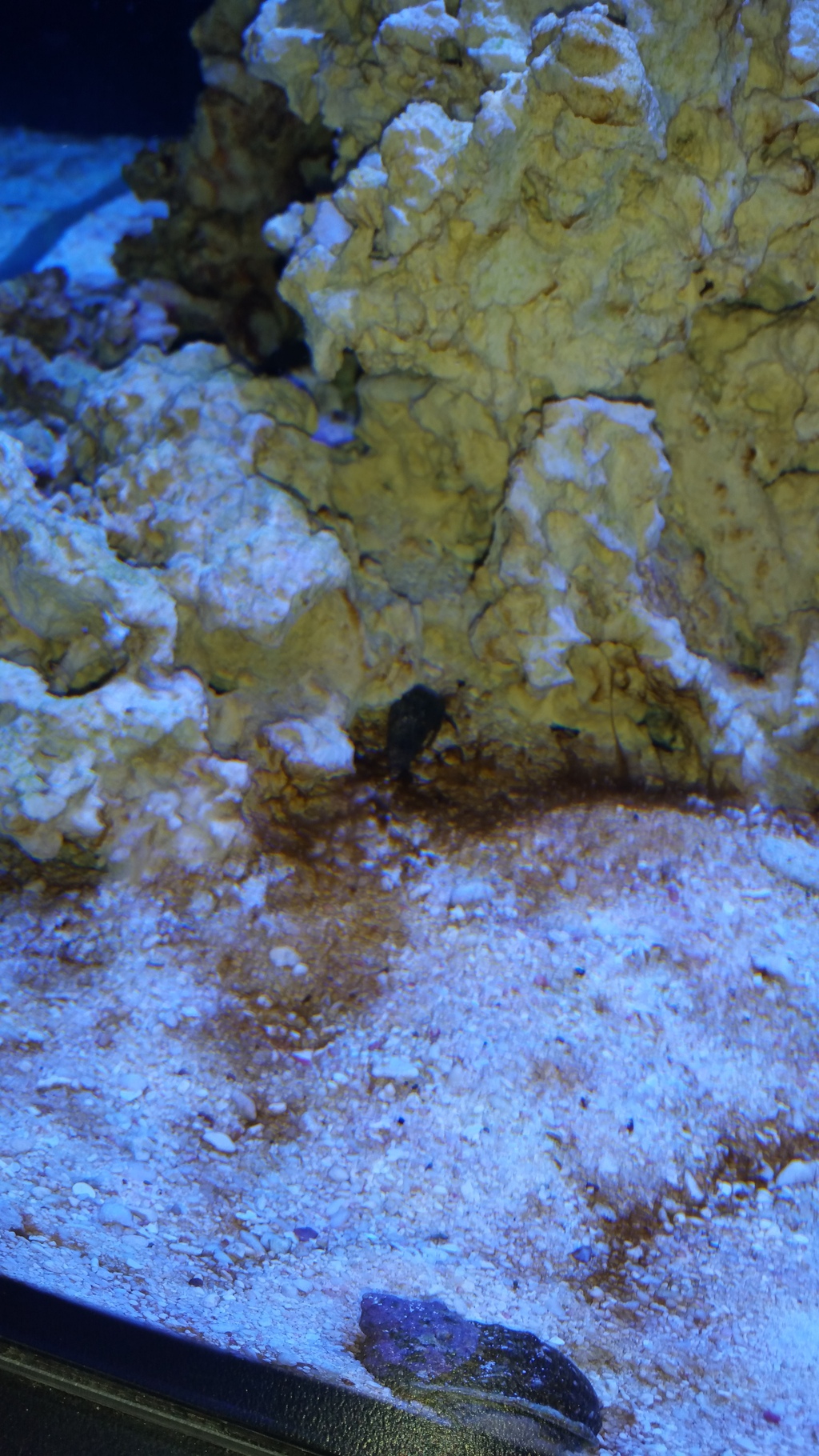
So I've had this stuff for almost a year now with nothing that's beat it. I'm thinking they are dinos. They LOVE water changes like crazy and grow really stringy bubble filled strands when I do them. They died back to a really short fuzz when I did 3,5, and even 10 days of darkness but didn't totally die off at all. It's a 1 1/2 year old bare bottom 40 gallon tank and is clean with only 2 fish so no high nutrients by any means. Radions for lighting, no sunlight, etc. I even raised the PH with kalk to kill it...didn't work at all. I also run GFO and a good skimmer. But nothing seems to kill this crap. Though, it killed 2 fish, 13 corals, and an urchin. I'm seriously on the edge of taking the tank down. Maybe I should try the H2O2 first. It's already all in rough shape...can't hurt, right?
fuzzy dinos2 3-30-15.jpg
 
what about bta's? I'm on my 3rd outbreak. This things suck. first two times I used algaefix. Not working this time. Tank looks hidios!
 
if you are meaning bubble tipped anems they are peroxide sensitive, can withdraw and act angry, so we consider them sensitive although not 1/4 as much as lysmata cleaner species. we have many reports of bta's surviving treatments and 1% reported survival of lysmata. overall, try to relocate the bta during in tank treatments if poss
 
Just had to go buy some more peroxide from chemist they no longer stock 3% they only stock 6% now

Am I correct in thinking I just half the dose for my tank
 
sure that would work, or dil the sample by half. i use 35% in my tank, im not even sure 6% is a big deal but with sensitives in tow it could be, mines trained lol.

can you post full tank shot, im curious to see the scope of your issue
 
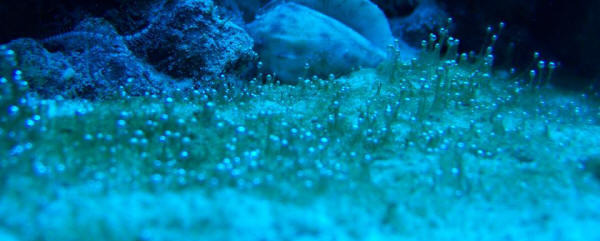
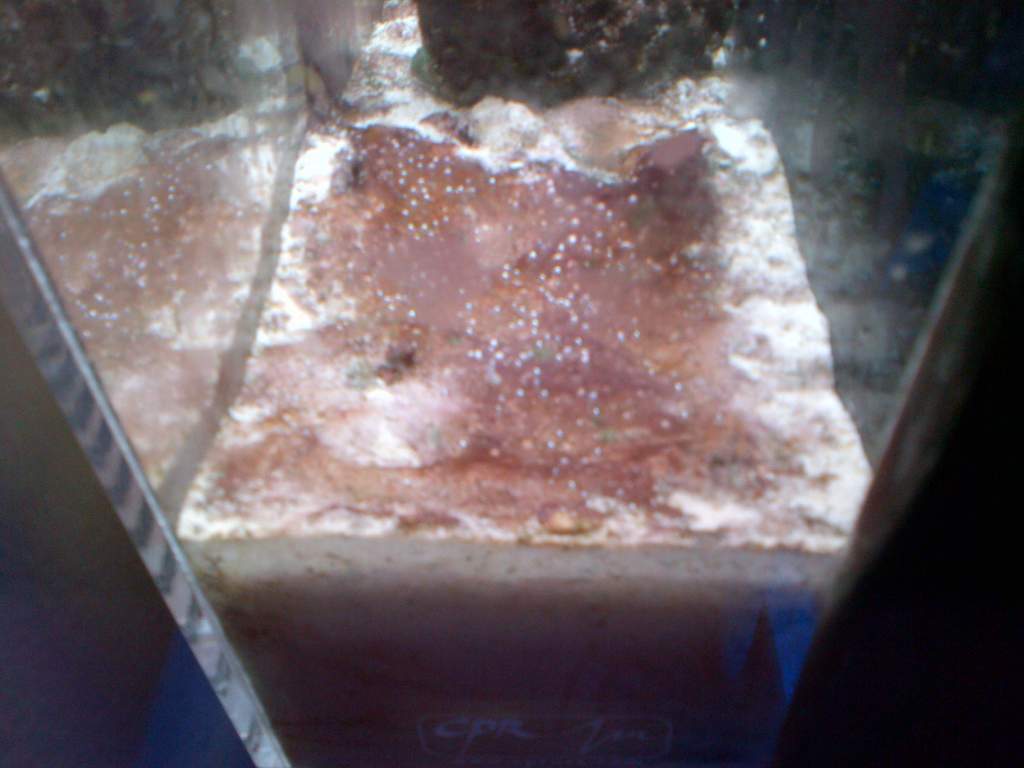
The last two pics aren't mine. The first is. You can't tell, but they are stringy with bubbles at the tip. When they get too long the flow breaks them off. The second two pictures are what they look like. The second is supposedly dinos. The thrid is apparently cyano. Mine look like both.

20150602_160533_zpsrtlnloiz.jpg


Dino%20pam%201_zpsqbtsb3or.jpg


bubble20130610-00003_zpss9swldwq.jpg
 
ImageUploadedByREEF2REEF1433474267.102911.jpg
ImageUploadedByREEF2REEF1433474293.965474.jpg
ImageUploadedByREEF2REEF1433474303.179079.jpg
ImageUploadedByREEF2REEF1433474311.018886.jpg
ImageUploadedByREEF2REEF1433474318.420920.jpg


Hi, I have a similar problem, everything was great in my 10 gal nano until my heater got stucked and overheated it, now I notice this purple/brownish slime, took a look in the microscope I think the filamentous purple thing is Cyanobacteria, not sure if the green organism is dinoflagellates, they swim around, any ideas? Thanks
 
This is the best thread on Dinos I have found! I've been fighting them for months. Couple weeks ago I bought a RO/DI unit and did water changes every day for like a week, picked up a phosban reactor the other day....all in an attempt to get rid of it. Since then I have been doing a tremendous amount of research. From what I have gathered, dinos thrive on low nutrient conditions, which is unlike most other algaes, and seem to feed on trace elements in the salt we all use.....rendering water changes even more problematic. I've since halted water changes, continuing my GFO reactor and running a bag of GAC in my sump....started dosing 1ml/10g (35g bow with a 20g sump about 2/3 full) peroxide. A few weeks ago I tried a 3 day blackout and lost most of the colour of my maze brain and the green tips on my hammer have really faded. been blowing and syphoning what i can. I'll continue the peroxide dosing and do another blackout only if I really have to. I look forward (fingers crossed) to seeing positive results....I miss looking at my tank with joy.
 
Kniquy, I think personally that when you disturb the top surface of an old sandbed you reveal a new quantity of nutrients, that was buried and to a degree locked in by the original surface of the sand (old sand bed surface layers tend to be a bit clumped from some organic type glue I often find). So every time you scoop a bit more out, you release more to the tank. 8 years is pretty old too and I'm not sure how many people manage to keep a sand bed going that long (I'm now BB so all this is behind me but speaking from several years experience with sand beds). Especially if its not deep (deep, like 6 inch, sand beds last longer IMO. A 2 inch 8 year old sand bed is almost bound to have problems IMO).

If it were me and I wanted to keep the sand bed, I would take stock out and put in a bucket of clean water siphoned from the tank before disturbing anything (so its as clean as point of sale), then remove / siphon the sand bed entirely. If you want to keep the water, siphon the water out before disturbing the sand. Then either get new sand, or if you want to reuse the old stuff, although I think its quite hard to clean, you can have a go. Get some tough rubber gloves because this destroys your knuckles - put the sand in a big container and run water through (while outdoors) so its overflowing, and spend a few hours stirring the sand vigorously with your hand. This washes the sand of solid debris. Then, although I have never done this, if I was to clean sand nowadays, I would use an acid bath, probably using clean hydrochloric acid, like a gallon of muratic acid (about 30% strength) in 10 gallons of water. If the sand is really fine this might not work but for the coarse (1 to 2 mm) sand I used to use I think this would work. Keep stirring with your gloved hand for a couple of minutes every 10 mins, for a couple of hours maybe. Or maybe use stronger acid for shorter time. Hydrochloric acid will strip the outer layer of sand so it should look bright and clean after, and it will strip the bound phosphate from the sand grain surface. Then rinse for a couple of hours as above, overflowing the water and stirring, and it should be OK to go back in the tank then. Before putting live stock back in tank it would be wise to check pH and alk to make sure the acid is completely washed away.

I used a paint stirrer which I stripped of paint before using it in the past to violently stir sand, so the abrasive action of sand grains against each other would scrape the outer surface while rinsing.

Or, just buy new sand. You got yo rmoneys worth if it lasted 8 years!

Also clean the crap off the pump and rocks if possible. I've done this with a soft brush in the past, it dosent destroy life on the rocks but removes the fragile gunk algae. Do this in salt water though (like the old tank water) so it dosent kill the rock bacteria and little critters on the rock.

Then with all that nutrient rich stuff removed, you will have a chance IMO. But with the sand bed as it is, probably full of nutrients and carbon sources, I think it will be hard to get on top of.


this greatly depends on the substrate and depth of the substrate, I'm not a professional but I have read that sand beds beyond 4 inches that are very small grain, if disturbed can release nutrients back into the water....I have a 35B with about 1lb/g i got as unseeded dry aragonite and my pistol makes huge piles that sit there for a long time, id rather not clean my sandbed for risk of losing the good stuff....I'm no pro but thats just my insight...a 'nutrient rich' 'dangerous if disturbed' sandbed is achieved through very fine and very deep sand,,,,,I've been vacuuming through a filter sock every chance I can to try and rid myself of these pests and my nutrients are more than good...still have dinos.
 
Hi ! I ve read firt pages and i m really impressed, i think i have dino, here s a picture:
(Or diatome?)


I think i ll do a treatment, with 1 ml for 10 gallons during 1 week, i ll post pictures

I ve noticed that my zoas just open half and are covered with dino (or diatome?)

Can i treat with uv on? Or better off for the week of'treatment?

Better to add the peroxyde at night or beginning of the day?

I hope this will work, sad seeing my zoas closing...

Thanks , i ll start treatment tomorrow after a waterchange of 10%.
 
Last edited:

TOP 10 Trending Threads

HOW MUCH DOES A FISH’S FEEDING REQUIREMENTS AFFECT YOUR STOCKING DECISIONS?

  • A lot! - I avoid fish that require frequent or specialized feeding

    Votes: 12 28.6%
  • Quite a bit, but an automatic feeder can change my answer

    Votes: 6 14.3%
  • It depends on whether my nutrient export can handle it

    Votes: 6 14.3%
  • It depends on how badly I want the fish

    Votes: 10 23.8%
  • Not much. I’m willing to adjust my routine

    Votes: 9 21.4%
  • Not at all. Feeding demands don’t limit my stocking choices

    Votes: 8 19.0%
  • I usually learn about the demanding feeding schedule after buying the fish!

    Votes: 2 4.8%
  • I haven’t really considered this before

    Votes: 3 7.1%
  • Something else (see my comments in the thread)

    Votes: 1 2.4%
Back
Top
Home
Post thread…
Market
What's new