Flow Sensors: Acceptable Variation in Measurement?

d2mini

5000 Club Member
View Badges

Joined
Sep 2, 2013
Messages
5,141
Reaction score
8,415
Location
Houston, TX
Rating - 0%
0   0   0
I have the GHL flow meter and it's installed on my drain plumbing.
The drain plumbing is pretty large and I have it dialed back after the sensor, right before it goes into the sump.
It measures in liters per hour, and if I watch the numbers, it bounces around.
For example.... 2265, 2298, 2388, 2276, 2198, 2187, 2220, 2388, 2187, 2298, 2332...
These are numbers I literally just recorded over the past minute or two.
About a 200 l/ph swing. Seems acceptable to me, no?

 

Brew12

Electrical Gru
View Badges
Joined
Aug 14, 2016
Messages
22,488
Reaction score
57,147
Location
Decatur, AL
Rating - 0%
0   0   0
I have the GHL flow meter and it's installed on my drain plumbing.
The drain plumbing is pretty large and I have it dialed back after the sensor, right before it goes into the sump.
It measures in liters per hour, and if I watch the numbers, it bounces around.
For example.... 2265, 2298, 2388, 2276, 2198, 2187, 2220, 2388, 2187, 2298, 2332...
These are numbers I literally just recorded over the past minute or two.
About a 200 l/ph swing. Seems acceptable to me, no?
I would call roughly 10% pretty good. Especially when you consider that flow isn't going to be constant and will bounce around.
 

mcarroll

10K Club member
View Badges
Joined
Jan 8, 2012
Messages
15,213
Reaction score
8,968
Location
Virginia
Rating - 0%
0   0   0
I have the GHL flow meter and it's installed on my drain plumbing.
The drain plumbing is pretty large and I have it dialed back after the sensor, right before it goes into the sump.
It measures in liters per hour, and if I watch the numbers, it bounces around.
For example.... 2265, 2298, 2388, 2276, 2198, 2187, 2220, 2388, 2187, 2298, 2332...
These are numbers I literally just recorded over the past minute or two.
About a 200 l/ph swing. Seems acceptable to me, no?

I may be misreading, but unless the flow meter is the same diameter as your drain plumbing (or larger), you're not gonna get a true reading – a smaller one will be restricting the flow.

Wouldn't you want this on your return pump rather than the drain anyway? (Same flow rate, but I suspect this is how it's intended to be mounted.)
 
OP
OP
d2mini

d2mini

5000 Club Member
View Badges
Joined
Sep 2, 2013
Messages
5,141
Reaction score
8,415
Location
Houston, TX
Rating - 0%
0   0   0
I may be misreading, but unless the flow meter is the same diameter as your drain plumbing (or larger), you're not gonna get a true reading – a smaller one will be restricting the flow.

Wouldn't you want this on your return pump rather than the drain anyway? (Same flow rate, but I suspect this is how it's intended to be mounted.)

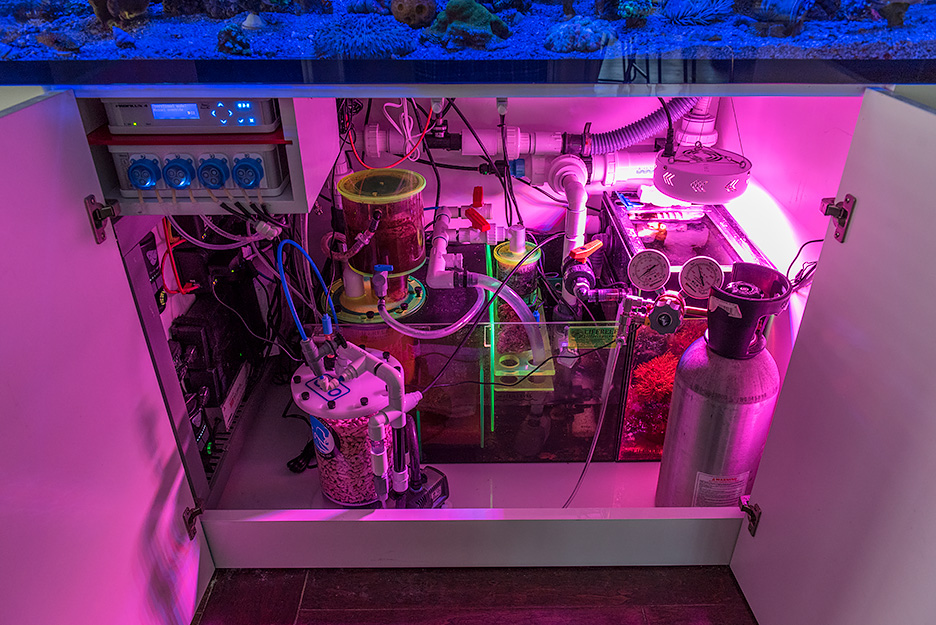
It's basically the same size. Drain plumbing is 1.25" and flow meter is 25mm (1") fittings but a smaller body. Restriction is fine. As mentioned above i have to dial back flow anyway.
Can't fit it on my return line.
 

mcarroll

10K Club member
View Badges
Joined
Jan 8, 2012
Messages
15,213
Reaction score
8,968
Location
Virginia
Rating - 0%
0   0   0
About what flow rate are you supposed to be getting in theory?

(Just curious why it won't fit on the return plumbing?)
 
OP
OP
d2mini

d2mini

5000 Club Member
View Badges
Joined
Sep 2, 2013
Messages
5,141
Reaction score
8,415
Location
Houston, TX
Rating - 0%
0   0   0
(Just curious why it won't fit on the return plumbing?)

i-vC3hPdf.jpg


As far as expected flow rate... I don't have one. That flow rate is fine with me.
I was just curious about the numbers bouncing around. I just go by the average.
 

TheEngineer

Formerly icecool2
View Badges
Joined
Nov 26, 2011
Messages
7,296
Reaction score
6,385
Location
PA
Rating - 0%
0   0   0
10% seems reasonable to me. You’re likely more concerned with large deviations,right?
 
OP
OP
d2mini

d2mini

5000 Club Member
View Badges
Joined
Sep 2, 2013
Messages
5,141
Reaction score
8,415
Location
Houston, TX
Rating - 0%
0   0   0
10% seems reasonable to me. You’re likely more concerned with large deviations,right?
Correct.
I just wanted to make sure what I'm currently seeing is "normal".
I figure turbulence going through the sensor is probably what's causing changes every few seconds.
I'd wager that if the diameter of the sensor and plumbing were identical, I'd see less of a swing.
 

TheEngineer

Formerly icecool2
View Badges
Joined
Nov 26, 2011
Messages
7,296
Reaction score
6,385
Location
PA
Rating - 0%
0   0   0
Is this lamanar flow through it? Any turbulence at all will throw it off I’m sure.

I think your insight is very true. It may just be the turbulence created from the bushing down to the smaller size.
 

mcarroll

10K Club member
View Badges
Joined
Jan 8, 2012
Messages
15,213
Reaction score
8,968
Location
Virginia
Rating - 0%
0   0   0
For example.... 2265, 2298, 2388, 2276, 2198, 2187, 2220, 2388, 2187, 2298, 2332...
These are numbers I literally just recorded over the past minute or two.
About a 200 l/ph swing. Seems acceptable to me, no?

I was being dense...we can use these numbers. You're getting "around 500 GPH". Even in 1" plumbing there's no significant friction in that size pipe from that much flow.

That said, GHL sells a 1.25" version from looking at the website...looks like the same sensor no matter what size, so maybe you can get the bigger housing from them for a minimal cost? It might smooth out the readings if that's of interest.
 

ca1ore

10K Club member
View Badges
Joined
Oct 28, 2014
Messages
14,193
Reaction score
19,711
Location
Stamford, CT
Rating - 100%
2   0   0
I have found, with the Neptune sensors at least, that upsizing the flow meter helps to reduce friction losses. In apex you just have to specify the flow meter size for it to read properly - imagine there would be something similar for GHL. I have found the apex sensors to be quite precise (the readings don't bounce around much) but that the accuracy is +- 10%.
 

Brew12

Electrical Gru
View Badges
Joined
Aug 14, 2016
Messages
22,488
Reaction score
57,147
Location
Decatur, AL
Rating - 0%
0   0   0
I have found, with the Neptune sensors at least, that upsizing the flow meter helps to reduce friction losses. In apex you just have to specify the flow meter size for it to read properly - imagine there would be something similar for GHL. I have found the apex sensors to be quite precise (the readings don't bounce around much) but that the accuracy is +- 10%.
Keep in mind that the flow in a return is more constant than the flow in a drain. Since this sensor is on the drain line I feel the fluctuations are to be expected.
 

ca1ore

10K Club member
View Badges
Joined
Oct 28, 2014
Messages
14,193
Reaction score
19,711
Location
Stamford, CT
Rating - 100%
2   0   0
Keep in mind that the flow in a return is more constant than the flow in a drain. Since this sensor is on the drain line I feel the fluctuations are to be expected.

Understood, however, I am running five flow sensors, two of which are on drains - and they are all quite consistent. OK, both drains are siphons, so less chaotic than one that might have an air/water mix.
 
OP
OP
d2mini

d2mini

5000 Club Member
View Badges
Joined
Sep 2, 2013
Messages
5,141
Reaction score
8,415
Location
Houston, TX
Rating - 0%
0   0   0
At least when I got this about a year ago, this was the largest one they had. Havent looked lately.
I knew I didn't need to measure up to 9000 l/ph but I got it for the larger diameter.

EDIT: Just checked, I'm still seeing the same 3 meter sizes with the largest having the internal diameter of 1".
 

mcarroll

10K Club member
View Badges
Joined
Jan 8, 2012
Messages
15,213
Reaction score
8,968
Location
Virginia
Rating - 0%
0   0   0

Brew12

Electrical Gru
View Badges
Joined
Aug 14, 2016
Messages
22,488
Reaction score
57,147
Location
Decatur, AL
Rating - 0%
0   0   0

Lasse

10K Club member
View Badges
Joined
Mar 20, 2016
Messages
12,664
Reaction score
31,363
Location
Källarliden 14 D Bohus, Sweden
Rating - 0%
0   0   0
DN 25 -> 1"; DN 32 -> 1 1/4". the mm system off pipes refers to outside diameter -> the tum system refer to inside diameter

@d2mini Is there a lot of bends and valves near the flow meter. Normally you want the meter have a couple of decimeters horizontal pipe before and after the meter - just to get a laminary flow. I have no experiences of GHL flowmeters but my general knowledge of these says me that its important with no turbulences and no air in order to get a stable reading

Sincerely Lasse
 
OP
OP
d2mini

d2mini

5000 Club Member
View Badges
Joined
Sep 2, 2013
Messages
5,141
Reaction score
8,415
Location
Houston, TX
Rating - 0%
0   0   0
DN 25 -> 1"; DN 32 -> 1 1/4". the mm system off pipes refers to outside diameter -> the tum system refer to inside diameter

@d2mini Is there a lot of bends and valves near the flow meter. Normally you want the meter have a couple of decimeters horizontal pipe before and after the meter - just to get a laminary flow. I have no experiences of GHL flowmeters but my general knowledge of these says me that its important with no turbulences and no air in order to get a stable reading

Sincerely Lasse

I have a minimum of 6" (15cm) either side of the meter.
Unfortunately it is what it is when working inside the stand. ;)
 

erk

Valuable Member
View Badges
Joined
Mar 19, 2014
Messages
1,382
Reaction score
2,017
Location
DFW
Rating - 0%
0   0   0
What kind of flow meter is it? I assume paddle wheel or turbine. Doubt it is an elliptical gear flow meter. For the paddle wheel or turbine, the typical requirement is 10x diameter straight on inlet and 5x diameter on outlet. This is the standard recommendation I've seen on industrial level flow meters. You could experiment though. No extra fittings or any obstructions within this region. This ensures laminar flow thru the pipe. You must use smooth bore tubing and clean it out regularly to keep biofilm and such to a minimum or it will disrupt the flow. Or you could average the reading out of the sensor over say a 10 second period. This would be the easier thing to do.

Keep in mind that the higher the fluid velocity, the longer the straights will need to be. It becomes easier to disturb the flow and cause shocks and turbulence with high velocity flows. This leads to a trade off between large diameter and small diameter tubing. Sure, smaller means shorter straights, but since the fluid velocity is higher, you will need to accommodate this and increase from 10x and 5x lead in/out to maybe 15x and 7x or more. You will probably need to do some testing or find a datasheet/contact the original manufacturer of the flow meter to see what they recommend.
 

TOP 10 Trending Threads

WHAT AMOUNT OF LIVE ROCK AND SAND SHOULD BE PRIORITIZED FOR OPTIMAL BIODIVERSITY/FILTRATION?

  • 100% live rock + bagged sand

    Votes: 38 26.2%
  • 100% dry rock + 100% live sand

    Votes: 48 33.1%
  • 50/50 live/dry rock, 50/50 live/bagged sand

    Votes: 33 22.8%
  • 75% live rock, 25% live sand

    Votes: 15 10.3%
  • 25% live rock, 75% live sand

    Votes: 11 7.6%
Back
Top