Frozen vs. Pellet Foods

I use both. Fresh twice a day when I am home, and dry flake (Prime Reef) and pellet (TDO chromoboost) 10 total times a day on autofeeders.
how many fish do you have Randy? I been trying to hone in my avast plank I currently do 3x 25 seconds but the food is eaten almost instantly so been considering increasing. Seeing you say 10 times makes me think I might be far undershooting lol

I haven't looked into much on the reef jerky it rehydrates from a health standpoint, but the wrasses and other fish tbh all love it and go crazy for the "rehydrated" food

I also feed frozen daily, but this is just while I am at work or away to keep them eating multiple times per day on top of the nori for the herbivores. I see all of you talking about TDO Chrono Boost, so maybe I will look into that as well, though not sure the avast can dispense that one but could always hook up a second feeder.
 
Last edited:

I feed both. NLS marine pellets every morning, frozen at lunch and nori in the late afternoon. That way the fish get a balanced diet with plenty of protein, vitamins and seaweed.
 
I also said multiple times, I have nothing to prove and this is only one of my many hobbies. My tank has never had a communicable disease in 45 years. Are there any quarantine or tanks fed dry foods that can say that? I think not, but maybe there are. Does that prove anything? Yes it does.
It proves my method works. It doesn't prove a quarantined tank or a tank feeding dry foods can't work, but so far there are none so we don't really know.

Yes, it proves your method overall works.

It does not prove that any single aspect of your husbandry is useful (they may actually be harmful) nor does it mean that your explanations for why as a whole the method works is accurate.

Further, the comment on not having other methods work for 45 years so we cannot know if they work is very tiresome and not appropriate unless keeping a tank for 45 years is the goal. If other methods keep fish from getting sick for the normal time people keep reef tanks, that is clearly a success.
 
I'm always amazed at how we have such a concentration of fish immunologists on reef2reef! I had no idea there were so many. Given that we have so much more to learn about human immunology (my area of expertise, specifically B cell/antibody immunology of infectious diseases), and human research being relatively well funded, I'm astounded by how far we've advanced our knowledge of fish immunology!
I find that interesting as well. Without any prejudice I claim that air Travel is the easiest way to spread infectious disease so along with uncontrolled immigration , which by that no medical screening. Not being a medical person someone else may explain this better but If I Fly to say India and have an active virus or communicable disease that shows no symptoms yet , Flu ect. Or Even ones that we have the antibodies for within our systems ( herd Immunity ). The population of India do not so they could quite easily contract it. We don't have to go far back to see that. So Is this not Easily Translated to transferring fish from around the world , and plopping them into our Tanks introduce things even though people QT ?
 
Strich, the frozen foods I use here in the US are not farmed. It states on the package that the mysis I use was collected fresh in the sea and I also use LRS foods. I know Larry the owner (or I spoke to him) and I know he buys literally tons of fresh seafoods including clams and mussels. I also use worms that I grow and fresh shellfish that I buy live and freeze myself.

Everything that goes into my tank was, or is fresh foods.

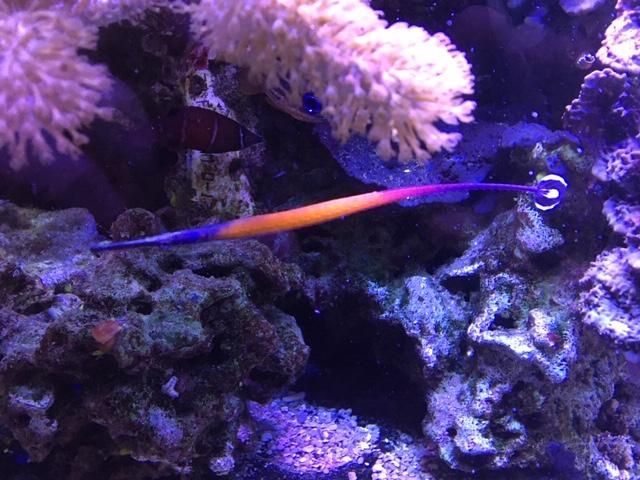
I am not crazy about mysis but some of my pipefish eat nothing else. Mysis are mostly indigestible shell which is not made of calcium so it is useless, but I have no choice with pipefish as I can't get their natural diet which is mostly tiny living animals including fish fry.

Have you ever looked at mysis from supposedly Glacier water from Canada?
 
how many fish do you have Randy? I been trying to hone in my avast plank I currently do 3x 25 seconds but the food is eaten almost instantly so been considering increasing. Seeing you say 10 times makes me think I might be far undershooting lol

I haven't looked into much on the reef jerky it rehydrates from a health standpoint, but the wrasses and other fish tbh all love it and go crazy for the "rehydrated" food

I also feed frozen daily, but this is just while I am at work or away to keep them eating multiple times per day on top of the nori for the herbivores. I see all of you talking about TDO Chrono Boost, so maybe I will look into that as well, though not sure the avast can dispense that one but could always hook up a second feeder.

I have 3 ocellaris clowns, 4 carberryi anthias, 3 green chromis, 2 azure damsels, two mandarins, a yellow tang, and a one spot foxface. All have gotten along well, and I am not seeing the oft-mentioned decline in chromis numbers (its been over a year).

The autofeeding is done with 2 Eheim and one Lonza feeder (an Eheim knockoff, seemingly). I generally put the TDS chromoboost and the Prime Reef flakes (crushed a bit) into different feeders since they need different opening sizes.
Each drops into a floating ring of different sorts to keep it from going over an overflow before it sinks. One is in a space where most fish cannot get to it (just the smallest azure damsel) and it then drops into a powerhead that shoots it across the tank, and the fish wait in the stream when that's happening and try to catch the bits flying by. I think it provides them some natural excitement.
 
Have you ever looked at mysis from supposedly Glacier water from Canada?
What product is that?

Edit: NVM found it PE mysis is the only stuff I can find around here. I didn't realize it was a freshwater species (Mysis diluviana) or from glacier fed lakes that's interesting.
 
Last edited:
Further, the comment on not having other methods work for 45 years so we cannot know if they work is very tiresome and not appropriate unless keeping a tank for 45 years is the goal. If other methods keep fish from getting sick for the normal time people keep reef tanks, that is clearly a success.
Keeping a tank for 45 years is not tiring to me. It is proof and that premise would work in any courtroom. What is the "normal" time people keep reef tanks? 5 year's, 10 years, infinity? Shouldn't the goal of any endeavor be that it lasts and stays healthy forever? Or is the goal only a few years ?

Keeping a fish for 5 years when it could live 25 years is not a success in any conversation anywhere. IMO of course.
 
how many fish do you have Randy? I been trying to hone in my avast plank I currently do 3x 25 seconds but the food is eaten almost instantly so been considering increasing. Seeing you say 10 times makes me think I might be far undershooting lol

I haven't looked into much on the reef jerky it rehydrates from a health standpoint, but the wrasses and other fish tbh all love it and go crazy for the "rehydrated" food

I also feed frozen daily, but this is just while I am at work or away to keep them eating multiple times per day on top of the nori for the herbivores. I see all of you talking about TDO Chrono Boost, so maybe I will look into that as well, though not sure the avast can dispense that one but could always hook up a second feeder.

I have 3 ocellaris clowns, 4 carberryi anthias, 3 green chromis, 2 azure damsels, two mandarins, a yellow tang, and a one spot foxface. All have gotten along well, and I am not seeing the oft-mentioned decline in chromis numbers (its been over a year).

The autofeeding is done with 2 Eheim and one Lonza feeder (an Eheim knockoff, seemingly). I generally put the TDS chromoboost and the Prime Reef flakes (crushed a bit) into different feeders since they need different opening sizes.
Each drops into a floating ring of different sorts to keep it from going over an overflow before it sinks. One is in a space where most fish cannot get to it (just the smallest azure damsel) and it then drops into a powerhead that shoots it across the tank, and the fish wait in the stream when that's happening and try to catch the bits flying by. I think it provides them some natural excitement.
I use one of the ehiems on the 40 gal so I’ll have to look into maybe getting another to add to the avast on the bigger tank to try the pellets. Ty. No matter what I think it confirms I’m probably not doing enough on my autofeeder since it gets eaten so fast and I have 18 fish. So increasing the time and amount on that may not be bad idea either
 
Keeping a tank for 45 years is not tiring to me. It is proof and that premise would work in any courtroom. What is the "normal" time people keep reef tanks? 5 year's, 10 years, infinity? Shouldn't the goal of any endeavor be that it lasts and stays healthy forever? Or is the goal only a few years ?

Keeping a fish for 5 years when it could live 25 years is not a success in any conversation anywhere. IMO of course.

The keeping of the tank may not be tiresome. The claim that if a method has not been demonstrated for 45 years, we cannot know if it works, is beyond tiresome.

Not a single human drug developed in the last 45 years has been shown to work for 45+ years. Consequently, we should only recommend drugs developed 50+ years ago since they are the only ones we can be confident actually work long term.

Your second sentence above appears to assume that that the fish ultimately got a disease. Keeping a fish for 5 or 10 or 20 years without disease, and if said fish never got an apparent disease (and may well be still alive and healthy), is a clear success to me, even if you try to claim it is not.
 
what i don't get is how does a fish for e.g become immune to a fluke? are you saying this guy bacteria is like a repellent i don't understand that?

fish in the ocean are not immune to parasites just the parasites drop off the fish and they outswim them cause the ocean is so big in our tanks its not that simple its small patch of water

sunfish get birds to pick parasites off them they are not immune
 
I use one of the ehiems on the 40 gal so I’ll have to look into maybe getting another to add to the avast on the bigger tank to try the pellets. Ty. No matter what I think it confirms I’m probably not doing enough on my autofeeder since it gets eaten so fast and I have 18 fish. So increasing the time and amount on that may not be bad idea either
Afaik you can also set those things to do 2 rotations.
My tank has never had a communicable disease in 45 years.
I assume you didn't quite mean to say this, but to be fair didn't you just report that one of your fishes is presenting with ick with the conclusion that it's immune system is compromised due to age? You have diseases in your aquarium, but you contend that your husbandry keeps it at bay right?
 
Afaik you can also set those things to do 2 rotations.

I assume you didn't quite mean to say this, but to be fair didn't you just report that one of your fishes is presenting with ick with the conclusion that it's immune system is compromised due to age? You have diseases in your aquarium, but you contend that your husbandry keeps it at bay right?
Yeah sorry, I meant add another to the schedule on the Avast (its through my Hydros) the other I will just have to be able to deal with 2 tdo sessions max
 
Keeping a tank for 45 years is not tiring to me. It is proof and that premise would work in any courtroom. What is the "normal" time people keep reef tanks? 5 year's, 10 years, infinity? Shouldn't the goal of any endeavor be that it lasts and stays healthy forever? Or is the goal only a few years ?

Keeping a fish for 5 years when it could live 25 years is not a success in any conversation anywhere. IMO of course.
You can't get to 25 years without first going through 5 years? Also just because something works, doesn't mean there aren't improvements over time as knowledge and technology advance? If you applied this thinking to everything in life we would be back in the stone ages. It isn't to say that your version isn't success, it is simply to say its not the only version of success
 
what i don't get is how does a fish for e.g become immune to a fluke? are you saying this guy bacteria is like a repellent i don't understand that?
Wild fish have huge parasite loads so exposure doesn't normally lead to acquired immunity in wild fish. However wild fish do survive until collection with these big parasite loads. During collection, shipping, holding, etc fish get immunocompromised from stress, low O2, lack of food etc and are held together in large numbers.

I would assert flukes for example are a bigger problem in aquaria v wild fish because there's less hosts so the numbers on individual hosts are higher, the fish are immunocompromised from all the time spent in less than ideal conditions then being put in a completely foreign environment with bigger parameter swings than the ocean, and there's less predators to said ectoparasites.

Also the dried v wet food debate is moot because of what I asked Randy earlier. We don't know how much oxidation reduces bioavailability of lipids. Nor do we know how bioavailable the lipids in the dry food are v fresh before oxidation. So even if dry food has the same nutrients in the chemical analysis we don't know how much the fish are actually absorbing, how useful these nutrients are to the fish. No matter what the diet of captive fish will be very restricted v the numerous species they'd be feeding on in the wild.

The study of probiotics on fish is very limited but there's evidence that lactobacillus will out compete other species in the digestive systems of salmon. But the effects of that are not well understood because further study is needed. So mabey (speculation) some day we'll all be feeding probiotic supplements to fish. Paul doesn't need to feeding fresh wild harvested food.

Just some thoughts being neutral to the above conversation and agreeing with both Randy and Paul on some points.
 
Last edited:
what i don't get is how does a fish for e.g become immune to a fluke? are you saying this guy bacteria is like a repellent i don't understand that?

fish in the ocean are not immune to parasites just the parasites drop off the fish and they outswim them cause the ocean is so big in our tanks its not that simple its small patch of water

sunfish get birds to pick parasites off them they are not immune

Wild fish have huge parasite loads so exposure doesn't lead to acquired immunity in wild fish. However wild fish do survive most of their natural lives with these big parasite loads. During collection, shipping, holding, etc fish get immunocompromised from stress, low O2, lack of food etc and are held together in large numbers.

I would assert flukes for example are a bigger problem in aquaria v wild fish because there's less hosts so the numbers on individual hosts are higher, the fish are immunocompromised from all the time spent in less than ideal conditions then being put in a completely foreign environment with bigger parameter swings than the ocean, and there's less predators to said ectoparasites.

Also the dried v wet food debate is moot because of what I asked Randy earlier. We don't know how much oxidation reduces bioavailability of lipids. Nor do we know how bioavailable the lipids in the dry food are v fresh before oxidation. So even if dry food has the same nutrients in the chemical analysis we don't know how much the fish are actually absorbing, how useful these nutrients are to the fish. No matter what the diet of captive fish will be very restricted v the numerous species they'd be feeding on in the wild.

The study of probiotics on fish is very limited but there's evidence that lactobacillus will out compete other species in the digestive systems of salmon. But the effects of that are not well understood because further study is needed. So mabey (speculation) some day we'll all be feeding probiotic supplements to fish. Paul doesn't need to feeding fresh wild harvested food.

Just some thoughts being neutral to the above conversation and agreeing with both Randy and Paul on some points.

I would simply abstain from making any assumptions at all about fish immune systems. Did you know that if you look at a SubSaharan African child's white blood cell composition and "active state", you'd be astounded at how different it looks compared to a US child's (edit: let's add child under heavy exposure to diverse pathogens such a malaria, enteric viruses/bacteria and respiratory pathogens)--and this is within the same species. Why should we assume that within the expansive diversity of fish species that they are all immunologically like salmon? What do we know about a flasher wrasse's antibodies? How about their T cells? For that matter, do wrasses have allergies? Here is what we *should* know, though:

Bacteria do not equal immunity. Bacteria do not give you or a fish immunity. This is a false statement. A fish has an immune system that *might* generate immunity based on what the fish is exposed to or what it is able to naturally defend against. Bacteria simply exist. It is true that gut bacteria can cause an organism's immune system to react one way or another, for example increasing or decreasing inflammation. Also true that "good" bacteria can outcompete "bad" bacteria for living space inside of the gut (or mouth or nose or skin for that matter). That is not immunity, though. And there is no reason why a gut bacteria should stimulate a fish's immune response to a parasite like Ich. If there is, I'd love to know about it.
 
The claim that if a method has not been demonstrated for 45 years, we cannot know if it works, is beyond tiresome.
You constantly have a problem with my method without offering a single method of your own.
What is your method?

I can cite scientific works, but they mean nothing to me unless the person citing them has a tank of their own that is successful.

Not a single human drug developed in the last 45 years has been shown to work for 45+ years.
Not a single drug developed in the last 45 years has cured anything either. Like I said before, not one disease has been cured in my lifetime. Cutting off a cancerous part is not curing anything.

In the last 4 years I have lost 5 close friends to disease. All of them tried multiple "cures" and yet they are all dead.

My wife has MS for 25 years and has been on many medications, none of which cure anything. They are not any closer to a cure now than they were 25 or 50 years ago.
Parkinson's, Lou Gerick's, water on the brain, Ataxia, or anything else.

My wife takes a needle monthly for $22,000.00 which is insane. It doesn't seem to do anything. She had stem cell treatment, nothing, low oxygen therapy, nothing, high oxygen therapy, nothing, bee stings, nothing.

Every new therapy and drug, nothing. What has been cured?

Big Pharma is probably the wealthiest conglomerate in the world, and yet, they have cured nothing.

Expensive treatments, plenty, cures, name one.
 
Without going into a long explanation , I believe we all carry for example flus that we have immunity for . You can call it what you want, gut health ect. but now have anti bodies ( herd Immunity ) for that particular one . During Flu season the medical profession chooses the most prevalent one and tries to make a proper vaccine ( I don't take Flu shots ) People from other places just like the fish we buy carry sickness that we and or the fish have never been exposed to and will in the proper situation get it if you will, and vise versa . Maybe Paul Immune is not the correct term . Maybe the fishes Immune system is strong . Strong enough to fight most things off
 
I would simply abstain from making any assumptions at all about fish immune systems. Did you know that if you look at a SubSaharan African child's white blood cell composition and "active state", you'd be astounded at how different it looks compared to a US child's (edit: let's add child under heavy exposure to diverse pathogens such a malaria, enteric viruses/bacteria and respiratory pathogens)--and this is within the same species. Why should we assume that within the expansive diversity of fish species that they are all immunologically like salmon? What do we know about a flasher wrasse's antibodies? How about their T cells? For that matter, do wrasses have allergies? Here is what we *should* know, though:

Bacteria do not equal immunity. Bacteria do not give you or a fish immunity. This is a false statement. A fish has an immune system that *might* generate immunity based on what the fish is exposed to or what it is able to naturally defend against. Bacteria simply exist. It is true that gut bacteria can cause an organism's immune system to react one way or another, for example increasing or decreasing inflammation. Also true that "good" bacteria can outcompete "bad" bacteria for living space inside of the gut (or mouth or nose or skin for that matter). That is not immunity, though. And there is no reason why a gut bacteria should stimulate a fish's immune response to a parasite like Ich. If there is, I'd love to know about it.
perhaps ich is like a virus . there is no vaccine / cure it runs its course . I had a cichlid that fought it off in less than a week that was before I was on this Forum , and did not know what it was .
 
Wild fish have huge parasite loads so exposure doesn't lead to acquired immunity in wild fish. However wild fish do survive most of their natural lives with these big parasite loads. During collection, shipping, holding, etc fish get immunocompromised from stress, low O2, lack of food etc and are held together in large numbers.

I would assert flukes for example are a bigger problem in aquaria v wild fish because there's less hosts so the numbers on individual hosts are higher, the fish are immunocompromised from all the time spent in less than ideal conditions then being put in a completely foreign environment with bigger parameter swings than the ocean, and there's less predators to said ectoparasites.

Also the dried v wet food debate is moot because of what I asked Randy earlier. We don't know how much oxidation reduces bioavailability of lipids. Nor do we know how bioavailable the lipids in the dry food are v fresh before oxidation. So even if dry food has the same nutrients in the chemical analysis we don't know how much the fish are actually absorbing, how useful these nutrients are to the fish. No matter what the diet of captive fish will be very restricted v the numerous species they'd be feeding on in the wild.

The study of probiotics on fish is very limited but there's evidence that lactobacillus will out compete other species in the digestive systems of salmon. But the effects of that are not well understood because further study is needed. So mabey (speculation) some day we'll all be feeding probiotic supplements to fish. Paul doesn't need to feeding fresh wild harvested food.

Just some thoughts being neutral to the above conversation and agreeing with both Randy and Paul on some points.
Food must be a factor in certain cases with certain fish . I fed out of date flake food once the same food I have used for years . It killed one in 1-2 days . The others survived
 

IF YOU HAD TO OPERATE EVERYTHING ELSE MANUALLY, WHICH AUTOMATED SYSTEM WOULD YOU KEEP?

  • Auto top-off

    Votes: 55 59.1%
  • Automated dosing

    Votes: 6 6.5%
  • Mechanical filtration / roller filter

    Votes: 4 4.3%
  • Automated water testing

    Votes: 3 3.2%
  • Automatic feeding

    Votes: 1 1.1%
  • Lighting schedule

    Votes: 16 17.2%
  • Controller and remote monitoring

    Votes: 3 3.2%
  • Leak detection and emergency shutoff

    Votes: 1 1.1%
  • Automatic water changes

    Votes: 3 3.2%
  • None. I prefer to operate everything manually

    Votes: 0 0.0%
  • Something else (explain in the comments)

    Votes: 1 1.1%
Back
Top
Home
Post thread…
Market
What's new