Good news! Silicate does not decrease GFO’s effectiveness!

Miami Reef

Reef Chem Enthusiast
View Badges
Joined
Sep 8, 2017
Messages
17,255
Reaction score
29,618
Location
Miami
Rating - 0%
0   0   0
It’s a paradox: I like using GFO to remove phosphate from my aquarium, but I also like dosing silicate for sponges and diatoms. GFO is known to bind silicate, and I’ve always wondered if I’m wasting my money binding silicate instead of phosphate when adding both.

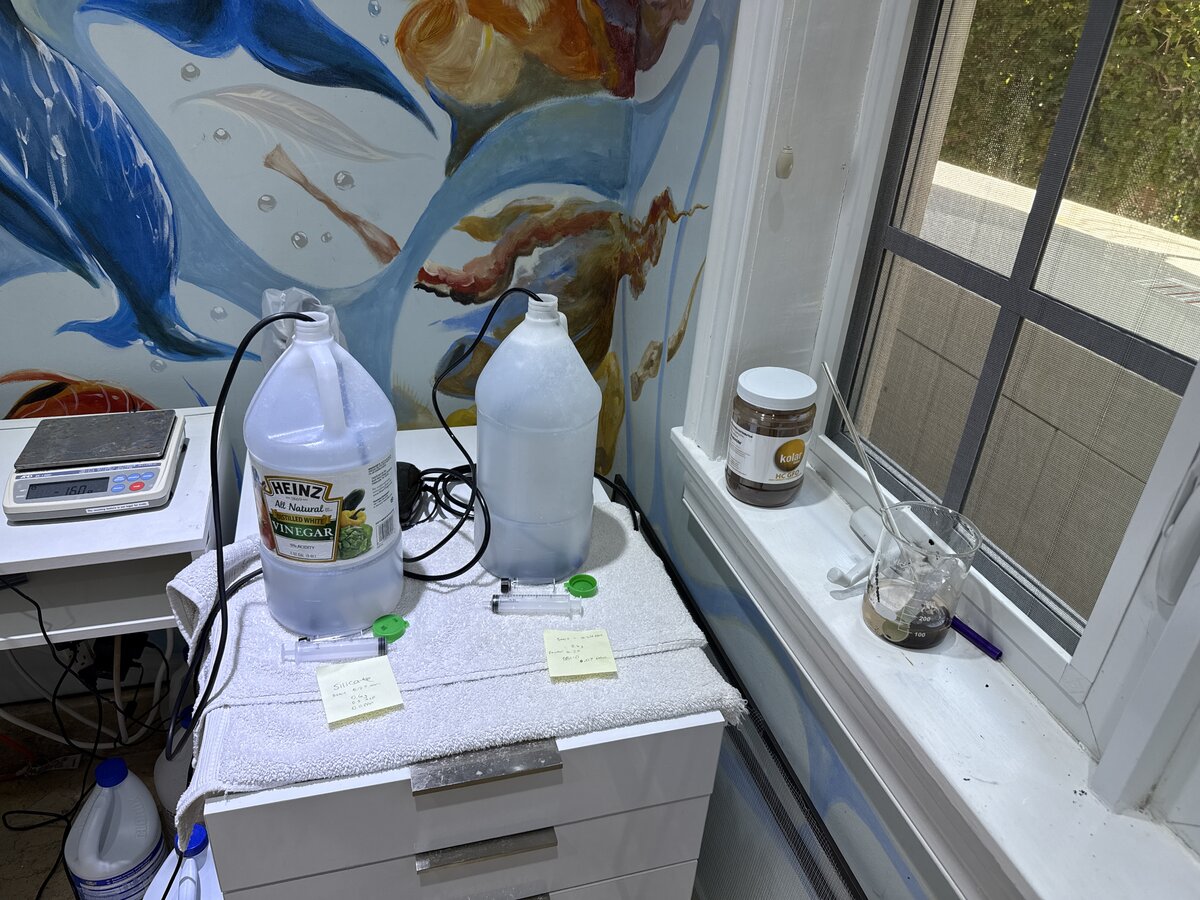
I did a small hobby-grade experiment: I made 2 vessels of fresh seawater and added 0.25 ppm phosphate per each. Then, I spiked one with 2 ppm silicate.

Over the course of a few days I slowly added GFO, tracking how much phosphate decreased over time. I learned GFO has a higher affinity for phosphate. It ended up decreasing both vessels to 0.01 ppm at a very similar depletion rate.

For the people using GFO to remove silicate from the water…maybe all you’re doing is removing phosphate. 🙂

What do you think?

IMG_4471.jpeg
 
OP
OP
Miami Reef

Miami Reef

Reef Chem Enthusiast
View Badges
Joined
Sep 8, 2017
Messages
17,255
Reaction score
29,618
Location
Miami
Rating - 0%
0   0   0
It’s possible for the results to be different in the real world with organics and stuff. At least in my test, I didn’t see a significant silicate preference that decreased the efficacy of phosphate adsorption.
 

Dan_P

7500 Club Member
View Badges
Joined
Sep 21, 2018
Messages
9,785
Reaction score
9,637
Rating - 0%
0   0   0
It’s a paradox: I like using GFO to remove phosphate from my aquarium, but I also like dosing silicate for sponges and diatoms. GFO is known to bind silicate, and I’ve always wondered if I’m wasting my money binding silicate instead of phosphate when adding both.

I did a small hobby-grade experiment: I made 2 vessels of fresh seawater and added 0.25 ppm phosphate per each. Then, I spiked one with 2 ppm silicate.

Over the course of a few days I slowly added GFO, tracking how much phosphate decreased over time. I learned GFO has a higher affinity for phosphate. It ended up decreasing both vessels to 0.01 ppm at a very similar depletion rate.

For the people using GFO to remove silicate from the water…maybe all you’re doing is removing phosphate. 🙂

What do you think?

IMG_4471.jpeg
Nice experiment.

How much did the silicate level drop?
 

mehmet

New Member
View Badges
Joined
Aug 12, 2024
Messages
20
Reaction score
1
Location
istanbul
Rating - 0%
0   0   0
Hi, my silicate and silicon levels are very high. I’m not dosing anything, and I’m using a phosphate remover, but the levels are not dropping. There’s also a lot of sponge growth, but no dino. What could be the reason?
 

Randy Holmes-Farley

Reef Chemist
View Badges
Joined
Sep 5, 2014
Messages
89,229
Reaction score
92,237
Location
Massachusetts, United States
Rating - 0%
0   0   0
Hi, my silicate and silicon levels are very high. I’m not dosing anything, and I’m using a phosphate remover, but the levels are not dropping. There’s also a lot of sponge growth, but no dino. What could be the reason?

When you say levels are not dropping, does that mean phosphate or silicate is not dropping?

What is your phosphate level?
 

Randy Holmes-Farley

Reef Chemist
View Badges
Joined
Sep 5, 2014
Messages
89,229
Reaction score
92,237
Location
Massachusetts, United States
Rating - 0%
0   0   0
Phosphate is dropping but slikat and silicones not.

It is somewhat unclear what the chemicals are that folks get when Si is very high by icp, and GFO won’t bind uncharged Si molecules. They also are unlikely to be used by diatoms or sponges, and may be relatively inert in reef aquaria. I’d ignore them if you do not have a problematic level of diatoms.
 

TOP 10 Trending Threads

WHAT AMOUNT OF LIVE ROCK AND SAND SHOULD BE PRIORITIZED FOR OPTIMAL BIODIVERSITY/FILTRATION?

  • 100% live rock + bagged sand

    Votes: 34 28.3%
  • 100% dry rock + 100% live sand

    Votes: 41 34.2%
  • 50/50 live/dry rock, 50/50 live/bagged sand

    Votes: 27 22.5%
  • 75% live rock, 25% live sand

    Votes: 10 8.3%
  • 25% live rock, 75% live sand

    Votes: 8 6.7%
Back
Top