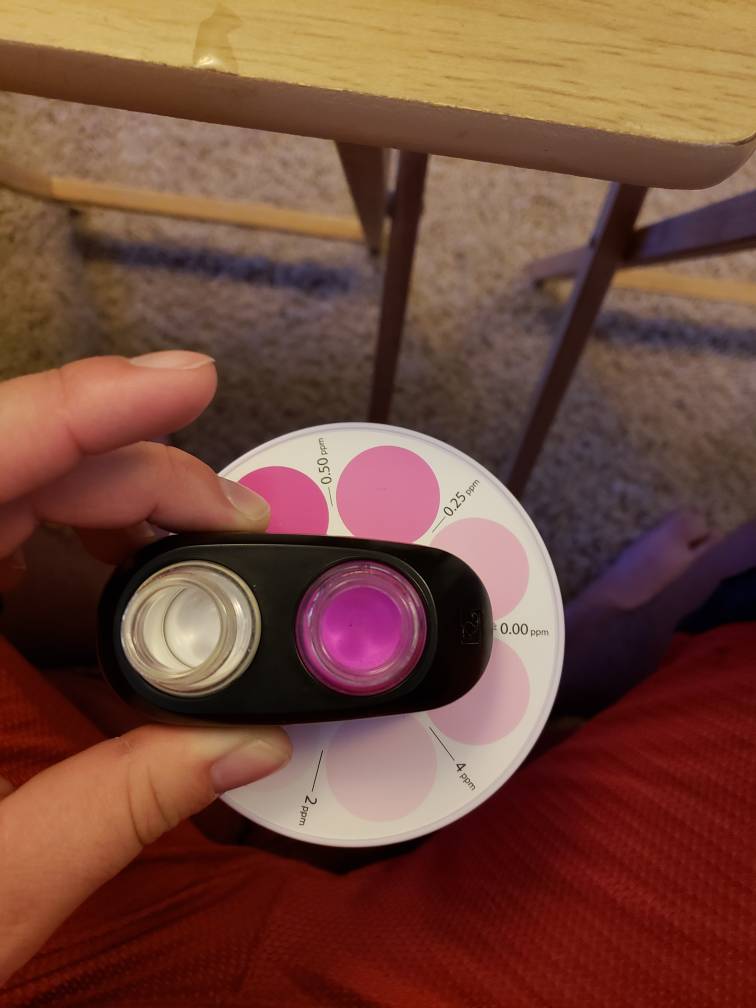
High nitrates, but low undectable phosphates help

Brew12

Electrical Gru
View Badges
Joined
Aug 14, 2016
Messages
22,488
Reaction score
57,147
Location
Decatur, AL
Rating - 0%
0   0   0
Hey everybody I've been thinking, at the end of the initial cycle when first starting a tank, after you've seen nitrate stop rising after you have 0 ammonia and 0 no2, what happens to the nitrate at that point, how does it get removed ? Does the tank remove it or are you supposed to do a series of water changes. Essentially changing out your entire water volume bringing your nitrates to 0 is that what your supposed to do ?
A healthy tank will have algae growing in it. Algae and coral will consume the NO3 over time. Bactieria naturally growing in your tank will consume some, also. Water changes are a good short term solution for lowering nitrates but a rather poor long term solution.

Film algae on your glass is one of the most common first signs of algae. How often do you have to clean your glass?

Before I forget.... I use the blue bucket salt, also. For my chaeto to grow I need to add iron supplements. Otherwise it grows a tiny bit after water changes and stops. My guess is that the Red Sea blue bucket is too low in iron to support healthy macro algae growth.

 

saltyhog

blowing bubbles somewhere
View Badges
Joined
Jan 2, 2014
Messages
9,414
Reaction score
15,936
Location
Conway, Arkansas
Rating - 0%
0   0   0
This may have been answered before and I missed it. How are you measuring PO4?

Can any of you smart guys explain how NO3 can be so high with PO4 undetectable. Are their sources of NO3 that don't contain any PO4. I've had fairly high nitrate in the past with fairly good PO4 (0.05 or so) but never undetectable. Having trouble wrapping my brain around this.
 

Brew12

Electrical Gru
View Badges
Joined
Aug 14, 2016
Messages
22,488
Reaction score
57,147
Location
Decatur, AL
Rating - 0%
0   0   0
This may have been answered before and I missed it. How are you measuring PO4?

Can any of you smart guys explain how NO3 can be so high with PO4 undetectable. Are their sources of NO3 that don't contain any PO4. I've had fairly high nitrate in the past with fairly good PO4 (0.05 or so) but never undetectable. Having trouble wrapping my brain around this.
I am too, which is why I questioned the test results. It's not impossible but it is odd.
 
OP
OP
vdubreefer

vdubreefer

Active Member
View Badges
Joined
Mar 5, 2017
Messages
324
Reaction score
138
Rating - 0%
0   0   0
Agree this could be part of the problem.


PO4 is a basic building block for life. Everything in your tank needs at least a little of it. For instance, we carbon dose to cause bacteria to rapidly reproduce. The energy they need to reproduce consumes nitrate. But, their cell structures also need phosphate. No phosphate means no new cell growth, which means carbon dosing won't work so nitrates stay high.

This idea is backed up by the possible dinoflagellates in your sump. Some dino's require much lower levels of phosphate than other organisms and can obtain what they need in other ways.
Ok well that's really good to know thank you for that
 
OP
OP
vdubreefer

vdubreefer

Active Member
View Badges
Joined
Mar 5, 2017
Messages
324
Reaction score
138
Rating - 0%
0   0   0
A healthy tank will have algae growing in it. Algae and coral will consume the NO3 over time. Bactieria naturally growing in your tank will consume some, also. Water changes are a good short term solution for lowering nitrates but a rather poor long term solution.

Film algae on your glass is one of the most common first signs of algae. How often do you have to clean your glass?

Before I forget.... I use the blue bucket salt, also. For my chaeto to grow I need to add iron supplements. Otherwise it grows a tiny bit after water changes and stops. My guess is that the Red Sea blue bucket is too low in iron to support healthy macro algae growth.

I'd say once a week on glass cleaning and its usually brown algea not green, where can one find straight iron supplement ?
 

Rick.45cal

2500 Club Member
View Badges
Joined
Jan 14, 2016
Messages
3,693
Reaction score
8,901
Location
Lakeland Florida
Rating - 0%
0   0   0
Your system is phosphate limited. For the bacteria that consume NO3 and PO4 to work they need three things. NO3, PO4, and a dissolved organic carbon source (NoPOx is the organic carbon source). If any of those three things becomes depleted the bacteria cease to work effectively. Here’s the real catch to your situation: Phosphate limited systems in the presence of ample nitrates does permanent and irreperable damage to corals. (Probably why nothing has grown in your system). But it can be fixed!

So I agree with Saltyfimfolks you need to dose phosphate. Here’s the caveat: you need to dose it consistentently and continuously in small amounts. (Start adding it to your ATO container). Then keep track of both your NO3 and PO4 levels, if it disappears right away (and it will) you have to continue dosing. I would probably wait a couple weeks on adding NOPOx and see if I could use up any excess dissolved organic carbons were used up by your bacteria before I started adding NOPOx again. (Having excess dissolved organic carbon causes other problems to corals, like bleaching).

Here’s how I would approach this. I would add a measured amount of neophos to my ATO container so that every day I am adding the equivalent of say. .03ppm per day based on how much water my ato replaces in a day. I would then test my phosphates every day to see if they increased, decreased, or disappeared. If they’ve disappeared I would continue my dosing scheme until they begin to increase. Once they start increasing then I can consider adding a small daily dose of NOPOx to maintain them. Now I will continue to dose PO4 with the NOPOx through the ATO and start checking my NO3 as well. If you continue to do this (may take many months) your NO3 will come down from the bacteria. The trick is to be patient.

All that being said, If you are going to use NOPOx or a source of carbon dosing, you might want to strongly consider getting rid of the chaeto, doing both things together will generally result in water that is too clean. If you want to keep the chaeto and run a fuge, just don’t dose NOPOx and let the algae consume the excess nutrients. In the case of the algae you may want to consider adding an iron source consistently to the tank as well to help it grow and process the nutrients. :)
 

Brew12

Electrical Gru
View Badges
Joined
Aug 14, 2016
Messages
22,488
Reaction score
57,147
Location
Decatur, AL
Rating - 0%
0   0   0
I'd say once a week on glass cleaning and its usually brown algea not green, where can one find straight iron supplement ?
I use the Redsea Trace Colors Part C, which is Iron +.
 

IslandLifeReef

Valuable Member
View Badges
Joined
Jul 25, 2017
Messages
2,417
Reaction score
5,986
Location
Florida
Rating - 0%
0   0   0
@Rick.45cal and @Brew12, what are your opinions on @vdubreefer performing a couple of water changes this weekend to bring his NO3 down to a more reasonable level, i.e. 20 ppm, and then starting the regiment of dosing PO4 that was mentioned?

Would this help him get to a more balanced system that would start growing more desirable levels of the right bacteria and bring his tank into balance sooner. I know that patience is the key to successful reefing, but I don't see the harm in reducing his NO3 a little quicker.

I would also recommend to @vdubreefer to slowly increase the intensity on his light. Many of the desirable things we try to grow in the tank, even algae, depend on light. I think that running the radions at 38% and 18% is too low for a 90 gallon display tank. Without giving the organisms the light they need, they aren't going to use the NO3 and PO4 that is there. The Zooxanthella need light, PO4, and NO3. I think your corals may also be light limited as well as PO4 limited. Two strikes against them. Take it slow raising the lights though, do it over a month at least, maybe two.
 

Brew12

Electrical Gru
View Badges
Joined
Aug 14, 2016
Messages
22,488
Reaction score
57,147
Location
Decatur, AL
Rating - 0%
0   0   0
@Rick.45cal and @Brew12, what are your opinions on @vdubreefer performing a couple of water changes this weekend to bring his NO3 down to a more reasonable level, i.e. 20 ppm, and then starting the regiment of dosing PO4 that was mentioned?

Would this help him get to a more balanced system that would start growing more desirable levels of the right bacteria and bring his tank into balance sooner. I know that patience is the key to successful reefing, but I don't see the harm in reducing his NO3 a little quicker.

I would also recommend to @vdubreefer to slowly increase the intensity on his light. Many of the desirable things we try to grow in the tank, even algae, depend on light. I think that running the radions at 38% and 18% is too low for a 90 gallon display tank. Without giving the organisms the light they need, they aren't going to use the NO3 and PO4 that is there. The Zooxanthella need light, PO4, and NO3. I think your corals may also be light limited as well as PO4 limited. Two strikes against them. Take it slow raising the lights though, do it over a month at least, maybe two.
Water changes will not hurt anything and could be useful. No reason not to do them imo.

I'm not familiar enough with those lights to know what a good setting would be based on the depth of the tank and height above the tank. I suspect you are correct but am not sure. The issue is that if he is PO4 limited then increasing the light could possibly damage the corals.

I am also wondering about the lack of green film algae. It's making me wonder if there is an issue with Chloramines.
@vdubreefer do you have well water or get it from a utility? If a utility, do you know if they add chloramines to the water to treat it?
 

IslandLifeReef

Valuable Member
View Badges
Joined
Jul 25, 2017
Messages
2,417
Reaction score
5,986
Location
Florida
Rating - 0%
0   0   0
I'm not familiar enough with those lights to know what a good setting would be based on the depth of the tank and height above the tank. I suspect you are correct but am not sure. The issue is that if he is PO4 limited then increasing the light could possibly damage the corals.


I agree, that is why I suggested going very slow with it. I am also assuming that he would be dosing the PO4 at the same time. Sorry if I wasn't clear with that.
 
OP
OP
vdubreefer

vdubreefer

Active Member
View Badges
Joined
Mar 5, 2017
Messages
324
Reaction score
138
Rating - 0%
0   0   0
Ok well here's some new information, bought a new test kit, ran test on tank water and RODI water, tank water was as expected 60ppm and RODI water was completely clear, 0ppm. So its definitely tank water from inside the tank big water changes coming
9904299902fbf8fc1c30e7eda6d4acbe.jpg
f4bbe76fd54fa7789f31095ae4e82af4.jpg
793445f558a32ef1b135524529f9c770.jpg
 
OP
OP
vdubreefer

vdubreefer

Active Member
View Badges
Joined
Mar 5, 2017
Messages
324
Reaction score
138
Rating - 0%
0   0   0
Your system is phosphate limited. For the bacteria that consume NO3 and PO4 to work they need three things. NO3, PO4, and a dissolved organic carbon source (NoPOx is the organic carbon source). If any of those three things becomes depleted the bacteria cease to work effectively. Here’s the real catch to your situation: Phosphate limited systems in the presence of ample nitrates does permanent and irreperable damage to corals. (Probably why nothing has grown in your system). But it can be fixed!

So I agree with Saltyfimfolks you need to dose phosphate. Here’s the caveat: you need to dose it consistentently and continuously in small amounts. (Start adding it to your ATO container). Then keep track of both your NO3 and PO4 levels, if it disappears right away (and it will) you have to continue dosing. I would probably wait a couple weeks on adding NOPOx and see if I could use up any excess dissolved organic carbons were used up by your bacteria before I started adding NOPOx again. (Having excess dissolved organic carbon causes other problems to corals, like bleaching).

Here’s how I would approach this. I would add a measured amount of neophos to my ATO container so that every day I am adding the equivalent of say. .03ppm per day based on how much water my ato replaces in a day. I would then test my phosphates every day to see if they increased, decreased, or disappeared. If they’ve disappeared I would continue my dosing scheme until they begin to increase. Once they start increasing then I can consider adding a small daily dose of NOPOx to maintain them. Now I will continue to dose PO4 with the NOPOx through the ATO and start checking my NO3 as well. If you continue to do this (may take many months) your NO3 will come down from the bacteria. The trick is to be patient.

All that being said, If you are going to use NOPOx or a source of carbon dosing, you might want to strongly consider getting rid of the chaeto, doing both things together will generally result in water that is too clean. If you want to keep the chaeto and run a fuge, just don’t dose NOPOx and let the algae consume the excess nutrients. In the case of the algae you may want to consider adding an iron source consistently to the tank as well to help it grow and process the nutrients. :)
This is fantastic thank you very much
 
OP
OP
vdubreefer

vdubreefer

Active Member
View Badges
Joined
Mar 5, 2017
Messages
324
Reaction score
138
Rating - 0%
0   0   0
Water changes will not hurt anything and could be useful. No reason not to do them imo.

I'm not familiar enough with those lights to know what a good setting would be based on the depth of the tank and height above the tank. I suspect you are correct but am not sure. The issue is that if he is PO4 limited then increasing the light could possibly damage the corals.

I am also wondering about the lack of green film algae. It's making me wonder if there is an issue with Chloramines.
@vdubreefer do you have well water or get it from a utility? If a utility, do you know if they add chloramines to the water to treat it?
I have utility water, but i also have dual stage di, think I should have my RODI water tested ?
 
OP
OP
vdubreefer

vdubreefer

Active Member
View Badges
Joined
Mar 5, 2017
Messages
324
Reaction score
138
Rating - 0%
0   0   0
So am I going to have to dose phosphates to my system forever ? Can't I just add a couple more fish ?
 

Rick.45cal

2500 Club Member
View Badges
Joined
Jan 14, 2016
Messages
3,693
Reaction score
8,901
Location
Lakeland Florida
Rating - 0%
0   0   0
So am I going to have to dose phosphates to my system forever ? Can't I just add a couple more fish ?

No you won’t have to dose them forever! But it may take awhile to eliminate your excess NO3. Adding more fish will help, but will also increase your nitrates. You can increase feeding over the long term, and also add foods like “Oyster feast” that will contribute phosphates to your system. Dosing will help get you out of the jam you’re in quicker, once your phosphates are increasing because of the combination of all of those other things then you can stop dosing. You just have to be continously mindful that your tank has a tendency to head to 0 PO4 and be ready to use the tools you have available to prevent that. Just go slow, test, be consistent, and be patient and you’ll get there.
 

VR28man

Valuable Member
View Badges
Joined
May 16, 2017
Messages
1,178
Reaction score
1,039
Rating - 0%
0   0   0
Thanks to @vdubreefer and everyone who answered this thread. It's educational.

@vdubreefer , IMO, simply based on what I've read on forums over many years and my own limited practical experience: I'd guess there's not enough life in your tank and it's too clean. That's really not a lot of livestock in a 90G.

Instead of more live rock, maybe seachem matrix might be useful? I never got any decent denitrification until about a month after I started using this. I'd also feed more kinds of fish. :)
 
OP
OP
vdubreefer

vdubreefer

Active Member
View Badges
Joined
Mar 5, 2017
Messages
324
Reaction score
138
Rating - 0%
0   0   0
No you won’t have to dose them forever! But it may take awhile to eliminate your excess NO3. Adding more fish will help, but will also increase your nitrates. You can increase feeding over the long term, and also add foods like “Oyster feast” that will contribute phosphates to your system. Dosing will help get you out of the jam you’re in quicker, once your phosphates are increasing because of the combination of all of those other things then you can stop dosing. You just have to be continously mindful that your tank has a tendency to head to 0 PO4 and be ready to use the tools you have available to prevent that. Just go slow, test, be consistent, and be patient and you’ll get there.
Thank you so much Rick I really appreciate all your advice, I feel like I can see the light at the end of the tunnel now, now the next thing I'll probably need help with is that is just use a 5 g lowes bucket on the side of my tank for my ATO how can I find out how much my tank evaporates during a day and how much to dose po4 to my ato res.
 
OP
OP
vdubreefer

vdubreefer

Active Member
View Badges
Joined
Mar 5, 2017
Messages
324
Reaction score
138
Rating - 0%
0   0   0
Thanks to @vdubreefer and everyone who answered this thread. It's educational.

@vdubreefer , IMO, simply based on what I've read on forums over many years and my own limited practical experience: I'd guess there's not enough life in your tank and it's too clean. That's really not a lot of livestock in a 90G.

Instead of more live rock, maybe seachem matrix might be useful? I never got any decent denitrification until about a month after I started using this. I'd also feed more kinds of fish. :)

What does matrix do
 

TOP 10 Trending Threads

WHAT AMOUNT OF LIVE ROCK AND SAND SHOULD BE PRIORITIZED FOR OPTIMAL BIODIVERSITY/FILTRATION?

  • 100% live rock + bagged sand

    Votes: 38 27.3%
  • 100% dry rock + 100% live sand

    Votes: 47 33.8%
  • 50/50 live/dry rock, 50/50 live/bagged sand

    Votes: 30 21.6%
  • 75% live rock, 25% live sand

    Votes: 14 10.1%
  • 25% live rock, 75% live sand

    Votes: 10 7.2%
Back
Top