- Joined
- Oct 14, 2016
- Messages
- 21
- Reaction score
- 15
I know, it’s bad.
Tank started with dry rock and dry sand. Went through the typical cycle - took about 2mo. Big diatoms bloom and then I started to get cyano.
I got impatient. Dosed GFO and crashed my phosphates making things worse.
Spent weeks online researching best methods.
Water changes and nutrient export
Redfield ratio 10:1 N and P nutrient balancing
3 day blackouts
Complete sandbed rinsing
Letting nitrates rise and waiting for the tank to balance itself out
Increasing biodiversity
UV sterilization
Refugiums
All sounded good in theory with varying levels of success. But not ideal for my personal tank set up.
The ones that stood out were those who ACTUALLY solved their cyano issues with the @SunnyX flocculant model and phytoplankton/pods.

The first step was knocking the Cyanobacteria back. Went to my LFS to get a reading and got started.
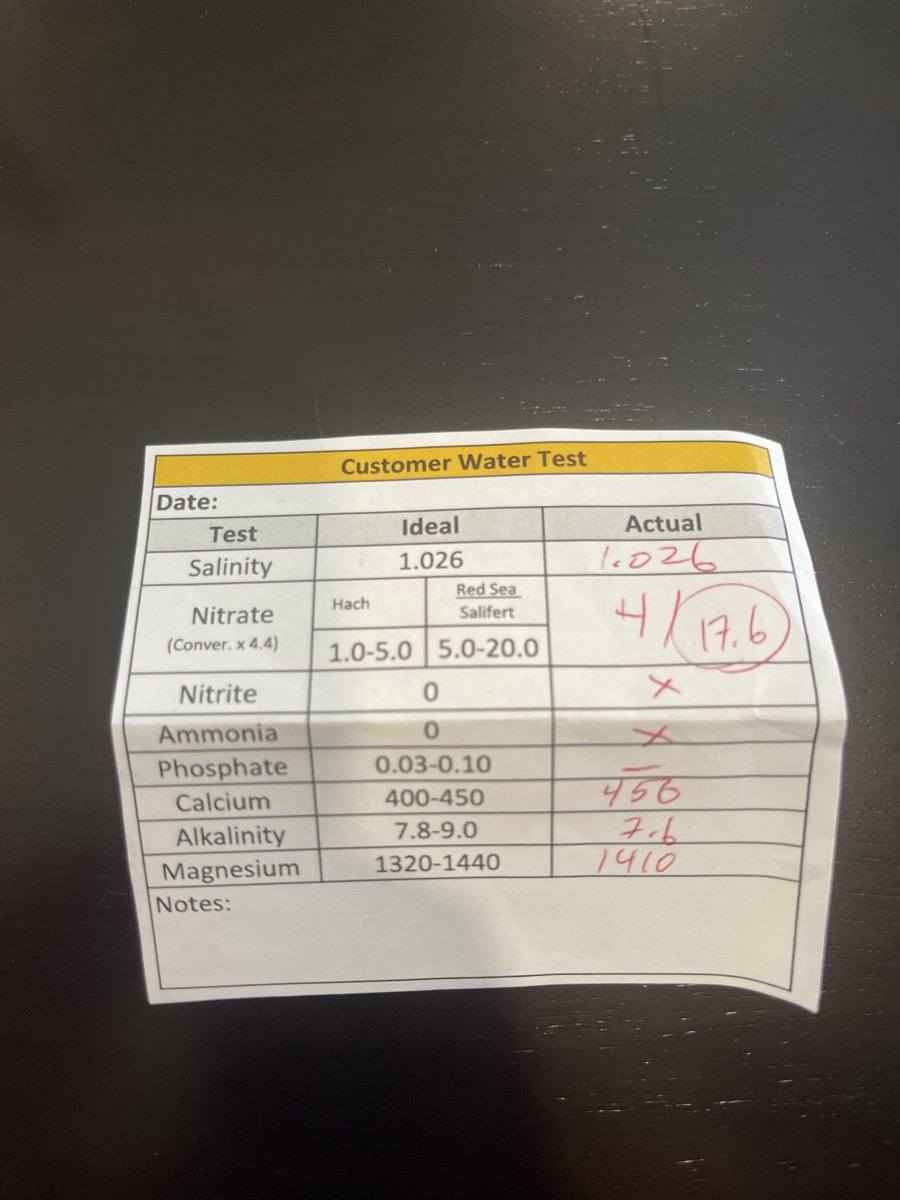
They normally test phosphates but the specific test was out (I knew it was 0 as of 3 weeks ago when I realized I crashed my phosphates and began trying to raise my nitrates)
The tank received a 5g waterchange and sandbed vac followed by a 2 day blackout (that’s as much time I can get before the BTAs start playing chicken with the wave maker)
I read the best way to combat the cyano is to incorporate the flocculant coated in beneficial bacteria - and allowing it to coat aquarium surfaces - taking up real estate before the cyano could take hold.
My flocculant consisted of Aquaforest Life Source, Microbacter 7, and Calcium Carbonate.
120ml of aquarium water
1 spoonful of AF lifesource
1 flat tablespoon of Calcium Carbonate
Flocculant has been added to the aquarium daily, and as of today makes 6 days.
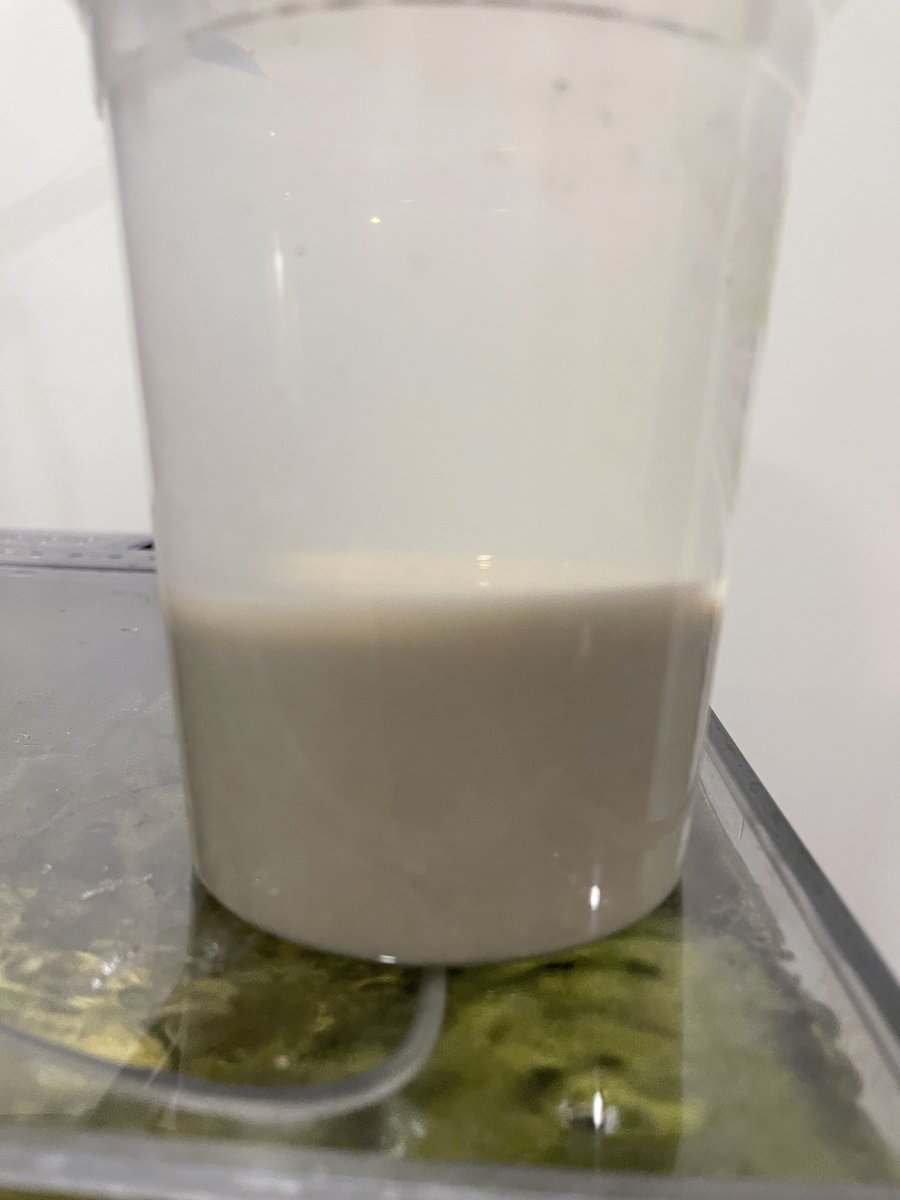
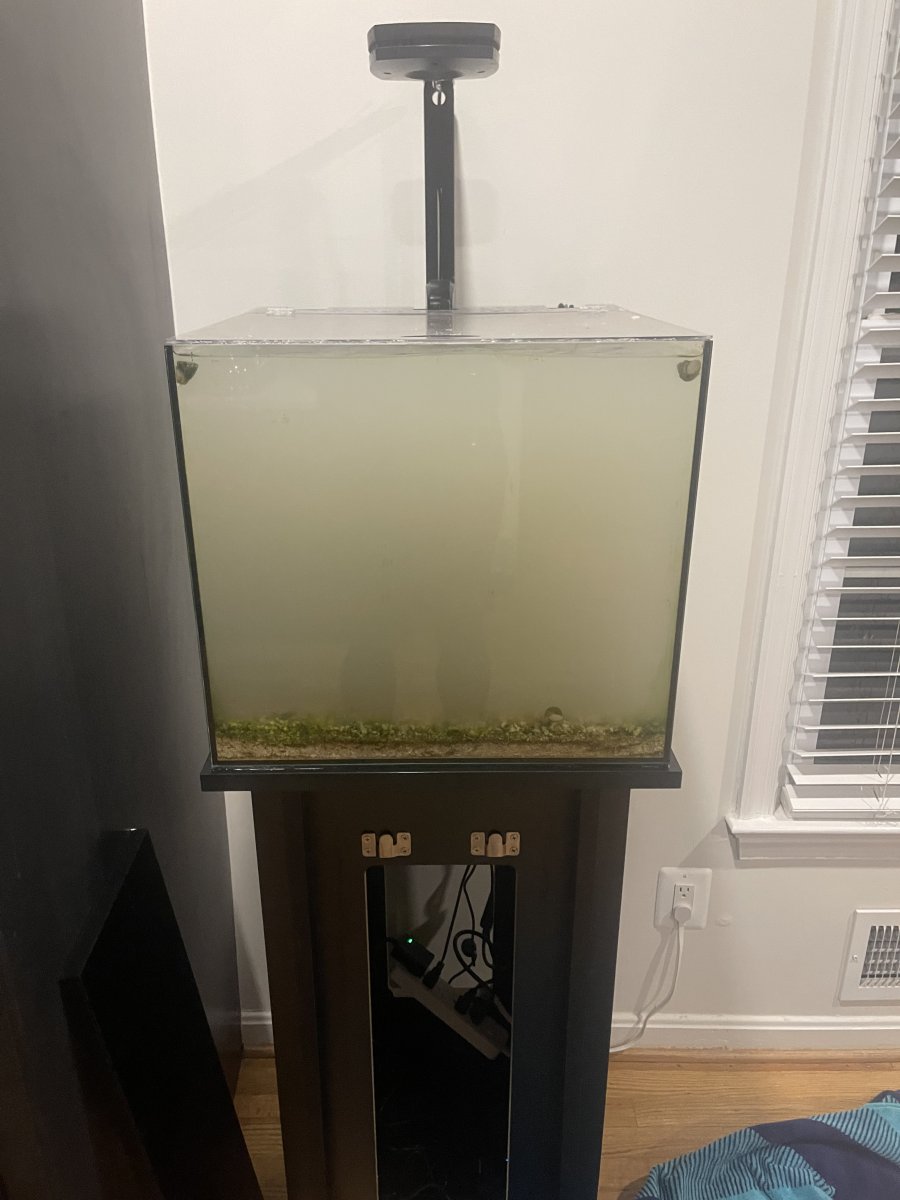
I’ve varied use of aquarium pumps - but will be turning ALL off shortly after flocculant introduction for about an hr or so to ensure adequate flocculant coverage. I run a filter sock and remove once the aquarium is cleared (generally the next morning)
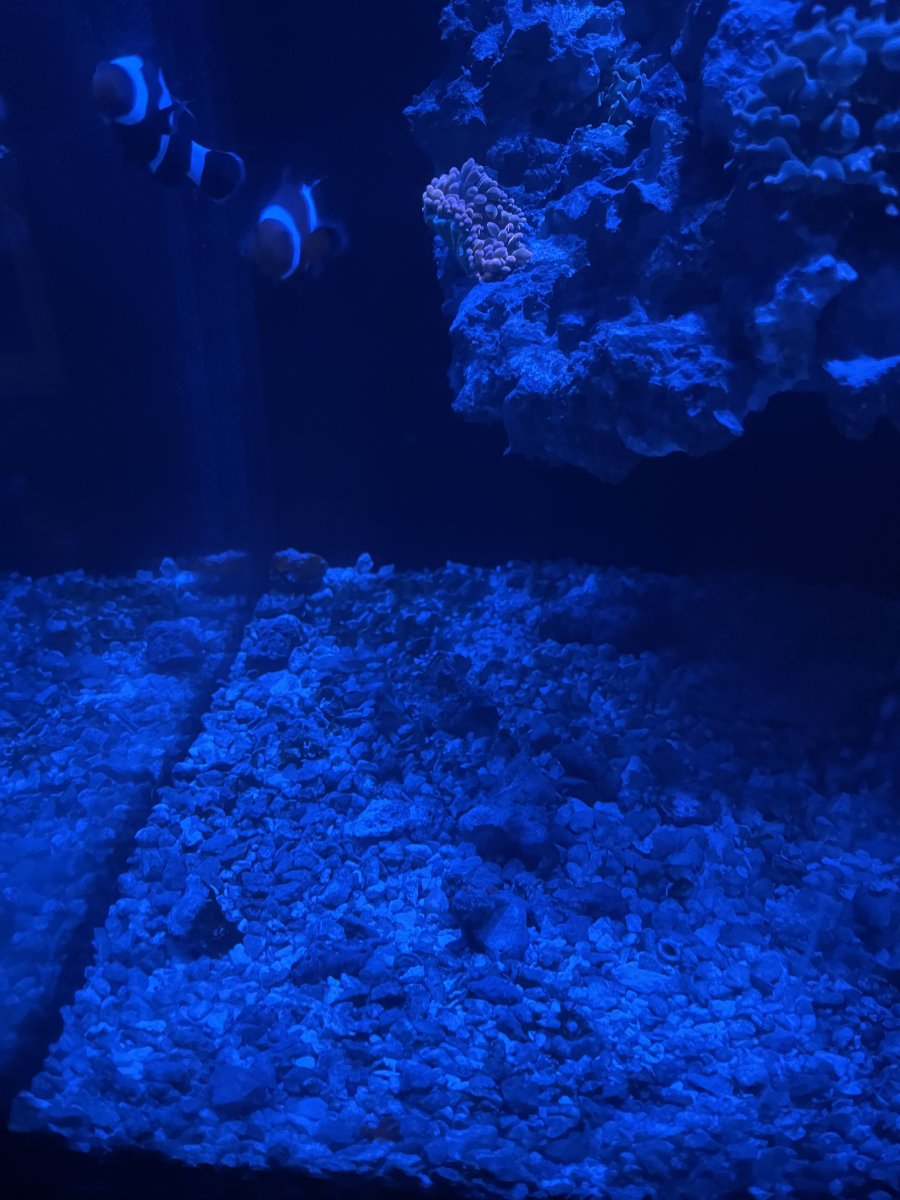
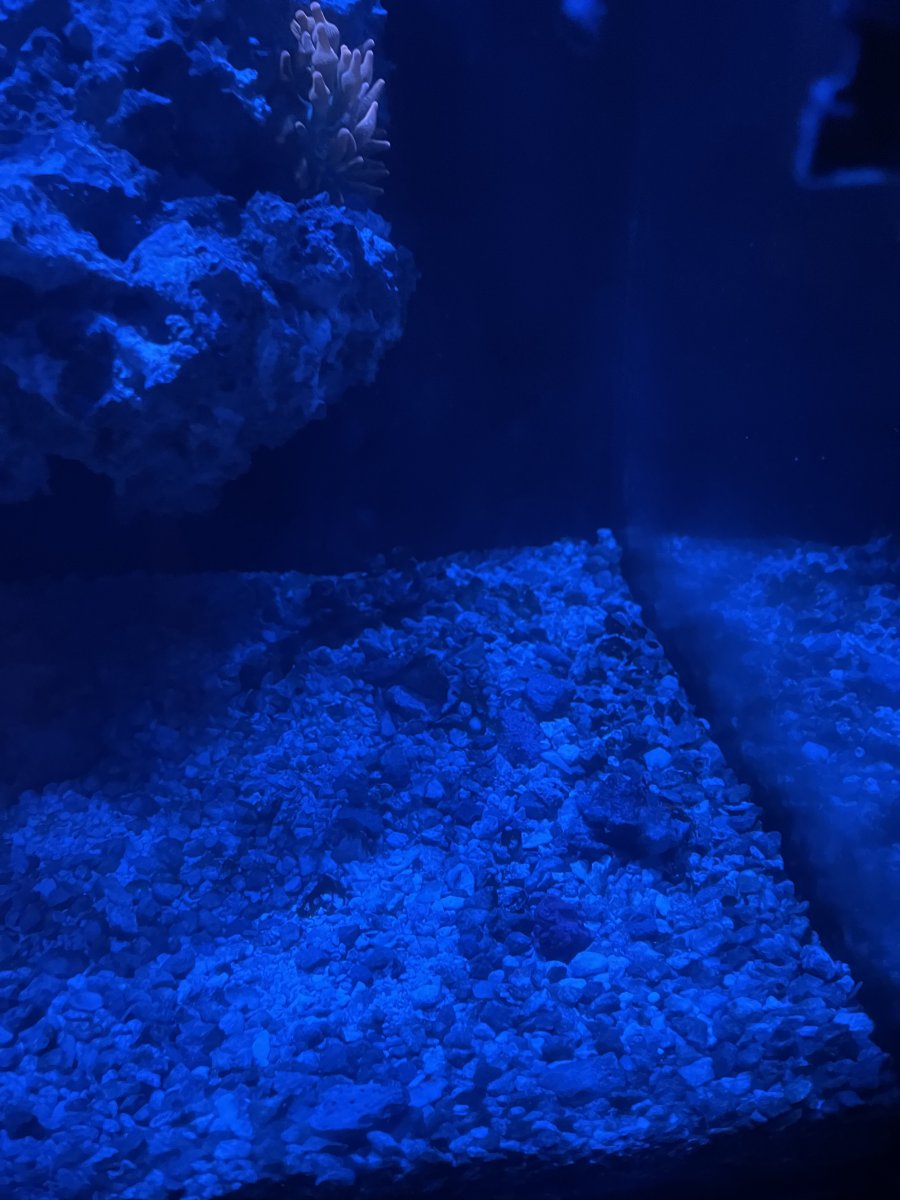
At this point - instead of the cyano coming back in full force 24hrs AFTER the blackout and tank/sandbed clean or receding at night and reappearing in the morning - it’s now been relegated to the rear corners of the tank (likely dead spots) that haven’t adequately been covered with flocculant.
It would appear as though knocking the cyano population back and allowing the flocculant to settle on surfaces BEFORE resuming the regular lighting cycle helps prevent the rapid RE-establishment of Cyanobacteria. Hopefully buying me time to create a more balanced N and P ratio without the unsightly reminder that the system is outta wack.
I’ll likely continue this method for the next few days and re-evaluate how often I might need to dose. This was a particularly bad case, so I dont see myself dosing flocculant daily much longer.
I’ll also look into dosing phytoplankton and pods for good measure because I do believe I started off with a fairly sterile tank with limited microbe introduction due to my choice of inhabitants.
This is how the tank looks as of this evening.
I’ll provide updated photos during full daytime spectrum in a few days. Hopefully the cyano in the corners continues to recede as I priortize flocculant coverage towards the rear aquarium corners.
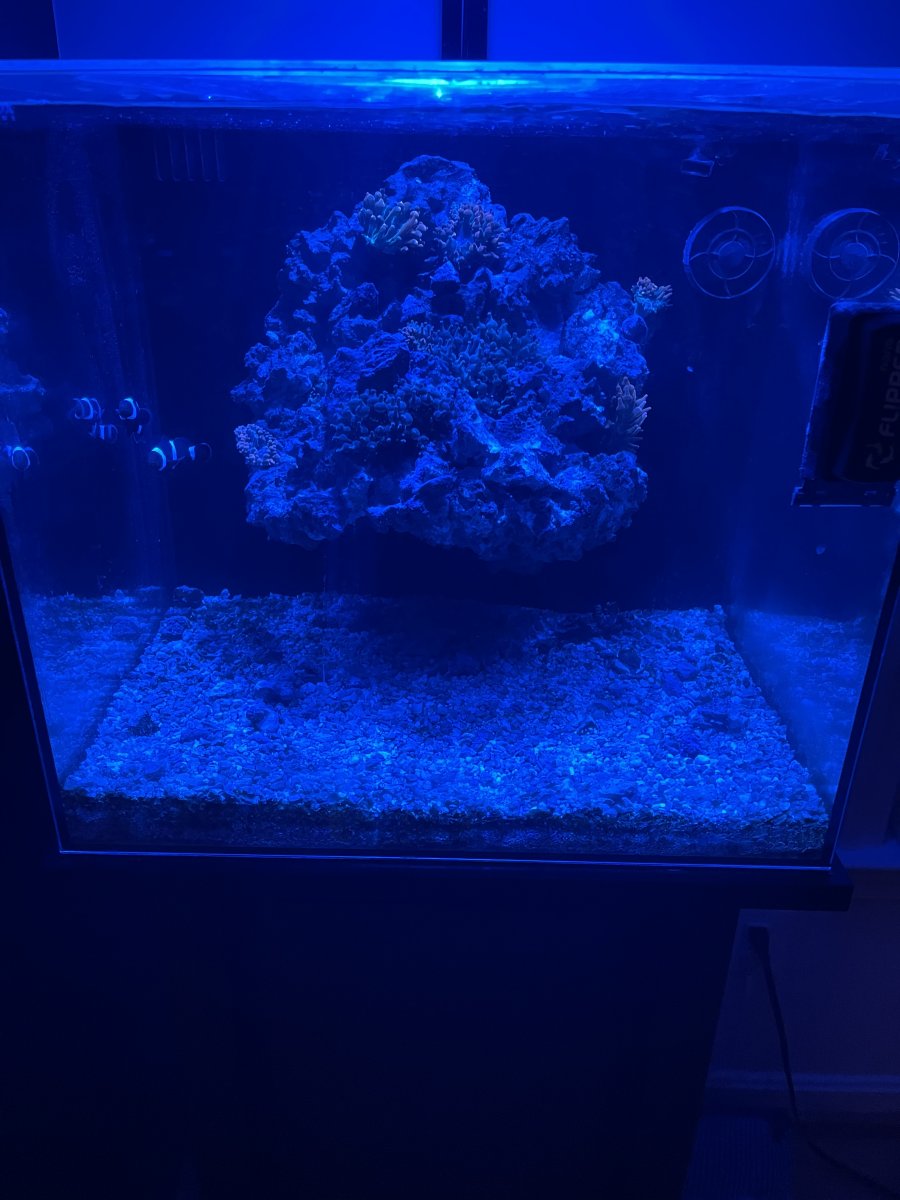
To those fighting cyano - don’t give up.
It took a while to get established, it'll take a while to clear up.
Hopefully this is additional and replicable proof that the cyano battle can be successfully managed.
I’ll continue updating this thread over the next few days - but I’ve seen a DRASTIC reduction in cyano after a water change to remove established cyano on the sandbed, a 2 day blackout, and dosing flocculant from the beginning of the 2 day blackout and the following 4 days with resumed system lighting.
This is by no means a cure, but I'm sure it gives me time to establish a more balanced system.
Tank started with dry rock and dry sand. Went through the typical cycle - took about 2mo. Big diatoms bloom and then I started to get cyano.
I got impatient. Dosed GFO and crashed my phosphates making things worse.
Spent weeks online researching best methods.
Water changes and nutrient export
Redfield ratio 10:1 N and P nutrient balancing
3 day blackouts
Complete sandbed rinsing
Letting nitrates rise and waiting for the tank to balance itself out
Increasing biodiversity
UV sterilization
Refugiums
All sounded good in theory with varying levels of success. But not ideal for my personal tank set up.
The ones that stood out were those who ACTUALLY solved their cyano issues with the @SunnyX flocculant model and phytoplankton/pods.
The first step was knocking the Cyanobacteria back. Went to my LFS to get a reading and got started.
They normally test phosphates but the specific test was out (I knew it was 0 as of 3 weeks ago when I realized I crashed my phosphates and began trying to raise my nitrates)
The tank received a 5g waterchange and sandbed vac followed by a 2 day blackout (that’s as much time I can get before the BTAs start playing chicken with the wave maker)
I read the best way to combat the cyano is to incorporate the flocculant coated in beneficial bacteria - and allowing it to coat aquarium surfaces - taking up real estate before the cyano could take hold.
My flocculant consisted of Aquaforest Life Source, Microbacter 7, and Calcium Carbonate.
120ml of aquarium water
1 spoonful of AF lifesource
1 flat tablespoon of Calcium Carbonate
Flocculant has been added to the aquarium daily, and as of today makes 6 days.
I’ve varied use of aquarium pumps - but will be turning ALL off shortly after flocculant introduction for about an hr or so to ensure adequate flocculant coverage. I run a filter sock and remove once the aquarium is cleared (generally the next morning)
At this point - instead of the cyano coming back in full force 24hrs AFTER the blackout and tank/sandbed clean or receding at night and reappearing in the morning - it’s now been relegated to the rear corners of the tank (likely dead spots) that haven’t adequately been covered with flocculant.
It would appear as though knocking the cyano population back and allowing the flocculant to settle on surfaces BEFORE resuming the regular lighting cycle helps prevent the rapid RE-establishment of Cyanobacteria. Hopefully buying me time to create a more balanced N and P ratio without the unsightly reminder that the system is outta wack.
I’ll likely continue this method for the next few days and re-evaluate how often I might need to dose. This was a particularly bad case, so I dont see myself dosing flocculant daily much longer.
I’ll also look into dosing phytoplankton and pods for good measure because I do believe I started off with a fairly sterile tank with limited microbe introduction due to my choice of inhabitants.
This is how the tank looks as of this evening.
I’ll provide updated photos during full daytime spectrum in a few days. Hopefully the cyano in the corners continues to recede as I priortize flocculant coverage towards the rear aquarium corners.
To those fighting cyano - don’t give up.
It took a while to get established, it'll take a while to clear up.
Hopefully this is additional and replicable proof that the cyano battle can be successfully managed.
I’ll continue updating this thread over the next few days - but I’ve seen a DRASTIC reduction in cyano after a water change to remove established cyano on the sandbed, a 2 day blackout, and dosing flocculant from the beginning of the 2 day blackout and the following 4 days with resumed system lighting.
This is by no means a cure, but I'm sure it gives me time to establish a more balanced system.
Last edited: