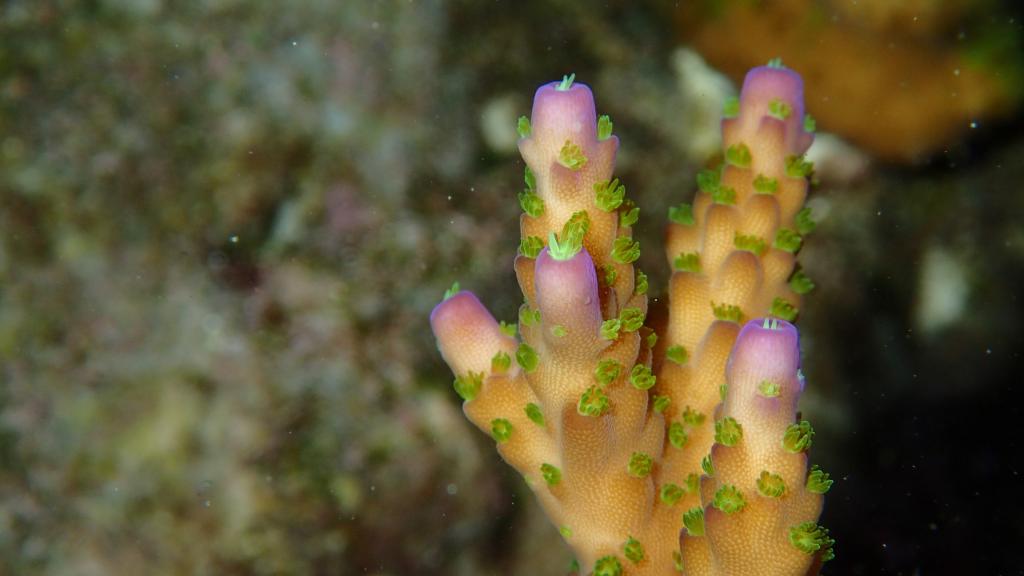
How to successfully keep SPS Corals!

Reading through this thread and it has great info, although, one thing that I didn't see stated was how much of an alkalinity swing in 24 hours or in between dosing is acceptable. For instance, would a full 1dkh swing be acceptable or is that too much of a swing? I know that as little as possible is optimal but what have others found to be the limits as to how much acros can tolerate without negatively impacting them?
 
Reading through this thread and it has great info, although, one thing that I didn't see stated was how much of an alkalinity swing in 24 hours or in between dosing is acceptable. For instance, would a full 1dkh swing be acceptable or is that too much of a swing? I know that as little as possible is optimal but what have others found to be the limits as to how much acros can tolerate without negatively impacting them?
That's a good question, was wondering about this as well since I've started dosing manually.
 
Back when I was manually dosing I noticed more then 3 dkh change in 48 hours would put sps in hibernatation and slow growth. Bought dosers and helped a lot, now using cal reactor and really helping a lot.
 
Reading through this thread and it has great info, although, one thing that I didn't see stated was how much of an alkalinity swing in 24 hours or in between dosing is acceptable. For instance, would a full 1dkh swing be acceptable or is that too much of a swing? I know that as little as possible is optimal but what have others found to be the limits as to how much acros can tolerate without negatively impacting them?

There's no hard/fast rule.

  • On the one hand, corals are extremely adaptable - they can adapt to a wide range of dKH conditions.
  • OTOH, pH changes seem to be the root of the problems associated with dKH changes that bother corals.
In reality, if you're dosing for dKH on a daily basis (or better) you'll never run into a low-dKH situation. (If you aren't dosing daily, or better, I recommend no stony corals.)

But it's still possible for you to have pH situations from dosing too much, too fast (which depends on the exact chemical used) or allowing dKH to get too low (depends on the rate of CO2-usage, alkalinity uptake and rate of air exchange).

It's also important to know that pH is actually rooted to atmospheric CO2 levels....any pH change we make by dosing is temporary and will be equalized by gas exchange with the air according to a known curve. (Google Randy's articles on low pH or high pH.)

For all these reasons, there is no hard and fast rule. ;)

 
There's no hard/fast rule.

  • On the one hand, corals are extremely adaptable - they can adapt to a wide range of dKH conditions.
  • OTOH, pH changes seem to be the root of the problems associated with dKH changes that bother corals.
In reality, if you're dosing for dKH on a daily basis (or better) you'll never run into a low-dKH situation. (If you aren't dosing daily, or better, I recommend no stony corals.)

But it's still possible for you to have pH situations from dosing too much, too fast (which depends on the exact chemical used) or allowing dKH to get too low (depends on the rate of CO2-usage, alkalinity uptake and rate of air exchange).

It's also important to know that pH is actually rooted to atmospheric CO2 levels....any pH change we make by dosing is temporary and will be equalized by gas exchange with the air according to a known curve. (Google Randy's articles on low pH or high pH.)

For all these reasons, there is no hard and fast rule. ;)

Great explanation. Thanks!
 
popcorn.gif
 
I need to read this entire thread! Having success with LPS and softies and want to make the jump to Sps!
 
Well the two corals have different needs. I mostly posted here to put this in my participated threads to read later. Softies need dirty water to thrive and medium flow. Sps needs steril water and high flow
 
Hey guys first time posting, was just wondering if there was anyone running an AI Hydra (older models) in any of there tanks and have had success in growing SPS. If you wouldn't mind pm'ing me that would be great. Want see what you guys are running them at. Thanks!
 
While this thread is great I feel like its worth discussing Lux vs PAR again. Its my understanding that PAR measures the light spectrum used by photosynthesis (Chlorophyll A/B/C) while Lux measures "human perceived" light intensity. The two are very very different.

Example: Lux will be extremely high for red/white spectrum lights but very low for actinic. PAR will be the opposite. Most corals have very little use for white/red light and the graphs for Chlorophyll are greatly skewed to the blue side.

I have not tested it, but I would expect that 10k lights have dramatically higher Lux then 20k lights. This is not at all a good representation of usable light your corals are getting.

PAR meters are an incredibly useful tool, and they aren't that expensive if you buy just the sensor and use a multimeter. You can have a full Apogee setup for under $150. Some of us have single Acro frags we paid that much for...
 
Too caught up in the theory and 'net wisdom.

In fact, PAR sensors are calibrated to daylight and misread reef lights.

Try using a lux meter - it's by far good enough.

That one costs only $15 makes having one a no-brainier.
 

TOP 10 Trending Threads

ARE YOU READY TO CONFESS TO CRAZIEST, DUMBEST, FUNNIEST THING YOU’VE EVER DONE IN REEFING?

  • Yeah, I'll confess! (Share your story in the comments!)

    Votes: 26 60.5%
  • Nah, I'll keep mine a secret...(Don't be like that, share with the class!)

    Votes: 17 39.5%
Back
Top
Home
Post thread…
Market
What's new