In the Dark

jer291113

New Member
View Badges
Joined
Aug 30, 2016
Messages
10
Reaction score
5
Rating - 0%
0   0   0
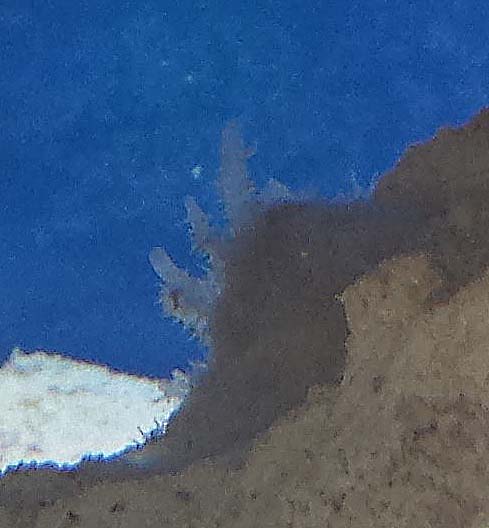
I have my tank up and running a little over 3 months. I recently treated it with ChemiClean for a cyano breakout. Now I noticed some algae growth only in two shaded areas as seen in the photo.
In the other area the algae growth is much smaller.
Can anyone identify it and what can I do to get rid of it?
I have done two 20% water changes after the treating for the cyano.
Thanks for your advise!
014.jpg
 

nex64

Active Member
View Badges
Joined
Aug 14, 2013
Messages
413
Reaction score
242
Location
United States
Rating - 0%
0   0   0
Who advised you to treat your new tank with chemiclean?


With a new tank, it usually has to go through all these nasty algae stages to eventually balance out. Wasting money on chemicals and stuff for algae problems right now just seems counter productive to be honest.
 
OP
OP
J

jer291113

New Member
View Badges
Joined
Aug 30, 2016
Messages
10
Reaction score
5
Rating - 0%
0   0   0
Thanks Nex64 for your reply...
The decision was based on my own research here and elsewhere. I am of the opinion to stop any algae growth before it gets out of hand, am I wrong? My water parameters have been closely monitored and all have been good.
 

Brew12

Electrical Gru
View Badges
Joined
Aug 14, 2016
Messages
22,488
Reaction score
57,147
Location
Decatur, AL
Rating - 0%
0   0   0
Thanks Nex64 for your reply...
The decision was based on my own research here and elsewhere. I am of the opinion to stop any algae growth before it gets out of hand, am I wrong? My water parameters have been closely monitored and all have been good.
I'm cycling my tank right now and I agree with Nex64. For instance, diatoms are typically caused by silicates leaching from sand and possibly rock. If you keep killing your diatoms they will keep coming back until they consume all the silicate and then get removed. I would prefer to get the silicates taken care of sooner rather than later so I was thrilled to see my diatom bloom. All you do by killing them early is ensure you will get another bloom later. Other algae types can be caused by phosphates leaching from your rocks. While there are other ways of removing phosphates algae growth is a natural one.
In an older tank I do think you want to deal with algae growth early. I won't let algae get too out of hand in my new tank but for now I am encouraging it to grow as I feel it is actually improving my water quality.
 

saltyfilmfolks

Lights! Camera! Reef!
View Badges
Joined
Feb 25, 2014
Messages
28,739
Reaction score
40,625
Location
California
Rating - 0%
0   0   0
I think those are sponges in the pic, maybe tunicates.
And yea some of the natural process in the firsts stages of a tank are necessary evils. And some are definitely worth keeping an eye on.
you are correct in keeping algaes out of the tank, and theres a lot of ways to do it. The first is to avoid bringing them in.

Welcome to Reef2reef BTW!
there a lot of ways to reef, I think you'll find a lot of them here, and a lot more acceptance of the different ways to do it.
 
OP
OP
J

jer291113

New Member
View Badges
Joined
Aug 30, 2016
Messages
10
Reaction score
5
Rating - 0%
0   0   0
Thanks Brew12, okay I will let the tank alone and watch what happens...
My phosphorus is .017 ppm using a Hanna Ultra Low Range tester.

Also, my rock still has a lot of diatom growth but no cyano.
 
OP
OP
J

jer291113

New Member
View Badges
Joined
Aug 30, 2016
Messages
10
Reaction score
5
Rating - 0%
0   0   0
I think those are sponges in the pic, maybe tunicates.
And yea some of the natural process in the firsts stages of a tank are necessary evils. And some are definitely worth keeping an eye on.
you are correct in keeping algaes out of the tank, and theres a lot of ways to do it. The first is to avoid bringing them in.

Welcome to Reef2reef BTW!
there a lot of ways to reef, I think you'll find a lot of them here, and a lot more acceptance of the different ways to do it.

Thank for the welcome saltyfilmfolks!
The algae is only in two dark areas of the rock, and the growth in the photo is only about 1/4" to 3/8" in size. The main structure seems tubular with little hairs branching off.
I definitely agree to avoid bringing anything into the tank... I'll let it take its natural course and keep a close eye on it.
 

TOP 10 Trending Threads

WHAT AMOUNT OF LIVE ROCK AND SAND SHOULD BE PRIORITIZED FOR OPTIMAL BIODIVERSITY/FILTRATION?

  • 100% live rock + bagged sand

    Votes: 34 27.9%
  • 100% dry rock + 100% live sand

    Votes: 42 34.4%
  • 50/50 live/dry rock, 50/50 live/bagged sand

    Votes: 27 22.1%
  • 75% live rock, 25% live sand

    Votes: 11 9.0%
  • 25% live rock, 75% live sand

    Votes: 8 6.6%
Back
Top