Is this diatom?

rowenaad

Active Member
View Badges
Joined
Oct 21, 2021
Messages
267
Reaction score
110
Location
Australia
Rating - 0%
0   0   0
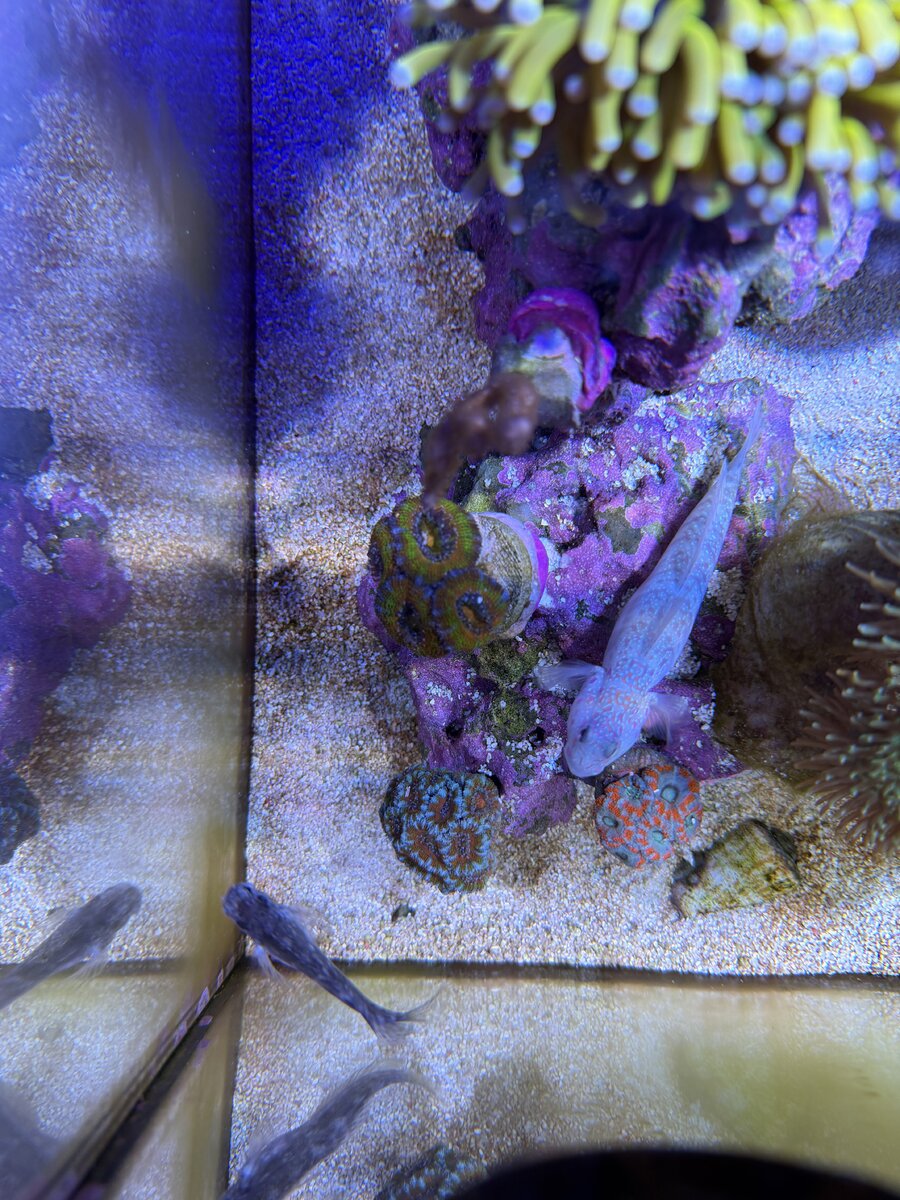
Hi, this is recently grow on my sand bed for a few days and i wanna make sure its not dino again. I have tried taking samples under microscope but couldnt spot any thing. 4 years ago i had diatom when i started the tank and it was started from the rock but this is over the sandbed and some spots on glass but nothing on the rock. it also disappears when the light is out. I would believe its diatom given its look with no bubble and no mat but dino nuked my tank last time and i just started to restock so i dont wanna lose to it again 😣

My most recent ict test from Oct 21 gave a trace of silicon at 154.00 µg/l. My nutrient levels were maintained >20 for nitrate and >0.1 for phosphate but after a few days away from home, i returned to 0.02 phosphate last week from Hanna ULR and dosed immediately to bring to back to >0.05.
IMG_1088.JPG


IMG_1087.JPG
 
Last edited:

BryanM

7500 Club Member
View Badges
Joined
Jun 27, 2024
Messages
7,652
Reaction score
9,377
Location
Morgan Hill
Rating - 100%
1   0   0
im pretty sure its some living thing cuz it disappears when light is out and comes back when light is on, but as long as its not dino, i can live with it 🤞
Certain types of dinos disappear with the lights out, definitive ID needs to be done with a microscope though.
 
OP
OP
R

rowenaad

Active Member
View Badges
Joined
Oct 21, 2021
Messages
267
Reaction score
110
Location
Australia
Rating - 0%
0   0   0
Certain types of dinos disappear with the lights out, definitive ID needs to be done with a microscope though.
I have already tried taking samples but couldnt spot anything under microscope
That sounds more like cyano? Do you have any water flow down there?
now that you bring it up, i think its indeed cyano. it looks a lot like the cyano i had before and i still have some chemiclean in head. and sandbed is pretty low flow.
 
OP
OP
R

rowenaad

Active Member
View Badges
Joined
Oct 21, 2021
Messages
267
Reaction score
110
Location
Australia
Rating - 0%
0   0   0
Hah i wonder if iron has caused this. I lost a tip of a scraper blade over a week ago. Now i have found it and pulled it out…
 

EnterName

Well-Known Member
View Badges
Joined
Sep 21, 2025
Messages
808
Reaction score
1,931
Location
Germany
Rating - 0%
0   0   0
If the stains disappear in the evening it's probably dinoflagellates. They either go into the open water (best case scenario) where a UV-Sterilizer can get them, or they go deeper into the substrate which can make it more difficult to get rid of them.

Dinoflagellates aren't always difficult to deal with and you will find a few great articles on how to identify and deal with them on this forum. If keeping parameters within desired levels and a UV-Sterilizer doesn't help, you can check if silicate dosing or increasing ORP is the right choice for your system.

Dinoflagellates should be visible under a microscope but there exist a few small species, which you might have confused for cilliates. Take a look at this guide to compare what you see: https://www.reef2reef.com/attachments/dinoflagellateid12_12_2019-pdf.2925012

If it's actually Cyanobacteria you might be able to see thin (possibly slowly moving) "hair" often attached to sand, detritus, or algae, but sometimes also freely moving.
 
OP
OP
R

rowenaad

Active Member
View Badges
Joined
Oct 21, 2021
Messages
267
Reaction score
110
Location
Australia
Rating - 0%
0   0   0
If the stains disappear in the evening it's probably dinoflagellates. They either go into the open water (best case scenario) where a UV-Sterilizer can get them, or they go deeper into the substrate which can make it more difficult to get rid of them.

Dinoflagellates aren't always difficult to deal with and you will find a few great articles on how to identify and deal with them on this forum. If keeping parameters within desired levels and a UV-Sterilizer doesn't help, you can check if silicate dosing or increasing ORP is the right choice for your system.

Dinoflagellates should be visible under a microscope but there exist a few small species, which you might have confused for cilliates. Take a look at this guide to compare what you see: https://www.reef2reef.com/attachments/dinoflagellateid12_12_2019-pdf.2925012

If it's actually Cyanobacteria you might be able to see thin (possibly slowly moving) "hair" often attached to sand, detritus, or algae, but sometimes also freely moving.
Thanks. Dino nuked my tank last time and the strain i had was the one doesnt go into water column. Ill try taking better sample to check. I really hope its not 😞 but sounds like its back
 

mcarroll

10K Club member
View Badges
Joined
Jan 8, 2012
Messages
15,213
Reaction score
8,968
Location
Virginia
Rating - 0%
0   0   0
I have tried taking samples under microscope but couldnt spot any thing.
That's a good sign even if there are dino's they aren't blooming.....just coexisting.

My nutrient levels were maintained >20 for nitrate and >0.1 for phosphate but after a few days away from home, i returned to 0.02 phosphate last week from Hanna ULR and dosed immediately to bring to back to >0.05.
Do you know why you (still) have to dose to keep N&P from zeroing out?

How is your system being filtered and maintained?

im pretty sure its some living thing cuz it disappears when light is out and comes back when light is on, but as long as its not dino, i can live with it 🤞
IMO you'd know if it was dino's.....cleanup crew behavior is one of the early "tells". They will act drunk, sleepy or start croaking (not like toads).

Cyano is another candicdate, and often follows dino's.....we hope for hair algae instead, to be honest.

Do you have other algae growing like hair or coralline?

it looks a lot like the cyano i had before and i still have some chemiclean in head. and sandbed is pretty low flow.
Fix the flow, don't try to fix the cyano....it is only a signal, and it comes in the air, so the tank will quickly be "reinfected". (Algae is not a disease, so that's not even good terminology.)

Hah i wonder if iron has caused this. I lost a tip of a scraper blade over a week ago. Now i have found it and pulled it out…
Should be stainless – did it appear rusted?
 
OP
OP
R

rowenaad

Active Member
View Badges
Joined
Oct 21, 2021
Messages
267
Reaction score
110
Location
Australia
Rating - 0%
0   0   0
Do you know why you (still) have to dose to keep N&P from zeroing out?

How is your system being filtered and maintained?
I would believe it was because i was out of town and having a friend feeding just pellets for a week and i have started to restock the tank and probably have gone a bit too fast on that. Before i started to restock the tank 2 month ago, my nitrate was >25 and phosphate around 0.1 with feeding just pellets and water change once a month. After Added some corals, I think I have been feeding pretty heavily with pellets, animo acids, and phyto daily and a cube of frozen mysis and 1/8 teaspoon reef roids weekly with daily ~3% water change and nitrate stabalized around 20 and phosphate trending down. I have been trying to change the food mix to get phosphate up but was away for a biz trip and came home with nitrate 12 and phosphate 0.02 without water changes while i was away.
Its a 20 gal tank. I now do 3% daily water. I have a roller mat and tunze skimmer, but the skimmer is not running super effecient.

Do you have other algae growing like hair or coralline?
The rocks under light are mostly covered by coralline. I had hair algae bloom during my last dino outbreak which covered almost the entire thank and nearly killed the gsp lolll. its now under control almost non visible except on my leather stem where no cuc is removing it from there. I have a lawnmower blenny, 4 astrea, a sea urchin and tons of pods.

cleanup crew behavior is one of the early "tells". They will act drunk, sleepy or start croaking (not like toads).
🥲 my conch snail has not moved for 2 days. Nassarius are still active and it was the first thing died to dino last time.

Fix the flow, don't try to fix the cyano....it is only a signal, and it comes in the air, so the tank will quickly be "reinfected". (Algae is not a disease, so that's not even good terminology.)
I always find it hard with a 20 gal, but its not like completely dead spot, just lower flow. I'll see what i can do there

Should be stainless – did it appear rusted?
Yea it claimed to be stainless but was rusted and i actually picked it out with a magnet
 
OP
OP
R

rowenaad

Active Member
View Badges
Joined
Oct 21, 2021
Messages
267
Reaction score
110
Location
Australia
Rating - 0%
0   0   0
okay i google how to take a sample now i can them. yes dino is back 🥹 but abundant but they are there.......the same type i had last time, the amphidium. 😮‍💨 just trashed the blackout box not seeing it after 6 months thinking i won the battle Time to make a new one.


should i cut out amino acids?
 

EnterName

Well-Known Member
View Badges
Joined
Sep 21, 2025
Messages
808
Reaction score
1,931
Location
Germany
Rating - 0%
0   0   0
okay i google how to take a sample now i can them. yes dino is back 🥹 but abundant but they are there.......the same type i had last time, the amphidium. 😮‍💨 just trashed the blackout box not seeing it after 6 months thinking i won the battle Time to make a new one.

should i cut out amino acids?
Amphidinium is good and bad news at the same time. The low toxicity is definitely good so your CUC should be safe. The bad news it is goes into the substrate instead of the open water so UV-Sterilization isn't very effective (I would still keep it running 24/7).

Blackouts don't seem very effective either. Many Dino species can actively feed on stuff so they don't need to photosynthesize in order to survive. This means you will kill/starve everything in your tank before the dinoflagellates.

Leaving out amino/vitamin mixes for a while might make sense. I would try to get nitrogen and phosphorus levels in check first, then see if the issue persists/gets worse. A slight discoloration of the substrate really isn't an issue.
 
OP
OP
R

rowenaad

Active Member
View Badges
Joined
Oct 21, 2021
Messages
267
Reaction score
110
Location
Australia
Rating - 0%
0   0   0
okay i google how to take a sample now i can them. yes dino is back 🥹 but abundant but they are there.......the same type i had last time, the amphidium. 😮‍💨 just trashed the blackout box not seeing it after 6 months thinking i won the battle Time to make a new one.

should i cut out amino acids?
Amphidinium is good and bad news at the same time. The low toxicity is definitely good so your CUC should be safe. The bad news it is goes into the substrate instead of the open water so UV-Sterilization isn't very effective (I would still keep it running 24/7).

Blackouts don't seem very effective either. Many Dino species can actively feed on stuff so they don't need to photosynthesize in order to survive. This means you will kill/starve everything in your tank before the dinoflagellates.

Leaving out amino/vitamin mixes for a while might make sense. I would try to get nitrogen and phosphorus levels in check first, then see if the issue persists/gets worse. A slight discoloration of the substrate really isn't an issue.
Yea this is the same type i had last time that nuked my tank tho I realised way too and acted too late…but it revived just 6 months after clearing it 🥹 i have turned down on white light and started dosing silicate. Hoping im in time to save the tank this time
 

EnterName

Well-Known Member
View Badges
Joined
Sep 21, 2025
Messages
808
Reaction score
1,931
Location
Germany
Rating - 0%
0   0   0
Yea this is the same type i had last time that nuked my tank tho I realised way too and acted too late…but it revived just 6 months after clearing it 🥹 i have turned down on white light and started dosing silicate. Hoping im in time to save the tank this time
I understand that you are worried. Dinoflagellates can be a real pain to deal with. Sometimes they seem to be caused by low nutrients, sometimes they appear to be the source of low nutrients. I personally would start with an ICP-MS analysis to really pin down what's going on regarding trace elements and possibly amino acids and organics if Oceamo's Organo-MS analysis is available to you.

If you really already want to start with silicate dosing and you tried all "natural" approaches to increase nutrients, you might want to have some chemical nitrogen and phosphorus sources available to compensate the increased nutrient uptake the diatoms will cause.
I really like the idea of using ammonium bicarbonate (optionally + urea) as a nitrogen source and maybe mono/di/trisodium phosphate as phosphorus source. I can help with the chemistry/math to get proper stock solutions for your tank based on what chemicals are available to you.

Besides stopping amino acid dosing you might want to check if you are providing additional carbon sources to bacteria in any way. All for Reef (AFR) for example uses calcium formate "Ca(HCOO)2" to maintain calcium and alkalinity, which behaves similar to carbon dosing as the formate molecules get oxidized by bacteria to gain energy. Just check if one of the products you use contains alcohol/acetic acid/vinegar or calcium formate.
 
OP
OP
R

rowenaad

Active Member
View Badges
Joined
Oct 21, 2021
Messages
267
Reaction score
110
Location
Australia
Rating - 0%
0   0   0
I understand that you are worried. Dinoflagellates can be a real pain to deal with. Sometimes they seem to be caused by low nutrients, sometimes they appear to be the source of low nutrients. I personally would start with an ICP-MS analysis to really pin down what's going on regarding trace elements and possibly amino acids and organics if Oceamo's Organo-MS analysis is available to you.

If you really already want to start with silicate dosing and you tried all "natural" approaches to increase nutrients, you might want to have some chemical nitrogen and phosphorus sources available to compensate the increased nutrient uptake the diatoms will cause.
I really like the idea of using ammonium bicarbonate (optionally + urea) as a nitrogen source and maybe mono/di/trisodium phosphate as phosphorus source. I can help with the chemistry/math to get proper stock solutions for your tank based on what chemicals are available to you.

Besides stopping amino acid dosing you might want to check if you are providing additional carbon sources to bacteria in any way. All for Reef (AFR) for example uses calcium formate "Ca(HCOO)2" to maintain calcium and alkalinity, which behaves similar to carbon dosing as the formate molecules get oxidized by bacteria to gain energy. Just check if one of the products you use contains alcohol/acetic acid/vinegar or calcium formate.
Thanks for chiming in. i have done an ict-oes 3 weeks ago https://www.reef2reef.com/threads/first-icp-result-back-what-worth-dosing.1133689/ nothing really stands up and i have started dosing TM A-&K+ elements. I indeed swapped to AFR more than a month ago, but this i have also upped amino recently 🥹 it could have been a combination of all these factors.

I still have some calcium nitrate in hand if needed but nitrate is 10+ atm and im planning to stop water change. i think that should stay in check. For phosphate im have dropped a few drops of trisodium phosphate just to play safe.

I think ill observe for a bit to see if anything's changing
 

EnterName

Well-Known Member
View Badges
Joined
Sep 21, 2025
Messages
808
Reaction score
1,931
Location
Germany
Rating - 0%
0   0   0
Thanks for chiming in. i have done an ict-oes 3 weeks ago https://www.reef2reef.com/threads/first-icp-result-back-what-worth-dosing.1133689/ nothing really stands up and i have started dosing TM A-&K+ elements. I indeed swapped to AFR more than a month ago, but this i have also upped amino recently 🥹 it could have been a combination of all these factors.

I still have some calcium nitrate in hand if needed but nitrate is 10+ atm and im planning to stop water change. i think that should stay in check. For phosphate im have dropped a few drops of trisodium phosphate just to play safe.

I think ill observe for a bit to see if anything's changing
According to the dinoflagellate identification guide Amphidinium seems to have no or very weak toxin production and isn't well armored. This means copepods, amphipods, and even snails might be able to eat them. I think it is worth a try.

Looking at your nutrient levels I assume the system is currently limited by phosphate. While 0.02ppm phosphate is still within the desired range, the high N:P ratio of your system (348:1 mass, or 805:1 molar) could be explained with a phosphate limitation. This means adding phosphate will boost the growth of various organisms possibly including the dinoflagellates themselves. In other words: It might get worse before it can get better. If my theory is correct, adding phosphates should bring down nitrates (to a certain extend), until some other limiting factor such as carbon is preventing further consumption of both nutrients. In the long run this should still help those organisms that are competing with dinoflagellates and it is probably necessary to add phosphate if you are trying to get diatoms to outgrow them.
 

TOP 10 Trending Threads

WHAT AMOUNT OF LIVE ROCK AND SAND SHOULD BE PRIORITIZED FOR OPTIMAL BIODIVERSITY/FILTRATION?

  • 100% live rock + bagged sand

    Votes: 34 27.4%
  • 100% dry rock + 100% live sand

    Votes: 44 35.5%
  • 50/50 live/dry rock, 50/50 live/bagged sand

    Votes: 27 21.8%
  • 75% live rock, 25% live sand

    Votes: 11 8.9%
  • 25% live rock, 75% live sand

    Votes: 8 6.5%
Back
Top