



Kessil a160we setting for Anemone

An ngo

Active Member
View Badges
Joined
Mar 6, 2018
Messages
486
Reaction score
104
Rating - 0%
0   0   0
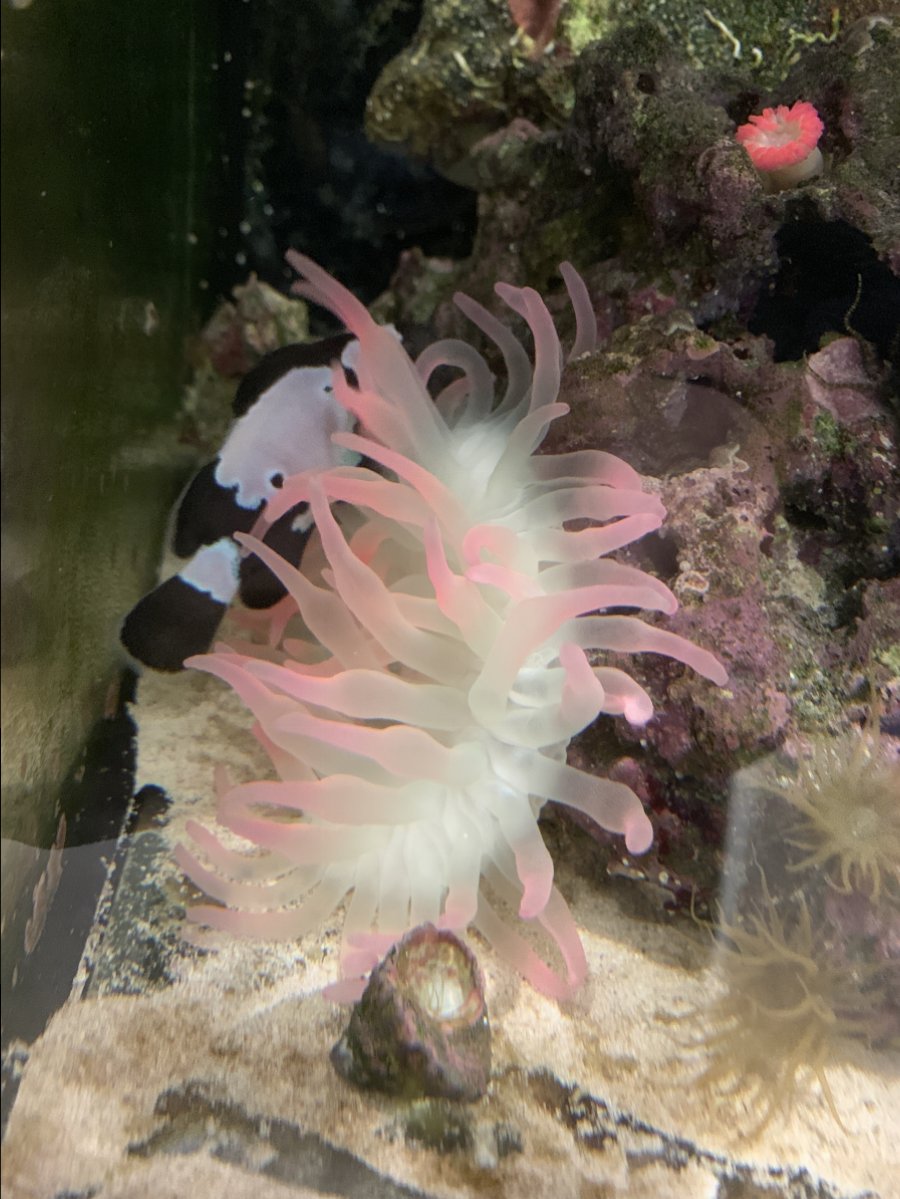
Having an issue with my light setting for rbta. My anemone lossing color but still pretty healthy. It start losing from November until now. I bought it from lfs with really red color, and colot still pop around the first 2 weeks. After that, it start fading color and havent gotten back. I saw a lot of thread about how light effect anemone with spectrum and intensity. As my observation, the spot my nem is there has around 170- 200. Asking for help on setting my light intensity schedule.
Note: I have 2 T5 bulb, blue plus and coral plus
2CEB0919-7EDB-4518-A79D-24AC3CE54976.jpeg


D39BFB0E-FEF3-4F36-96D8-B6A5AED0E419.jpeg


C8B1DBCD-A9D0-452C-9088-4009861F8887.jpeg
 

Gareth elliott

Read, Tinker, Fail, Learn
View Badges

Joined
May 7, 2017
Messages
5,470
Reaction score
6,903
Location
NJ
Rating - 0%
0   0   0
That looks bleached to me but i am not a bubble tip keeper.
I know @Crabs Mcjones wrote an article on them maybe he can help more.

Would check your alk, nitrate and phosphate as well. Ime of photosynthetic inverts high light and things off here lead to bleaching.
 

Crabs McJones

Regional Reef Manager (AKA Revhtree's Boss)
View Badges
Joined
Jul 24, 2017
Messages
33,584
Reaction score
153,813
Location
Wisconsin
Rating - 100%
3   0   0
Looks like its bleaching. Bubbletips require a bit more light, i'm assuming your 170-200 is your par reading in that spot? They tend to like SPS light levels of 250+ but if that was the case we would see it stretching for light.
But can you post your parameters?
What size tank, how long has it been up, and is it just a single A160 with two T5's?
 
Last edited:
OP
OP
A

An ngo

Active Member
View Badges
Joined
Mar 6, 2018
Messages
486
Reaction score
104
Rating - 0%
0   0   0
That looks bleached to me but i am not a bubble tip keeper.
I know @Crabs Mcjones wrote an article on them maybe he can help more.

Would check your alk, nitrate and phosphate as well. Ime of photosynthetic inverts high light and things off here lead to bleaching.
Alk and calcium stable from october . Nitrate may go back and forth a bit but stable from january which is 8-10. Light havent’t change almost half a year. Just change 2 new T5 bulb on December
 
OP
OP
A

An ngo

Active Member
View Badges
Joined
Mar 6, 2018
Messages
486
Reaction score
104
Rating - 0%
0   0   0
Looks like its bleaching. Bubbletips require a bit more light, i'm assuming your 170-200 is your par reading in that spot? They tend to like SPS light levels of 250+ but if that was the case we would see it stretching for light.
But can you post your parameters?
What size tank, how long has it been up, and is it just a single A160 with two T5's?
Kh: 7.8-8.2
Ca: 430-440
No3: 8-10 , sometime drop to 4-6 due to no3po4x
Phosphate: havent check for a while but running GFO

One of my rbta try to hide after splitting. I try to flip the rock over but it move away and hide underneath that piece of rock. My light use to set for sps and have ‘t change from that time. I believe the Par may higher than I told before
 

Gareth elliott

Read, Tinker, Fail, Learn
View Badges
Joined
May 7, 2017
Messages
5,470
Reaction score
6,903
Location
NJ
Rating - 0%
0   0   0
Alk and calcium stable from october . Nitrate may go back and forth a bit but stable from january which is 8-10. Light havent’t change almost half a year. Just change 2 new T5 bulb on December

I think the nutrients being unstable from November till January might be playing a role here. You are giving it light to build itself but if during that time the building blocks to build new tissue varied from low to high it was like the tank was turning on and off and it started to expel its photosynthetic dinos held within to compensate. Again this is general as i dont have any anemones [emoji23]
 

Crabs McJones

Regional Reef Manager (AKA Revhtree's Boss)
View Badges
Joined
Jul 24, 2017
Messages
33,584
Reaction score
153,813
Location
Wisconsin
Rating - 100%
3   0   0
What did you use to determine that par level?
 
OP
OP
A

An ngo

Active Member
View Badges
Joined
Mar 6, 2018
Messages
486
Reaction score
104
Rating - 0%
0   0   0
I think the nutrients being unstable from November till January might be playing a role here. You are giving it light to build itself but if during that time the building blocks to build new tissue varied from low to high it was like the tank was turning on and off and it started to expel its photosynthetic dinos held within to compensate. Again this is general as i dont have any anemones [emoji23]
I understand fluctuate parameter may cause it, but i try to keep it stable the best I can. Nitrate could be the main reason for this issue. I read a comment from Amoo and figure out light may cause my anemone losing color

7403C6F3-0BE3-49CC-9793-A5106F38E3FE.png
 

Crabs McJones

Regional Reef Manager (AKA Revhtree's Boss)
View Badges
Joined
Jul 24, 2017
Messages
33,584
Reaction score
153,813
Location
Wisconsin
Rating - 100%
3   0   0
I know @Amoo hasn't been around lately, lets see if anyone else from #reefsquad may know, i'm out of ideas.
 

Crabs McJones

Regional Reef Manager (AKA Revhtree's Boss)
View Badges
Joined
Jul 24, 2017
Messages
33,584
Reaction score
153,813
Location
Wisconsin
Rating - 100%
3   0   0
OP
OP
A

An ngo

Active Member
View Badges
Joined
Mar 6, 2018
Messages
486
Reaction score
104
Rating - 0%
0   0   0
If anything i'd up it, try to shoot for around 250 par
So you mean I need to raise my intensity?. Due to what Amoo said too much light lead to anemone bleaching. Some people say raise nite make anemone darker. I was confused and don’t know what to do.
 

PDR

<°)))>{
View Badges
Joined
Jul 13, 2015
Messages
3,354
Reaction score
16,274
Rating - 0%
0   0   0
What size tank do you have? I would find out your phosphate level and stop running gfo if you can manage p04 without it, same goes for the nitrate and no3p04x.

I run 3 A160we's at 100% intensity and 40% color for 8 hours (8 hours full intensity, the total photoperiod is much longer, they ramp up starting at 9 am and don't turn off until 11:00 pm) and have nowhere near that level of par in my tank, especially where my bta's are in the bottom corner. They have thrived there for years. I have a hard time believing 2 t5 bulbs would make that much of a difference unless you have a very shallow tank.
 

davocean

2500 Club Member
View Badges
Joined
Apr 28, 2014
Messages
3,197
Reaction score
4,056
Location
San Diego CA
Rating - 0%
0   0   0
So you mean I need to raise my intensity?. Due to what Amoo said too much light lead to anemone bleaching. Some people say raise nite make anemone darker. I was confused and don’t know what to do.

You are far from too much light issue, and right now being bleached I would not blaze it w/ light as it may not be able to tolerate it in it's present condition.

Too sterile can be an issue too, but not a lot of people have that problem.
 

Dana Riddle

2500 Club Member
View Badges
Joined
Sep 10, 2011
Messages
3,162
Reaction score
7,455
Location
Dallas, Georgia
Rating - 0%
0   0   0
The turnover rate of fluorescent proteins, at least in some cases, is 30 days or so. So, if conditions are not correct, florescence could be less noticeable in just a few weeks. Fluorescence depends upon production of proteins by the anemone. If a nitrogen source is not there, the anemone cannot fluoresce. Your anemone appears bleached. Could be due to intense lighting, lack of nutrients, or both. My suggestion - feed the anemone. I don't think a PAR value of 230 is excessive.
 
OP
OP
A

An ngo

Active Member
View Badges
Joined
Mar 6, 2018
Messages
486
Reaction score
104
Rating - 0%
0   0   0
What size tank do you have? I would find out your phosphate level and stop running gfo if you can manage p04 without it, same goes for the nitrate and no3p04x.

I run 3 A160we's at 100% intensity and 40% color for 8 hours (8 hours full intensity, the total photoperiod is much longer, they ramp up starting at 9 am and don't turn off until 11:00 pm) and have nowhere near that level of par in my tank, especially where my bta's are in the bottom corner. They have thrived there for years. I have a hard time believing 2 t5 bulbs would make that much of a difference unless you have a very shallow tank.
My tank is nuvo abyss 20
Gal and all my nem stay at the top level of the tank. You can see the picture to know where my nem at.

EB635D0B-F837-475A-92D5-04C10BE5010C.jpeg
 
OP
OP
A

An ngo

Active Member
View Badges
Joined
Mar 6, 2018
Messages
486
Reaction score
104
Rating - 0%
0   0   0
You are far from too much light issue, and right now being bleached I would not blaze it w/ light as it may not be able to tolerate it in it's present condition.

Too sterile can be an issue too, but not a lot of people have that problem.
I feed my nem couple time a week with fronzen shrimp. I just choped down a small piece and direct feed for my nem, but it still give me any hope
 
OP
OP
A

An ngo

Active Member
View Badges
Joined
Mar 6, 2018
Messages
486
Reaction score
104
Rating - 0%
0   0   0
The turnover rate of fluorescent proteins, at least in some cases, is 30 days or so. So, if conditions are not correct, florescence could be less noticeable in just a few weeks. Fluorescence depends upon production of proteins by the anemone. If a nitrogen source is not there, the anemone cannot fluoresce. Your anemone appears bleached. Could be due to intense lighting, lack of nutrients, or both. My suggestion - feed the anemone. I don't think a PAR value of 230 is excessive.
I follow what you said, but feeding them does make them gain back the color but it bigger than before. Color still the same and even worse
 

TOP 10 Trending Threads

WHAT AMOUNT OF LIVE ROCK AND SAND SHOULD BE PRIORITIZED FOR OPTIMAL BIODIVERSITY/FILTRATION?

  • 100% live rock + bagged sand

    Votes: 34 26.4%
  • 100% dry rock + 100% live sand

    Votes: 45 34.9%
  • 50/50 live/dry rock, 50/50 live/bagged sand

    Votes: 29 22.5%
  • 75% live rock, 25% live sand

    Votes: 11 8.5%
  • 25% live rock, 75% live sand

    Votes: 10 7.8%
Back
Top









