Lasses Dream Build

OP
OP
Lasse

Lasse

10K Club member
View Badges
Joined
Mar 20, 2016
Messages
12,662
Reaction score
31,353
Location
Källarliden 14 D Bohus, Sweden
Rating - 0%
0   0   0
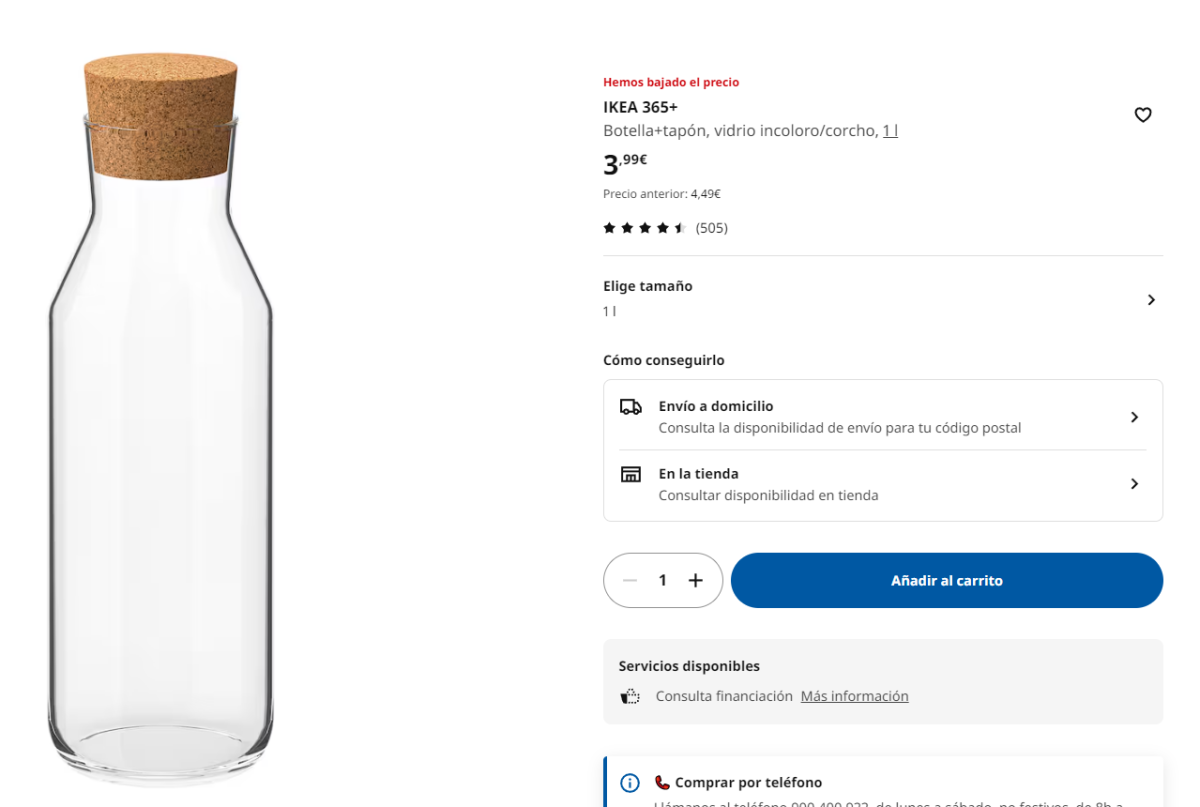
I use this type of glass bottle.

1729369304405.png


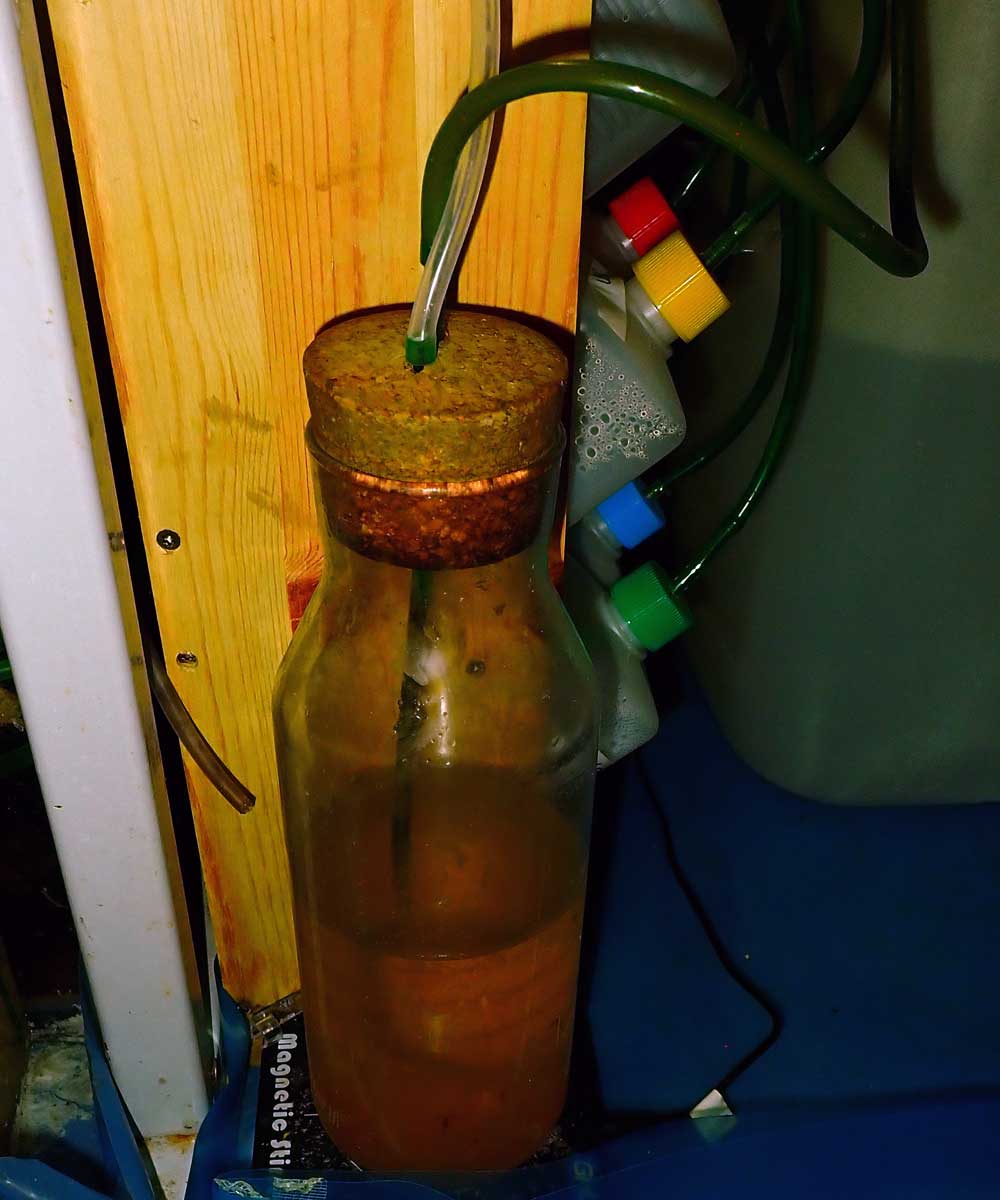
The cork is drilled with two holes. One for the on/off tube and one for a safety tube back to the sump (the clear on the second photo. The drilled holes is tight to the tubes in order to force any overflow to flow back to the sump. The cork is also tight against the glass bottle. (it needs to be cleaned tomorrow:))
bottle2.jpg


Sincerely Lasse
 
OP
OP
Lasse

Lasse

10K Club member
View Badges
Joined
Mar 20, 2016
Messages
12,662
Reaction score
31,353
Location
Källarliden 14 D Bohus, Sweden
Rating - 0%
0   0   0
Finally - some great photos of one of my Plectranthias inermis

Hawkanthias.jpg


Hawkanthias2.jpg


Hawkanthias3.jpg

My copper band - still going strong

copperband.jpg

My sun corals is growing good Orange and yellow

yellow-suncoral.jpg


orange-suncoral.jpg

Sincerely Lasse

 
Last edited:

chema

Active Member
View Badges
Joined
May 14, 2016
Messages
403
Reaction score
312
Location
Salamanca (Spain)
Rating - 0%
0   0   0
I use this type of glass bottle.

1729369304405.png


The cork is drilled with two holes. One for the on/off tube and one for a safety tube back to the sump (the clear on the second photo. The drilled holes is tight to the tubes in order to force any overflow to flow back to the sump. The cork is also tight against the glass bottle. (it needs to be cleaned tomorrow:))

bottle2.jpg


Sincerely Lasse
Thank you for the explanation and the photos. Are both tubes of the same diameter? It seems that the green one has a larger diameter. Are they 4 mm peristaltic tubes?
 
OP
OP
Lasse

Lasse

10K Club member
View Badges
Joined
Mar 20, 2016
Messages
12,662
Reaction score
31,353
Location
Källarliden 14 D Bohus, Sweden
Rating - 0%
0   0   0
Are they 4 mm peristaltic tubes
Yes - freshwater air hoses but the green is PVC and the clear silicon. I use PVC for the suction side of my dosing pumps - silicon is IMO too soft in order to be a suction hose. In this case - the actual pump hose serve as both suction and pressure hose - hence PVC (that happens to be green) The emergency hose only works on the pressure side, hence silicon. The reason why I use the "stiffer" PVC tubes on the suction side is that I have noted that the silicone hose often will be sucked in by the negative pressure and therefore often gives a variable amount of liquid that does not agree with the calibration. I prefer clear PVC because it has been shown that some colored ones can leak tin but if there is light around I need darker hoses because of algae growth inside.

Sincerely Lasse
 

chema

Active Member
View Badges
Joined
May 14, 2016
Messages
403
Reaction score
312
Location
Salamanca (Spain)
Rating - 0%
0   0   0
Yes - freshwater air hoses but the green is PVC and the clear silicon. I use PVC for the suction side of my dosing pumps - silicon is IMO too soft in order to be a suction hose. In this case - the actual pump hose serve as both suction and pressure hose - hence PVC (that happens to be green) The emergency hose only works on the pressure side, hence silicon. The reason why I use the "stiffer" PVC tubes on the suction side is that I have noted that the silicone hose often will be sucked in by the negative pressure and therefore often gives a variable amount of liquid that does not agree with the calibration. I prefer clear PVC because it has been shown that some colored ones can leak tin but if there is light around I need darker hoses because of algae growth inside.

Sincerely Lasse
Sometime ago I replaced all the silicon suction hoses of the GHL dosers for the same reason. PVC in the suction side, silicon in the pressure one.

Have you made any test on the type of frozen food that may be dosed with the 4 mm tubes? Usually I manually feed a mixture of brine shrimp, mysis and krill on alternate days. I'm afraid that krill may be too big for the peristaltic tubes.

What I love about your system is that makes easy to feed non dry food several times per day. In that way you may think about keeping non photosynthetic corals. I love those Tubastrea!, although never thought about keeping them in my tank
 
OP
OP
Lasse

Lasse

10K Club member
View Badges
Joined
Mar 20, 2016
Messages
12,662
Reaction score
31,353
Location
Källarliden 14 D Bohus, Sweden
Rating - 0%
0   0   0
I normally feed around 3-4 cubes of frozen artemia manually around 21:00 in the evening - all in at the same time but in different places in the tank. This manual feeding also force me to look at the tank and observe the behaviour of my animals at least once a day. Another reason is that I have a lot of bottom dwelling fish and hermit crabs - this way of feeding bring some of the food down to the bottom. You could change your schedule - only dose brine ans small mysis by the dosing pump during day and mass feed krill and large mysis at the evening.

If you have zooplankton pickers like some damsels, anthias, Chromis and so on - I would recommend freshwater copepods - IMO - there is no natural colour exchanger of red, orange and yellow that is better than that food. Its also perfect for tubastrea and clams

Sincerely Lasse
 
Last edited:
OP
OP
Lasse

Lasse

10K Club member
View Badges
Joined
Mar 20, 2016
Messages
12,662
Reaction score
31,353
Location
Källarliden 14 D Bohus, Sweden
Rating - 0%
0   0   0
Doesn't seem to do too well with my fathead anthias after I drop it in. My Ctenochaetus binotatus doesn't seem to like it at all. For now it's in a corner - we'll see how it goes. It was in good condition when I got it but stress is never good for this type of fish. I possibly let it in a little too early but it didn't really like the cage - that's why it was let out. 3 days is usually enough - no fish showed any aggression towards it when it was in the cage. I have had surgeons with this fish before with no problems. You just have to wait and hope for the best

Sincerely Lasse
 

chema

Active Member
View Badges
Joined
May 14, 2016
Messages
403
Reaction score
312
Location
Salamanca (Spain)
Rating - 0%
0   0   0
I normally feed around 3-4 cubes of frozen artemia manually around 21:00 in the evening - all in at the same time but in different places in the tank. This manual feeding also force me to look at the tank and observe the behaviour of my animals at least once a day. Another reason is that I have a lot of bottom dwelling fish and hermit crabs - this way of feeding bring some of the food down to the bottom. You could change your schedule - only dose brine ans small mysis by the dosing pump during day and mass feed krill and large mysis at the evening.

If you have zooplankton pickers like some damsels, anthias, Chromis and so on - I would recommend freshwater copepods - IMO - there is no natural colour exchanger of red, orange and yellow that is better than that food. Its also perfect for tubastrea and clams

Sincerely Lasse
Great suggestion Lasse. Curiously, I also feed manually at the same time (21:00). It is the moment of the day I dedicate to observe the animals in the tank and check that all fishes are well and hungry. In the old times I used to do it drinking a beer, but my wife, wisely, recommended to drink less and now the beer is restricted, from time to time, to the dinner.
It is a very good idea to restrict the krill to the manual feeding and dose artemia and mysis with the dosing pump. I'll also consider the freshwater copepods. I have never used them. Which brand do you use?
 
OP
OP
Lasse

Lasse

10K Club member
View Badges
Joined
Mar 20, 2016
Messages
12,662
Reaction score
31,353
Location
Källarliden 14 D Bohus, Sweden
Rating - 0%
0   0   0
Which brand do you use?

Ocean Nutrition

Here is an example how especially red colours can be accelerated with food rich in some colour exchanging substances like carotenoids (both artemia and fresh water cyclops are rich in those)

My old scooter Blenny female (Synchiropus ocellatus) today

241020-old-scooter-female.jpg

The same female one and a half year ago (230505) after 3 months in the aquarium

230505-old-female.jpg

My new male from today (241020)

241020-new-male.jpg

Sincerely Lasse
 
OP
OP
Lasse

Lasse

10K Club member
View Badges
Joined
Mar 20, 2016
Messages
12,662
Reaction score
31,353
Location
Källarliden 14 D Bohus, Sweden
Rating - 0%
0   0   0
Another cool colour change has my Macropharyngodon bipartitus done during the last 6 months. Here - it is as an female - I got it back in 2017 but this photo is from 24-03-05

240306-wrasse.jpg

Today - it look like this and have become a male!

1729448498006.png


The nature is unbeatable

Sincerely Lasse
 

chema

Active Member
View Badges
Joined
May 14, 2016
Messages
403
Reaction score
312
Location
Salamanca (Spain)
Rating - 0%
0   0   0
Ocean Nutrition

Here is an example how especially red colours can be accelerated with food rich in some colour exchanging substances like carotenoids (both artemia and fresh water cyclops are rich in those)

My old scooter Blenny female (Synchiropus ocellatus) today

241020-old-scooter-female.jpg

The same female one and a half year ago (230505) after 3 months in the aquarium

230505-old-female.jpg

My new male from today (241020)

241020-new-male.jpg

Sincerely Lasse
Amazing change! Congratulations. Are they paired?
 

GARRIGA

2500 Club Member
View Badges
Joined
Oct 12, 2021
Messages
4,386
Reaction score
3,496
Location
South Florida
Rating - 0%
0   0   0
African cichlids breeders and those peddling discus have been know to use certain foods to enhance color and often frowned upon yet from my perspective seems legit. Fact I have fish is because I want vibrant colors and not drabness
 
Last edited:
OP
OP
Lasse

Lasse

10K Club member
View Badges
Joined
Mar 20, 2016
Messages
12,662
Reaction score
31,353
Location
Källarliden 14 D Bohus, Sweden
Rating - 0%
0   0   0
My female have been in the aquarium for nearly 2 years but the male was introduced last week. She is is angry on him but he is allowed to swim around nipping after food as long as he is not heading front to front. She is the boss. We will see in a couple of weeks but it seems that it may be a pair.

African cichlids breeders and those peddling discus have been know to use certain foods to enhance color and often frowned upon yet from my perspective seems legit. Fact I have fish is becsuse I want vibrant colors and not drabness
I only give them natural food - what they normally eat - and it contain these colour pigments (or the building blocks) I did that with my chiclids too - back in the 70-80 ties

Sincerely Lasse
 
OP
OP
Lasse

Lasse

10K Club member
View Badges
Joined
Mar 20, 2016
Messages
12,662
Reaction score
31,353
Location
Källarliden 14 D Bohus, Sweden
Rating - 0%
0   0   0
Doesn't seem to do too well with my fathead anthias after I drop it in. My Ctenochaetus binotatus doesn't seem to like it at all. For now it's in a corner - we'll see how it goes. It was in good condition when I got it but stress is never good for this type of fish. I possibly let it in a little too early but it didn't really like the cage - that's why it was let out. 3 days is usually enough - no fish showed any aggression towards it when it was in the cage. I have had surgeons with this fish before with no problems. You just have to wait and hope for the best

Sincerely Lasse
What´s has happen since the 20/10 till now?

Well it was stuck between a rock and and one of the short sides of the aquarium for a few days. I could see it behind a layer of calcareous algae growing on the glass. It moved its body from time to time. One evening when the light went out I could see it swimming near the stone. Then it was gone - haven't been able to see it until today when it poked its nose out from behind a rock on the other side of the aquarium! And it eats. It is a shy fish so it will take time before it will be able to be photographed.

But it lives!

Sincerely Lasse
 

chema

Active Member
View Badges
Joined
May 14, 2016
Messages
403
Reaction score
312
Location
Salamanca (Spain)
Rating - 0%
0   0   0
Hi again Lasse: I eventually set up the "feeding station" and is working fine. I'm afraid is not delivering as much food per round as I hoped because mysis and artemia are a little too big for the diameter of the tubing, but both are getting to the tank.
I tried to set up the stirrer at the minimum speed (1) but it seems that the minimum it woks is 2. May be I should try with a smaller magnetic bar.
I'm curious to evaluate the evolution of phosphate and nitrate. In my experience frozen food contains far less phosphate than pellets
 
OP
OP
Lasse

Lasse

10K Club member
View Badges
Joined
Mar 20, 2016
Messages
12,662
Reaction score
31,353
Location
Källarliden 14 D Bohus, Sweden
Rating - 0%
0   0   0
What´s has happen since the 20/10 till now?

Well it was stuck between a rock and and one of the short sides of the aquarium for a few days. I could see it behind a layer of calcareous algae growing on the glass. It moved its body from time to time. One evening when the light went out I could see it swimming near the stone. Then it was gone - haven't been able to see it until today when it poked its nose out from behind a rock on the other side of the aquarium! And it eats. It is a shy fish so it will take time before it will be able to be photographed.

But it lives!

Sincerely Lasse
Its still alive and eating good. Still hiding 99 % of the time. My tang is still aggressive against it

Sincerely Lasse
 

TOP 10 Trending Threads

WHAT AMOUNT OF LIVE ROCK AND SAND SHOULD BE PRIORITIZED FOR OPTIMAL BIODIVERSITY/FILTRATION?

  • 100% live rock + bagged sand

    Votes: 38 27.1%
  • 100% dry rock + 100% live sand

    Votes: 47 33.6%
  • 50/50 live/dry rock, 50/50 live/bagged sand

    Votes: 31 22.1%
  • 75% live rock, 25% live sand

    Votes: 14 10.0%
  • 25% live rock, 75% live sand

    Votes: 10 7.1%
Back
Top