Let Me ID Your Wrasse!

  • Thread starter Thread starter evolved
  • Start date Start date
  • Tagged users Tagged users None
Status
Not open for further replies.
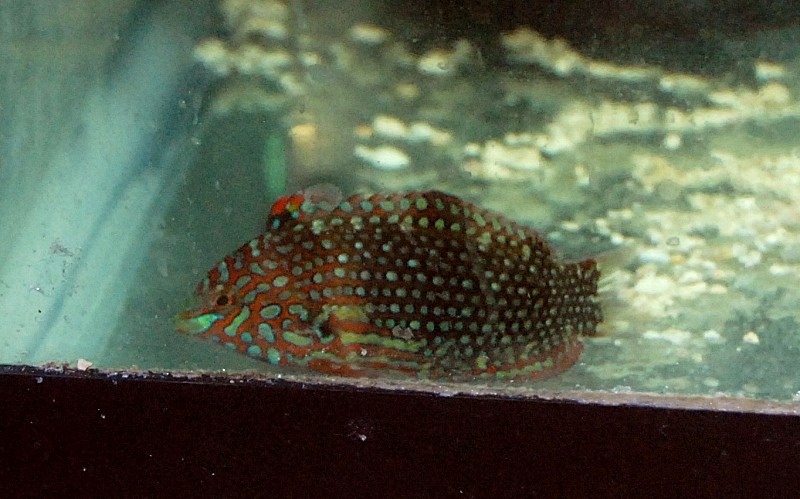
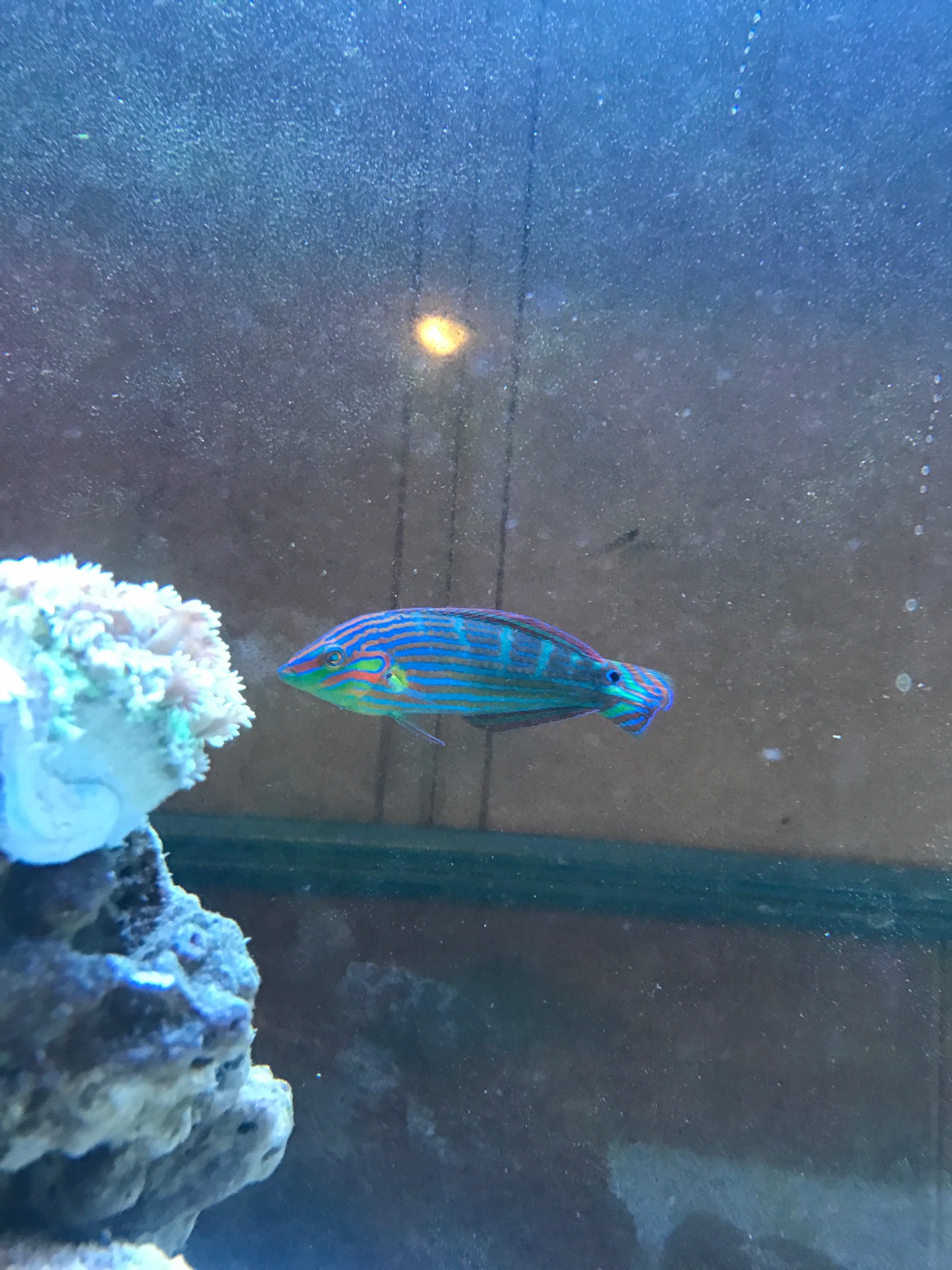
I sent them the picture posted above and quoted their own description regarding the caudal fin markings. They want to see a white light picture "because it's impossible to make a positive ID with the blue light". I wouldn't have thought coloration would be a definitive help with these two species.

 
I wouldn't think so ... but it's a decent delaying tactic, and possibly a "canned" response from a customer service rep who doesn't know the fish themselves, but will pass the request along to someone who does - if the customer doesn't just give up.

~Bruce
 
^Agree with those thoughts. It's not a matter of lighting - the caudal pattern of both species is unique in all lighting. :)
 
Male or female?


Yes. :p
By far the toughest species to distinguish, but male in this instance.
That's what I thought.
I thought the females were red/orange with a faint light blue color.
 
This a google image, not sure of the source, but this is what I thought the ornate females looked like.


That's what I thought.
I thought the females were red/orange with a faint light blue color.
The more telling way is by the facial markings and spotting pattern. As a juvenile the facial markings are smaller spots and as they mature the facial markings elongate to give a more striated appearance. The body spotting also becomes more 'organized'.
 
That's what I thought.
I thought the females were red/orange with a faint light blue color.
It's much more about patterns than colors with this species.
This a google image, not sure of the source, but this is what I thought the ornate females looked like.


That's actually a male. ;)
The more telling way is by the facial markings and spotting pattern. As a juvenile the facial markings are smaller spots and as they mature the facial markings elongate to give a more striated appearance. The body spotting also becomes more 'organized'.
Right.
Perhaps some images for illustration?

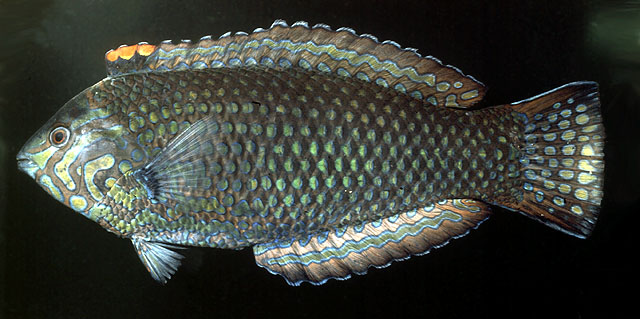
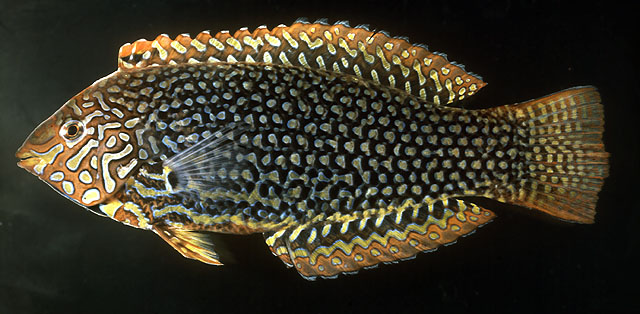
These are holotypes (dead fish) obviously, but should still give you a good idea as to what to look for.

Male:
Maorn_m0.jpg


Female:
Maorn_f1.jpg


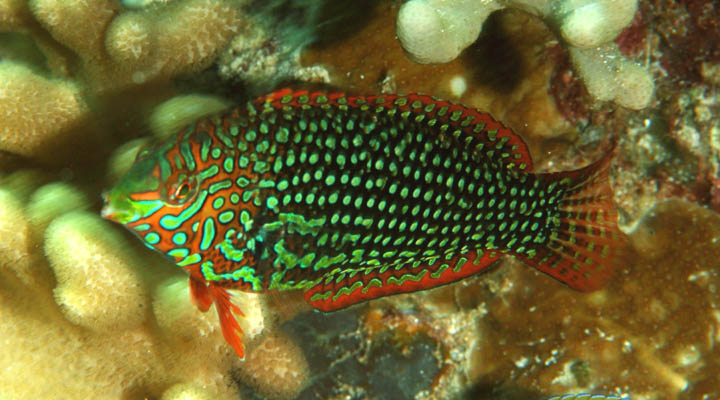
And here's a female in the wild, to provide some contrast to the male mfinn posted/quoted above:
051677F000387W000008.jpg
 
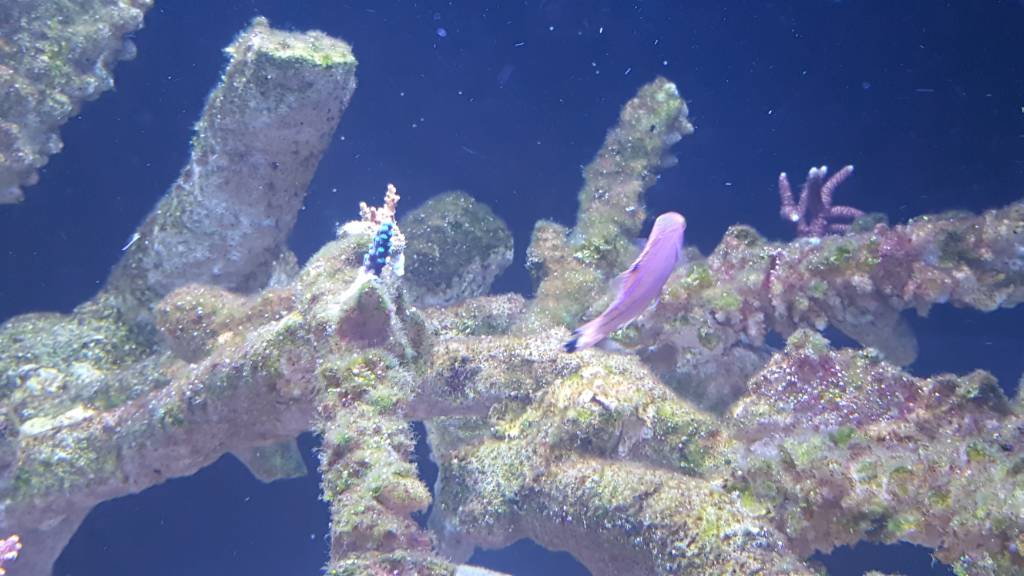
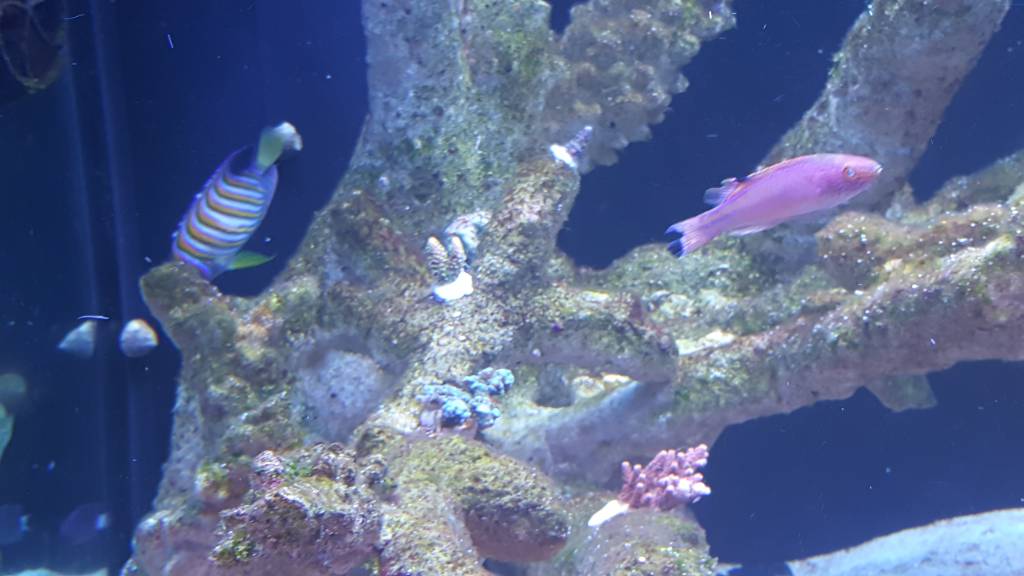
Is this a male or female? Also cant leopard wrasses change sex as they mature?
IMG_1958.JPG
IMG_1953.JPG
 
Is this a male or female? Also cant leopard wrasses change sex as they mature?
IMG_1958.JPG
IMG_1953.JPG
It's a female M. meleagris. Yes, leopards can transition, but aren't as reliable about it as fairy, flasher, and Halichoeres wrasses.
 
Hello @evolved and @eatbreakfast,

I recently finished reading through this thread and the wrasse lovers thread. I want to thank you both for sharing your knowledge and thank everyone else for asking and answering questions too. Before reading these two threads I knew very little about wrasses at all. But your patient answering of repeated questions has served well to hammer through my brains density! I have learnt so much from you all.

Thank you!

Mick.
 
Hello @evolved and @eatbreakfast,

I recently finished reading through this thread and the wrasse lovers thread. I want to thank you both for sharing your knowledge and thank everyone else for asking and answering questions too. Before reading these two threads I knew very little about wrasses at all. But your patient answering of repeated questions has served well to hammer through my brains density! I have learnt so much from you all.

Thank you!

Mick.


I agree, I started reading through this thread today aswell. I posted a photo earlier before i realized how many pages this thread was which had been asked before and still got a prompt answer. You guys are dedicated. Thank you and cant wait to finish reading it all.
 
Hello @evolved and @eatbreakfast,

I recently finished reading through this thread and the wrasse lovers thread. I want to thank you both for sharing your knowledge and thank everyone else for asking and answering questions too. Before reading these two threads I knew very little about wrasses at all. But your patient answering of repeated questions has served well to hammer through my brains density! I have learnt so much from you all.

Thank you!

Mick.
Thank you!
And there's also this too:
https://www.reef2reef.com/ams/all-about-reef-safe-wrasses-in-aquaria.28/
I agree, I started reading through this thread today aswell. I posted a photo earlier before i realized how many pages this thread was which had been asked before and still got a prompt answer. You guys are dedicated. Thank you and cant wait to finish reading it all.
It's my [our] pleasure; you're very welcome.
 
Status
Not open for further replies.

TOP 10 Trending Threads

WHICH TYPE OF MISTAKE TAUGHT YOU YOUR MOST EXPENSIVE REEFKEEPING LESSON?

  • Moving too quickly or adding too much at once

    Votes: 2 50.0%
  • Skipping—or shortening—quarantine or dipping

    Votes: 2 50.0%
  • Buying the wrong equipment the first time

    Votes: 0 0.0%
  • Ignoring maintenance, warning signs, or redundancy

    Votes: 1 25.0%
  • Chasing numbers or making too many changes

    Votes: 1 25.0%
  • Choosing incompatible fish, corals, or invertebrates

    Votes: 1 25.0%
  • Poor aquascaping or tank-design decisions

    Votes: 0 0.0%
  • Failing to research an animal’s needs

    Votes: 1 25.0%
  • Trusting bad advice

    Votes: 1 25.0%
  • Doing something on the tank when you should've gone to bed

    Votes: 0 0.0%
  • Something else—tell us below

    Votes: 0 0.0%
  • I’m still waiting for my first expensive lesson!

    Votes: 0 0.0%
Back
Top
Home
Post thread…
Market
What's new