Name that Euphyllia...

Stephers

Well-Known Member
View Badges
Joined
May 5, 2018
Messages
518
Reaction score
395
Location
South Carolina
Rating - 0%
0   0   0
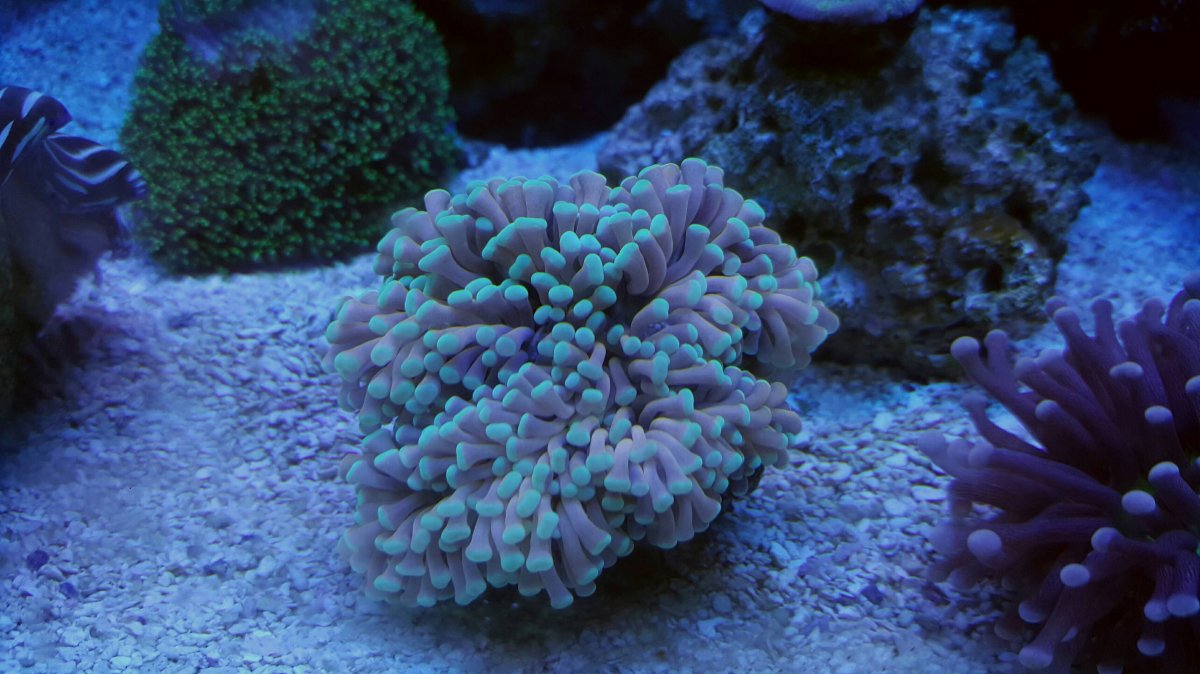
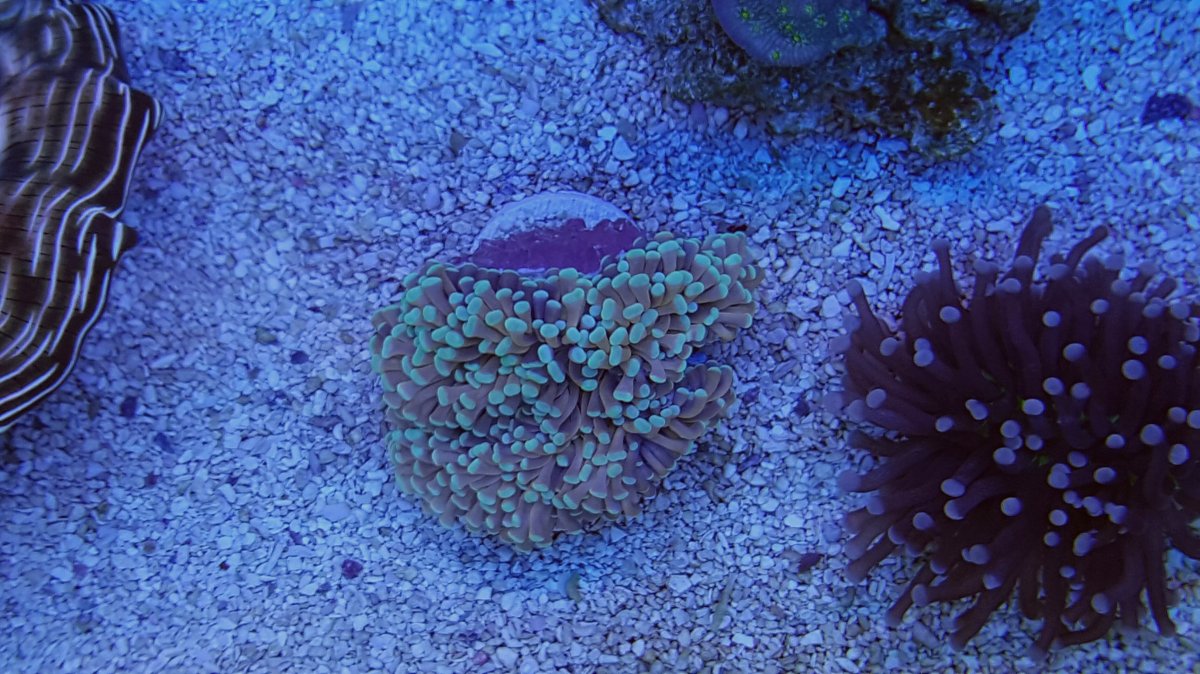
Sold as a hammer. I'm thinking no. It doesn't extend further than an inch at most. I was thinking cristata but it's a very unique color for that species... orange/gold with green tips.

20181214155343.jpg


20181214_161219.jpg


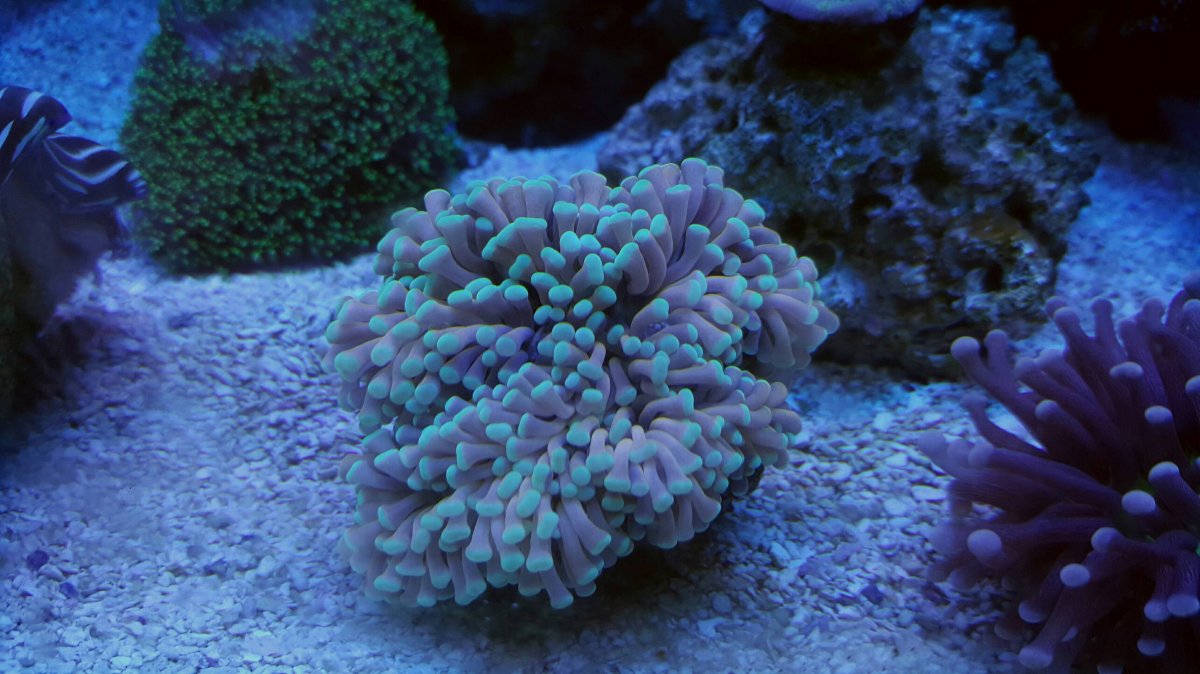
20181214155343.jpg
 

cristata.reef

Well-Known Member
View Badges
Joined
Dec 20, 2017
Messages
884
Reaction score
735
Rating - 0%
0   0   0
Why do you think so?

I'd say about 50% of the ends are circular like torches and the other 50% are oblong. but there's not like Ah hah! that's a hammer... at least to me.

Precisely! So F. paraancora is sometimes referred to as a "false hammer" since it does not have true hammer heads on the tentacles of their polyps. The morphology of this species is rather variable with some tentacles looking rounded, some being blunted, and some curving backwards (almost like a true hammer F. ancora). However as it's name suggests it's just not quite the same (if ancora = hammer, then paraancora is well, a hammer sort of).

I made this ID based off the shape of the tentacles first and since for all practical purposes there are only 2 species of hammer that enter our hobby, I narrowed it down to this. But I could be wrong. The best way to ID any coral is to examine their skeleton (so if you could snap a pic later with lights off, that might help) especially since different environmental factors can affect the appearance of really any coral

 

cristata.reef

Well-Known Member
View Badges
Joined
Dec 20, 2017
Messages
884
Reaction score
735
Rating - 0%
0   0   0
Only other options (IMO) would be as follows
Euphyllia fimbriata (elongated but blunted tentacle tips; not a valid species name)
Euphyllia ancora (but with weird looking polyps)
Euphyllia cristata (thick tentacles with blunt tips; highly unlikely since septa are indistinct)
 
OP
OP
Stephers

Stephers

Well-Known Member
View Badges
Joined
May 5, 2018
Messages
518
Reaction score
395
Location
South Carolina
Rating - 0%
0   0   0
Precisely! So F. paraancora is sometimes referred to as a "false hammer" since it does not have true hammer heads on the tentacles of their polyps. The morphology of this species is rather variable with some tentacles looking rounded, some being blunted, and some curving backwards (almost like a true hammer F. ancora). However as it's name suggests it's just not quite the same (if ancora = hammer, then paraancora is well, a hammer sort of).

I made this ID based off the shape of the tentacles first and since for all practical purposes there are only 2 species of hammer that enter our hobby, I narrowed it down to this. But I could be wrong. The best way to ID any coral is to examine their skeleton (so if you could snap a pic later with lights off, that might help) especially since different environmental factors can affect the appearance of really any coral


Here's the best I could do for the skeleton...

20181219_221257.jpg
 

cristata.reef

Well-Known Member
View Badges
Joined
Dec 20, 2017
Messages
884
Reaction score
735
Rating - 0%
0   0   0
Hmm maybe it is E. cristata since I can see some nice septal teeth. Is the skeleton branching or more star-shaped? (can't really tell from the pic)
 
OP
OP
Stephers

Stephers

Well-Known Member
View Badges
Joined
May 5, 2018
Messages
518
Reaction score
395
Location
South Carolina
Rating - 0%
0   0   0
Looks like a wall hammer crossed with an aussie torch..... not sure. def not a grape coral or any other branching LPS

Well. I'm not sure if it's branching. It was originally a bigger piece. The seller cut it in half. Here's the whole colony before being fragged.

I also placed it next to an actual hammer coral and they're both getting along well when they touch, if that's any help...

47580139_2770594382954415_967037643613274112_o.jpg
 

cristata.reef

Well-Known Member
View Badges
Joined
Dec 20, 2017
Messages
884
Reaction score
735
Rating - 0%
0   0   0
Hmm yea ok maybe I got a little too excited about the septal teeth

I think I'll agree with E. glabrescens but perhaps crossed with something, not sure.

 

TOP 10 Trending Threads

WHAT AMOUNT OF LIVE ROCK AND SAND SHOULD BE PRIORITIZED FOR OPTIMAL BIODIVERSITY/FILTRATION?

  • 100% live rock + bagged sand

    Votes: 34 26.8%
  • 100% dry rock + 100% live sand

    Votes: 45 35.4%
  • 50/50 live/dry rock, 50/50 live/bagged sand

    Votes: 27 21.3%
  • 75% live rock, 25% live sand

    Votes: 11 8.7%
  • 25% live rock, 75% live sand

    Votes: 10 7.9%
Back
Top