PAR vs LUMEN

Dom

Theoretical Reef Keeper
View Badges
Joined
Apr 29, 2016
Messages
7,763
Reaction score
8,199
Location
NY
Rating - 0%
0   0   0
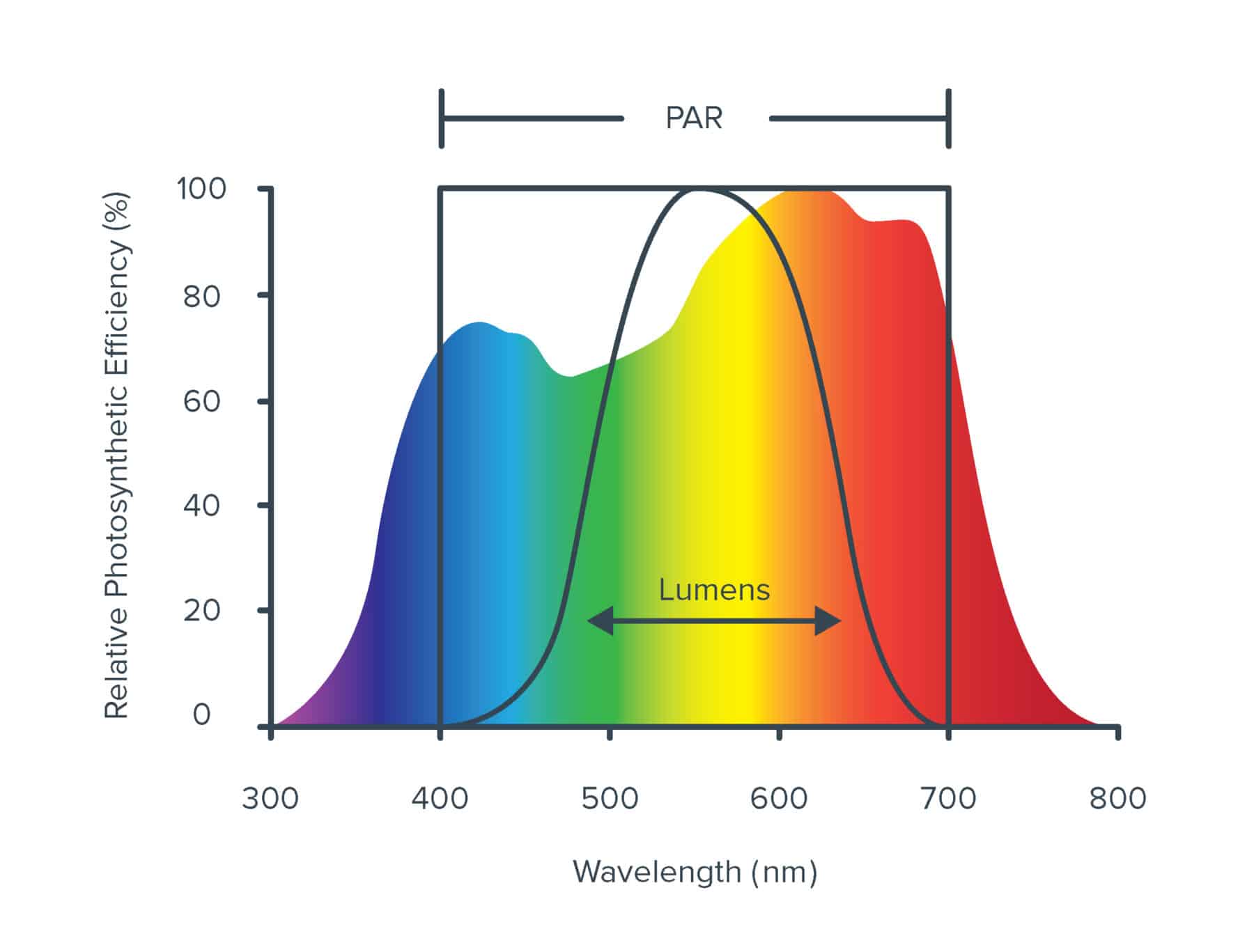
When speaking of light and it’s intensity in aquariums, people will reference light measurements in “lumen” or “PAR”. What is the difference between PAR and Lumen?

As I understand it (please correct me if I say something incorrect or inaccurate), lumen are used to measure the brightness of light as perceived by the human eye.

PAR is the amount of light that is actually available to be used during the photosynthesis process. So when speaking in terms of PAR, we are speaking about the portions of the light spectrum usable by the inhabitants in the tank.

Is this correct?

 

oreo54

5000 Club Member
View Badges
Joined
Sep 18, 2017
Messages
6,886
Reaction score
4,089
Rating - 0%
0   0   0
Roughly yes..though "PAR" as usually define does miss some of the usable spectrum..


Daniel@R2R

Living the Reef Life
View Badges
Joined
Nov 18, 2012
Messages
40,388
Reaction score
67,447
Location
Fontana, California
Rating - 100%
1   0   0
PAR, I believe is the more useful measurement while lumens are easier (more cost effective for hobbyists) to measure. I believe that's the trade off. Most hobbyists will probably say PAR usd what should be measured, but I know a number of hobbyists that I highly respect will suggest measurement in lumens and have even created conversion charts for converting lumens to PAR.
 
OP
OP
Dom

Dom

Theoretical Reef Keeper
View Badges
Joined
Apr 29, 2016
Messages
7,763
Reaction score
8,199
Location
NY
Rating - 0%
0   0   0
PAR, I believe is the more useful measurement while lumens are easier (more cost effective for hobbyists) to measure. I believe that's the trade off. Most hobbyists will probably say PAR usd what should be measured, but I know a number of hobbyists that I highly respect will suggest measurement in lumens and have even created conversion charts for converting lumens to PAR.

This is exactly why SaltyFilmFolks recommended a meter to measure in lumens; cost. I find that as long as my lumen measurement is in the 8-10k range at points farthest from the light, my tanks do well.
 

alton

Valuable Member
View Badges
Joined
Feb 8, 2016
Messages
1,943
Reaction score
3,184
Location
Zuehl, Texas
Rating - 0%
0   0   0
Here is an example of why sometimes conversion charts do not work. In my job I have had to always check foot candles on finished projects and why I kept a foot candle meter. Checking my Metal Halide lamps they typically read in the 2500 to 2600 FTC range and when they dropped 10% I would change them. When I started using a Par meter it read 1800 to 2000 on the Par meter. So not much of a difference. When LED's first started coming out I received a Marineland reef capable light. Foot candles 4000, but only 200 Par. On my desk under my fluorescent lights I have 60 ftc, but only 3 for a Par reading. So yes if you have the same light as another who checks Par and then ftc or lux/lumens the conversion works, but be careful if you are not comparing apples to oranges.
 

shred5

5000 Club Member
View Badges
Joined
Jun 7, 2007
Messages
6,404
Reaction score
4,765
Location
Waukesha, Wi
Rating - 100%
3   0   0
Even though this is not exactly right but keeps it simple..

Lumens is based on what the human eye sees as visible light..

Par is the spectrum of light used in photosynthesis.

They are not related.
 

blasterman

Valuable Member
View Badges
Joined
Feb 14, 2019
Messages
1,730
Reaction score
1,959
Rating - 0%
0   0   0
Lumens, being subject to human eye values (photopic) and is heavily weighted on green light because our eyes are most sensitive to green light. "How bright does it look under my desk or floor of the gymnasium"

PAR is, simplistically put, weighted on red/blue because that's the typical growth spectrum for plants. The problem with PAR is we typically don't value red light in our reef tanks and most PAR meters are designed for metering light for terrestrial plants. Some have a reef mode.

There is no direct conversion for lumens to PAR because both use different standards. You can use lumens as a baseline as long as you have a reference and are comparing apples to apples (same approx color temp).

I use the blue channel in my dSLR for reading PAR. I have shots of reference tanks taken as specific camera settings and can get real close.
 

oreo54

5000 Club Member
View Badges
Joined
Sep 18, 2017
Messages
6,886
Reaction score
4,089
Rating - 0%
0   0   0
Lumens is a sub-set of PPFD ("PAR")

PAR-approved.jpg

Conversion factors get tricky w/ all blue lights...
lumens-to-ppf

1 Lumen of 6500k .02 PPFD
1 Lumen of 450nm blue is .12 PPFD


I use the blue channel in my dSLR for reading PAR. I have shots of reference tanks taken as specific camera settings and can get real close.
Interesting.. Always wondered if one can use the histogram to get a K temp somehow..
Since most lights in this "field" are probably "non-K" it doesn't really apply though.
 

TOP 10 Trending Threads

HOW DO YOU ADJUST YOUR CUC AS ALGAE DISAPPEARS?

  • Capture and re-home CUC

    Votes: 2 4.3%
  • Increase white light/hours in tank to spur algae growth to feed CUC

    Votes: 4 8.7%
  • Feed nori to support CUC

    Votes: 18 39.1%
  • Feed herbivore pellets to support CUC

    Votes: 13 28.3%
  • Allow attrition to balance CUC and algae

    Votes: 22 47.8%
  • Provide macro algae to feed CUC

    Votes: 5 10.9%
  • Introduce CUC predators

    Votes: 1 2.2%
  • Other (please explain)

    Votes: 4 8.7%
Back
Top