Polyp out of control, tips?

rknott

Active Member
View Badges
Joined
Jan 29, 2019
Messages
132
Reaction score
66
Rating - 0%
0   0   0
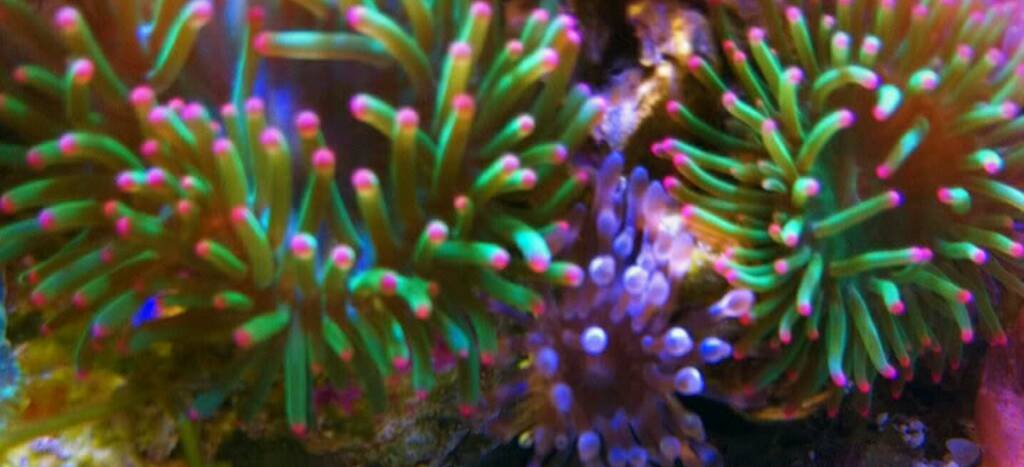
I thought these were an innocent polyp, but they are starting to take over my tank, growing on corals, the glass. . . . . . . Can someone help me identify them and give me some tips on getting them in control?

#reefsquad (giving this a shot, just learned about it)

IMG_20190225_214809.png


IMG_20190225_214737.png
 
Last edited:
OP
OP
R

rknott

Active Member
View Badges
Joined
Jan 29, 2019
Messages
132
Reaction score
66
Rating - 0%
0   0   0
Those are palythoas, most of them are highly invasive.You can use something like aptasia X to kill them off.

Ugh, I figured as much. Thanks for the tip. In the second picture there is a brighter green item that I believe was the host for these things that I bought at the local store. Is this the same thing, or different and safe? It appears similar in shape, but has a much more color to it. Is this safe or it is the same thing just brighter because it is picking up more light?
 

Gareth elliott

Read, Tinker, Fail, Learn
View Badges
Joined
May 7, 2017
Messages
5,470
Reaction score
6,903
Location
NJ
Rating - 0%
0   0   0
Ugh, I figured as much. Thanks for the tip. In the second picture there is a brighter green item that I believe was the host for these things that I bought at the local store. Is this the same thing, or different and safe? It appears similar in shape, but has a much more color to it. Is this safe or it is the same thing just brighter because it is picking up more light?

Same genus different species, green button polyp is the trade name. Can spread over other corals, but ive never seen it spread as badly as the brown ones you have.

If they didnt require care when removing id say use as a fuge coral. That is some insane growth rates.
 

GabeM

King of... something.
View Badges
Joined
Jan 15, 2019
Messages
685
Reaction score
907
Location
Worcester
Rating - 0%
0   0   0
Looks like you got the "texas trash palythoas" as a hitchhiker. Right so be mindful of palytoxins when removing - some of these guys can release a pretty powerful venom.
 
OP
OP
R

rknott

Active Member
View Badges
Joined
Jan 29, 2019
Messages
132
Reaction score
66
Rating - 0%
0   0   0
Looks like you got the "texas trash palythoas" as a hitchhiker. Right so be mindful of palytoxins when removing - some of these guys can release a pretty powerful venom.

I have been doing some reading on this now that I know what I have. I was planning on cutting them off the glass with my algae scraper, taking a few rocks out where I can, but my big rocks will be tough given so many other corals on them. Not sure what to do there. I am reading about people getting sick, need to wear gloves, what??? I am totally ignorant in this space.

Interestingly, I am in the process of building out a new tank, but I was planning on taking much of my coral to this new tank. Now I am concerned some of these will make the transition. I have some pretty big/valuable coral that are potentially infected. I have some tough choices here.
 

Dsnakes

Knight Reefer
View Badges
Joined
Feb 16, 2017
Messages
5,289
Reaction score
20,575
Location
Outer Banks, NC
Rating - 0%
0   0   0
I have been doing some reading on this now that I know what I have. I was planning on cutting them off the glass with my algae scraper, taking a few rocks out where I can, but my big rocks will be tough given so many other corals on them. Not sure what to do there. I am reading about people getting sick, need to wear gloves, what??? I am totally ignorant in this space.

Interestingly, I am in the process of building out a new tank, but I was planning on taking much of my coral to this new tank. Now I am concerned some of these will make the transition. I have some pretty big/valuable coral that are potentially infected. I have some tough choices here.

I would recommend gloves while scraping with additional glasses if they are removed from the tank. Any flesh or polyps you can’t remove I would try to cover with some reef epoxy. I have seen that work before on several occasions.
 

GabeM

King of... something.
View Badges
Joined
Jan 15, 2019
Messages
685
Reaction score
907
Location
Worcester
Rating - 0%
0   0   0
I have been doing some reading on this now that I know what I have. I was planning on cutting them off the glass with my algae scraper, taking a few rocks out where I can, but my big rocks will be tough given so many other corals on them. Not sure what to do there. I am reading about people getting sick, need to wear gloves, what??? I am totally ignorant in this space.

Interestingly, I am in the process of building out a new tank, but I was planning on taking much of my coral to this new tank. Now I am concerned some of these will make the transition. I have some pretty big/valuable coral that are potentially infected. I have some tough choices here.

I would scrape them off the rocks and rinse the rocks in new salt or RO water once the palythoa are removed while taking the precautions Dsnakes describes. I would also do this outside of the tank as to not damage any fish or corals that are in your tank as the toxins are released when the palythoa are disturbed.

That being said I encourage you to do a bit of research yourself on the matter as I have not performed this myself.
 

PursuitOfHappiness

Community Member
View Badges
Joined
Sep 12, 2017
Messages
43
Reaction score
32
Location
Ohio
Rating - 0%
0   0   0
I have been doing some reading on this now that I know what I have. I was planning on cutting them off the glass with my algae scraper, taking a few rocks out where I can, but my big rocks will be tough given so many other corals on them. Not sure what to do there. I am reading about people getting sick, need to wear gloves, what??? I am totally ignorant in this space.

Interestingly, I am in the process of building out a new tank, but I was planning on taking much of my coral to this new tank. Now I am concerned some of these will make the transition. I have some pretty big/valuable coral that are potentially infected. I have some tough choices here.
If you do use your alge scraper try to do it and siphon them,out or use a net.
 

norfolkgarden

2500 Club Member
View Badges
Joined
Dec 25, 2012
Messages
2,694
Reaction score
7,085
Location
Norfolk, Virginia, USA
Rating - 0%
0   0   0
Use carbon (or fresh carbon) in your tank when you do any of this.

Razor Scraping them off the glass under water should be ok.
(Fresh carbon)

Wear gloves and safety glasses. Take them from the water directly to a plastic bag and keep the bag closed.
I would have some carbon in the bag already.

The classic "I scraped my rocks to get These Thing's off it and went to the hospital." is what you want to avoid.

Bleach is supposed to work great on rock outside of the tank.
Research this because I have never had to do it, but people much smarter than me have explained it in the past. [emoji846]

I have fragged mine in the past. (Grandis and other more colorful versions of palys) Gloves and safety glasses!
Working outdoors during the summer and smashing the rock into smaller pieces with a brick chisel to make frags.
Um, yeah, some people have questioned my intelligence in the past. [emoji849]

Anyway, one heck of a headache, different from any other in the past, after just 10 minutes exposure.

I put the frags back in the tank and relaxed for a few hours till it went away.

Had them for years in the tank with no other issues.
Still have them and enjoy them.


Honestly I would just sacrifice the rock or frag the rock and throw away wherever they have existed.
if you are not going to use the bleach method.

You mentioned other corals.
Are they on the same rock?

Whatever you do, the danger is very real once you start taking them out of the tank.
You do need to respect them!

Other people have talked about bleaching the rocks for a few weeks which may neutralize the poison completely. You will want to do this outdoors away from the house.
You will need to do more research on that.
 

Kmadden

Active Member
View Badges
Joined
Jul 13, 2018
Messages
253
Reaction score
139
Rating - 0%
0   0   0
I would say they are palys. I just got rid of a majano in my tank.

You can see it beside my GSP in the pic.
20190204_122032.jpeg
 
OP
OP
R

rknott

Active Member
View Badges
Joined
Jan 29, 2019
Messages
132
Reaction score
66
Rating - 0%
0   0   0
This is very helpful. I appreciate all the tips. There seems to be some real safety hazards involved here. Based on everything here and abroad I have read all work will be in the water and right to a small bucket with gallon ziplocks and will be a combination of throwing away entire rocks and siphoning. This is going to be a multi prong approach over multiple days/weeks. I still haven't decided what to do with the relatively expensive coral that has them growing on the side. I will try a shot of Joe's juice on those that took out 2 aptasia I had a long while back.

Thanks for the tip on the carbon. I will put fresh carbon in. Can I expect toxins to be released into the tank that will kill fish and other corals as these die off? I am reading mixed messages here. One person saying do outside the tank and others saying better in the water for personal safety. Possible I should pace my killing to 10 or so per day for individuals I target where I am attempting to save rock or until I migrate just the coral I want to save to my new tank. Long term I plan on getting rid of all the rock. Based on what I am reading here even letting the rock dry out over several months and curing again for a new life is not recommended.
 
Last edited:

TOP 10 Trending Threads

WHAT AMOUNT OF LIVE ROCK AND SAND SHOULD BE PRIORITIZED FOR OPTIMAL BIODIVERSITY/FILTRATION?

  • 100% live rock + bagged sand

    Votes: 34 28.1%
  • 100% dry rock + 100% live sand

    Votes: 41 33.9%
  • 50/50 live/dry rock, 50/50 live/bagged sand

    Votes: 27 22.3%
  • 75% live rock, 25% live sand

    Votes: 11 9.1%
  • 25% live rock, 75% live sand

    Votes: 8 6.6%
Back
Top