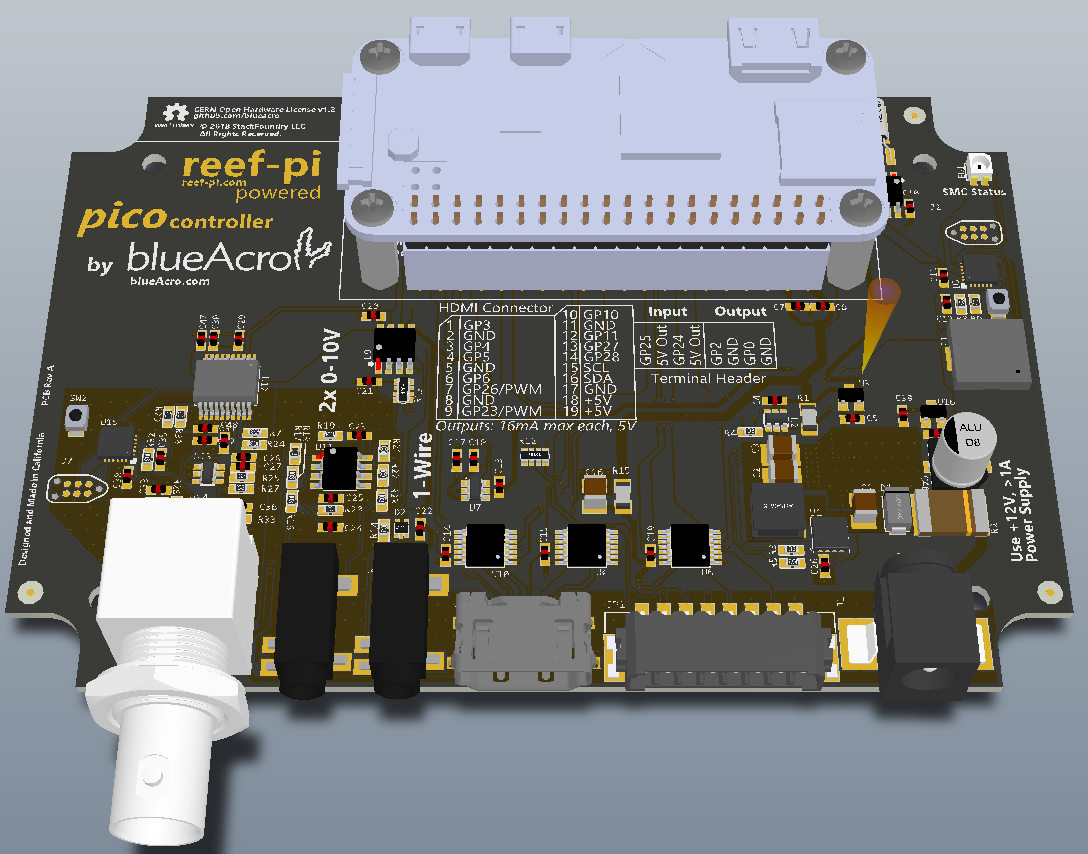
@Ranjib Do you use 3v or 5v for your temp and float sensor circuits... The 1wire protcol seems to sugged 5v is most reliable.. and 100m is easily achieved as we have now..
Length = weight
a Temp sensor has a wight of .5 meters ..
So i have 4 sensors.. 2m..... i have a 10 meter cable then 4-1m pig tails..
so my total weight = 2+10+4 16 meters.. Well below the 100m limitation.... But i am running at 3.3v not 5v as they advise doing..
Will give this a test and see. If not i have to change the circuit board layout.. Now I am what they are calling a Star network..
I need to what i think i need is a stubbed network.. 3 SENSORS Will be about 3 meters long and one will be 13 meters... If you reach over 50 meters on the stub they say adding 150 resisters on each of the pull downs ..
anywhere is where i got most of my info.. Confirmed from a few other sources.
https://www.maximintegrated.com/en/app-notes/index.mvp/id/148
NOW Does pi follow the standard 1wire protcol.. as this link
Any thoughts ?
--------------------------------
Network weight is limited by the ability of the cable to be charged and discharged quickly enough to satisfy the 1-Wire protocol. A simple resistor pullup has a weight limitation of about 200m. Sophisticated 1-Wire master designs have overcome this limitation by using active pullups, that provide higher currents under logic control and have extended the maximum supportable weight to over 500m. See application note 244, "
Advanced 1-Wire Network Driver."
Parasite Powering Issues
The 1-Wire waveform must not only be sufficient for communication, but also provide operating power for the slaves. Each slave "robs" power from the bus when the voltage on the bus is greater than the voltage on its internal energy storage capacitor. When the weight of the network becomes excessive, the current delivered by the master may not be sufficient to maintain operating voltage in the slaves.