



Installing a new membrane in a residential-scale RO system like those used in this hobby is a common maintenance item.
One way NOT to do this, that we run across with customers maybe once per year, is to slide the membrane in until you feel resistance, and then use the force exerted by the membrane housing cap to push the membrane in all the way (aka "seat the membrane"). You'll see in the pics below what can result:
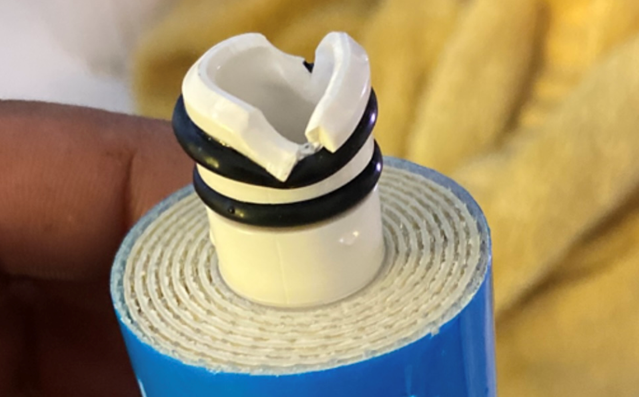
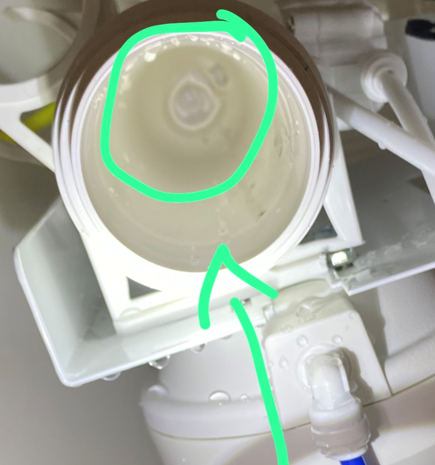
In this case both the membrane stem and the RO Membrane Housing have been damaged and should be replaced.
The correct way to install a membrane is to gently slide it in until you feel resistance - then put the heel of your hand on the stem and push firmly - you'll feel the membrane go in about another 1/4" as you seat the double orings in the little "cup" of the membrane housing. The orings on the membrane stem, and the walls of the cup have to be intact for the membrane to perform as expected. It never hurts to put a little food grade silicone grease on those orings as well.
One way NOT to do this, that we run across with customers maybe once per year, is to slide the membrane in until you feel resistance, and then use the force exerted by the membrane housing cap to push the membrane in all the way (aka "seat the membrane"). You'll see in the pics below what can result:
In this case both the membrane stem and the RO Membrane Housing have been damaged and should be replaced.
The correct way to install a membrane is to gently slide it in until you feel resistance - then put the heel of your hand on the stem and push firmly - you'll feel the membrane go in about another 1/4" as you seat the double orings in the little "cup" of the membrane housing. The orings on the membrane stem, and the walls of the cup have to be intact for the membrane to perform as expected. It never hurts to put a little food grade silicone grease on those orings as well.
Last edited:








