Tank birthday, 47+ years

  • Thread starter Thread starter Paul B
  • Start date Start date
  • Tagged users Tagged users None
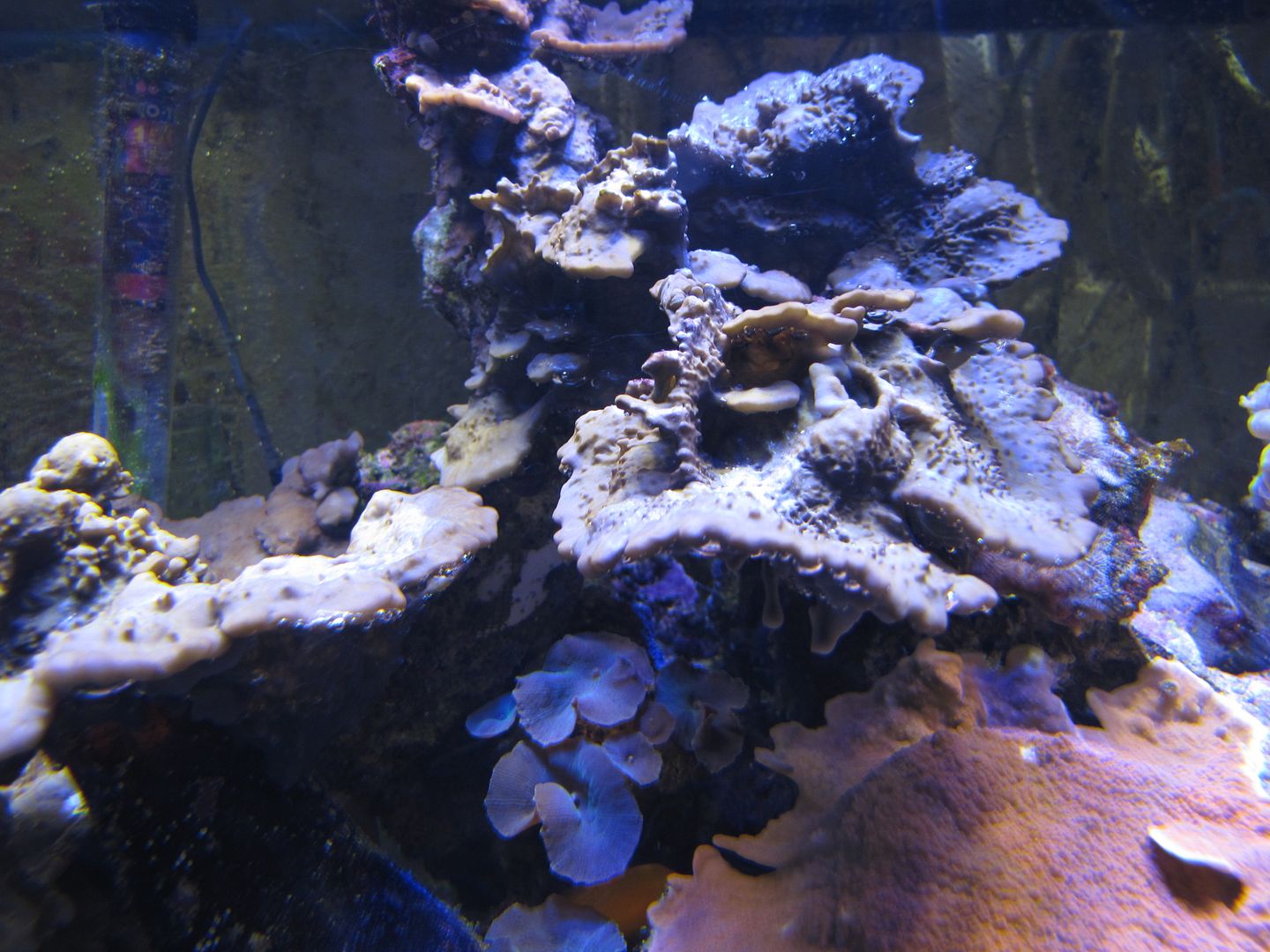
I am slowly making a big change to my tank. I have so much blue encrusting sponge that I think it is either sucking nutrients out of my water or it is adding some sort of toxin. It is beautiful and looks like light blue montipora but you can't eliminate it. You can see a milky substance come out of it when it is cut. (angelfish won't touch it)

The last time I trimmed a lot of it, I lost almost all my SPS corals and many of the Zoa's. The Zoa's are all tiny now and they were huge. My green star polyps disappeared and that stuff will grow on your piano if it's close enough to your tank.

But the good news is that gorgs and leather corals grow like crazy so maybe they like what the sponge is putting into the water or taking out.
I am slowly changing the tank over to leather corals, mushrooms, gorgonians and of course sponges. :beaming-face-with-smiling-eyes:

It's this stuff.


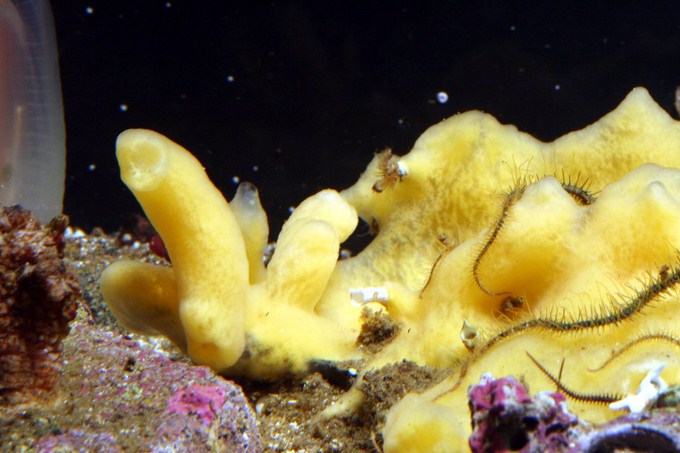
1. Sponges are TOXIC​

One of the main weapons in sponges’ arsenal to compete on the crowded coral reef is that they are very toxic. Very few species of large angelfish, sea turtles and nudibranch have evolved to consume primarily sponges.

Like their bright red, orange and yellow colors indicate, sponges are known to produce some very toxic compounds. This is great for bioprospecting new medicines and researching potential cures to deadly human diseases but this is not so great for the confines of an aquarium.

sponge02.jpg
Regular growth of sponges have usually been encouraged in reef tanks, but that yellow colored sponge is probably leaching toxins into your aquarium water.
Sponges are known to release compounds in reef water that stunts, kills and even induces bleaching in stony corals. Sure it’s probably no big deal to have a few small cute sponges in your reef tank and refugium. But a big population of sponges, mostly hiding where the sun don’t shine, and where you can’t see them, could be toxifying you reef aquarium water against conditions that our precious corals prefer.
(from reef builders)
 
The sea is a little choppy today

Rough Sound.JPG
Just wade in that is what I do. Got me my two 5 gallon bottles. The only thing that sucks is dragging them back to the car and gettting sand everywhere.

Wait a minute ... you have a boat!
 
HuduVudu. The water in Houston is a wee bit warmer than here right now. It's about 40 degrees and the air is about 44 degrees. :anguished-face:

My boat is not in the water yet, probably still encased in ice.
 
HuduVudu. The water in Houston is a wee bit warmer than here right now. It's about 40 degrees and the air is about 44 degrees. :anguished-face:

My boat is not in the water yet, probably still encased in ice.
40 schmordy ... jump in and git-er-dun :P
 
2 or so years ago I built a DIY de-nitrate reactor just for fun.
I didn't think it was actually going to do anything and it is behind my tank so I hardly ever even see the thing but today I am going to PT and I needed to kill an hour so I figured I would test the water coming out of it.

I didn't think it was actually doing anything and if it wasn't, I would take it out and build something else out of it. This is it.

Denitrification reactor.JPG


I tested the water in my tank which is on the left and is about 60 mg/L nitrate

The water coming out of the device is about 5. I guess it works. :beaming-face-with-smiling-eyes:

Nitrate test.JPG
 
paul, i saw your fish fry catcher design on your book, do you think it would be possible to build 2 of the pumps from it, put them in a hob filter body and run them on controllers so one dispenses eggs from an auto feeder 36hr later, the 2nd one dispenses eggs, then once the 1st one reaches 36h, it pumps 1/6 of the shrimps into the tank every 6 hours till 72h, when it dispenses eggs back. the 2nd one does this just 36h in advance so it dispenses shrimp every 6 hours. i would have the pod coffee filters so it replensihes the water. idk what kind of controller or timer i would need to do this
 
Yes, my test kits are expired. This copper is from the 70s, that copper test kit is 20 years old and it was never opened and that blue stuff called Parasite control is Methyline blue. I use it for a dye and would never use it on fish.
The "Paraclear is also very old, I think it is written in Latin and says to keep in a cool chariot.
I never use any of that stuff


Test kits.JPG


I tested the water in my tank which is on the left and is about 60 mg/L nitrate

The water coming out of the device is about 5. I guess it works. :p

 
I found 2 more test kits. One says my nitrate is 30 and one says it's 10. Good thing I never use test kits.
 
And I always thought these things were good:

Sponges are known to release compounds in reef water that stunts, kills and even induces bleaching in stony corals. Sure it’s probably no big deal to have a few small cute sponges in your reef tank and refugium. But a big population of sponges, mostly hiding where the sun don’t shine, and where you can’t see them, could be toxifying you reef aquarium water against conditions that our precious corals prefer.

See also Reef Delete is a New Way to Sterilize Aiptasia and Other Pests

2. Sponges COMPETE with corals for resources​

Sponges in a reef tank concern us not only for what they release into the aquarium water, but also for what they take out. All living things need a basic recipe of essential trace elements and minerals and this includes corals and sponges.

Since they both adapted to live in seawater corals and sponges need the same suite of elements like iodine, strontium, potassium etc. to keep their cells alive and growing. Thankfully most sponges use silicate to build the skeletons so they don’t compete with corals as much on the mineral requirements for calcium, carbonate and magnesium.

However they are sucking up all the other trace elements that corals need, and essentially competing with corals for all trace elements that we try to replenish regularly through regular additions and water changes. In an aquarium environment devoid of sponges you can be assured that corals are only competing with each other for minor and trace elements.
 
That is very interesting about sponges, and what they utilize to grow. My rock is 20+ years old and was taken from the ocean and has a lot of encrusting sponges on it, especially underneath in the dark areas.

Fortunately, I am a lazy reefer who hates to do water tests so I don't have sps Coral. I love the movement of tree leathers and gorgonians, along with BTAs and all of these seem to coexist with the sponges just fine. I do a 5% water change every week and after it I always add coral vite, Seachem stability and sometimes strongium so perhaps I am replenishing what is taken up by the sponges.

Anyway, thanks for the info Paul!
 
Yesterday my wife and I went to a 6 hour lecture on Psychoneuroimmunology, which used up almost all the ink in my computer.
It's a study of immunity and how your diet and mostly stress suppresses it. Very interesting. :)
 
Yes, my test kits are expired. This copper is from the 70s, that copper test kit is 20 years old and it was never opened and that blue stuff called Parasite control is Methyline blue. I use it for a dye and would never use it on fish.
The "Paraclear is also very old, I think it is written in Latin and says to keep in a cool chariot.
I never use any of that stuff


Test kits.JPG


I tested the water in my tank which is on the left and is about 60 mg/L nitrate

The water coming out of the device is about 5. I guess it works. :p
Did you get a chance to try the greatest copper formalin treatment available in the late 70's ??? AQUA-CURE ...by poly bio marine.....that stuff was the schizzle !!!!
 
I am sure I tried Aqua-Cure but don't remember. That stuff I have is also copper and formalin and will cure ich in a day or two. Of course now we know how to keep our fish from getting these silly things so we don't need to poison them any more.

That 6 hour course I took yesterday got me thinking and I have known for a long time how to prevent these diseases but now I know the mechanisms better. I wrote an article about it last night but am busy today so when I have time, I will tweek it a little before I post it.

Then of course the arguments will begin. :beaming-face-with-smiling-eyes:

This stuff is so easy but many of us try to make it complicated and in the process we kill a lot of fish. :oops:
 

WHAT’S THE HARDEST PART OF REEFING TO EXPLAIN TO A NON-REEFER?

  • Why a tiny coral frag can cost that much

    Votes: 10 25.6%
  • Why I spend time testing and adjusting water

    Votes: 7 17.9%
  • Why the fish I want might not fit my tank

    Votes: 8 20.5%
  • Why I have buckets, tubing, and salt around the house

    Votes: 1 2.6%
  • Why corals are living animals, not decorations

    Votes: 11 28.2%
  • How much time and attention a reef takes

    Votes: 9 23.1%
  • The difference between freshwater and saltwater creatures

    Votes: 2 5.1%
  • I’ve stopped trying to explain

    Votes: 12 30.8%
  • Other (Post in the comments)

    Votes: 3 7.7%
Back
Top
Home
Post thread…
Market
What's new