- Joined
- Mar 24, 2025
- Messages
- 122
- Reaction score
- 42
- Location
- china
- What state or country do you live in
- Other International
On January 4, 2026, I purchased two species of wrasse: one Cleaner Wrasse (Labroides dimidiatus) and one Eclipse Hogfish (Bodianus mesothorax). From January 4 to January 8, I did not add any medication, and both fish began feeding on frozen mysis shrimp. On January 9, I added 2.3 ppm of praziquantel powder to the water (without using any organic solvent). On January 10, both fish were still eating and showed no apparent loss of appetite. However, on January 10, I noticed a hole near the tail fin of the Cleaner Wrasse. I am certain that there was no hole on its tail on January 8. I also observed a red patch on its side, which has been present for 3–4 days. I suspect the hole on the tail was caused by a bite from the larger Eclipse Hogfish.
I plan to administer a 30–60 minute bath treatment with 10 ppm enrofloxacin daily to the Cleaner Wrasse and add Seachem StressGuard to the quarantine tank to promote wound healing. However, I am concerned whether the red patch on the Cleaner Wrasse’s body could be Uronema.
Additional note: From January 4 to January 6, I kept the two fish separated, but later the Cleaner Wrasse jumped out of the isolation box. After that, I did not observe any fighting between them, so I did not move it back to the isolation box.
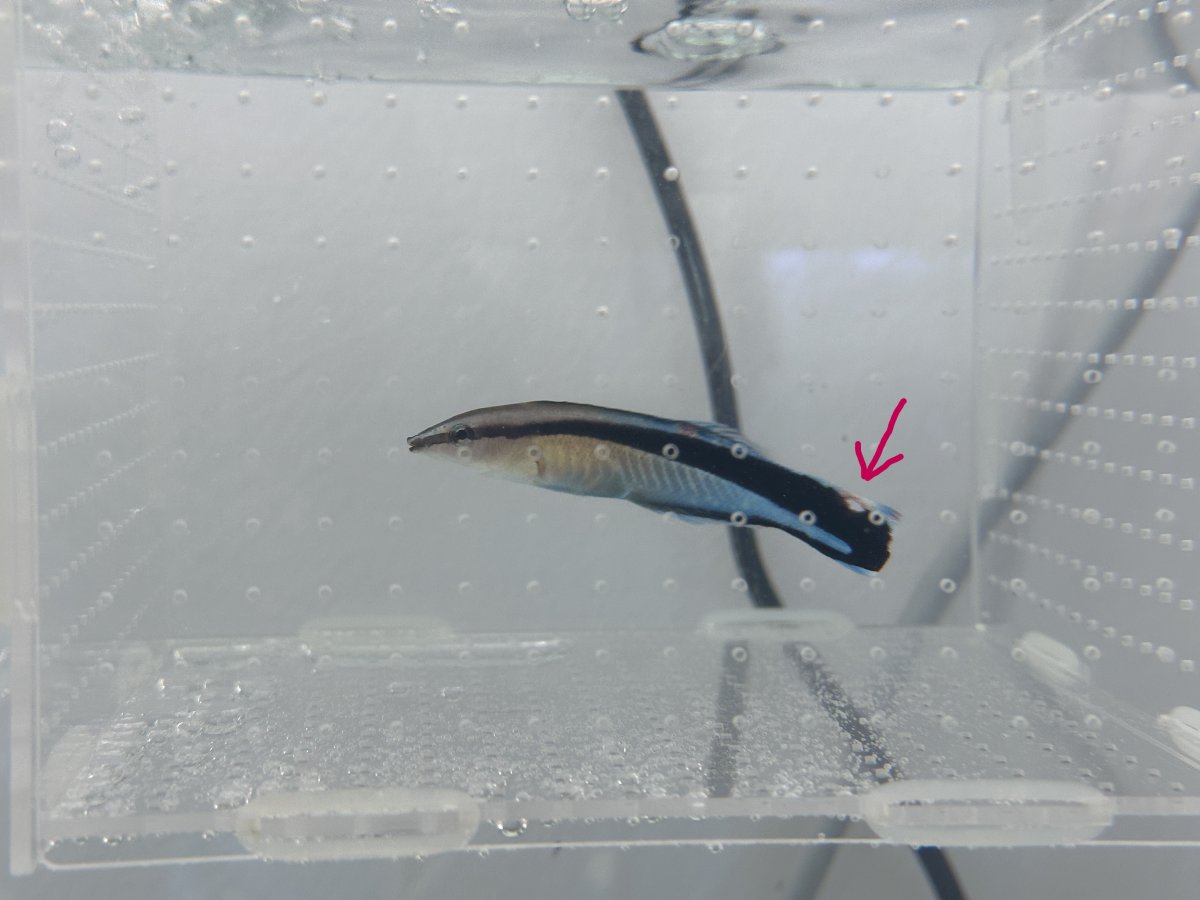
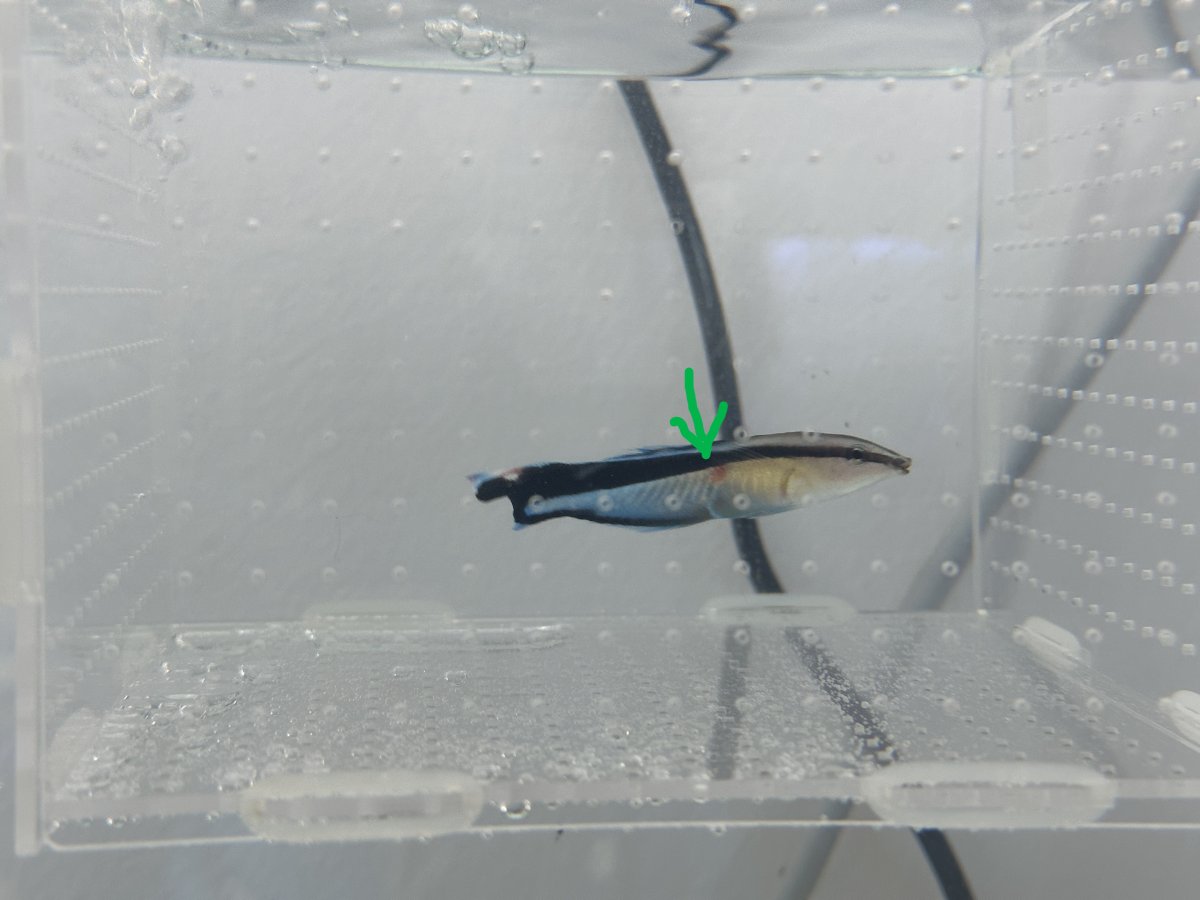
I plan to administer a 30–60 minute bath treatment with 10 ppm enrofloxacin daily to the Cleaner Wrasse and add Seachem StressGuard to the quarantine tank to promote wound healing. However, I am concerned whether the red patch on the Cleaner Wrasse’s body could be Uronema.
Additional note: From January 4 to January 6, I kept the two fish separated, but later the Cleaner Wrasse jumped out of the isolation box. After that, I did not observe any fighting between them, so I did not move it back to the isolation box.