The Wrasse Lover's Thread!

Hi guys.
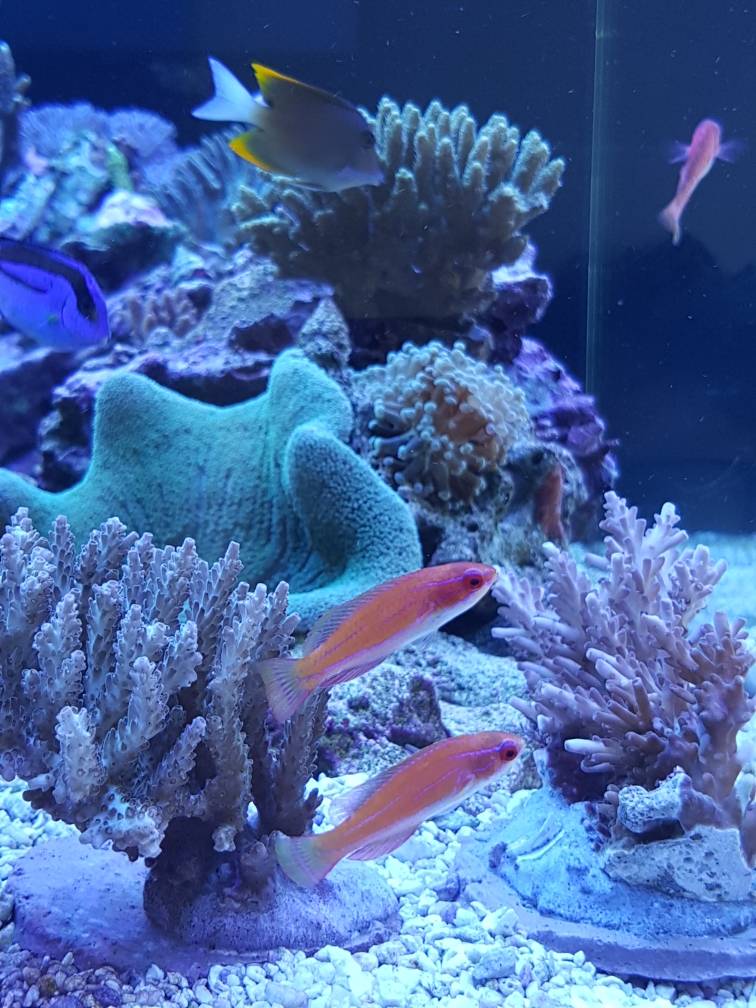
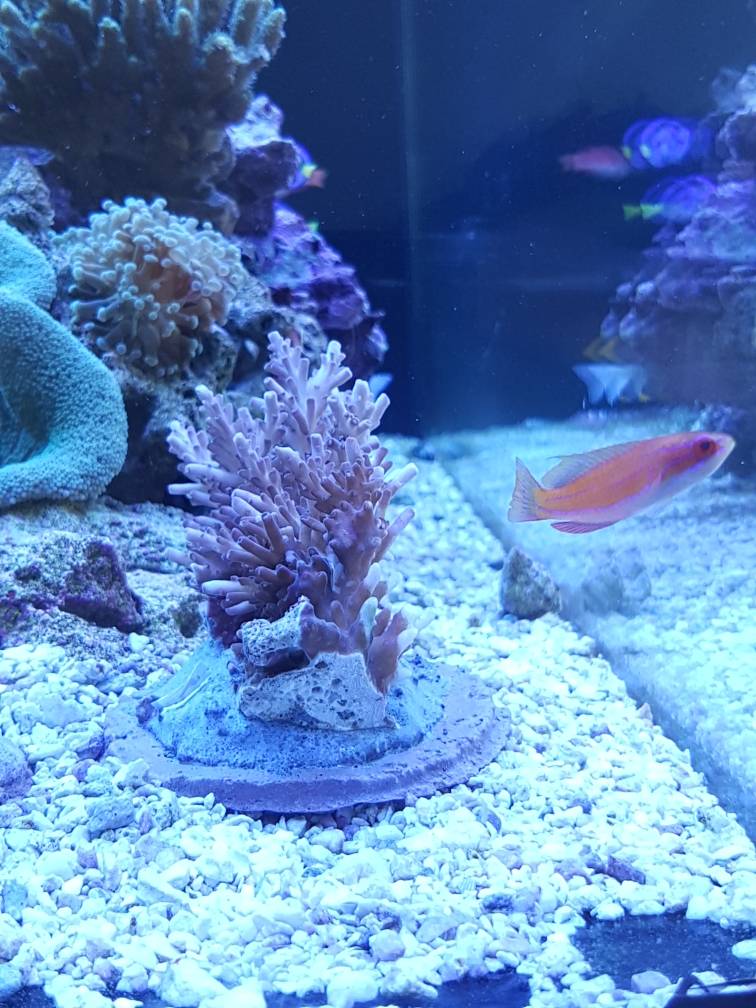
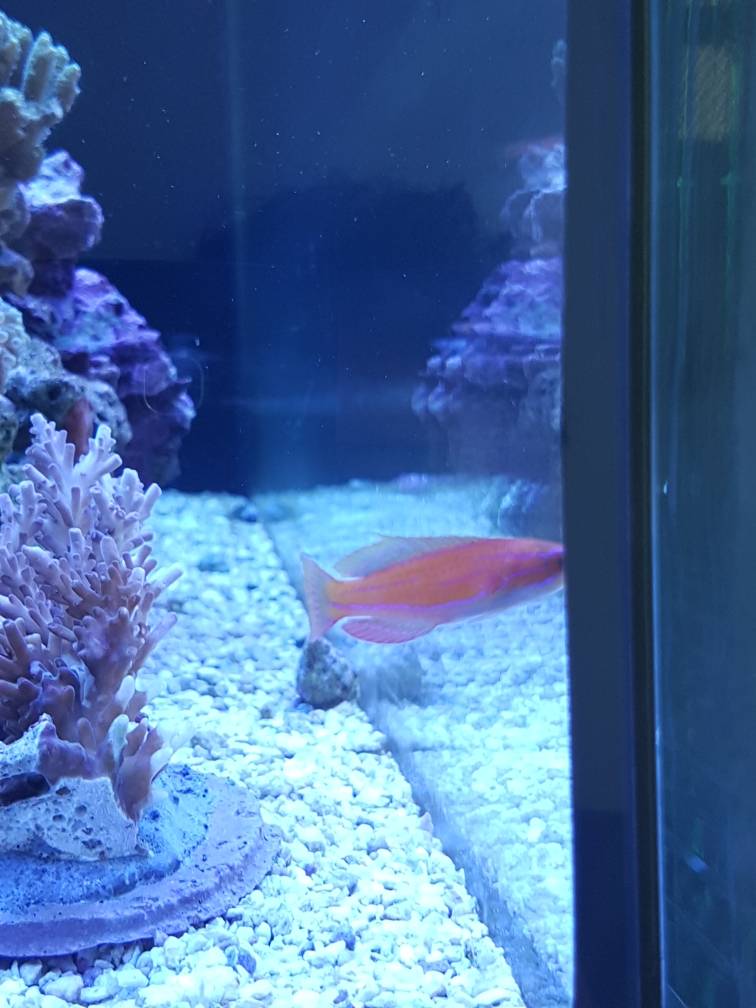
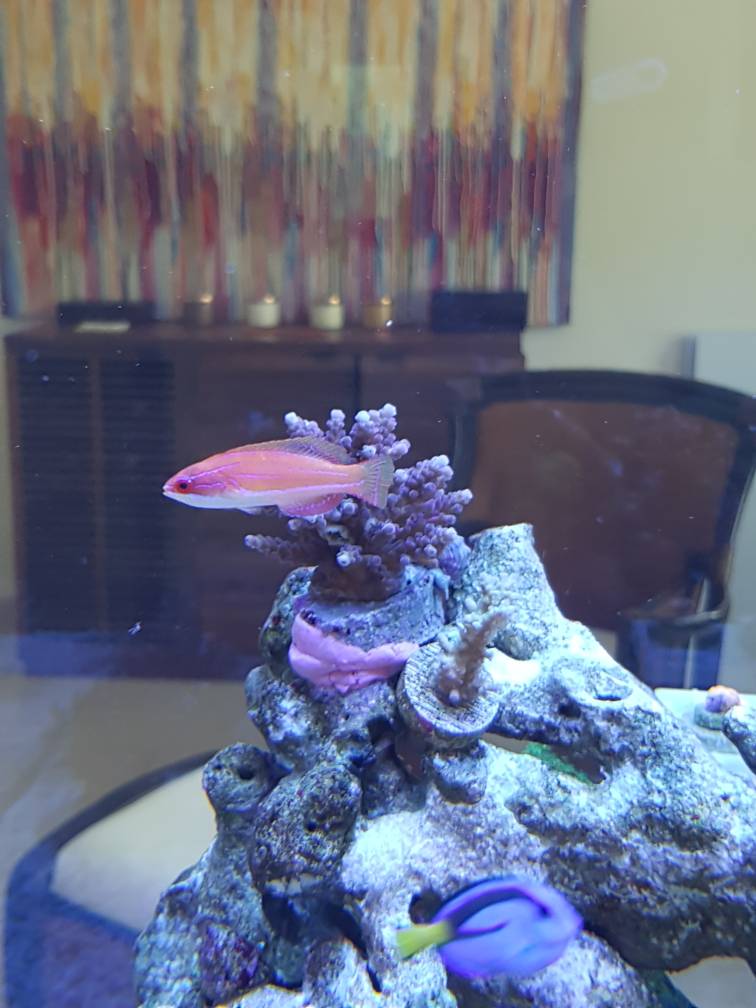
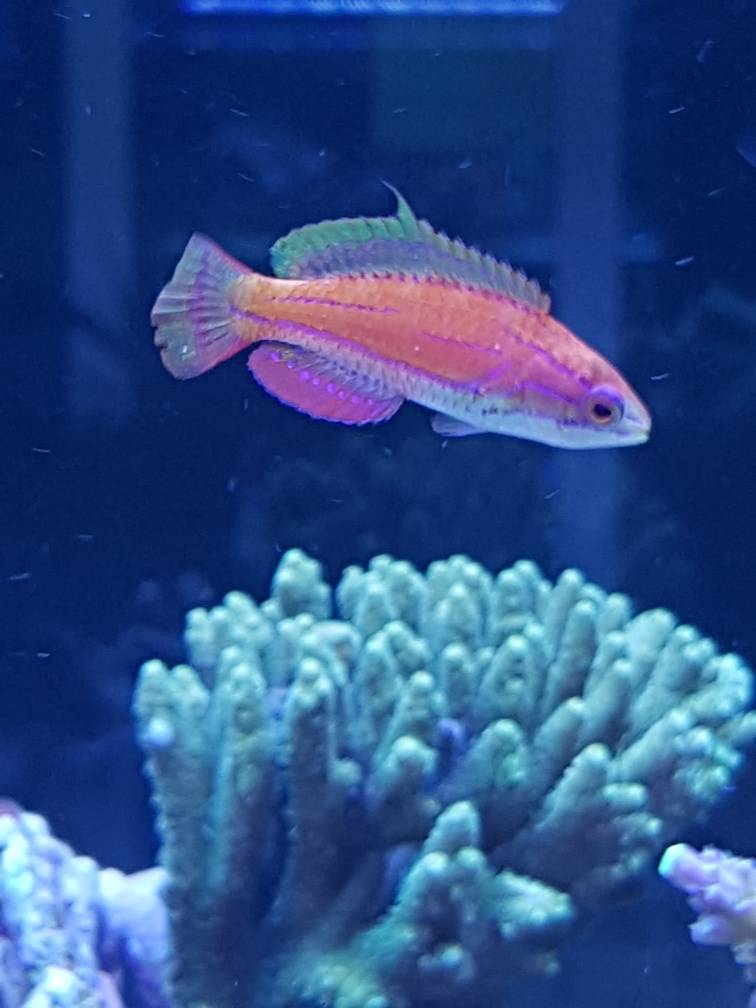
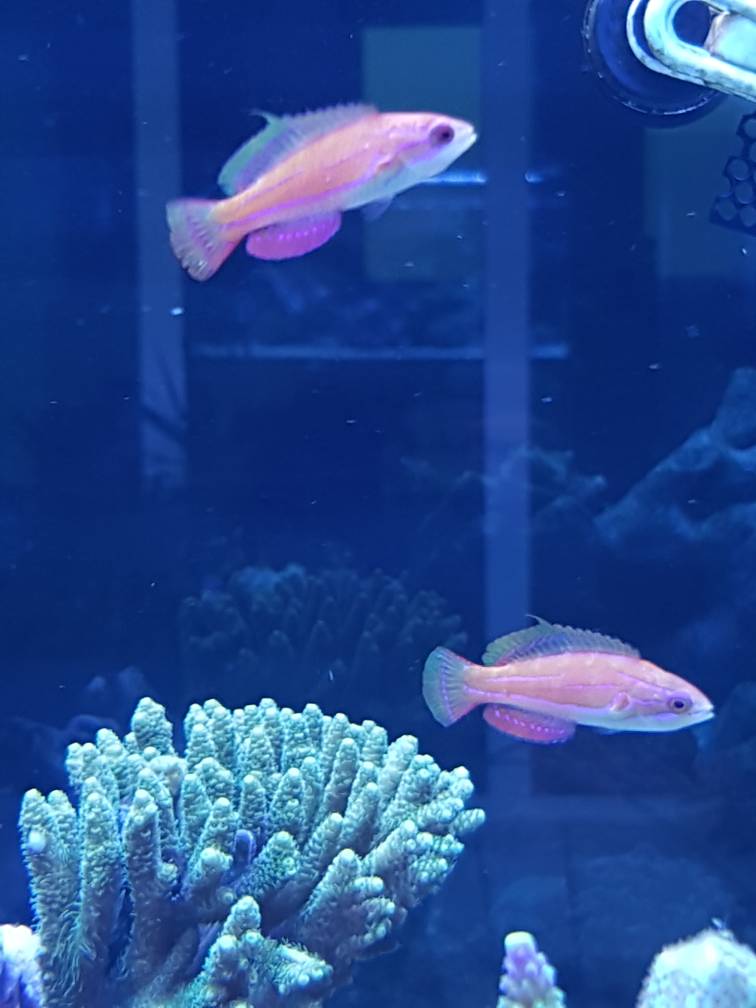
Are these male/female Mccosker/Yellow fin flashers?
Or just something else?
32e1366adfa75466a5e7d96801aee28f.jpg
97fe29e66a12e441d12ed3b4b38d0a6c.jpg
fd615ed3d43608250e529fc016ae2436.jpg
d8dc1bc1c82e9063cdd4432909a1aef7.jpg
 
Not yellow fin. Look like females to me except the last one may be a transitional phase male? This should be an easy one for Hunter and TJ. We'll see what they say.
 
Hi guys.
Are these male/female Mccosker/Yellow fin flashers?
Or just something else?
32e1366adfa75466a5e7d96801aee28f.jpg
97fe29e66a12e441d12ed3b4b38d0a6c.jpg
fd615ed3d43608250e529fc016ae2436.jpg
d8dc1bc1c82e9063cdd4432909a1aef7.jpg
Showing a dorsal filament and color in the caudal fin = male.

Single dorsal filament = mckosker.

The only way one of them is not mckoskeri is that the tail of one of them appears to be developing a slight lyre shape at the top and bottom of the caudal. So it may possibly be a hybrid. However, I could just be seeing things.
 
Showing a dorsal filament and color in the caudal fin = male.

Single dorsal filament = mckosker.

The only way one of them is not mckoskeri is that the tail of one of them appears to be developing a slight lyre shape at the top and bottom of the caudal. So it may possibly be a hybrid. However, I could just be seeing things.
Thank you. Here a better picture.
5fb63f2f5dfc76edca8b6990422f8db2.jpg
a980fdae641e2dcefba1ce9d5857f8aa.jpg
 
Seeing the tail more clearly, they are both mckoskeri. Unless the tank is very lg, 2 male mckoskeri can be become problematic.
 
@evolved Hunter, thanks for your various write-ups and the "aggression" diagram! I've gotten three smaller fairy's (C. rubriventralis, C. cyanopleura & C. lubbocki) all getting along in QT together after some initial dominance displays that subsided quickly. They had been acrylic baffled off for the first three days and a week later all are starting copper after making sure they were eating well.

I do have a question for when they are introduced to the DT, should I add all three together in an acclimation box or do them one at a time? Existing stock list is two small ocellaris clowns, bi-colour blenny, cleaner wrasse, elongate dottyback and a 3" tomini tang. I'm going to get some acrylic cut and make a hang-in box, but I'm wondering just how large to make it if all three are in there. The existing fish have shown almost no aggression towards each-other, even at feeding time.

 
@evolved Hunter, thanks for your various write-ups and the "aggression" diagram! I've gotten three smaller fairy's (C. rubriventralis, C. cyanopleura & C. lubbocki) all getting along in QT together after some initial dominance displays that subsided quickly. They had been acrylic baffled off for the first three days and a week later all are starting copper after making sure they were eating well.

I do have a question for when they are introduced to the DT, should I add all three together in an acclimation box or do them one at a time? Existing stock list is two small ocellaris clowns, bi-colour blenny, cleaner wrasse, elongate dottyback and a 3" tomini tang. I'm going to get some acrylic cut and make a hang-in box, but I'm wondering just how large to make it if all three are in there. The existing fish have shown almost no aggression towards each-other, even at feeding time.

With your current stock inn the dt, you should be able to add all 3 at once without the acclimation box.
 
Thank you. Here a better picture.
5fb63f2f5dfc76edca8b6990422f8db2.jpg
a980fdae641e2dcefba1ce9d5857f8aa.jpg
Yup, those are both sub-male mccoskeri. A 120g tank likely won't be big enough for 2 males.
@evolved Hunter, thanks for your various write-ups and the "aggression" diagram! I've gotten three smaller fairy's (C. rubriventralis, C. cyanopleura & C. lubbocki) all getting along in QT together after some initial dominance displays that subsided quickly. They had been acrylic baffled off for the first three days and a week later all are starting copper after making sure they were eating well.

I do have a question for when they are introduced to the DT, should I add all three together in an acclimation box or do them one at a time? Existing stock list is two small ocellaris clowns, bi-colour blenny, cleaner wrasse, elongate dottyback and a 3" tomini tang. I'm going to get some acrylic cut and make a hang-in box, but I'm wondering just how large to make it if all three are in there. The existing fish have shown almost no aggression towards each-other, even at feeding time.

If you're set on using it, I'd just put all 3 in the box together. Something along the lines of 15x8x8 would be fine for a couple days. But:
With your current stock inn the dt, you should be able to add all 3 at once without the acclimation box.
I also agree here - it's probably not even necessary with what you currently have.
 
I have had two female m. bipartitus in QT for coming up on four weeks now. They have been through two rounds of prazi, and observation. They're both eating aggressively, and looking good. I think it is time to move them to my DT. The tank is a 220g with a mix of five resplendent anthias, two small clowns, a few small gobies, and five other wrasses (flashers and fairies). The fish all get along.

What should I expect when I move these gals to the DT? Will they go through the same couple of days hiding in the sand before they come out? Or even more hiding because they won't be alone? I've read the comments about how useful an acclimation box can be when introducing new tank mates, but the tank is pretty peaceful, so I am wondering if it would be more stressful to use a sand-free acclimation box, or just introduce the two females to the tank and let them hide until they are ready? Or put some sand in the acclimation box?

What's considered "best practice" here?
 
IMG_8011.PNG
IMG_8010.PNG
IMG_8009.PNG
IMG_8008.PNG

Just have to show off my new rhomboid wrasse. Wanted a pair for quite sum time and eventually the opportunity came up and it coincided with my birthday
Lucky you.
Happy belated birthday!
 
I have had two female m. bipartitus in QT for coming up on four weeks now. They have been through two rounds of prazi, and observation. They're both eating aggressively, and looking good. I think it is time to move them to my DT. The tank is a 220g with a mix of five resplendent anthias, two small clowns, a few small gobies, and five other wrasses (flashers and fairies). The fish all get along.

What should I expect when I move these gals to the DT? Will they go through the same couple of days hiding in the sand before they come out? Or even more hiding because they won't be alone? I've read the comments about how useful an acclimation box can be when introducing new tank mates, but the tank is pretty peaceful, so I am wondering if it would be more stressful to use a sand-free acclimation box, or just introduce the two females to the tank and let them hide until they are ready? Or put some sand in the acclimation box?

What's considered "best practice" here?
In instances likes these, I like to use an acclimation box (no sand, just pvc) for 1-2 days before letting them out. This also helps them adjust to the DT photo period (if different from your QT).
 
In instances likes these, I like to use an acclimation box (no sand, just pvc) for 1-2 days before letting them out. This also helps them adjust to the DT photo period (if different from your QT).
No sand in the acclimation box even for sand dwelling wrasses? Is that a special occasion with his/her situation or is that standard for shirt periods without existing Leopard wrasses? I have some fairy wrasses in the display tank, and a Leopard and melanurus in quarantine. So it would be OK to do the same?
 
No sand in the acclimation box even for sand dwelling wrasses? Is that a special occasion with his/her situation or is that standard for shirt periods without existing Leopard wrasses? I have some fairy wrasses in the display tank, and a Leopard and melanurus in quarantine. So it would be OK to do the same?
In general, I don't like to use sand in an acclimation box - it kinda defeats the purpose if the new guy buries in the box. However, I also don't like to hold them very long in box either if they're a sand sleeper. If it's a tamarin, I'll add them in the box early in the photo period and let them out before the lights turn out - they stress too easy without sand.
HOWEVER - in the rare instance that there's an apparent issue with the fish in the box and those already in the tank, then I'll add a sandbox to the acclimation box if they need to be held longer than 2 days (leopard) or overnight or longer (tamarin).
(Halichoeres get treated like a leopard in this sense too)
 
Would a Christmas wrasse be ok to add to a tank with a melanurus and leopard wrasse?
 
Back
Top
Home
Post thread…
Market
What's new