Tips for Long Term Success

  • Thread starter Thread starter HardyG
  • Start date Start date
  • Tagged users Tagged users None
Do your own thing. Everyone has an opinion but yours is what matters for your tank. I've spent 20 years with fads and do this or that. Honestly if you have stability, you can keep most anything no matter the parameters. There are definitely benefits to those best parameters but anyone can have a tank.

The advice I have is don't give up. Find your happy spot and stick to it. Stability.

Also keep everything! You never know when you might need it!

Also learn chemistry. Ha!
One other thing i failed to mention, get as much as you can automated if you ever want to go on vacation...its a lifesaver if you dont have a reefing buddy
 
Is stability unnatural?

I’m not going to try to debate what corals like best, but alkalinity and all major ions are extremely stable in the ocean, only changing if there is a salinity change. Alk is never above about 7 dKH.

Phosphate and nitrate in the ocean are never more than a few ppm nitrate and 0.1 ppm phosphate. :)
So, for Acros this is ideal, however I find most of the corals you’ll see when diving are SPS, very few are LPS and even fewer are softies.

Stability is unnatural to an extent even for SPS, wave movement for one - currents are rarely staying exactly the same long term, they’re changing therefore, corals are being bashed around in several ways (and the growth of acros specifically can show the difference in captivity - many lean towards one way, usually the way the flow is going over them).

Then, looking down the route of LPS, if they’re not found in a traditional reef, where are they found?
Well, it’s interesting, but they are frequently found around large sediment dumps from alluvial processes as well as the marine processes, the salinity is rarely stable in those regions due to the tides retreating. Freshwater rushes in and the same happens the opposite way - salinity then goes and swings slightly.

The only thing that really ever stays even remotely stable is where their food sources come from;
Acros, it’s the currents from open water.
LPS, it’s the sediment from rivers and oceans.

I used to be under the thought of stability is great… but working in LFSs I’ve found it to just be such a bad move.
The one I’ve had most people struggle to keep is torches in the long term scenario - most of the time, in a 3 year old tank, they’re dead, and yet, they thrive in immature tanks where nothing is stable.

But that’s when you look at where these species are found in the wild that you’ll realise how bad stability can get.

I’ve had 2 out of 3 of my current reefs like this and so far, I’ve had the best growth, colour and shapes from corals.

 
I'm only 6 months in but I'm very much of the belief that if you are new to the hobby you should enjoy being a noob.
Don't run out and spend £5000 on a tank and stuff it with tangs and torches.
Start small, start cheap, buy Xenia and GSP, run a tank without gadgets and expensive additives, get a "Nemo", buy budget gear to see where you can trim costs, invest in good gear when you know what you need. Test, monitor, adjust.
You can always progress to bigger things but I think there is real beauty in the basics. I see this as a journey for life. If I rush through it, I'll have nowhere to go in 10...20...30 years.
 
One word of advice I have not seen yet is to stick to what works for you and your system. The moment you detour from what you have always done is the moment your taking a risk. If your method you choose gives the results your looking for then stick to it and enjoy your tank!

Also if you find someone to take advice from that achieves the results your looking for then mimic their footsteps. Those new in the hobby can benefit from looking at others tank threads they are taking advice from, how someone maintains their system and the success from it can tell you a lot. I wouldnt want to take advice from someone on acropora that only maintains a softy tank.
 
Never keeping anything stable. It’s unnatural, corals love variety...
I've always felt like it was silly (maybe even bad) for most of us to keep our tanks at a consistent temperature at all times.
Unnatural and seems like it would be better to have livestock be used to temperature variations.
*alas, none of the temperature controllers I've owned had the ability to handle that (automatically)
Do you think there is a reason no manufacturer has done this?
I don't think it needs to be manufactured ...

I have an Inkbird ITC-308 with my AIO supplied Eheim 50E heater and a double headed fan from Amazon plugged into it.

If the temperature drops more than 0.3C, the heater gets powered and it warms up the tank (I live in a notoriously cold area and freezing indoor plumbing happens) if the temp rises over 1C (pretty sure that's what I set it to) the fans start up.

I can of course vary this spread as much as I'd like - but I want to keep it pretty stable

My fans run maybe once a day, I've seen the heater come online once.

Fish seems happy, zoas are super happy and growing, the RBTA is grumpy but that's because the clown is in there being a clown and they just met.

So I think it's doable to manufacture it, but I think they don't because the tech already exists really. Using a temp controller is just as valuable as an ATO in my opinion.

Albeit I'm very new to reefing, and aquariums in general, so I may be out to lunch about some stuff, but this has made sense to me from the start and it's working well for me.
 
10’years in the hobby(I’m gonna make this quick because I just wrote a whole page and it froze )

1. 10% weekly water change

2. Dip every single coral you buy

3. Nutrients stay in the 100:1 ratio (n&p)

4. Keep alk stable no more than a .5dkh swing in 24 hours

5. Do not use any chemicals or additives including bacterias. Every issue has a natural approach than can be solved slowly and naturally to maintain STABILITY(which really should be #1)

To be clear you can use these things but, I’d say 80% of people use them without understanding exactly what it’s doing. Also bacteria in a cycling tank would also be ok imo.
 
Last edited:
So, for Acros this is ideal, however I find most of the corals you’ll see when diving are SPS, very few are LPS and even fewer are softies.

Stability is unnatural to an extent even for SPS, wave movement for one - currents are rarely staying exactly the same long term, they’re changing therefore, corals are being bashed around in several ways (and the growth of acros specifically can show the difference in captivity - many lean towards one way, usually the way the flow is going over them).

Then, looking down the route of LPS, if they’re not found in a traditional reef, where are they found?
Well, it’s interesting, but they are frequently found around large sediment dumps from alluvial processes as well as the marine processes, the salinity is rarely stable in those regions due to the tides retreating. Freshwater rushes in and the same happens the opposite way - salinity then goes and swings slightly.

The only thing that really ever stays even remotely stable is where their food sources come from;
Acros, it’s the currents from open water.
LPS, it’s the sediment from rivers and oceans.

I used to be under the thought of stability is great… but working in LFSs I’ve found it to just be such a bad move.
The one I’ve had most people struggle to keep is torches in the long term scenario - most of the time, in a 3 year old tank, they’re dead, and yet, they thrive in immature tanks where nothing is stable.

But that’s when you look at where these species are found in the wild that you’ll realise how bad stability can get.

I’ve had 2 out of 3 of my current reefs like this and so far, I’ve had the best growth, colour and shapes from corals.


I don’t dispute that wave motion and temperatures are quite variable, as may be particulates, but extending that to chemical parameters in the water seems unjustified to me.
 
This is easy for me. My reef is certainly not the nicest looking reef on here but it is over 50 years old with no problems. My tank run itself with little help from me. I rarely test anything. Not saying that is wrong but it seems the tanks with the most "tweeking" are the ones with the most problems.

I personally would never quarantine or medicate. Again, not saying that is wrong, there is no wrong and if you want to run a sterile, quarantined or medicated tank, that works as long as you always do that.

I feel that natural is best. Of course we don't have a real sea in our house but we can mimic much of it or at the least eliminate the un-natural things in our tanks that fish hate. Yes, I can read their minds and the expression on their face.

This Watchman is smiling here because he knows he will live happily for at least another 10 years. 😃

(you may have to look at him "up side down" to see his smile. )


To me, the most important and least understood thing in this hobby and the thing that causes most, if not all of the "fish" problems is the lack of proper food. Proper food is never dry in any form as fish in the sea don't eat that. Proper is food with living gut bacteria which only comes from live or freshly frozen foods. That, along with a few other things will keep our fish immune from "almost" everything for the fishes natural life span which for the majority of fish we keep is at least 10 years. Some like clowns can live 40 years. Mine are 35.

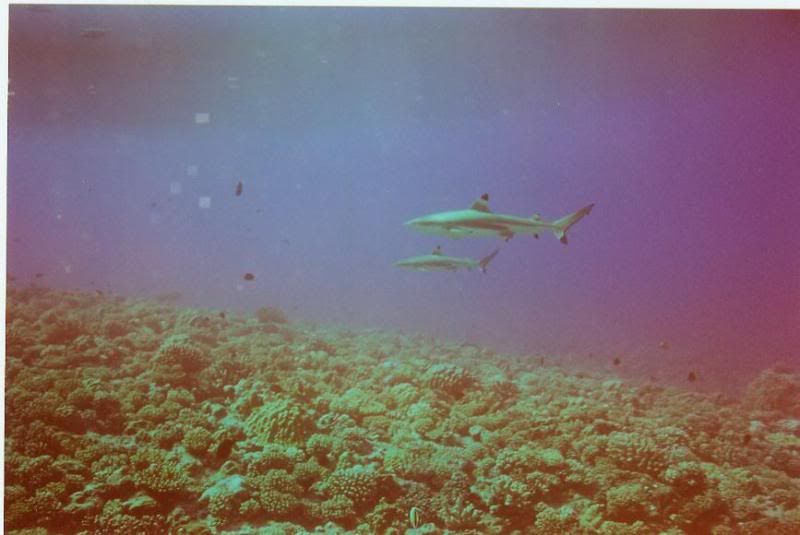
I have spent over 300 hours underwater with fish learning what they do and how they make their living. Not in a tourist resort with 100 other divers, but alone with just the fish and my Speedo.
Bora Bora


This guy is young, about 4 or 5 years old, he will live to at least 12 years old but I probably will not be here then. 😁


He is a beautiful Royal blue with not even a freckle on him. His skin looks like velvet and he and his 10 year old predecessor has never eaten any greens or nori. Just normal seafoods with living bacteria

This seems like common sense to me, but what do I know? I'm an electrician with a fish tank. 😎
 
I used to be under the thought of stability is great… but working in LFSs I’ve found it to just be such a bad move.
Imo, your assessment is incorrect. Can healthy corals tolerate instability: yes, but instability is not preferable.
 
Imo, your assessment is incorrect. Can healthy corals tolerate instability: yes, but instability is not preferable.
Honestly, some of my corals with instability have shown to be better than the ones with constant 100% stability.
Let’s also not forget, Instability can mean anything from a minor to a large change. I’m not talking about an instant change but instead gradual swings or smaller swings.
 
Dual everything, main pumps. Heaters/controller, skimmers, half the system on one circuit breaker and half on another. GFCI everything but not external main pumps, Separate GFCI for each breaker. Zip tie everything so temperature probes don't fall out of tank. Mount electric outlets higher than tank.
 

TOP 10 Trending Threads

ARE YOU READY TO CONFESS TO CRAZIEST, DUMBEST, FUNNIEST THING YOU’VE EVER DONE IN REEFING?

  • Yeah, I'll confess! (Share your story in the comments!)

    Votes: 30 55.6%
  • Nah, I'll keep mine a secret...(Don't be like that, share with the class!)

    Votes: 24 44.4%
Back
Top
Home
Post thread…
Market
What's new