Townsend Angelfish and Growth Rate

mjreefs

Active Member
View Badges
Joined
Nov 4, 2018
Messages
377
Reaction score
154
Rating - 0%
0   0   0
Hi. So an LFS came in with a shipment, it first looked like a queen to me, but, i also had doubts and my mind tells me it's more of a townsend. So I asked the LFS and they say it is a townsend. It's around 2". Just want to confirm that it is one and would also like to ask, how fast do they develop mature coloration? And are these difficult to get eating? I've read that juvys are easier to take care of. Many thanks!

Credits to the LFS who owns the pic.
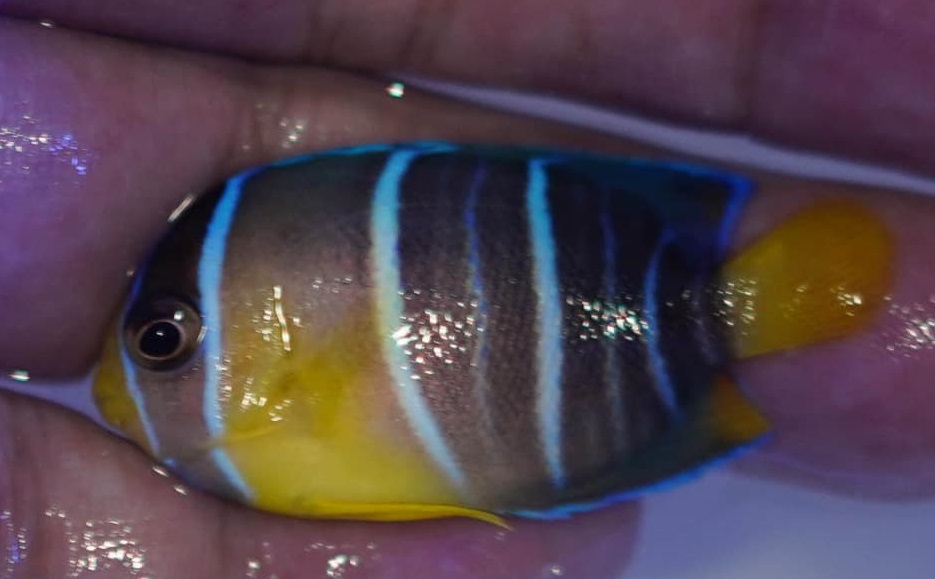
Townsend.jpg
 

EmdeReef

2500 Club Member
View Badges
Joined
Dec 2, 2017
Messages
3,138
Reaction score
3,902
Location
New York, NY
Rating - 0%
0   0   0
That looks like a juvenile blue angelfish (Holacanthus bermudensis). Blue angels will easily reach a foot in the tank and are pretty fast growers. Juvenile colors usually last a few months. That said every tank is different and depending on the environment the growth can be slower.
 
OP
OP
M

mjreefs

Active Member
View Badges
Joined
Nov 4, 2018
Messages
377
Reaction score
154
Rating - 0%
0   0   0
That looks like a juvenile blue angelfish (Holacanthus bermudensis). Blue angels will easily reach a foot in the tank and are pretty fast growers. Juvenile colors usually last a few months. That said every tank is different and depending on the environment the growth can be slower.

Hmm now that you've mentioned it, it looks more like a blue angel.
 
OP
OP
M

mjreefs

Active Member
View Badges
Joined
Nov 4, 2018
Messages
377
Reaction score
154
Rating - 0%
0   0   0
That looks like a juvenile blue angelfish (Holacanthus bermudensis). Blue angels will easily reach a foot in the tank and are pretty fast growers. Juvenile colors usually last a few months. That said every tank is different and depending on the environment the growth can be slower.

Also when you say few months, you mean in the span of 6 months or less?
 

TOP 10 Trending Threads

WHAT AMOUNT OF LIVE ROCK AND SAND SHOULD BE PRIORITIZED FOR OPTIMAL BIODIVERSITY/FILTRATION?

  • 100% live rock + bagged sand

    Votes: 34 27.9%
  • 100% dry rock + 100% live sand

    Votes: 42 34.4%
  • 50/50 live/dry rock, 50/50 live/bagged sand

    Votes: 27 22.1%
  • 75% live rock, 25% live sand

    Votes: 11 9.0%
  • 25% live rock, 75% live sand

    Votes: 8 6.6%
Back
Top